Van's Air Force

The definitive Van's Aircraft support community! Buying, building or flying an RV? Join our exclusive family of mentors and enthusiasts!

Do you use electric fuel pump as a backup on takeoff?

nickw9815

Well Known Member
I have recently acquired an RV6 (o-360 carbureted), with a 6psi facet fuel pump (ES-40135). The builder we bought the plane from said to never use the fuel pump on takeoff since it ever so slightly enriches the fuel mixture. However, ever low wing plane I have flown (DA40, Archer) all have you use the electric fuel pump as a backup on takeoff.

Is it common practice for people to use the electric fuel pump on takeoff and landing? Or is the original builder right?
 
Yes, for every takeoff and landing. However, my electric fuel pump (supplied with the Vans kit when I built it) puts out a whole lot more than the Facet’s 6 psi. More like around 28 psi. If you took off with that facet pump turned on, and then your engine-driven pump failed, I wonder how much engine power you’d have from only 6 pounds of fuel pressure.
 
I attended a Vans seminar at Oshkosh and their recommendation was use it continuously. Taxi out with it off the verify the engine driven pump works correctly, then turn the electric pump on for the remainder of the flight. Partly to ensure fuel flow if the engine driven pump fails, but also because it helps with vapor lock.
 
Your carburator have a float to regulate the fuel flow. The pressure 6 psi from the pump should not normally interfere with the function of the carburator.
I would test this on an airport with a longer runway. Then you will know.

Good luck
 
Electric Boost pump ON is SOP (Standard Operating Procedure) for Starting, Takeoff, Landing, hot operation on the ground, and any time operating at or below 1,000 AGL. I use to use it early on when switching fuel tanks but over time and tests determined that it was not necessary.
 
Thanks - that is what I thought. The fuel pump I have is rated for ~15gph fuel flow which is about what an O-360 needs for take off.
 
Sadly, I lost a friend and his wife in an RV-6 with O-360. He followed the practice of not using the boost pump on take offs. While we were departing two ship formation from Petaluma after lunch he experienced a loss of power. Witnesses on the golf course said the engine was sputtering. I was number 2 executing a running rejoin when he attempted a turn back resulting in a stall spin.

just a week before that flight he pulled the mechanical fuel pump due to issues.

I always thought if he followed the practice of turning on the electric fuel pump for takeoffs he would still be leading formation flights today.

I miss them both very much. Wish I could unsee what I witnessed.

Please, follow the practice of using your electric fuel pump for takeoffs and landing.
 
I love the idea of always on until after landing.

I once had the engine die while taxiing in hot weather (40c) and scrubbed the flight because I thought my mechanical pump had fried, only to learn that having the electric pump on was what I really needed thanks to vapor lock. So, turning it on after runup will probably be my go-to procedure from now on.
 
Boost pump is #9 on my prestart checklist. I leave it on to prime, start and taxi. During my runup, I switch it off before going through my runup checklist, then turn it back on. I always use it for departures, and, as above, below 1000 feet or entering early downwind, before flaps. It stays on until I am off the runway (as that is where it is on my TAXI checklist). There are tales on this forum about someone having an engine failure on departure and had not turned on the boost pump.

I guess my question would be Why not? I wonder where your builder got his information. Sounds like he might have heard it from one of the many Sage Advice-givers that seem to collect around an airplane, especially ours. My response to that would have been..........Huh.......Well, I'll be..............

Bottom line: FUEL PUMP on departure and any time it would spice up a flight if the engine failed due to lack of fuel pressure......See above....
 
Sadly, I lost a friend and his wife in an RV-6 with O-360. He followed the practice of not using the boost pump on take offs. While we were departing two ship formation from Petaluma after lunch he experienced a loss of power. Witnesses on the golf course said the engine was sputtering. I was number 2 executing a running rejoin when he attempted a turn back resulting in a stall spin.

just a week before that flight he pulled the mechanical fuel pump due to issues.
Charlie, I'm sorry for your loss.
Out of morbid curiosity, what did the NTSB/FAA find as the contributing factor(s) to the accident?

If it was the mechanical fuel pump, what was its failure mode and would have running the boost pump achieved anything?

...Onward...

The only reason to turn on the pump during switching tanks or during critical phases of flight (take off, landing) is to ensure continued fuel flow. It's not a bad practice considering that the fuel delivery to the engine is dependent upon a single, rapidly wiggling, mechanical device (suck-blow, repeat)...but...

I test the pump every time I start the airplane -- raise the fuel pressure to +30psi, open the throttle 1/2" or so, move the mixture to Full Rich, observe fuel flow on the EFIS, then turn the pump off and hit the starter. I don't use it the rest of the time.

I've played with some scenarios, and I think the only one that is problematic is the failure of the engine driven pump shortly after V1/Vr and before about 200ft AGL. For all other cases, enabling the boost pump if the engine-driven one fails is a non-event; the correct corrective action takes < 1 second to achieve.

Now, if the engine driven pump cracks open and spills its guts all over the inside of the cowling, turning the boost pump on won't do a thing...other than feed the incipient fire.

Not looking for a war - just a good understanding of the possible failure modes and mitigating actions before introducing additional actions that *could* be worse than the effect they're intended to prevent...

 
Yes, for every takeoff and landing. However, my electric fuel pump (supplied with the Vans kit when I built it) puts out a whole lot more than the Facet’s 6 psi. More like around 28 psi. If you took off with that facet pump turned on, and then your engine-driven pump failed, I wonder how much engine power you’d have from only 6 pounds of fuel pressure.
28 psi = FI motor, I assume..... 6# Facet on a carb motor would be no problem if the driven pump failed.

Maybe I just didn't understand your response:cautious:
 
I use for takeoff/climb, landing, and switching fuel tanks.
Same here. That said, I had a takeoff a couple years ago where the engine began to sputter and quit when I turned the boost pump off after some amount of climb out.. That gets your attention! Turned the boost pump back on, engine sprang back to life, and headed back to the airport, a bit shaken. Turns out the mechanical pump failed some time during the takeoff and climb after having gotten me through the taxi. So, as others have mentioned, taxi with the mechanical (except when hot conditions demand the boost pump), and add the boost during all transitional conditions. And despite their supposed expected lifetime coinciding with engine overhauls, mechanical pumps do fail, sometimes surprisingly soon, perhaps more so in recent times.
 
my only concern would be wear from having the boost pump on continuously, and having it fail when you most need it.

I use for takeoff/climb, landing, and switching fuel tanks.
I would not advocate running my Weldon boost pump continuously. On takeoff, I shut down at 1000 ft AGL.
 
SOP for carb'd low wing airplanes I've flown has been:

Takeoff: boost pump ON for engine start, OFF for taxi and run up, ON for take off, OFF at 1000 ft AGL.

Switching Tanks: boost pump ON

Landing: boost pump ON for landing at 1000 AGL (sometimes further out in the decent or pattern entry if it will be busy in the pattern), OFF for taxi.

So to the OP's question...yes, absolutely use it on takeoff. I think your airplane builder is/was worried about a non-issue. Slightly richer on takeoff???? OK....I'm more interested in keeping that expensive thing up front making noise on takeoff until I'm high enough I have time to deal with any kind of power loss.
 
Just a data point from an occasional Bonanza pilot. The POH for the continental powered bonanzas I fly say to use the boost pump only for priming and in the case of loss of engine power. Use while the engine is running tends to over-enriched and will even flood and kill the engine. I understand newer bonanzas have high and low boost, but I’ve never had the pleasure.

This nuance of continental engines may cause some of the discrepancy on standard practice - probably depends on what you were trained on. Just need to acknowledge that not all engines are the same and you need to understand the operation of your particular airplane/engine based on manufacturer’s guidance.

All lycomings I have ever flown are pump on during takeoff and landing.
 
SOP for carb'd low wing airplanes I've flown has been:

Takeoff: boost pump ON for engine start, <snip>
To expand on this a bit.....I turn on the boost pump Before engine start, and delay the start until I have confirmed the pump is producing expected fuel pressure. Then the engine is started and the boost pump turned off so fuel pressure via the engine pump can be confirmed during taxi and run-up.

I have never seen over-rich condition due to the boost pump running, but I sure saw over-lean when the engine pump got sick during climb! Turning on the boost (get home) pump returned fuel pressure (and heart rate) to normal. :)
 
28 psi = FI motor, I assume..... 6# Facet on a carb motor would be no problem if the driven pump failed.

Maybe I just didn't understand your response:cautious:
Ah, excellent point, Gasman. Mine is indeed fuel injected, and I admit I am ignorant of the different fuel pressure requirements for a carb'd engine.
 
With a couple thousand hrs in type, I guess I'll chime in. (Carb or injected, doesn't matter)
My SOP, during any critical phase of flight or fuel configuration change, switch fuel pump on.

And a tip of the hat to Scroll for formation.... "Set 'em up". = (fuel pump on) for me as it is a critical phase of flight for the duration of the flight.

PS: There are some comments here that think they might reveal a failed mechanical pump in just a few seconds on the runup pad with a Carbureted engine. The bowl holds a LOT of fuel. Go out to the runup pad and select fuel off and see if the engine stumbles in the time that you do your mag check....

I would echo Sam's words as well.
 
In my RV-8 training with Bruce Bohannon, he had me turn on the boost pump (IO-360) at takeoff and then switch it off climbing through 1000' AGL. We'd turn it on again at 1000' AGL or below with airport in sight. I don't generally turn it on when switching tanks (Andair fuel selector valve) - but maybe I should? Never a hiccup, knock on wood.
 
Agree with everyone but one tiny little data point- I turn mine on during pre flight, check the gascolator and then turn the pump off. By the time I finish my walk around and strap in, I turn the master back on and if the fuel pressure is still up it means my fuel system is leak free. I have caught a sticking carb float this way.

As with the others, off for taxi, on for t/o, climb, changing tanks and landing.

Ive never heard of an engine running ritcher from a boost pump being on... and even if it did, takeoff and climb (full power/reduced cooling air flow) would be the perfect time for it to indeed run a little ritch. Marvel Ma-4SPA carbs (and probably others) actually have an enrichening jet that does ritchen the mixture at full power for that reason.
 
A Facet Cube is designed to run continuously. As long as it's not run dry for an extended period of time.

Why shut it off at 1000 feet.... you have better things to do. Wait till 2000 feet. You are then established and can deal with a double failure if the mechanical pump fails and the switch to the electric fails when you switch it off. All RV's can out climb their glide, so at 2000' you should have no problem landing back where you started.

Why wait till 1000' to turn on the pump during landing... you have better things to do. Turn it on 5 miles out. One less thing to do in the pattern.

If your aux pump produces the same pressure ( within the spec's) as your mechanical pump, your carb will not know the difference.
 
It is all to do with timing.
If taking off and landing without the electric pump on and the mechanical pump fails, the reaction time to correctly diagnose the problem and switch on the electric pump can take time or height that is not available.
With the electric pump on and the mechanical one fails the electrical one should take over seamlessly.
Upon reaching safety height with a failed mechanical pump and upon switching the electrical pump off then it will be an immediate pointer what the problem is.

As an aside I operate out of a grass strip and one of my checks is to check fuel pressure with the electric pump both on and off as part of my checks, not just having the electric pump on.


Rob
RV 3 G-BVDC
 
My Weldon boost pump is located on the firewall and those puppies tend to run hot, so I've been told by several several people smarter than me about this stuff. So I run it only during critical phases of flight where redundancy is wise. Partly to preserve it and partly because it's unnecessary and does nothing to support fuel flow or pressure. I chose 1000 feet because I'm pretty confident that I can return to land from that altitude. My AG6 annunciator notifies me after it's been running for about 4 minutes in case I forget as I transition to cruise-climb.
 
My AG6 annunciator notifies me after it's been running for about 4 minutes in case I forget as I transition to cruise-climb.
Big ORANGE FUEL PUMP light for me. Hard to miss that..........! 😊 Fuel pump switch just in front of the throttle and below the carb heat control knob in this picture. Handy arrangement if things should go quiet........
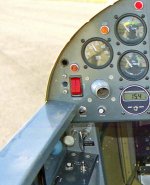
(Emergency check list: throttle/mixture: full forward; boost pump: on; carb heat: on; switch tanks; mag switch. OR: in a condensed version mentally said in a hurry: fuel/fuel/heat/fuel/spark)😲
 

Attachments

  • img704acC.jpg
    img704acC.jpg
    203.9 KB · Views: 39
Use
I have recently acquired an RV6 (o-360 carbureted), with a 6psi facet fuel pump (ES-40135). The builder we bought the plane from said to never use the fuel pump on takeoff since it ever so slightly enriches the fuel mixture. However, ever low wing plane I have flown (DA40, Archer) all have you use the electric fuel pump as a backup on takeoff.

Is it common practice for people to use the electric fuel pump on takeoff and landing? Or is the original builder right?
I use the boost pump for all critical stages of flight. If your mixture is effected by the boost pump then there's something wrong with the carb or the boost pump is the wrong model providing too much pressure.
 
I'm fuel injected, but carry over many of the habits I learned in a couple thousand hours of single-engine Grummans.

On to prime, off to start, taxi, run up etc, on when I switch to tower.

I see no reason to hurry to switch it off at 1,000 AGL. That seems a strange practice to me. It does no harm to leave it on, and 1,000' is still pretty low in case shutting it off causes a power loss. For me, it's part of the level off checklist.

Switching tanks I look at fuel pressure, turn it on and monitor the slight rise, switch tanks, wait a minute, turn it off while observing fuel pressure.

I turn it back on again entering the pattern VFR or before beginning the approach IFR.
 
Had a conversation with Don at Airflow Performance several years ago when I was on a XC and the mechanical FP was acting up. Fuel injected engine. Was told the Airflow Performance pump (stock vans part circa 2014) was able to run continuously. Said it had a 100% duty cycle, and can keep it on the entire flight. Also mentioned the AFP fuel injection would work fine down to 15psi at cruise. Need higher during high power settings.

Not saying I do this by any means but its nice to know.

Personally, ON for start, then OFF for taxi and run up. Gives time to detect issues with mechanical pump. On before taking runway. Keep it on below 1000’, and during stalls and maneuvering , takeoff and landings.
 
Use

I use the boost pump for all critical stages of flight. If your mixture is effected by the boost pump then there's something wrong with the carb or the boost pump is the wrong model providing too much pressure.
For lycoming. Have been told otherwise from the Contenintal guys
 
Lycoming and Lycoming Clones only. Some Continentals have high and low boost pump selections. The high will likely cause the engine to quit.
 
Had a conversation with Don at Airflow Performance several years ago when I was on a XC and the mechanical FP was acting up. Fuel injected engine. Was told the Airflow Performance pump (stock vans part circa 2014) was able to run continuously. Said it had a 100% duty cycle, and can keep it on the entire flight. Also mentioned the AFP fuel injection would work fine down to 15psi at cruise. Need higher during high power settings.

Not saying I do this by any means but its nice to know.

Personally, ON for start, then OFF for taxi and run up. Gives time to detect issues with mechanical pump. On before taking runway. Keep it on below 1000’, and during stalls and maneuvering , takeoff and landings.

I still recall from my training decades ago: Fuel pump On for:

- startup (for priming)
- takeoff
- landing
- switching tanks
- engine misfunction/failure.

Also: Fuel pump OFF: just before a forced or emergency landing to minimize the risk of fire.

In my particular case, running the pump continuously gives a false fuel flow rating, so I turn it off in cruise. This depends on the location of the flow sender.
 
The fuel delivery system doesn't require 2 pumps. The engine comes with its own fuel pump. The electric pump is intended as a backup.

If you run the electric pump all the time, how do you know if the engine pump is working or not?

Why turn it on when changing tanks? What does switching fuel sources have to do with running an extra pump?
 
I used to puzzle over people posting here complaining about how hot the tunnel got. Is it because they were running their facet pumps continuously? If so...why? I've found that the Lycoming engine-driven pump is completely capable of providing adequate fuel flow and fuel pressure in all phases of flight. Why would one run both pumps at the same time?
 
Yes, for every takeoff and landing. However, my electric fuel pump (supplied with the Vans kit when I built it) puts out a whole lot more than the Facet’s 6 psi. More like around 28 psi. If you took off with that facet pump turned on, and then your engine-driven pump failed, I wonder how much engine power you’d have from only 6 pounds of fuel pressure.
28 PSI sounds like the fuel pump for a fuel injected engine.

6 PSI sounds like the fuel pump for a carburetor engine.

My engine and electric pumps on my carburetor engine was always 5-6 PSI.

My engine and electric pumps on my fuel injected engine is always 26-27 PSI.

Just curious ... which do you have?
 
The fuel delivery system doesn't require 2 pumps. The engine comes with its own fuel pump. The electric pump is intended as a backup.

If you run the electric pump all the time, how do you know if the engine pump is working or not?

Why turn it on when changing tanks? What does switching fuel sources have to do with running an extra pump?
I always watch the fuel pressure when switching tanks. When the cabin heat is running full bore, the stagnant fuel in the unused side gets fairly warm. In these cases, I'll see pressure drop from ~28 down to below 20 when switching, since the engine pump is pulling against warm fuel. Turning the pump on instantly corrects this until the warm fuel is past the engine pump.

Pump on 100% when below about 1000 agl for me. Runup done without it on.
 
Just a data point from an occasional Bonanza pilot. The POH for the continental powered bonanzas I fly say to use the boost pump only for priming and in the case of loss of engine power. Use while the engine is running tends to over-enriched and will even flood and kill the engine. I understand newer bonanzas have high and low boost, but I’ve never had the pleasure.

This nuance of continental engines may cause some of the discrepancy on standard practice - probably depends on what you were trained on. Just need to acknowledge that not all engines are the same and you need to understand the operation of your particular airplane/engine based on manufacturer’s guidance.

All lycomings I have ever flown are pump on during takeoff and landing.
Some POHs on bonanza’s and Baron’s also stipulate low boost pump on for high ambient air temps on takeoff. Otherwise boost pump off.

For Lycoming, I follow boost pump on for takeoff, aerobatics, and landing. Most any certified lycoming I’ve flown also calls for this procedure.
 
The fuel delivery system doesn't require 2 pumps. The engine comes with its own fuel pump. The electric pump is intended as a backup.

If you run the electric pump all the time, how do you know if the engine pump is working or not?

Why turn it on when changing tanks? What does switching fuel sources have to do with running an extra pump?
Many certified planes call for this in their checklists. Maybe a carry over. I do know if you run your tank dry or unport the tank in a side slip you will definitely need that electric fuel pump on to get fuel to the engine driven pump.
 
  • Like
Reactions: JGT
Back
Top


