Van's Air Force

The definitive Van's Aircraft support community! Buying, building or flying an RV? Join our exclusive family of mentors and enthusiasts!

Do you use electric fuel pump as a backup on takeoff?

28 PSI sounds like the fuel pump for a fuel injected engine.

6 PSI sounds like the fuel pump for a carburetor engine.

My engine and electric pumps on my carburetor engine was always 5-6 PSI.

My engine and electric pumps on my fuel injected engine is always 26-27 PSI.

Just curious ... which do you have?
I’m fuel injected. In post #27 I acknowledged my ignorance of the fuel pressure demand differences between FI and carb’d engines.
 
When I started the install of my engine, a very wise gentleman advised me that Lycoming's oil system causes a lot of wear on starting and suggested I install a pre-oiler pump that goes on with the master and off when the engine reaches a pre-defined pressure (I think I used 20 psi). It worked so well I decided to do the same thing for the backup electric fuel pump. So, I use the electric pump to prime the engine, off for starting to confirm engine fuel pump is working (FI so no carb bowls), then armed from there until rolling out on landing. If the fuel pressure drops below 24 psi, it comes on. I am much more comfortable knowing its reaction time is much better than mine if there is a problem and I have an indicator light to show the backup pump is on. The switch is cheap and I installed it in the line to the fuel pressure transducer without even having to change any fuel lines.

On Amazon: LEFOO Adjustable Air Pressure Switch 10psi ± 2psi Pressure Control for Air Oil Water and Vacuum Applications
 
Nope never use. Carry over from Cessna days. I have used when once shutting off fuel at cruise by mistake…… pump on, switch tanks ( muscle memory) ….all good, back off.
 
Looks like a lot of fuel pump on replies. I know it's how we're taught. Some primacy here, perhaps.

Scenario:
Prime with the electric pump, then turn it off
Start the engine. (Arguably if it starts and keeps running the mechanical pump is working)
Taxi - Off
Runup - Off

Here are some question:
You did your run-up, and then CHANGED the configuration by turning the electric pump back on. Did you run it up again?
Do you change tanks after a run-up? (Something I remember being taught never to do)
I learned starting on the lesser tank and change tanks while taxiing to confirm flow, then go to the fuller before run-up and leave everything alone.
Even in the highwings - Start on left, taxi on right, BOTH before runup and leave it alone.
Finally, for the 1000' AGL crowd - My little 6A gets 1k really quickly with a lowly O-320 (160 HP - FP cruise prop) . I'm talking under a minute.
 
Finally, for the 1000' AGL crowd - My little 6A gets 1k really quickly with a lowly O-320 (160 HP - FP cruise prop) . I'm talking under a minute.
Does that invalidate the choice to shut the boost pump off at 1000 ft?
 
I've usually shut down the boost pump when the cows are about this big (thumb and forefinger held 1/8" apart.....). I have to smile when I see us debating what altitude is appropriate for relying on the engine pump......turn the boost pump off when departing the airport environment and turn it back on when approaching the airport. This isn't complicated. ;)
 
Looks like a lot of fuel pump on replies. I know it's how we're taught. Some primacy here, perhaps.
It's how it is taught and, in a low wing, makes logical sense. As I was taught in Cubs, my Cub doesn't have any kind of pump except gravity.....😊, so it isn't how I was taught......
Scenario:
Prime with the electric pump, then turn it off
Start the engine. (Arguably if it starts and keeps running the mechanical pump is working) Taxi off. Runup: off
That's about what I do except I leave it on to start, then off to taxi. Don't forget to turn it back on before departure. It's on my checklist, as well as CONFIRM MAGS ON BOTH. Of course, I have never forgotten that..... Why do you ask......;) That's why it made it on the checklist.

You did your run-up, and then CHANGED the configuration by turning the electric pump back on.
Yes. But the runup is an orchestrated series of configuration changes. I turn it back on with the RPMs still at run-up power, right after pulling the carb heat on and off. They are very near each other.
Did you run it up again?
No.
Do you change tanks after a run-up? (Something I remember being taught never to do)
I learned starting on the lesser tank and change tanks while taxiing to confirm flow, then go to the fuller before run-up and leave everything alone.
Even in the highwings - Start on left, taxi on right, BOTH before runup and leave it alone.
I taxi on the left tank, then switch to the right tank for run-up and leave it. SuzieQ doesn't have a BOTH.
Finally, for the 1000' AGL crowd - My little 6A gets 1k really quickly with a lowly O-320 (160 HP - FP cruise prop) . I'm talking under a minute.
Yeah: SuzieQ gets right with the program as well with an O-320 and fixed Almost Constant Speed wooden prop.:love: I just leave the fuel pump on until I'm established on either cruise or climb to altitude, depending on my flight. Pump off is #5 on my CLIMB/CRUISE checklist. I don't have a specific altitude; just a where.

Arrival: pump on during the approach to the pattern, before I get to the pattern or, at the very least, on downwind. I don't pay attention to the altitude; just where I am.

IMHO; YMMV😊
 
This is a great post - 57 replies in two days. That’s great, everybody has an opinion, and most are in agreement. No penalty in using your boost pump on your low wing airplane, at least at certain times, and it gives you the level of redundancy you are looking for. So many of us (not me anymore - I’m aging out) have almost countless redundancies (electrical/navigation usually) when it comes to flying our homebuilts in IFR weather. Yet many of the same question a simple redundancy in keeping the engine running during a critical phase of flight, at least when it comes to fuel delivery.

My first three airplanes (all Cessna 170’s) had no fuel pump. They were gravity fed systems, and in my experience, gravity has never failed. Later in life I acquired a Cessna 182RG, along with a couple other airline buddies, who were not so well versed in GA flying. That airplane had an engine driven fuel pump, and a firewall mounted Weldon electric fuel pump. WHAT?? WHY?? Well, maybe it was because of the increased horsepower, or increased service ceiling, or whatever, but it seems like the FAA didn’t think that airplane (and others like it) would be able to perform to spec in a their higher density altitude environment based on a gravity fed fuel delivery system. So what was the operational effect of that? Turn on the electric aux fuel boost pump prior to engine start to make sure it is working, then turn it off. When do you turn it on again? On the next flight (preflight) - unless you noted the following problems during a flight: During climb, or high altitude flight, or any phase of flight, you noticed a reduction in fuel pressure below .5 psi (remember, you have an engine driven pump, with backup, so you have to have a fuel pressure gage), AND the engine operation becomes rough, or changes, turn on the electric backup fuel pump. That is the only time you turn on that electric fuel pump in flight according to the pilots operating manual. It’s not on the pre-landing checklist, or the before takeoff checklist.

What’s that tell me……. well, gravity still works in the traffic pattern, even in Denver in a high wing airplane. It also tells me that I don’t have gravity working for me. Turning on my electric backup fuel pump in my low wing RV at this critical phase of flight is a level of fuel system redundancy that works (based on common sense, and several accounts or failures on this post alone), and is simple. Just do it, it’s free.
 
Yes, for every takeoff and landing. However, my electric fuel pump (supplied with the Vans kit when I built it) puts out a whole lot more than the Facet’s 6 psi. More like around 28 psi. If you took off with that facet pump turned on, and then your engine-driven pump failed, I wonder how much engine power you’d have from only 6 pounds of fuel pressure.
You must have a fuel injected engine.. the OP is talking about a Carbed engine. Carbed engines work just fine with 6 psi.
 
Some POHs on bonanza’s and Baron’s also stipulate low boost pump on for high ambient air temps on takeoff. Otherwise boost pump off.

For Lycoming, I follow boost pump on for takeoff, aerobatics, and landing. Most any certified lycoming I’ve flown also calls for this procedure.
Bonanzas use a Continental engine with a gear driven (super reliable) engine driven pump. Using the electric pump with the mechanical on a Continental engine could cause the engine to run rich enough to cause it to quit unless you counter it with leaning using the mixture knob. You can’t compare Continental to Lycoming fuel injection. Very different animals.
 
I attended a Vans seminar at Oshkosh and their recommendation was use it continuously. Taxi out with it off the verify the engine driven pump works correctly, then turn the electric pump on for the remainder of the flight. Partly to ensure fuel flow if the engine driven pump fails, but also because it helps with vapor lock.
I believe they recommend this on maybe the Rotax powered 12? But I don’t think that’s smart to do for a Lycoming.. you want to use the electric pump for takeoff incase the untimely failure of the diaphragm mechanical pump. Then when safely airborn with some time on your side, you switch off the electric pump and operate solely with the mechanical. This way, incase the mechanical diaphragm pump fails, you have an electric backup to run the engine with and land. If you leave the electric on all the time, you wouldn’t know if the mechanical pump died and if the electric pump happens to quit, you are now dead stick.
 
This is a great post - 57 replies in two days. That’s great, everybody has an opinion, and most are in agreement. No penalty in using your boost pump on your low wing airplane, at least at certain times, and it gives you the level of redundancy you are looking for. So many of us (not me anymore - I’m aging out) have almost countless redundancies (electrical/navigation usually) when it comes to flying our homebuilts in IFR weather. Yet many of the same question a simple redundancy in keeping the engine running during a critical phase of flight, at least when it comes to fuel delivery.

My first three airplanes (all Cessna 170’s) had no fuel pump. They were gravity fed systems, and in my experience, gravity has never failed. Later in life I acquired a Cessna 182RG, along with a couple other airline buddies, who were not so well versed in GA flying. That airplane had an engine driven fuel pump, and a firewall mounted Weldon electric fuel pump. WHAT?? WHY?? Well, maybe it was because of the increased horsepower, or increased service ceiling, or whatever, but it seems like the FAA didn’t think that airplane (and others like it) would be able to perform to spec in a their higher density altitude environment based on a gravity fed fuel delivery system. So what was the operational effect of that? Turn on the electric aux fuel boost pump prior to engine start to make sure it is working, then turn it off. When do you turn it on again? On the next flight (preflight) - unless you noted the following problems during a flight: During climb, or high altitude flight, or any phase of flight, you noticed a reduction in fuel pressure below .5 psi (remember, you have an engine driven pump, with backup, so you have to have a fuel pressure gage), AND the engine operation becomes rough, or changes, turn on the electric backup fuel pump. That is the only time you turn on that electric fuel pump in flight according to the pilots operating manual. It’s not on the pre-landing checklist, or the before takeoff checklist.

What’s that tell me……. well, gravity still works in the traffic pattern, even in Denver in a high wing airplane. It also tells me that I don’t have gravity working for me. Turning on my electric backup fuel pump in my low wing RV at this critical phase of flight is a level of fuel system redundancy that works (based on common sense, and several accounts or failures on this post alone), and is simple. Just do it, it’s free.
Was the 182RG fuel injected? I think gravity isn’t enough on injected Continental engines..
 
Was the 182RG fuel injected? I think gravity isn’t enough on injected Continental engines..
The later model 210's have boost pumps. The fuel injected engines require engine driven and boost pumps because ot the pressure requirements. Same with the high wing Lycoming powered airplanes with fuel injection.
 
Was the 182RG fuel injected? I think gravity isn’t enough on injected Continental engines..
The 182RG has a carbureted O-540 (Lyc) derated to 235 hp, via a max RPM engineered at 2400 RPM. On my first takeoff I thought something was wrong. The IP said “no, continue, everything is fine”.

The normal Continental O-470 had an oil pan that wouldn’t accommodate a retracting nose wheel. Retractable high wing Cessnas - a bad idea from the very beginning. Nothing in that retractable system is supported today, and hasn’t been for quite a while. Every problem we had with that airplane during the year+ that we owned it was related to the RG system. A stiff legged 182 with the Conti O-470 is a great airplane, with relatively few airframe AD’s.
 
O-360 Electric fuel pump
On for takeoff to 1,000' AGL then off.
On prior to fuel tank switch and off when satisfied with FF on new tank and monitor for 5 seconds.
On when downwind for landing. Off when clear of runway.
I don't think these fuel pumps are rated for continuous use in all flight regimes, but I may be wrong on that.
 
You know, this whole thread was started by an innocent (and proper) question of the new owner of an RV-6 with a carbureted Lycomning and standard fuel system, asking about random advice he got from another pilot at the airport that was contrary to his experience with other typical low-wing light singles.

So far, the thread has mimicked the advice he got from that (probably welling-meaning) pilot who knew what worked for his Bonanza. We’ve gotten advice here for Bonanza’s, Cessnas (high wings), and a few other planes and engines that have different operating characteristics than the standard Lycoming in an RV-6. Just like at a typical airport bull session ….”well I was told that….” By a hangar neighbor’s uncle’s mechanic’s instructor who worked on Skyraiders in Korea.

Yup - I’ve learned a lot from all those types - I’ve learned to go read about the actual engine/airframe I am flying or working on from the source.

RV-6 with a carbed Lycoming? Run the boost pump for takeoff and landing - and you can decide (based on your location, terrain, reaction time, and availability of landing sites) when you want to turn it off. I’ve had mechanical pumps fail on a carbed Lycoming and the engine pretty much stopped firing - I turned on teh boost pump, and the windmilling engine started again in a few seconds. Better not to have that happen down low - if it happens up high, you’ve got plenty of time to react.

Flying something else? Look up the procedure for that airframe/engine!
 
You know, this whole thread was started by an innocent (and proper) question of the new owner of an RV-6 with a carbureted Lycomning and standard fuel system, asking about random advice he got from another pilot at the airport that was contrary to his experience with other typical low-wing light singles.

So far, the thread has mimicked the advice he got from that (probably welling-meaning) pilot who knew what worked for his Bonanza. We’ve gotten advice here for Bonanza’s, Cessnas (high wings), and a few other planes and engines that have different operating characteristics than the standard Lycoming in an RV-6. Just like at a typical airport bull session ….”well I was told that….” By a hangar neighbor’s uncle’s mechanic’s instructor who worked on Skyraiders in Korea.

Yup - I’ve learned a lot from all those types - I’ve learned to go read about the actual engine/airframe I am flying or working on from the source.

RV-6 with a carbed Lycoming? Run the boost pump for takeoff and landing - and you can decide (based on your location, terrain, reaction time, and availability of landing sites) when you want to turn it off. I’ve had mechanical pumps fail on a carbed Lycoming and the engine pretty much stopped firing - I turned on teh boost pump, and the windmilling engine started again in a few seconds. Better not to have that happen down low - if it happens up high, you’ve got plenty of time to react.

Flying something else? Look up the procedure for that airframe/engine!
👍🏻👍🏻

Many here have referred to the popular procedure ( use boost pump during takeoff and landing) as an opinion.
How many would say that the design engineers for major manufacturers put that procedure in their POH based on an opinion?
It wasn’t.
It was because there are specific engineering concepts that make it a very good process to follow.
In my entire flying career, I have only flown one low wing airplane powered by a Lycoming that didn’t specifically call for aux. / boost pump use during takeoff and landing ( if my aged mind remembers correctly).
That was the Varga Kachina. Which has had a disproportionate number of fuel starvation accidents, but I think that is largely because it is also the only low wing I have flown that has a both position on the fuel selector 😳 but a lack of aux. pump use may be a factor as well.
 
On a carbureted Lycoming, the fuel pumps provide the pressure that fills the carburettor bowl.

Whether they supply 3psi or 15psi makes no realistic difference to anything.

Turning the electric pump on or off cannot possibly affect the mixture because that’s metered in the venturi, which is after the bowl.

If you leave the electric pump running all the time you won’t be able to tell when one of the pumps has failed until both of them have failed.


- mark
 
In the Archer POH I used to fly, you would turn the boost pump on while changing tanks as well.
 
You know, this whole thread was started by an innocent (and proper) question of the new owner of an RV-6 with a carbureted Lycomning and standard fuel system, asking about random advice he got from another pilot at the airport that was contrary to his experience with other typical low-wing light singles.

So far, the thread has mimicked the advice he got from that (probably welling-meaning) pilot who knew what worked for his Bonanza. We’ve gotten advice here for Bonanza’s, Cessnas (high wings), and a few other planes and engines that have different operating characteristics than the standard Lycoming in an RV-6. Just like at a typical airport bull session ….”well I was told that….” By a hangar neighbor’s uncle’s mechanic’s instructor who worked on Skyraiders in Korea.

Yup - I’ve learned a lot from all those types - I’ve learned to go read about the actual engine/airframe I am flying or working on from the source.

RV-6 with a carbed Lycoming? Run the boost pump for takeoff and landing - and you can decide (based on your location, terrain, reaction time, and availability of landing sites) when you want to turn it off. I’ve had mechanical pumps fail on a carbed Lycoming and the engine pretty much stopped firing - I turned on teh boost pump, and the windmilling engine started again in a few seconds. Better not to have that happen down low - if it happens up high, you’ve got plenty of time to react.

Flying something else? Look up the procedure for that airframe/engine!
👍🏻👍🏻

Many here have referred to the popular procedure ( use boost pump during takeoff and landing) as an opinion.
How many would say that the design engineers for major manufacturers put that procedure in their POH based on an opinion?
It wasn’t.
It was because there are specific engineering concepts that make it a very good process to follow.
In my entire flying career, I have only flown one low wing airplane powered by a Lycoming that didn’t specifically call for aux. / boost pump use during takeoff and landing ( if my aged mind remembers correctly).
That was the Varga Kachina. Which has had a disproportionate number of fuel starvation accidents, but I think that is largely because it is also the only low wing I have flown that has a both position on the fuel selector 😳 but a lack of aux. pump use may be a factor as well.
Agree!

As the manufacturer of my RV-6 airplane, I tend to learn from what others have done. I like to use the BEST info that is available. My SOP (Standard Operating Procedure) listed in one of the posts above is based on what Lycoming recommends and published in their "Lycoming Flyer" Key Reprints publication. I have attached page 53 so that others can see what the engine manufacturer of the engine that is used in my airplane recommends.
 

Attachments

👍🏻👍🏻

It was because there are specific engineering concepts that make it a very good process to follow.
I'm certain that that's true... redundancy is a key component of aircraft design. This thread has a lot of opinion and dogma, but is a little short on engineering rationale. Could you elaborate a bit on what those specific engineering concepts are?
 
Open question for the group. Why not have a pressure sensor wired to an OFF AUTO ON switch for boost pump operations? If the sensor fails you would still have off and on available for manual operation as selected. With AUTO selected when the pressure sensor senses loss of pressure it would automatically turn the electric boost pump on potentially saving the day.
 
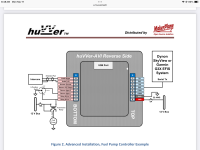
Auto switching for the fuel pump was one of the functions I considered in the early development of the huVVer-AVI instruments. I use the serial data from a Dynon or Garmin EFIS to extract fuel pressure, then automatically switch on the pump. Importantly, there is a manual over-ride.

This was never implemented in the production code, because of the Law of Unintented Consequences. For example, if a fuel line ruptures and pressure drops, do you want the fuel pump to come on automatically? Probably not. Even though you can manually switch it off, why not put the human brain in command of the fuel pump, and just indicate an alarm for low pressure?

IMG_0174.png
 
Last edited:
Many certified planes call for this in their checklists. Maybe a carry over. I do know if you run your tank dry or unport the tank in a side slip you will definitely need that electric fuel pump on to get fuel to the engine driven pump.
Yes, the electric fuel pump on is a critical checklist item for recovering from running an engine dry in a 4-ship at the pitch out lol
Does that invalidate the choice to shut the boost pump off at 1000 ft?
imho and just for me, I'm usually pretty busy at 1,000' and there's no rush to turn it off. 1,000 is pretty low. Why distract myself from scanning for traffic or doing whatever I'm doing in IMC, with something utterly unnecessary? Especially if there's a chance doing it will result in an inflight emergency. I'll turn it off later in the climb or at level off.
 
Think of the why. Engine driven fuel pumps are above the gas tanks and must suck the fuel into them. Boost pumps are lower and don’t require suction for the fuel to enter. Should a pump that uses suction to bring incoming fuel in lose its prime the flow of gas could stop. Pumps can push fluid much higher than pumps that require suction..
 
imho and just for me, I'm usually pretty busy at 1,000' and there's no rush to turn it off. 1,000 is pretty low. Why distract myself from scanning for traffic or doing whatever I'm doing in IMC, with something utterly unnecessary? Especially if there's a chance doing it will result in an inflight emergency. I'll turn it off later in the climb or at level off.
I'm sure everyone has a cockpit routine that works for them. For me, 1000 ft altitude is a point where I'm pretty confident I can return to the runway if the engine fails, and is about where I'm transitioning to cruise-climb power. "Boost pump off" is on that checklist and part of that cruise-climb routine.
 
I think the OP's question has been answered pretty thoroughly here.
One thing that stands out though, is that people run the boost pump when changing tanks. This is pointless.
Yes, I was taught to run the boost pump while changing tanks too. But it is pointless.

The boost pump is downstream of the fuel selector valve. If you change tanks, having the pump on or off can make no difference as to whether there is an un-interrupted flow of fuel as the flow switches from one tank to the other. Normally the fuel lines from each tank are full from the tank to the fuel selector valve. If you had run a tank empty and then re-filled it and had not yet drawn fuel from that tank, there could be a little slug of air in that line, and that air will be drawn along and fed to the engine, whether your boost pump is on or not.
For a carbureted engine, the slug of air won't even show up in the engine running because the carb float bowl will just vent it and I suppose the fuel level in the bowl would drop a little bit until the fresh fuel gets there and quickly fills it back up. For a fuel injected engine, that slug of air is going to make the engine hiccup, regardless of whether the boost pump is on or not. In either case this would be a very unusual thing. Normally the fuel lines are full.

PS having a slug of air in the fuel line is not the same thing as vapor lock.
 
Logic: the fuel in the tanks of a low-wing airplane will be lower than the carburetor (or injector system) and needs to be sucked/pushed to where it needs to get to be useful. There is an engine-driven pump, which was new to me, which was there to do that job. During my flight-testing, there was no way (or desire) to shut off the engine-driven fuel pump to assess what would happen. Logic determined that the engine would not like that, which was a mental way of turning it off. I would need a backup. The electric-driven 'boost pump' was included as part of my fuel system design. It just made sense to have that as a backup. Redundancy is a good thing, especially when it has to do with keeping the engine warm and noisy. Why have two magnetos? Why have two spark plugs in each cylinder? (Yes, I know with this system the fuel burn in the cylinders is more efficient, but it is also redundancy.)

Bottom line: the way I get SuzieQ from the hangar and back to the hangar is based on my previous experiences and my current experiences with this airplane. That is why my fuel pump sequence (ref: post #57) developed during my time as a Test Pilot and since, over hours/years of refining that, is the way it is. If it works for someone else, fine. They can use it as I did back when I was first trying to figure out what was best based on advice from those more experienced than I. They can modify it to suit their airplane and piloting skills. If not, it is likely not going to change how I do things.....unless someone has a really convincing argument as to why it should be changed. I'm always open to advice...................but haven't heard a good argument yet....😊

Or: in the current vernacular: you do you. ;)

LOVE my RV-4!:love: We have learned a lot together and that continues every time we leave the hangar..... She has taught me a lot about flying, flying an RV, and about myself. How can you beat that?? Canopy: down and locked; Seat belts: locked; Boost pump: on; Flaps set: 20 degrees........
 
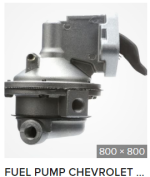
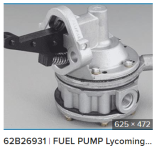
How far will the mechanical fuel pump pull?

Well, let's look at a typical Chevrolet fuel pump in service till the early 90's when FI became popular. This pump pulled gas with a lower RVP than avgas, from the gas tank that was located under the trunk, and pulled it all the way to the front of the motor where the fuel pump was mounted low on the front corner of the block....... The Lyc pump is nothing special
 

Attachments

  • chev p.png
    chev p.png
    66.2 KB · Views: 11
  • lyc p.png
    lyc p.png
    106.6 KB · Views: 11
I think the OP's question has been answered pretty thoroughly here.
One thing that stands out though, is that people run the boost pump when changing tanks. This is pointless.
Yes, I was taught to run the boost pump while changing tanks too. But it is pointless.
I understand the logic behind your thinking (based on general knowledge of science and fluid dynamics) but I will choose to disagree, and will always advocate for using it during tank changes.
Why?
Over the years I have had a few instances where while doing a tank switch at higher altitudes, I have seen a dip in fuel pressure (I always monitor it visually when I switch tanks).
Never enough to cause an engine stumble but enough evidence for me that "something" happens some times. Made a decision to always include use of the pump and have never seen it again.
I see no value/benefit in advocating for not using it... in fact I think promoting that idea takes the conversation backwards a couple of clicks....
 
crash tested/ verified- need boost pump on to recover from air lock/ unported tank. agree with 2,000 ft agl on/off and G of gumps check approaching airport. My vote.
Cal
 
Lots of responses based on theirs or others past experience. Just a reminder that your flight experience in today’s flight is not based on your last flight experience. It is based on the risk designed into the system and the procedure of use. Just because it worked in the past does not guarantee it will work today. Be prepared for the unexpected.
 
Funny this thread is so new. Just got a RV-6 and boost pump use came up. I fly a bunch of different airplanes I try to make sense of why some do and some don't. My only experience with a mechanical pump failing was in the Twin Cessna. I took off with boost bumps on low and when I turned them off the left engine stopped doing engine things and had to run the boost pump on high to keep it worth having... The builder of this RV put a nicely luminated green light when the aux pump is on.
I'm just going to be in the habit of running it anytime a mechanical failure would leave me helpless without the aux pump being on. I haven't read an answer to suggest a downside to that.
 
Think of the why. Engine driven fuel pumps are above the gas tanks and must suck the fuel into them. Boost pumps are lower and don’t require suction for the fuel to enter. Should a pump that uses suction to bring incoming fuel in lose its prime the flow of gas could stop. Pumps can push fluid much higher than pumps that require suction..
All pumps have a NPSHr (Net Pressure Suction Head, required). It can be a positive or negative value. "Boost" pumps (a bit of a misnomer here) are typically positive displacement types and have a pretty decent amount of pick-up (negative NPSH). All pumps are delta P devices. A device's application shouldn't define it, rather the opposite.

How far will the mechanical fuel pump pull?

Well, let's look at a typical Chevrolet fuel pump in service till the early 90's when FI became popular. This pump pulled gas with a lower RVP than avgas, from the gas tank that was located under the trunk, and pulled it all the way to the front of the motor where the fuel pump was mounted low on the front corner of the block....... The Lyc pump is nothing special

Lower system design margins are safely allowed when the effects/severity portion of the FEMA is low. Not truly applicable on aircraft, though it demonstrates the ability/NPSHr of this type of device.
 
Last edited:
I think the OP's question has been answered pretty thoroughly here.
One thing that stands out though, is that people run the boost pump when changing tanks. This is pointless.
Yes, I was taught to run the boost pump while changing tanks too. But it is pointless.

The boost pump is downstream of the fuel selector valve. If you change tanks, having the pump on or off can make no difference as to whether there is an un-interrupted flow of fuel as the flow switches from one tank to the other. Normally the fuel lines from each tank are full from the tank to the fuel selector valve. If you had run a tank empty and then re-filled it and had not yet drawn fuel from that tank, there could be a little slug of air in that line, and that air will be drawn along and fed to the engine, whether your boost pump is on or not.
For a carbureted engine, the slug of air won't even show up in the engine running because the carb float bowl will just vent it and I suppose the fuel level in the bowl would drop a little bit until the fresh fuel gets there and quickly fills it back up. For a fuel injected engine, that slug of air is going to make the engine hiccup, regardless of whether the boost pump is on or not. In either case this would be a very unusual thing. Normally the fuel lines are full.

PS having a slug of air in the fuel line is not the same thing as vapor lock.
I understand the logic behind your thinking (based on general knowledge of science and fluid dynamics) but I will choose to disagree, and will always advocate for using it during tank changes.
Why?
Over the years I have had a few instances where while doing a tank switch at higher altitudes, I have seen a dip in fuel pressure (I always monitor it visually when I switch tanks).
Never enough to cause an engine stumble but enough evidence for me that "something" happens some times. Made a decision to always include use of the pump and have never seen it again.
I see no value/benefit in advocating for not using it... in fact I think promoting that idea takes the conversation backwards a couple of clicks....
concur.
I can think of multiple scenarios for ex. which would result in a diminished, but not closed aperture for fuel, where a boost pump would help

ultimately to each his own but I don't think that statements of absolute are necessary helpful
 
I love this forum. 91 posts on something everybody has an opinion on, and not once has anybody been compared to Hitler.

Here's my $0.02. There are all sorts of different systems that lead to different answers for various engine/airframe combinations. What it boils down to for the original poster with his carbureted Lycoming powered RV6 is this:

q; What harm will it do to have the boost pump on during T.O. and Landing?
a; none that I can think of. I haven't worked on a carburetor since A&P school, but I don't see how it could enrich the mixture unless an extra 6 psi is going to unseat the needle valves. If this were the case, it seems like you would have a flooded engine any time you flipped that switch at any thing less than wide open throttle. Perhaps a carb guru could answer that question specifically?

q; what harm will it do to NOT have it on during T.O. and Landing?
a; if the engine driven pump craps out, the engine will suck the float bowl dry and then quit. At that point, you get to do your restart procedure and hope that it lights off again before you smack the ground.

seems like a no brainer to me. By and large I just can't think of a good reason to not have the boost pump on when I'm close to the ground in most low wing airplanes.
 
To answer the OP's question: I use the pump 100% when below 1000 AGL, and I don't need it at any other time edit: my current procedure doesn't call for its use at any other time (although I'm now rethinking that; see below).

In my carbureted RV-6A, I do NOT use the boost pump when switching tanks, though. I could, but in my opinion, there's no point. The amount of time the selector valve is crossing through the OFF position is so minimal as to be irrelevant. Downstream there are at least two things that act as a "buffer" of sorts in case of a momentary pause in the fuel flow: gascolator, carburetor bowl. edit: It may be different on a fuel-injected system, but at least with a carburetor the carb bowl acts as a "buffer" of sorts in case of a momentary pause in fuel flow. Not sure if the gascolator provides the same function; probably not.

Now, I do monitor for fuel pressure afterward. Here's what I do: After I switch tanks, I put my pointer finger on the EFIS screen edge, below the fuel pressure gauge. I leave my finger there for a minute or so and don't remove it until I have mentally confirmed that the tank switch caused no problems.

---

Ditto the previous comments that turning on a boost pump should have absolutely no effect on mixture OR fuel flow. If it does, there's something else wrong with the system.

I'd suggest you trace the lines and make sure you don't have a return line. A carbureted airplane shouldn't need one, but my system had one installed, and it returned fuel from a point *after* the fuel flow transducer (red cube). So boosting the pressure would cause more fuel to flow around in a circle, and show as a higher fuel flow. See https://vansairforce.net/threads/what-is-this-mystery-fuel-return-line-for.221249/post-1720525

You may also check (on the ground) for leaks in the carburetor when the boost pump is on. My carburetor was leaking fuel anytime the pressure went above 7 psi. I sent it in for repair, and it came back completely leak-free. The float seat had a microscopic defect that was preventing a good seal.


It is all to do with timing. If taking off and landing without the electric pump on and the mechanical pump fails, the reaction time to correctly diagnose the problem and switch on the electric pump can take time or height that is not available.

This is exactly my reasoning. And because of this, it's running 100% when I'm out doing landing practice.

their recommendation was use it continuously ... because it helps with vapor lock.
Risk of vapor lock while in flight, lines are cool, and fuel moving continuously? I initially find that hard to believe. But I'm always here to learn. If running it continuously is safer, maybe I should do that too.


my only concern would be wear from having the boost pump on continuously, and having it fail when you most need it.
Well, if the boost pump is failed when you start the flight, you should notice the difference in sound and see that it's not boosting the pressure. If you're referring to it failing right when you need it because of an engine-driven pump failure, that's a highly unlikely coincidence. To be extra safe, you could install two boost pumps in parallel? :)

I personally am much more worried that the boost pump will fail somehow in a closed position. I've heard of it happening at least once with a Facet pump. Full engine failure, because no more fuel flow. I'm in the middle of installing a bypass line with a one-way valve to protect against that rare possibility.

 
Last edited:
personally am much more worried that the boost pump will fail somehow in a closed position. I've heard of it happening at least once with a Facet pump. Full engine failure
someone mentioned that the booster pump is designed to run continuously, but i could not find any information on the service life. continuously does not mean indefinitely so I try not to overuse it. having the pump fail and block fuel flow - well now i have a new phobia to address 😅
 
someone mentioned that the booster pump is designed to run continuously, but i could not find any information on the service life. continuously does not mean indefinitely so I try not to overuse it. having the pump fail and block fuel flow - well now i have a new phobia to address 😅
I'm sure it depends on the specific pump. My Weldon 8163 is rated for continuous duty. It lasted about 400 tach hours before it started leaking a bit. Cost to replace was about 1 AMU. Heat under the cowl and fuel temps have been a bit of an issue for me. I don't know if that played a role in its demise but the possibility has led me to limit its "on" time.
 
someone mentioned that the booster pump is designed to run continuously, but i could not find any information on the service life. continuously does not mean indefinitely so I try not to overuse it. having the pump fail and block fuel flow - well now i have a new phobia to address 😅
Yes/no/depends. A bit of drift here, sorry.

Mooneys and other certified aircraft were TC'd with Duke boost pumps. Their run-life span was less than 40 hrs. Aeromotive would overhaul them for $550 with an expected life of just over 40 hrs. If I ever forgot to kill the boost after reaching a safe altitude, I'd definitely kick myself. It doesn't appear they've gotten any better. My hangar neighbor just replaced the boost pump in his Piper Saratoga again; second time in just over two years. $3500 not including install labor. While application still demands the proper prudence, be happy you aren't bound by TCs.
 
Just to add fuel to the fire (pun intended)... Back when I was building my LongEZ, there were reports of Facet fuel pump failures which blocked flow to the engine driven pump. When I laid out the firewall, I included a boost pump bypass with an Andair check valve. When you complete the EZ, you have to do a fuel flow check to ensure you can make 2x the max fuel flow without a pump on (and I also checked the bypass only flow). I assume Vans has a similar test, if for nothing else but to remove any debris from the tanks prior to the first engine start. I would imagine that any failures of the Facet pump to pass fuel if they fail would have been corrected by now.

I did have the engine driven pump fail, or at least start to fail. The indications were low fuel pressure on the ground and during run up. I have assumed that this is how they fail. I can't recall any reports of a complete / instantaneous failure of an engine driven pump, only low pressure. Anyone know of an actual case of fuel starvation which wasn't caused by running a tank dry?
 
Just to add fuel to the fire (pun intended)... Back when I was building my LongEZ, there were reports of Facet fuel pump failures which blocked flow to the engine driven pump. When I laid out the firewall, I included a boost pump bypass with an Andair check valve. When you complete the EZ, you have to do a fuel flow check to ensure you can make 2x the max fuel flow without a pump on (and I also checked the bypass only flow). I assume Vans has a similar test, if for nothing else but to remove any debris from the tanks prior to the first engine start. I would imagine that any failures of the Facet pump to pass fuel if they fail would have been corrected by now.

I did have the engine driven pump fail, or at least start to fail. The indications were low fuel pressure on the ground and during run up. I have assumed that this is how they fail. I can't recall any reports of a complete / instantaneous failure of an engine driven pump, only low pressure. Anyone know of an actual case of fuel starvation which wasn't caused by running a tank dry?
 
someone mentioned that the booster pump is designed to run continuously, but i could not find any information on the service life. continuously does not mean indefinitely so I try not to overuse it. having the pump fail and block fuel flow - well now i have a new phobia to address 😅
Many posts here regarding fuel pumps that aren't the Facet click-clack pump usually installed in carbed RVs. Facet pumps have been standard equipment as the sole pump in many automotive applications in particular British sports cars. Wait......maybe that isn't a good datapoint! :LOL: But they are designed for continuous use, I had one in a resto-mod S-10 truck and it was still running perfectly when I sold the truck after several years in service. I still have the original Facet pump in my 1999 RV-6.
 
Last edited:
Anyone know of an actual case of fuel starvation which wasn't caused by running a tank dry?
Yes, happened to me on Sept. 9, 2024 taking off from Telluride, CO for a simple cruise around the area. 1,000’ AGL, turned the boost pump off, the fuel PSI dropped like a rock, yellow then red flashing light, and the engine quit. And, anyone who’s departed Telluride, at that altitude, knows the options aren’t good. Boost pump on, engine regains, and then it’s back to the airport to change my pants.

That’s on an 800 hr. 0-360 that’s been great. Bottom line, lotsa stuff, including fuel pump failures happen to our planes. THAT’S why we have certain procedures. ;)
 
IO-320 9A. I always use mine for take off, turning off in climb above 1k. On again as I am approaching TPA, off once I have weight on mains and flaps retracted which is when I’m committed to staying on the ground.
 
Sorry if I caused thread drift by mentioning the possibility of a Facet pump failing in the closed position, blocking fuel flow. I felt it was mostly related to this thread, since we're talking about backup plans in case a pump fails. But let's keep that topic on a separate thread. I plan to start a new thread to ask the community about the failure + blocking fuel flow scenario, not just the dead pump scenario. I'll also be discussing the idea and design for a bypass line / one-way valve to mitigate this risk. Separate thread; stay tuned.
 
Last edited:
Back
Top