Hopefully an attempt to inform and dispel some common mis-information.
Rotax Myths
- Small boutique maker of engines. Actually BRP is a multi-national company with a 4-5 billion dollar market cap. BRP has produced over 7 million engines across their product lines for over 50 years. The aviation division has produced over 170,000 engines over the last 30 years. Who knows how many drone engines.
- Rotax doesn’t produce certified engines for certified aircraft. Rotax has produced certified engines for a number of airframes and continues to do so. Tecnam, Sling, Cubcrafters, and Van’s use certified engines in SLSA aircraft. There are several European plane manufacturers that use certified engines as well. The small c in the model name indicates a certified engine, e.g. 912isc Sport is the certified version of the 912is.
- Rotax engines are not reliable. Over the years of use, the track record for Rotax aviation engines has been found to be as good, if not better than other engines. The TBO for the 912 and 916 series is 2000 hours with many engines flying beyond that time period.
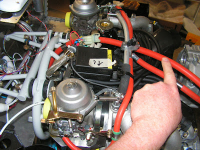
- Rotax is water cooled. In reality the 9xx series is a hybrid engine with the cylinder heads being water cooled and the cylinders being air cooled. As such, shock cooling is not a concern and CHT’s are much more consistent.
- If a Rotax looses all its coolant the engine quits. The engine is designed to handle such an event. With a power reduction the engine may safely be operated up 30 minutes with air cooling only. If the CHTs exceed the temp limit (temp and time) they need to have the hardness tested or the heads replaced. The engine doesn’t just overheat and seize up.
- There is no constant speed prop option. Though not common, all of the 9xx series engines can be equipped with an electric prop governor and variable pitch prop. External mounting pad is available for an additional alternator or vacuum pump. (Hydraulic CS prop setups are also available--Thanks to all that pointed this out)
- Don’t trust the electronics. Like legacy engines Rotax has redundant electrical systems. 2 generators, 2 regulators, 2 ECU units. Further, its has 2 ignition systems and dual fuel injectors per cylinder.
- No service is available. This is a valid complaint in many parts of the USA. Factory approved training is available but limited to a handful of locations. Frankly, the market for A&Ps to learn about Rotax has been stunted by the predominance of the engine in the EAB market. As more SLSA planes come into the market with Rotax engines, the market dynamic is anticipated to correct the shortage.
- I don’t trust an airplane with a gearbox or PSRU. Almost all helicopters have a transmission, otherwise known as a gearbox. Most turboprops with a PT6 engine have a gearbox. A320’s have a gearbox. Gearboxes are not inherently bad. Rotax gearboxes have a slipper clutch and a 30 degree ramp on the coupling from prop shaft to gearbox output shaft. This actually protects the engine during a prop strike and there are relatively simple tests to be done after a prop strike that does not require engine teardown.
- Parts are expensive. Compared to what? Not cheap, but comparable to other aircraft engine manufacturers. Most parts are available within weeks, not months or years.
- Rotax engines don’t use 100LL. Well they do, but the lead does shorten some service intervals. Decalin can be used but Rotax XPS oil has been developed to mitigate the lead effect without Decalin. Many owners try to use mogas but if not available, fly 100LL without problem.
1. You count a huge conglomerate, multi national company which makes EVERYTHING, dozens of companies, ROTAX just one they gobbled up. That is a good thing, giving them resources. In the end it is a boutique (not a negative) Austria engine maker for LSA (non certified but ASTM approved) engines. Cool. It is what it is.
2. No they are NOT certified nor do they have the traceability of a Lyc. They are approved by ASTM committee for LSA's, not certified nor are the planes they go in.
3. Not sure who says that but reliability is directly related to poor maintenance and operations abuse. I do find the Rotax is less tolerant of abuse (my gut opinion).
4. Yes water cooling is great, big radiator is not, heavy, draggy, subject to Van's SB's. However it is indeed water and oil cooled. Lyc is air and oil cooled.
5. Heard it will fly w/o coolant, get you on ground. I'd be concern if it did dump coolant. RV-12iS exhaust pipe runs ridiculously close to water line. A lot of stuff in there, exhaust, water lines, radiator, water tank, oil lines, oil cooler, dry sump oil tank, LANE A/B EFI / EI, coil packs... The exhaust in particular needs a lot of TLC per MM.
6. I personally say NO to electric props.
Curtiss C-46 Commando twin-engine transport known for deadly (electric) propeller malfunctions during WW II.
7. Back up A/B Gens, battery s/b reliable, BUT two magnetos, carb/mechanical FI/mechanical fuel pump is fault resistant. P-Mags (self powered EI) are on a O-360.
8. Have not had to get a Rotax part so no comment, but will say Lycoming has parts from Lycoming and several STC sources, USA made.
9. Trust is their issue. You do have to watch RPM on ground, not back drive, 100LL fuel lead coats gears. Direct drive has it's charm. I say do as you like fly more.
10. Parts? Not sure but a Rotax with cylinder issues, may replace them. Not horrible but not cheap, and Lycoming comparable. Again Lyc pars have several sources.
11. Yep I know Rotax drivers who don't hunt down 93 Oct ethanol free we have in area, and/or don't use additive with 100LL Avgas. I looked at their plugs. Yep.
I would not say these are myths, as they all have some validity or are preferences and observations. Points are valid for discussion, but again, we are talking Apples and Oranges. There is no right and wrong. A high Rev small displacement geared engines vs bigger more powerful direct drive certified aircraft engines. I do say certified counts due to QC and traceability, but Rotax does a great job of making engines. However Rotax SB's... too much thread locker blocking oil passage, over heating coils, cotter pins, fuel pumps... Not throwing stones, Lyc has had spurious issues as well, but
TWO THINGS ARE TRUE, they are both good engines with Pros and Cons and TOTALLY different missions. You can't compare. No myth.