

Van's Air Force

The definitive Van's Aircraft support community! Buying, building or flying an RV? Join our exclusive family of mentors and enthusiasts!

Rotax Myths

docjjrmd

Well Known Member
Benefactor
Hopefully an attempt to inform and dispel some common mis-information.
Rotax Myths
  1. Small boutique maker of engines. Actually BRP is a multi-national company with a 4-5 billion dollar market cap. BRP has produced over 7 million engines across their product lines for over 50 years. The aviation division has produced over 170,000 engines over the last 30 years. Who knows how many drone engines.
  2. Rotax doesn’t produce certified engines for certified aircraft. Rotax has produced certified engines for a number of airframes and continues to do so. Tecnam, Sling, Cubcrafters, and Van’s use certified engines in SLSA aircraft. There are several European plane manufacturers that use certified engines as well. The small c in the model name indicates a certified engine, e.g. 912isc Sport is the certified version of the 912is.
  3. Rotax engines are not reliable. Over the years of use, the track record for Rotax aviation engines has been found to be as good, if not better than other engines. The TBO for the 912 and 916 series is 2000 hours with many engines flying beyond that time period.
  4. Rotax is water cooled. In reality the 9xx series is a hybrid engine with the cylinder heads being water cooled and the cylinders being air cooled. As such, shock cooling is not a concern and CHT’s are much more consistent.
  5. If a Rotax looses all its coolant the engine quits. The engine is designed to handle such an event. With a power reduction the engine may safely be operated up 30 minutes with air cooling only. If the CHTs exceed the temp limit (temp and time) they need to have the hardness tested or the heads replaced. The engine doesn’t just overheat and seize up.
  6. There is no constant speed prop option. Though not common, all of the 9xx series engines can be equipped with an electric prop governor and variable pitch prop. External mounting pad is available for an additional alternator or vacuum pump. (Hydraulic CS prop setups are also available--Thanks to all that pointed this out)
  7. Don’t trust the electronics. Like legacy engines Rotax has redundant electrical systems. 2 generators, 2 regulators, 2 ECU units. Further, its has 2 ignition systems and dual fuel injectors per cylinder.
  8. No service is available. This is a valid complaint in many parts of the USA. Factory approved training is available but limited to a handful of locations. Frankly, the market for A&Ps to learn about Rotax has been stunted by the predominance of the engine in the EAB market. As more SLSA planes come into the market with Rotax engines, the market dynamic is anticipated to correct the shortage.
  9. I don’t trust an airplane with a gearbox or PSRU. Almost all helicopters have a transmission, otherwise known as a gearbox. Most turboprops with a PT6 engine have a gearbox. A320’s have a gearbox. Gearboxes are not inherently bad. Rotax gearboxes have a slipper clutch and a 30 degree ramp on the coupling from prop shaft to gearbox output shaft. This actually protects the engine during a prop strike and there are relatively simple tests to be done after a prop strike that does not require engine teardown.
  10. Parts are expensive. Compared to what? Not cheap, but comparable to other aircraft engine manufacturers. Most parts are available within weeks, not months or years.
  11. Rotax engines don’t use 100LL. Well they do, but the lead does shorten some service intervals. Decalin can be used but Rotax XPS oil has been developed to mitigate the lead effect without Decalin. Many owners try to use mogas but if not available, fly 100LL without problem.
 
Last edited:
Hopefully an attempt to inform and dispel some common mis-information.
Rotax Myths
  1. Small boutique maker of engines. Actually BRP is a multi-national company with a 4-5 billion dollar market cap. BRP has produced over 7 million engines across their product lines for over 50 years. The aviation division has produced over 170,000 engines over the last 30 years. Who knows how many drone engines.
  2. Rotax doesn’t produce certified engines for certified aircraft. Rotax has produced certified engines for a number of airframes and continues to do so. Tecnam, Sling, Cubcrafters, and Van’s use certified engines in SLSA aircraft. There are several European plane manufacturers that use certified engines as well. The small c in the model name indicates a certified engine, e.g. 912isc Sport is the certified version of the 912is.
  3. Rotax engines are not reliable. Over the years of use, the track record for Rotax aviation engines has been found to be as good, if not better than other engines. The TBO for the 912 and 916 series is 2000 hours with many engines flying beyond that time period.
  4. Rotax is water cooled. In reality the 9xx series is a hybrid engine with the cylinder heads being water cooled and the cylinders being air cooled. As such, shock cooling is not a concern and CHT’s are much more consistent.
  5. If a Rotax looses all its coolant the engine quits. The engine is designed to handle such an event. With a power reduction the engine may safely be operated up 30 minutes with air cooling only. If the CHTs exceed the temp limit (temp and time) they need to have the hardness tested or the heads replaced. The engine doesn’t just overheat and seize up.
  6. There is no constant speed prop option. Though not common, all of the 9xx series engines can be equipped with an electric prop governor and variable pitch prop. External mounting pad is available for an additional alternator or vacuum pump.
  7. Don’t trust the electronics. Like legacy engines Rotax has redundant electrical systems. 2 generators, 2 regulators, 2 ECU units. Further, its has 2 ignition systems and dual fuel injectors per cylinder.
  8. No service is available. This is a valid complaint in many parts of the USA. Factory approved training is available but limited to a handful of locations. Frankly, the market for A&Ps to learn about Rotax has been stunted by the predominance of the engine in the EAB market. As more SLSA planes come into the market with Rotax engines, the market dynamic is anticipated to correct the shortage.
  9. I don’t trust an airplane with a gearbox or PSRU. Almost all helicopters have a transmission, otherwise known as a gearbox. Most turboprops with a PT6 engine have a gearbox. A320’s have a gearbox. Gearboxes are not inherently bad. Rotax gearboxes have a slipper clutch and a 30 degree ramp on the coupling from prop shaft to gearbox output shaft. This actually protects the engine during a prop strike and there are relatively simple tests to be done after a prop strike that does not require engine teardown.
  10. Parts are expensive. Compared to what? Not cheap, but comparable to other aircraft engine manufacturers. Most parts are available within weeks, not months or years.
  11. Rotax engines don’t use 100LL. Well they do, but the lead does shorten some service intervals. Decalin can be used but Rotax XPS oil has been developed to mitigate the lead effect without Decalin. Many owners try to use mogas but if not available, fly 100LL without problem.

Hopefully an attempt to inform and dispel some common mis-information.
Rotax Myths
  1. Small boutique maker of engines. Actually BRP is a multi-national company with a 4-5 billion dollar market cap. BRP has produced over 7 million engines across their product lines for over 50 years. The aviation division has produced over 170,000 engines over the last 30 years. Who knows how many drone engines.
  2. Rotax doesn’t produce certified engines for certified aircraft. Rotax has produced certified engines for a number of airframes and continues to do so. Tecnam, Sling, Cubcrafters, and Van’s use certified engines in SLSA aircraft. There are several European plane manufacturers that use certified engines as well. The small c in the model name indicates a certified engine, e.g. 912isc Sport is the certified version of the 912is.
  3. Rotax engines are not reliable. Over the years of use, the track record for Rotax aviation engines has been found to be as good, if not better than other engines. The TBO for the 912 and 916 series is 2000 hours with many engines flying beyond that time period.
  4. Rotax is water cooled. In reality the 9xx series is a hybrid engine with the cylinder heads being water cooled and the cylinders being air cooled. As such, shock cooling is not a concern and CHT’s are much more consistent.
  5. If a Rotax looses all its coolant the engine quits. The engine is designed to handle such an event. With a power reduction the engine may safely be operated up 30 minutes with air cooling only. If the CHTs exceed the temp limit (temp and time) they need to have the hardness tested or the heads replaced. The engine doesn’t just overheat and seize up.
  6. There is no constant speed prop option. Though not common, all of the 9xx series engines can be equipped with an electric prop governor and variable pitch prop. External mounting pad is available for an additional alternator or vacuum pump.
  7. Don’t trust the electronics. Like legacy engines Rotax has redundant electrical systems. 2 generators, 2 regulators, 2 ECU units. Further, its has 2 ignition systems and dual fuel injectors per cylinder.
  8. No service is available. This is a valid complaint in many parts of the USA. Factory approved training is available but limited to a handful of locations. Frankly, the market for A&Ps to learn about Rotax has been stunted by the predominance of the engine in the EAB market. As more SLSA planes come into the market with Rotax engines, the market dynamic is anticipated to correct the shortage.
  9. I don’t trust an airplane with a gearbox or PSRU. Almost all helicopters have a transmission, otherwise known as a gearbox. Most turboprops with a PT6 engine have a gearbox. A320’s have a gearbox. Gearboxes are not inherently bad. Rotax gearboxes have a slipper clutch and a 30 degree ramp on the coupling from prop shaft to gearbox output shaft. This actually protects the engine during a prop strike and there are relatively simple tests to be done after a prop strike that does not require engine teardown.
  10. Parts are expensive. Compared to what? Not cheap, but comparable to other aircraft engine manufacturers. Most parts are available within weeks, not months or years.
  11. Rotax engines don’t use 100LL. Well they do, but the lead does shorten some service intervals. Decalin can be used but Rotax XPS oil has been developed to mitigate the lead effect without Decalin. Many owners try to use mogas but if not available, fly 100LL without problem.
Well written. I just completed both the IRMT Service and Maintenance courses last week. It was an excellent training and learning experience of the 9 series of Rotax engines. I am flying behind a 912ULS in my ELSA registered RV-12 and I feel more confident and competent in serving and maintaining my engine. I am so glad that I took this training and I highly recommend it to any owner/builder who wants to be hands-on with their RV-12 or any aircraft with the 9 series Rotax engine.
 
Great response to the thread full of false or subjective information. I almost did the same but decided not to feed the troll.

If I am not mistaken, they also support hydraulic CS setups.
 
Great response to the thread full of false or subjective information. I almost did the same but decided not to feed the troll.

If I am not mistaken, they also support hydraulic CS setups.
I must have missed something good!

Correct regard prop setups.
 
I must have missed something good!

Correct regard prop setups.
 
I am currently flying behind an O-360 angle valve, but have flown 912UL (100 hp) and the 915iS.

I much prefer the Rotax engines, it was not an option due to W&B on my Bearhawk.

IF Rotax had a 180+ HP (preferably 200) I would put it on the -15 build, but it will be a IO-390

Being a conspiracy theorist I do believe Rotax has 180’s and likely 200 hp engines in military drones currently flying.

They are simple to fly and very reliable.
 
Ohhhhh yeah that one. I as in and out fast since I have seen that whole AI fencepost too many times before.

I'll beat up the Rotax a little bit since we're here. I'm finding a minor disadvantage to my 912is this week as I make plans to fly the Hayward Air Rally. We're rookies in a tough field so it's just a father/daughter flying weekend with no expectation to really be competitive, but it's still fun to try. Anyway, with the FADEC controls along with general engine efficiency we aren't left with much to work the fuel burn. The thirsty engines with mixture control can make some fuel flow changes, but we have to take what we can get.

In past years they have handed out a 'least fuel burned' side award. I think if we wanted to completely bail on the overall score we could get up high and fly the course with pure fuel efficiency as the goal. Depending on what the field looks like Saturday morning we could decide to do that.

So there's a problem with the Rotax. It's not intuitive, but too efficient and consistent to be much help when trying to game the air rally scoring matrix.
 
Ohhhhh yeah that one. I as in and out fast since I have seen that whole AI fencepost too many times before.

I'll beat up the Rotax a little bit since we're here. I'm finding a minor disadvantage to my 912is this week as I make plans to fly the Hayward Air Rally. We're rookies in a tough field so it's just a father/daughter flying weekend with no expectation to really be competitive, but it's still fun to try. Anyway, with the FADEC controls along with general engine efficiency we aren't left with much to work the fuel burn. The thirsty engines with mixture control can make some fuel flow changes, but we have to take what we can get.

In past years they have handed out a 'least fuel burned' side award. I think if we wanted to completely bail on the overall score we could get up high and fly the course with pure fuel efficiency as the goal. Depending on what the field looks like Saturday morning we could decide to do that.

So there's a problem with the Rotax. It's not intuitive, but too efficient and consistent to be much help when trying to game the air rally scoring matrix.
FADEC aside what a great excuse to go flying with your daughter! Who cares if you win. -JJR
 
Great response to the thread full of false or subjective information. I almost did the same but decided not to feed the troll.

If I am not mistaken, they also support hydraulic CS setups.
They do. We had that on our Diamond DA20-A1.
 
Rotax doesn’t produce certified engines for certified aircraft. Rotax has produced certified engines for a number of airframes and continues to do so. Tecnam, Sling, Cubcrafters, and Van’s use certified engines in SLSA aircraft.
In addition to SLSAs, the Rotax 912 series is also used in aircraft with regular FAR 23 type certificates, like the Tecnam P2006T (normal category, twin engine) and Diamond DA20-A1 (utility category).
 
Since your goal is to dispel misinformation, the Vans SLSA is equipped with a 912iS Sport - not the 912iSc Sport.
 
Since your goal is to dispel misinformation, the Vans SLSA is equipped with a 912iS Sport - not the 912iSc Sport.
Meant my statement to be generic, "certified" means different things in different countries. Canada, Europe, S Africa, and other countries all have different takes on it. You are correct that Vans puts 912is Sports in their SLSA. Perhaps I should also point out, that in the Austrian factory where the engines are built there is no difference in the parts, process, or testing of the engines. Only whats on the model plate, and the plate itself is different. The point being made was Rotax builds "certified" engines and they are designated with the "c" in the model name for FAR 23 planes. With that said, all Rotax engines in the USA are "certified" to the ASTM standard which is what Van's uses in the -12. Thanks for clarifying my poorly worded statement.
See Rotax Certifications .
 
Good post. In regards to item #8 about finding service, I think this is partially mitigated by the well-written technical manuals that Rotax makes freely available for their engines. The Line Maintenance and Heavy Maintenance manuals are well organized, thorough and well illustrated, making it much easier for owners to understand how the engine works and to service it themselves (to the degree they're comfortable with, experimentals only). And the one time I needed professional help to troubleshoot an issue, a quick visit to flyrotax.com showed several iRMTs in my area that were available to help (and the one I called was fantastic to work with).

Combined with the nicely done iRMT classes (I've taken the Service course), the wealth of maintenance information at RotaxOwner.com, and the super helpful folks at Lockwood Aviation that go out of their way to answer questions and help troubleshoot, I feel well-supported with my Rotax engine. It may not be as easy as going to the numerous local A&Ps that understand Lycoming and Continental engines, but there are many service resources available for Rotax owners with just a little effort. Also note that with the changes made by MOSAIC, many more EAB owners will soon be able to do their own maintenance on Rotax-powered airplanes.
 
I've done the iRMT classes twice: at Rotec Canada in BC in 2014, and in 2024 at Lockwood, from whom I bought my engine, which we successfully ran for the first time on Saturday. Can't stress how much they did for my knowledge of the engine, personally I think the Service course should be mandatory for people new to the Rotax engine, and I plan to take a refresher course every so often. Or at least watch videos on https://rotax-owner.com/en/

The 2014 class is documented here: https://seareybuild.blogspot.com/2014_10_20_archive.html
The 2024 class became an article in Kitplanes: https://www.kitplanes.com/university-of-rotax/


Here's the morning of the Service Class at Lockwood by Dean, graciously allowed to be posted to youtube by Lockwood Aviation. Not airline ground school intense, but you gotta show up with your A game.


Last edited:

Hopefully an attempt to inform and dispel some common mis-information.
Rotax Myths
  1. Small boutique maker of engines. Actually BRP is a multi-national company with a 4-5 billion dollar market cap. BRP has produced over 7 million engines across their product lines for over 50 years. The aviation division has produced over 170,000 engines over the last 30 years. Who knows how many drone engines.
  2. Rotax doesn’t produce certified engines for certified aircraft. Rotax has produced certified engines for a number of airframes and continues to do so. Tecnam, Sling, Cubcrafters, and Van’s use certified engines in SLSA aircraft. There are several European plane manufacturers that use certified engines as well. The small c in the model name indicates a certified engine, e.g. 912isc Sport is the certified version of the 912is.
  3. Rotax engines are not reliable. Over the years of use, the track record for Rotax aviation engines has been found to be as good, if not better than other engines. The TBO for the 912 and 916 series is 2000 hours with many engines flying beyond that time period.
  4. Rotax is water cooled. In reality the 9xx series is a hybrid engine with the cylinder heads being water cooled and the cylinders being air cooled. As such, shock cooling is not a concern and CHT’s are much more consistent.
  5. If a Rotax looses all its coolant the engine quits. The engine is designed to handle such an event. With a power reduction the engine may safely be operated up 30 minutes with air cooling only. If the CHTs exceed the temp limit (temp and time) they need to have the hardness tested or the heads replaced. The engine doesn’t just overheat and seize up.
  6. There is no constant speed prop option. Though not common, all of the 9xx series engines can be equipped with an electric prop governor and variable pitch prop. External mounting pad is available for an additional alternator or vacuum pump. (Hydraulic CS prop setups are also available--Thanks to all that pointed this out)
  7. Don’t trust the electronics. Like legacy engines Rotax has redundant electrical systems. 2 generators, 2 regulators, 2 ECU units. Further, its has 2 ignition systems and dual fuel injectors per cylinder.
  8. No service is available. This is a valid complaint in many parts of the USA. Factory approved training is available but limited to a handful of locations. Frankly, the market for A&Ps to learn about Rotax has been stunted by the predominance of the engine in the EAB market. As more SLSA planes come into the market with Rotax engines, the market dynamic is anticipated to correct the shortage.
  9. I don’t trust an airplane with a gearbox or PSRU. Almost all helicopters have a transmission, otherwise known as a gearbox. Most turboprops with a PT6 engine have a gearbox. A320’s have a gearbox. Gearboxes are not inherently bad. Rotax gearboxes have a slipper clutch and a 30 degree ramp on the coupling from prop shaft to gearbox output shaft. This actually protects the engine during a prop strike and there are relatively simple tests to be done after a prop strike that does not require engine teardown.
  10. Parts are expensive. Compared to what? Not cheap, but comparable to other aircraft engine manufacturers. Most parts are available within weeks, not months or years.
  11. Rotax engines don’t use 100LL. Well they do, but the lead does shorten some service intervals. Decalin can be used but Rotax XPS oil has been developed to mitigate the lead effect without Decalin. Many owners try to use mogas but if not available, fly 100LL without problem.
All internal combustion engines, other than marine engines and I suppose rocket engines, are air cooled. :)
 
All internal combustion engines, other than marine engines and I suppose rocket engines, are air cooled. :)
I just removed the radiator and hoses from my Jeep. Why carry around all that unnecessary weight?

Heck. Even the Porsche 911 is water cooled these days....
 
Is considerable and meticulous maintenance required for Rotax engines to remain reliable? Answer -- a big YES from Phil Lockwood himself.

 
Last edited:
I appreciate this post as someone who has a little time flying behind Rotax engines, but no hands-on maintenance experience. There are a few Rotax-powered homebuilts that appeal to me, and if I ever decide to build one of these I'll definitely go take a course and learn everything I can about the engine. Knowing the basics of Rotax maintenance would probably help with one of my chief concerns, which is lack of knowledgeable mechanics within convenient distance.

Honest questions I have about these engines, help me fix my ignorance:

I understand the use of leaded fuel requires additives or more frequent oil changes, but from the post above it sounds like there is now a different oil that provides a workaround for this?

For the non-FADEC engines, I seem to read a lot about people having to fiddle endlessly with carburetors. Is this something you have to do frequently, or is what I see on the internet just skewed by people posting about their problems?

Do you ever get used to how quickly the prop comes to a stop when you shut it down? Every time I've completed a flight in a Rotax-powered airplane I always feel like I'm going to find a handful of gear teeth sitting under the cowl! :)
 
Do you ever get used to how quickly the prop comes to a stop when you shut it down? Every time I've completed a flight in a Rotax-powered airplane I always feel like I'm going to find a handful of gear teeth sitting under the cowl!
Do you ever get used to how long it takes to not only shut down but also how many cranks to start a non-Rotax aviation engine? I fly both Rotax and Lycoming (more time in Lycoming) and am annoyed every time. Running a Rotax is like running a Lexus: Turn the key and it starts; shut down the lanes and the engine stops. I remember my grandmother's 1968 Galaxy 500 Fastback that she would turn off, remove the key and get to the front door before the engine quit chugging.

Another bonus to Rotax is I NEVER carry a liter of oil in the RV-12 and have NEVER had to add oil between oil changes. Try that in a traditional aviation engine.
 
Last edited:

Do you ever get used to how long it takes to not only shut down but also how many cranks to start a non-Rotax aviation engine? I fly both Rotax and Lycoming (more time in Lycoming) and am annoyed every time. Running a Rotax is like running a Lexus: Turn the key and it starts; shut down the lanes and the engine stops.

Another bonus to Rotax is I NEVER carry a liter of oil in the RV-12 and have NEVER had to add oil between oil changes. Try that in a traditional aviation engine.
Not really -- after replacing the original light-weight Skytec with a B&C starter and two pumps on the throttle while cranking, my trusty O-320-D2A cranks briskly and starts right up! And no -- with the oil separator I'm using and even running Lycoming's recommended 8-quarts, I only use 1-quart every 25-hours. Belly stays nice and clean, too! (y)
 
Another bonus to Rotax is I NEVER carry a liter of oil in the RV-12 and have NEVER had to add oil between oil changes. Try that in a traditional aviation engine.
And, it only needs 3 L of oil at oil change, even with a new filter!
 
Honest questions I have about these engines, help me fix my ignorance:

I understand the use of leaded fuel requires additives or more frequent oil changes, but from the post above it sounds like there is now a different oil that provides a workaround for this?

The use of leaded fuel does not require additives. This is a wives tale that grew to be the conventional wisdom, because reasons. It's logical that additives could offer some benefit, but that exists in the minds of Experimental Amateur Petrochemists. For a person following Rotax documentation there is no requirement or benefit to using an additive with leaded fuels.

The new oil spec that you're thinking of does not provide any workaround to leaded fuels either, at least so far as the change intervals are the same. The new oil is a synthetic oil that Rotax has formulated and tested and approved for use with leaded fuels. This is a pretty big step, since synthetic oils have generally been a problem with leaded fuels, with a lot of people familiar with the Mobil AV1 debacle. People like to run synthetics, particularly important for the later turbo engines, and now there is an ability to do that.

For the non-FADEC engines, I seem to read a lot about people having to fiddle endlessly with carburetors. Is this something you have to do frequently, or is what I see on the internet just skewed by people posting about their problems?

There is typical carb maintenance involved, some scheduled and some just common points of wear/failure like the infamous sinking-floats. I would not say you have to endlessly fiddle, but they are certainly more maintenance intensive than the FI engine. I have seen/heard a few different places that the estimate is that for an owner paying a mechanic, the rule of thumb is that over 1,000 hours the extended maintenance intervals, service requirements, and fuel savings cover the cost difference between ULS/IS engines.


Do you ever get used to how quickly the prop comes to a stop when you shut it down? Every time I've completed a flight in a Rotax-powered airplane I always feel like I'm going to find a handful of gear teeth sitting under the cowl! :)

It's a little unsettling. I'm used to it, doesn't bother me. I kinda get a kick out the hysterics some use to describe it (not pointing at you, I mean other techs and pilots I come across in trainings and such)
 
I would be concerned and taking a very close look if an owner brought be a 912 that needed a quart in 25 hours.
Well -- considering we were talking Lycoming engine, 25-hours is very good oil consumption. I also change my oil and filter every 25-hours to prevent combustion acids from building-up, causing internal engine corrosion and damage. I would think that would also apply to Rotax engines unless you're flying every few days, which is hard to do during the winter season.
 
The one thing I like about most fuel injected Rotax engines is the turbo charger for reaching the higher altitudes. However, if the turbo were to fail over the Rocky Mountains for instance, not sure what that would bring? :unsure:
 
Well -- considering we were talking Lycoming engine,

Well -- Consider this is a thread is actually about Rotax. You felt a need to insert defensive comparisons or poke fun, so here we are. All in fun, I understand.

25-hours is very good oil consumption. I also change my oil and filter every 25-hours to prevent combustion acids from building-up, causing internal engine corrosion and damage. I would think that would also apply to Rotax engines unless you're flying every few days, which is hard to do during the winter season.

The Rotax oil change interval is 100 hours if using unleaded fuel, or leaded fuel less than 30% of the time. If using leaded fuel it is 50 hours.

I understand your position on combustion acids and corrosion to match up with guidance from Lycoming so it's probably a good idea. Similar to auto engines, this is generally not a problem with the 9 series Rotax engines.
 
The one thing I like about most fuel injected Rotax engines is the turbo charger for reaching the higher altitudes. However, if the turbo were to fail over the Rocky Mountains for instance, not sure what that would bring? :unsure:

These engines are reliable and we figured out turbo charging a while ago. Anything can fail, but I'd put a turbo down the list a bit.
 
Is considerable and meticulous maintenance required for Rotax engines to remain reliable? Answer -- a big YES from Phil Lockwood himself.

Not sure what point you are trying to make. This holds true for any engine used to power an aircraft.
 
Well -- Consider this is a thread is actually about Rotax. You felt a need to insert defensive comparisons or poke fun, so here we are. All in fun, I understand.
No -- I was simply saying that my original statement was regarding 25-hour oil changes for my Lycoming O-320-D2A and simply responding to the post above about non Rotax owners needing to carry oil with them when they fly. I find your statement very odd and off-color to say the least?? :oops:
 
No -- I was simply saying that my original statement was regarding 25-hour oil changes for my Lycoming O-320-D2A and simply responding to the post above about non Rotax owners needing to carry oil with them when they fly. I find your statement very odd and off-color to say the least?? :oops:
Sure man, sure. Your posts are all still there for us to see.

Glad you enjoy your plane and your engine. I love them all. My current build will have a Lycoming.

Not sure what point you are trying to make. This holds true for any engine used to power an aircraft.

I'm not the only one to notice. The funny part is that this whole thread started because of insecure Lyc dudes in the one you linked. :ROFLMAO:
 
Last edited:
Not sure what point you are trying to make. This holds true for any engine used to power an aircraft.
Specifically -- Phil Lockwood's comments in the video to his class regarding the big difference in the Rotax design and its usage vs other traditional aircraft engines and why that requires more meticulous maintenance practices than traditional aircraft engines -- that's all. He also compares the Rotax design to a motorcycle engine desgin, which is very different than a traditional aircraft engine -- right? Phil Lockwood's comment about higher RPM and higher work loads simply caught my attention, so I felt it was wroth mentioning in the thread, especially because Phil Lockwood is actually the guy that created the Rotax 916 RV-9A conversion kit.
 
Last edited:
These engines are reliable and we figured out turbo charging a while ago. Anything can fail, but I'd put a turbo down the list a bit.
Well -- I know of two instances that the turbo inter-cooler hose came loose after the hose clamp slipped-off. That caused a total loss of turbo boost into the inter-cooler, where the power dropped-off to 40-percent in a high-density altitude environment. So, it can and has happened. I was just curious what the non-turbo service ceiling is for a Rotax 912 -- that's all.
 
Last edited:
From the RV-12 POH:
View attachment 118890

Here's a video of somebody flying their ULS to over 17,000.
Wow -- so, Vans has the RV-12, 912-ULS service ceiling at 13,000 feet and the RV-12, 912-iS at 17,300 feet, but someone actually climbed to 17,000 with the ULS carbureted model? The Bing 64 constant velocity (CV) carburetors compensate to 5,000 feet then keep getting richer after that -- much like motorcycle CV carburetors.
 
This is 12,500 over Tioga Pass on a Sierra crossing last week. That portion of the climb was at about 300 FPM and 90 TAS but it was a little bumpy and inconsistent so I wouldn't bet on those numbers. What was clear is there was plenty climb performance to go higher and I would have been glad to take a couple thousand feet more.

When I got home from this trip, I ordered an Aerox O2 system.


mono.jpg
 
Ignorance breeds fear. The point of this thread was to inform and educate, not to sell anyone that one engine was better or worse, or even to draw comparisons to Lycoming or Continental. Rotax is a different engine than Lycoming, period. I urge anyone flying to be well informed about what ever power plant they are flying behind. I highly recommend taking the time and energy to attend the Rotax technical training if you are flying behind a Rotax.
To add to the myth list myths:

12. Decalin is required to fly with 100LL. It is not needed, required, or even suggested to be used by Rotax. The oil change interval is cut in half to 50 hours vs 100 hours.
13. ULS carburetors are finicky. Not really. The Bing carburetors are actually relatively simple and work well. The mixture is vacuum controlled and the mixture auto meters with atmospheric pressure. The bad rap frequently comes from the need to balance the 2 carbs. There is a learning curve as anybody who has synced carbs on a motorcycle, MG, Triumph or boat can attest to. You need the right tools and knowledge base. Once those are in hand, its not all that hard or time consuming.
14. Vapor lock is common. Not if the operator is paying attention to whats in the fuel tank. Vapor lock can occur with any engine. Due to the large number Rotax engines flying on auto gas, there may be more incidents of vapor lock reported. As has been covered elsewhere, the risk of vapor lock can be reduced knowing what seasonal fuel mix is in the tank, making sure boost pumps are in use, adequate fuel pressure is being maintained, circulating fuel from "cool" tank to "hot" lines and reducing heat soaking post flight if possible.
 
This is 12,500 over Tioga Pass on a Sierra crossing last week. That portion of the climb was at about 300 FPM and 90 TAS but it was a little bumpy and inconsistent so I wouldn't bet on those numbers. What was clear is there was plenty climb performance to go higher and I would have been glad to take a couple thousand feet more.

When I got home from this trip, I ordered an Aerox O2 system.


View attachment 118892
Your RV-12 is the 912-iS (fuel injected) model -- correct? Van's shows that model having a 17,300 service ceiling -- really good! But, since the RV-12 ULS is a dual constant velocity (CV) carbureted engine, without a mixture control and only altitude compensates to 5000 feet, wouldn't going higher than the specified service ceiling of 13,000 feet cause the engine to run richer and richer as you go higher than the service ceiling?
 
Well -- I know of two instances that the turbo inter-cooler hose came loose after the hose clamp slipped-off. That caused a total loss of turbo boost into the inter-cooler, where the power dropped-off to 40-percent in a high-density altitude environment......

The intercooler on the 916 is Rotax supplied. The mounting position, hose connections to intercooler are airframe specific provided by the manufacturer as are clamps. If the clamp slipped off I would be concerned about hose size, clamp style, and / or clamp torque. I agree, popping off a turbo hose would result in lack of boost and decrease in power but this particular issue is outside of Rotax design and control. It is part of the design and provision of the FWF provider, usually the aircraft manufacturer.
 
I urge anyone flying to be well informed about what ever power plant they are flying behind. I highly recommend taking the time and energy to attend the Rotax technical training if you are flying behind a Rotax.

To this point, the Lycoming service school in Williamsport is an informative week and a really good time. Each day is roughly half classroom and half lab, along with a pretty thorough tour of the Lycoming factory. Highly recommended.

Thinking about doing Continental's school this year too, just because it's fun to go learn engine stuff.
 
Ignorance breeds fear. The point of this thread was to inform and educate, not to sell anyone that one engine was better or worse, or even to draw comparisons to Lycoming or Continental. Rotax is a different engine than Lycoming, period. I urge anyone flying to be well informed about what ever power plant they are flying behind. I highly recommend taking the time and energy to attend the Rotax technical training if you are flying behind a Rotax.
To add to the myth list myths:

12. Decalin is required to fly with 100LL. It is not needed, required, or even suggested to be used by Rotax. The oil change interval is cut in half to 50 hours vs 100 hours.
13. ULS carburetors are finicky. Not really. The Bing carburetors are actually relatively simple and work well. The mixture is vacuum controlled and the mixture auto meters with atmospheric pressure. The bad rap frequently comes from the need to balance the 2 carbs. There is a learning curve as anybody who has synced carbs on a motorcycle, MG, Triumph or boat can attest to. You need the right tools and knowledge base. Once those are in hand, its not all that hard or time consuming.
14. Vapor lock is common. Not if the operator is paying attention to whats in the fuel tank. Vapor lock can occur with any engine. Due to the large number Rotax engines flying on auto gas, there may be more incidents of vapor lock reported. As has been covered elsewhere, the risk of vapor lock can be reduced knowing what seasonal fuel mix is in the tank, making sure boost pumps are in use, adequate fuel pressure is being maintained, circulating fuel from "cool" tank to "hot" lines and reducing heat soaking post flight if possible.
I think that's what I was attempting to add with Phil Lockwood's comments form his Rotax service training video. And, since Van's will be offering Phil Lockwood's RV-916iS, RV-9A conversion kit very soon (really cool beans!), comparing the 916iS Rotax to the O-320 Lycoming for the RV-9A is a VERY important and relevant thing to discuss in this thread. And, I'm not saying one is better than than the other -- I'm just adding information from a Rotax and RV-9A expert (Phil Lockwood). (y):cool:(y)

1779933792751.png1779933887806.png
 
Last edited:
Your RV-12 is the 912-iS (fuel injected) model -- correct? Van's shows that model having a 17,300 service ceiling -- really good! But, since the RV-12 ULS is a dual constant velocity (CV) carbureted engine, without a mixture control and only altitude compensates to 5000 feet, wouldn't going higher than the specified service ceiling of 13,000 feet cause the engine to run richer and richer as you go higher than the service ceiling?

I think everything you are saying is correct, except that I don't know the max compensation altitude off hand. What you are describing is definitely why we see the different service/absolute ceiling for the USL and IS.

The carbs can be jetted for higher altitude operation. It's generally not recommended to mess with this unless you are really flying often under otherwise unusual circumstances. Someone really shooting for max ceiling on a ULS might find some gains by playing with the jetting.
 
Do you ever get used to how quickly the prop comes to a stop when you shut it down? Every time I've completed a flight in a Rotax-powered airplane I always feel like I'm going to find a handful of gear teeth sitting under the cowl! :)

If you think Sensenich 2-Blade prop stops quickly… you need to experience 3-Blade E-Prop. Total weight of complete prop assembly including fasteners is 4.4 lbs.
 
As has been covered elsewhere, the risk of vapor lock can be reduced knowing what seasonal fuel mix is in the tank, making sure boost pumps are in use, adequate fuel pressure is being maintained, circulating fuel from "cool" tank to "hot" lines and reducing heat soaking post flight if possible.
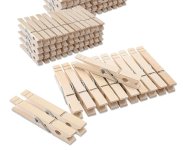
Many, many (many) years ago I had a 1972 BMW Bavaria with the 3.0-liter M30B30 inline-six that was factory equipped with dual Zenith carburetors. Not only were the carbs difficult (impossible) to keep synced but vapor lock was a constant annoyance. The only "fix" for the vapor lock was placing wooden clothespins along the fuel lines.

clothepins.jpg

This IS NOT recommended in an aviation application!
 
Couple of points-
Rotax engines do not burn oil generally, but they are dry sump engines. The circulating oil is forced back from the sump to the oil reservoir by engine blow by. There is constant pressure relief from the oil tank overboard. This will carry some oil vapor and micro droplets out over time. My experience is adding about 0.1 L every 10 hours or so. Also, filling the tank beyond halfway on the dipstick seems to accelerate the loss.

Secondly, semisynthetic oil is very slippery. It is less adherent to engine components over long intervals. There may be benefit to mineral oils if engines are left sitting for long intervals.

fd
 
I just removed the radiator and hoses from my Jeep. Why carry around all that unnecessary weight?

Heck. Even the Porsche 911 is water cooled these days....
both air cooled

the water is just the medium to get the heat to the air

that's the what the radiator is for

on a marine engine you either cycle raw water through a heat exchanger (a water/water "radiator") or run the closed circuit side to a keel cooler which is essentially the same thing.

even jet engines (a form of internal combustion engine) is air cooled.
 
Back
Top