

Van's Air Force
You are using an out of date browser. It may not display this or other websites correctly.
You should upgrade or use an alternative browser.
You should upgrade or use an alternative browser.
Running Mogas/Autofuel in a IO 360 ?
- Thread starter Python
- Start date

BoydBirchler
Well Known Member
The local Indiana/Indianapolis area has Landmark (Farm Bureau?) has 90 octane non alcohol gasoline. I run it in my IO-360 PV 180 hp engine. I retard the timing 2 degrees to get a larger detonation margine, but I have friends who run the full data tag timing (25 degrees) and so far no one has had any problems.
Cautions: do not carry over winter blend into the warmer late spring temperatures. It is alright to carry over summer blend into the winter. I would say I do use 25 or maybe 30% 100LL because thats what is available on XC's. Almost all my flights are LOP mixture. I've run this way for near 1000 hours.
Cautions: do not carry over winter blend into the warmer late spring temperatures. It is alright to carry over summer blend into the winter. I would say I do use 25 or maybe 30% 100LL because thats what is available on XC's. Almost all my flights are LOP mixture. I've run this way for near 1000 hours.
Last edited:
BoydBirchler
Well Known Member
PS: I did remove the gascolator. The theory being; it was a place to boil fuel and cause problems. I have a large screen fillter ahead of the boost pump, to catch any debreas coming from the fuel tanks. I sump any potential water from the wing tank drains.
How clean are the pistons & valves?I've been running Walmart 93 octane (with ethanol) in my parallel valve IO360 for 10 years now, just over 2000 hours.
rmarshall234
Well Known Member
What is your compression ratio / Engine model designation ?I've been running Walmart 93 octane (with ethanol) in my parallel valve IO360 for 10 years now, just over 2000 hours.
Norman CYYJ
Well Known Member
I have been using mogas for 20 years when I can get it and no problems and the plugs are clean as a whistle and so are the valves and piston top.How clean are the pistons & valves?

Lots of people on this forum run mogas in their io-360. Considerations are compression, timing, fuel system compatibility, and ethanol content.
I've burned all kinds of mogas both with and without ethanol and the only problems I have seen is occasional low vapor pressure (use boost pump to avoid it) and fuel cap gasket swelling (changed them to Viton). I did get a service notice from Andair that they needed to do an upgrade on the fuel pump due to mogas incompatibility, but that was after I had already run a few hundred hours on mogas.
From time to time I use 100LL when mogas is not available, or very inconvenient.
Once flying, I can't perceive any difference. It might be interesting to throw all my data into a statistical analysis engine to see if it can detect any differences - perhaps Savvy or Flysto will add this someday.
I've burned all kinds of mogas both with and without ethanol and the only problems I have seen is occasional low vapor pressure (use boost pump to avoid it) and fuel cap gasket swelling (changed them to Viton). I did get a service notice from Andair that they needed to do an upgrade on the fuel pump due to mogas incompatibility, but that was after I had already run a few hundred hours on mogas.
From time to time I use 100LL when mogas is not available, or very inconvenient.
Once flying, I can't perceive any difference. It might be interesting to throw all my data into a statistical analysis engine to see if it can detect any differences - perhaps Savvy or Flysto will add this someday.

Toobuilder
Well Known Member
Many threads on this subject if you do a search.Hi, does anyone have any experience ( not opinion) in running Mogas/Autofuel ( nil ethanol) in a 180hp parallel valve IO 360, I’ve noticed some models ARE on the approved list from Lycoming. Thanks in advance.

They look almost new - very low deposits, I run obsessively lean of peak. With just over 2000 hours on the engine my compressions are still 78 and 79, and I burn a quart of oil in about 25 hours.How clean are the pistons & valves?
A couple samples from my annual a few months back, but these are typical.
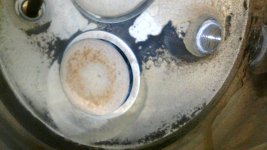
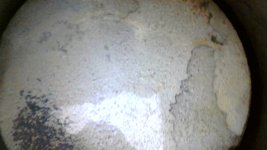
I still have a lot of crosshatching visible.
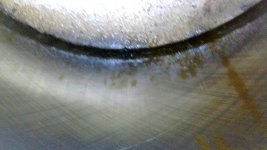
Last edited:
M1B with 8.5 standard compression, SDS engine control.What is your compression ratio / Engine model designation ?
Last edited:
rmarshall234
Well Known Member
Thx. 8 1/2 to one seems like the limit, I’m not sure it would work well with 9:1 and certainly not above that. That’s a nice set-up you have and the pics and your results tell the story. It’s nice and clean in there.M1B with 8.5 standard compression, SDS engine control.
 .
.I’ve been working (slowly) towards switching over to auto gas bc like you, I know that lead is the enemy. My Bonanza has low compression and is already approved (with a cheap and easy STC) and my biplane - even though a high performance airplane - was built with 8.5:1 pistons. Still burning 100LL in both of them but a change is coming soon!
rmarshall234
Well Known Member
Vapor pressure is a problem. There are multiple ways to solve it, search here is your friend.I have always been paranoid about vapor lock in the IO-360 so I have ran exclusively 100LL in mine. I may consider filling up one tank and giving it a try in cruise after reading this thread.
If you are running standard bendix injection, remove the engine driven fuel pump and install a pair of electrics (in parallel for safety), run the pressure up to 40-45 psig using a Borla regulator referenced to manifold pressure. That will keep any vapor bubbles from forming upstream of the servo, but you can still get them downstream. Now change out the standard .028 orifices in the injector body to .024 and it will raise the pressure in the servo-to-injector line to stop the bubbles there as well. The higher fuel pressure is required to be able to make full flow rate through the smaller injectors. The Bendix system will happily tolerate the higher pressure, I tested mine to 55 and ran it at 45 for just over 800 hours.
Or install SDS.
Good info here. FYI, I and many others run .024 restrictors and 25 PSI is more than adequate. In fact, they still operate down to the 12-14 PSI range like the 028's. Clearly the higher pressure you run is far superior for avoiding vapor and a great idea. Just wanted to clear up the required part.Vapor pressure is a problem. There are multiple ways to solve it, search here is your friend.
If you are running standard bendix injection, remove the engine driven fuel pump and install a pair of electrics (in parallel for safety), run the pressure up to 40-45 psig using a Borla regulator referenced to manifold pressure. That will keep any vapor bubbles from forming upstream of the servo, but you can still get them downstream. Now change out the standard .028 orifices in the injector body to .024 and it will raise the pressure in the servo-to-injector line to stop the bubbles there as well. The higher fuel pressure is required to be able to make full flow rate through the smaller injectors. The Bendix system will happily tolerate the higher pressure, I tested mine to 55 and ran it at 45 for just over 800 hours.
Or install SDS.

Had an IO360-M1B and ran 91 Octane autogas and never had a problem. And the difference was night and day on the spark plugs. The engine was quite happy. The only time I exercised additional caution was in the spring when some tanks hadn't switched to the summer blend and the temperatures were warming. But other than that, it was all good, especially on the bottom line.
Last edited:

flyabq
Active Member
What did you change in the rest of the plane to get that to work without issues?I've been running Walmart 93 octane (with ethanol) in my parallel valve IO360 for 10 years now, just over 2000 hours.
This is a 2-part question - materials, and pressures. I would not recommend this for carbureted engines so I'll confine my remarks to an injected setup.What did you change in the rest of the plane to get that to work without issues?
For the materials - remove all rubber components between the filler cap and the engine block. These need to be replaced with Viton, Teflon, or Fluorosilicone. This includes, but may not be limited to (for your particular installation), the O-rings in the fuel cap (there are two - one big and one small), in the tank sump drain, the fuel lines from the tank to the cockpit, the O-rings and seals in the fuel selector valve (Andair comes with the right material), any sealing O-rings in the fuel filter bodies, the fuel pump internals themselves, and the internals for the servo, the distributor block, and all fuel lines. Airflow Performance and Bendix injection systems have used fluorosilicone elastomers since, to my knowledge, 1987 - so if you have a new one or recently rebuilt one, you should be good. Selective purchase of fuel filters, or replacement of the O-rings in them, will be necessary. All flexible hoses should use Teflon lines inside, I recommend Tom here on this forum, he will know exactly what you need.
Pressures - the trick here is to keep all pressure-drop plumbing AWAY from the pre-pump area. No drilled 90-degree fittings, use aluminum tubing or flex-hose with gentle loops as a first preference. Prefilters between the tank and pumps, if used (I recommend) should be at least 80 micron and fairly large to prevent pressure drop across them. I use this one - prefilter- for my pre-pump filter. Then the lines to the fuel tank selector - same story, gentle bends, no sharp radius - and again same story from the fuel tank selector to the fuel pump, which should be electric (dual in parallel for safety) and not engine driven. Heat is the enemy here - the engine driven fuel pump is a cardinal sin in the world of a properly designed, hydraulically correct fuel system and should not exist on modern aircraft. Same goes for a firewall forward gascolator - it serves no purpose on RV aircraft and only adds heat to the fuel. After the pumps, there is no longer any real worry about boiling with the fuel under pressure, so no real design concerns with fittings and flow restriction as long as you don't go crazy. A post-pump final filter to protect the injectors themselves should be about 40 micron - I use this one - postfilter.
From there, up front to the servo and distributor if you are running standard injection, or to the electronic injector bodies for SDS or EFII. For SDS or EFII they use a return line that recirculates excess fuel back to the tanks through a Borla pressure regulator holding backpressure of about 40 psi (relative to the manifold pressure) on the fuel FWF, and dumping the rest to the tanks. This pressure on the fuel between the pumps and the regulator stops it from boiling, and the returned fuel going back to the tanks stops it from getting hot enough to want to.
Double firesleeve all your FWF fuel lines for insulation. Replace the standard .028 restrictors in the AFP or Bendix injectors with .024 orifice.
Have you implemented a convenient way to get auto gas to your plane? No airports near me sell it.This is a 2-part question - materials, and pressures. I would not recommend this for carbureted engines so I'll confine my remarks to an injected setup.
For the materials - remove all rubber components between the filler cap and the engine block. These need to be replaced with Viton, Teflon, or Fluorosilicone. This includes, but may not be limited to (for your particular installation), the O-rings in the fuel cap (there are two - one big and one small), in the tank sump drain, the fuel lines from the tank to the cockpit, the O-rings and seals in the fuel selector valve (Andair comes with the right material), any sealing O-rings in the fuel filter bodies, the fuel pump internals themselves, and the internals for the servo, the distributor block, and all fuel lines. Airflow Performance and Bendix injection systems have used fluorosilicone elastomers since, to my knowledge, 1987 - so if you have a new one or recently rebuilt one, you should be good. Selective purchase of fuel filters, or replacement of the O-rings in them, will be necessary. All flexible hoses should use Teflon lines inside, I recommend Tom here on this forum, he will know exactly what you need.
Pressures - the trick here is to keep all pressure-drop plumbing AWAY from the pre-pump area. No drilled 90-degree fittings, use aluminum tubing or flex-hose with gentle loops as a first preference. Prefilters between the tank and pumps, if used (I recommend) should be at least 80 micron and fairly large to prevent pressure drop across them. I use this one - prefilter- for my pre-pump filter. Then the lines to the fuel tank selector - same story, gentle bends, no sharp radius - and again same story from the fuel tank selector to the fuel pump, which should be electric (dual in parallel for safety) and not engine driven. Heat is the enemy here - the engine driven fuel pump is a cardinal sin in the world of a properly designed, hydraulically correct fuel system and should not exist on modern aircraft. Same goes for a firewall forward gascolator - it serves no purpose on RV aircraft and only adds heat to the fuel. After the pumps, there is no longer any real worry about boiling with the fuel under pressure, so no real design concerns with fittings and flow restriction as long as you don't go crazy. A post-pump final filter to protect the injectors themselves should be about 40 micron - I use this one - postfilter.
From there, up front to the servo and distributor if you are running standard injection, or to the electronic injector bodies for SDS or EFII. For SDS or EFII they use a return line that recirculates excess fuel back to the tanks through a Borla pressure regulator holding backpressure of about 40 psi (relative to the manifold pressure) on the fuel FWF, and dumping the rest to the tanks. This pressure on the fuel between the pumps and the regulator stops it from boiling, and the returned fuel going back to the tanks stops it from getting hot enough to want to.
Double firesleeve all your FWF fuel lines for insulation. Replace the standard .028 restrictors in the AFP or Bendix injectors with .024 orifice.

akschu
Well Known Member
I have a 74 gallon tank in my truck, but that doesn’t help when traveling.
In my opinion having a good pump and filter setup for transferring the fuel is very important. Many that run mogas use 5 gallon gas cans, but that’s a great way to transfer all kinds of crap into your tank, I run everything through a goldenrod filter before the fuel spout.
In my opinion having a good pump and filter setup for transferring the fuel is very important. Many that run mogas use 5 gallon gas cans, but that’s a great way to transfer all kinds of crap into your tank, I run everything through a goldenrod filter before the fuel spout.
If you use a secure-on pump cap for an electric fuel transfer pup on the 5-gallon can, I don't see a particular danger unless you fill up at the gas station during a dust storm. As with anything, care in keeping all fuel free of contaminants is key.I have a 74 gallon tank in my truck, but that doesn’t help when traveling.
In my opinion having a good pump and filter setup for transferring the fuel is very important. Many that run mogas use 5 gallon gas cans, but that’s a great way to transfer all kinds of crap into your tank, I run everything through a goldenrod filter before the fuel spout.
That's a big piece of the puzzle, yes. In my case I'm one of the lucky ones, I have a lot of acreage and a private strip so no "big brother" looking over my shoulder - but also no fuel on location. I took a 125-gallon stainless chemical tank that we had surplus, steamcleaned it, put it in a one of the tote frames that are used for 265-gallon chemical vessels, and use that for my 93E10 supply with a 12-volt pump. I forklift it by means of the tote fork pockets into the back of my pickup when it's empty and it goes to town for a refill. With two airplanes sucking on that fuel we go through a tank in about 4-6 weeks, so no real chance for it to get stale. I have a 3-pound vapor spring on the filler cap to prevent the lighter ends of the fuel mix from evaporating to atmosphere as well.Have you implemented a convenient way to get auto gas to your plane? No airports near me sell it.

Greg,That's a big piece of the puzzle, yes. In my case I'm one of the lucky ones, I have a lot of acreage and a private strip so no "big brother" looking over my shoulder - but also no fuel on location. I took a 125-gallon stainless chemical tank that we had surplus, steamcleaned it, put it in a one of the tote frames that are used for 265-gallon chemical vessels, and use that for my 93E10 supply with a 12-volt pump. I forklift it by means of the tote fork pockets into the back of my pickup when it's empty and it goes to town for a refill. With two airplanes sucking on that fuel we go through a tank in about 4-6 weeks, so no real chance for it to get stale. I have a 3-pound vapor spring on the filler cap to prevent the lighter ends of the fuel mix from evaporating to atmosphere as well.
I’d be interested in what you are using for your igintion, and if you adjusted the timing to fire a couple of degrees early to compensate for the faster mogas burn (as compared to 100LL).
Carl
Good point.Greg,
I’d be interested in what you are using for your igintion, and if you adjusted the timing to fire a couple of degrees early to compensate for the faster mogas burn (as compared to 100LL).
Carl
In the initial version of my airplane, for the first 800 hours, I was running Klaus Saviers electronic ignition (both upper and lower plugs) along with the standard Bendix injection. I had this set at the standard 25 degrees BTDC without any modification. I found a few deep dark secret corners of the operating envelope that I wasn't happy with (at the time I was also using 91 octane with ethanol, as 93 was not yet available around me) where I could induce detonation with a hot engine and high manifold pressure. That was partly what pushed me to rip all that out and install the full SDS system from Ross, both ignition and injection. With that setup I'm able to adjust the timing map wherever I want. I run basic 25 degrees from 4000' pressure altitude and up, with it further retarding a degree for 2500'-4000' at 24 degrees, 1500-2500' at 23 degrees, and 22 degrees below 1500' for those trips I make to sea-level airports. Important to note here this is NOT based on actual altitude, but based on the manifold pressure the system is seeing - so I can be at an airport on the coast and run with partial throttle at 25 degrees, and as I add throttle the system will automatically pull out timing as the manifold pressure comes up, and add back the timing as the manifold pressure comes down. I set it up that way to avoid going into detonation during a go-around with the pilot being task-saturated, the engine can take care of itself and doesn't need my attention.
The second part of that is LOP operation. For a lean mixture, the flame front propagation speed is significantly lower, so it takes longer to reach peak cylinder pressure in the combustion chamber. There is an optimum crank angle on the crankshaft where you really want the peak chamber pressure to be located on the timing map for best mechanical extraction of the energy (17 degrees after TDC if I recall), so if the peak pressure happens later because the fire is burning slower, you need to light the fire earlier so you arrive at peak pressure in the cylinder at the optimum point on the crankshaft rotation. (more education on this subject - search John Deakin and "Pelican Perch" articles he wrote). For this reason I use the "LOP" button on my SDS controller to automatically add 4 degrees of advance as I go to lean of peak operations, putting me at 29 degrees BTDC for WOTLOP cruise at altitude. During initial testing I was able to fairly reliably induce detonation at 32 degrees if I tried it - so I backed off 3 degrees for my standard "set it and forget it" cruise configuration.
Last edited:
Thanks Greg. Good gouge.Good point.
In the initial version of my airplane, for the first 800 hours, I was running Klaus Saviers electronic ignition (both upper and lower plugs) along with the standard Bendix injection. I had this set at the standard 25 degrees BTDC without any modification. I found a few deep dark secret corners of the operating envelope that I wasn't happy with (at the time I was also using 91 octane with ethanol, as 93 was not yet available around me) where I could induce detonation with a hot engine and high manifold pressure. That was partly what pushed me to rip all that out and install the full SDS system from Ross, both ignition and injection. With that setup I'm able to adjust the timing map wherever I want. I run basic 25 degrees from 4000' pressure altitude and up, with it further retarding a degree for 2500'-4000' at 24 degrees, 1500-2500' at 23 degrees, and 22 degrees below 1500' for those trips I make to sea-level airports. Important to note here this is NOT based on actual altitude, but based on the manifold pressure the system is seeing - so I can be at an airport on the coast and run with partial throttle at 25 degrees, and as I add throttle the system will automatically pull out timing as the manifold pressure comes up, and add back the timing as the manifold pressure comes down. I set it up that way to avoid going into detonation during a go-around with the pilot being task-saturated, the engine can take care of itself and doesn't need my attention.
The second part of that is LOP operation. For a lean mixture, the flame front propagation speed is significantly lower, so it takes longer to reach peak cylinder pressure in the combustion chamber. There is an optimum crank angle on the crankshaft where you really want the peak chamber pressure to be located on the timing map for best mechanical extraction of the energy (17 degrees after TDC if I recall), so if the peak pressure happens later because the fire is burning slower, you need to light the fire earlier so you arrive at peak pressure in the cylinder at the optimum point on the crankshaft rotation. (more education on this subject - search John Deakin and "Pelican Perch" articles he wrote). For this reason I use the "LOP" button on my SDS controller to automatically add 4 degrees of advance as I go to lean of peak operations, putting me at 29 degrees BTDC for WOTLOP cruise at altitude. During initial testing I was able to fairly reliably induce detonation at 32 degrees if I tried it - so I backed off 3 degrees for my standard "set it and forget it" cruise configuration.
I agree on the LightSpeed point. The typical LightSpeed timing goes from 25 degrees BTDC to 42 degrees BTDC. I worked a dual LightSpeed install where both boxes had a failed MAP unit. The timing light showed 42+ degrees regardless of RPM or MP. They got sent back to Klaus for repair.
I set up my pMags to go from 25 to 34 degrees (i.e timing jumper in) and find this to be a good match for my LOP operations. CHTs run cool and no detonation while running 100LL. Engine is a IO-360-M1B with standard 8.5 pistons.
I’m thinking I’ll drop the timing to 23 to 32 degrees for using 93E10 (no place to get ethonal free 93 mogas). I may keep a little more fuel flow during the typical take off climb (sea lever to 9K’) as a start for taking data. I’ll also start with no more than 50% 93E10.
On the new RV-10 I’m running dual six cylinder pMags. I added the “FIXED/VARIABLE” timing swith on the panel and will keep it at ~23 degrees fixed pending post engine breaking testing. On the six cylinder pMags you set both base timing and max advance. I will work up to a max of no more than 9 degrees.
Carl
I am surprised you were getting detonation lop at lower maps on 93 octane. Would not have expected that.Good point.
In the initial version of my airplane, for the first 800 hours, I was running Klaus Saviers electronic ignition (both upper and lower plugs) along with the standard Bendix injection. I had this set at the standard 25 degrees BTDC without any modification. I found a few deep dark secret corners of the operating envelope that I wasn't happy with (at the time I was also using 91 octane with ethanol, as 93 was not yet available around me) where I could induce detonation with a hot engine and high manifold pressure. That was partly what pushed me to rip all that out and install the full SDS system from Ross, both ignition and injection. With that setup I'm able to adjust the timing map wherever I want. I run basic 25 degrees from 4000' pressure altitude and up, with it further retarding a degree for 2500'-4000' at 24 degrees, 1500-2500' at 23 degrees, and 22 degrees below 1500' for those trips I make to sea-level airports. Important to note here this is NOT based on actual altitude, but based on the manifold pressure the system is seeing - so I can be at an airport on the coast and run with partial throttle at 25 degrees, and as I add throttle the system will automatically pull out timing as the manifold pressure comes up, and add back the timing as the manifold pressure comes down. I set it up that way to avoid going into detonation during a go-around with the pilot being task-saturated, the engine can take care of itself and doesn't need my attention.
The second part of that is LOP operation. For a lean mixture, the flame front propagation speed is significantly lower, so it takes longer to reach peak cylinder pressure in the combustion chamber. There is an optimum crank angle on the crankshaft where you really want the peak chamber pressure to be located on the timing map for best mechanical extraction of the energy (17 degrees after TDC if I recall), so if the peak pressure happens later because the fire is burning slower, you need to light the fire earlier so you arrive at peak pressure in the cylinder at the optimum point on the crankshaft rotation. (more education on this subject - search John Deakin and "Pelican Perch" articles he wrote). For this reason I use the "LOP" button on my SDS controller to automatically add 4 degrees of advance as I go to lean of peak operations, putting me at 29 degrees BTDC for WOTLOP cruise at altitude. During initial testing I was able to fairly reliably induce detonation at 32 degrees if I tried it - so I backed off 3 degrees for my standard "set it and forget it" cruise configuration.
I was beating on the engine pretty hard at that point - exploring the corners of the envelope. Not what you would call "standard ops" but I wanted to see the edge of the map.I am surprised you were getting detonation lop at lower maps on 93 octane. Would not have expected that.

Edit - the detonation I was inducing at 32 degrees was down low, with a hot engine, high manifold pressure and high CHT. NOT standard cruise. As I said, I was off the reservation, knew it, and was exploring it. I believe that the best insurance you can have against a risk is to completely understand that risk.
Last edited:
