If one considers the numerous variables involved in operating these units, it becomes clear that both we and the manufacturer each have important roles to play.
Consider the tolerance window associated with the following:
- Component manufacturing
- PCB assembly
- Unit assembly
- Testing processes
All of these steps are performed by professionals skilled in their respective fields, and we should assume they are applying the best analytical and statistical practices available.
On the user side, however, we have additional variables:
- Installation quality and variance, timing...
- Proper wiring practices, connectors, grounding
- Cooling strategy, placement, and airflow management
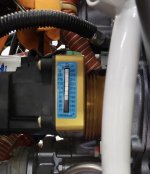
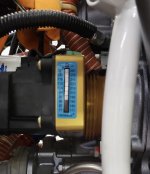
- Monitoring practices (such as temperature strips)
- Operational management — for example, whether the oil door is opened soon after flight
This illustrates how the user side often carries greater vulnerability to mishaps due to operational and installation-related factors.
In systems design and reliability engineering, there is a concept often referred to as tolerance stack-up or cumulative tolerance analysis, where the variability of every component and process step is combined to estimate overall system reliability.
Having worked in this field for years, the end-user installation and operational environment often becomes the largest source of variability in overall system reliability. EI systems should be treated more like avionics or electronic control systems than “install and forget” mechanical components. Many of us are aware of the common failure mechanisms and incorporate protective features into our systems accordingly. Others are still learning these lessons through experience.