

Van's Air Force

The definitive Van's Aircraft support community! Buying, building or flying an RV? Join our exclusive family of mentors and enthusiasts!

Fuel Leak - Repair Ideas

N8DAV8R

Well Known Member
Friend
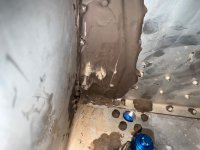
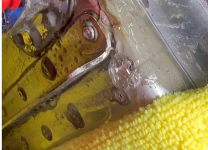
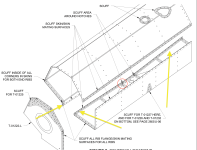
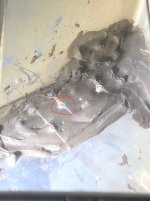
I am working on an RV-12is with a leaky fuel tank. I was able to see the leak with some bubble solution and light pressure. The leak is coming from somewhere in the long seam that joins the top and bottom skins, on the rear-bottom side of the tank. I was kind of hoping that the leak was coming from the plate with the fittings or mount, but unfortunately it is coming from the seam.

So far I think my best shot at this repair is to remove the sender plate and try to re-seal that seam with a bead of sealant on the inside. I'd love to hear any other ideas.
Screenshot 2025-12-15 at 1.58.48 PM.pngScreenshot 2025-12-15 at 1.19.31 PM.png
 
Nate; I concur with your approach if you can adequately reach the area leaking. Does the tank have the filter access port installed? It is too small to increase access but may allow improved visualization during repair. If not installed might suggest it as you will be into the tank with Proseal anyway.
 
Nate; I concur with your approach if you can adequately reach the area leaking. Does the tank have the filter access port installed? It is too small to increase access but may allow improved visualization during repair. If not installed might suggest it as you will be into the tank with Proseal anyway.
It does not have the port. I ordered the SL kit for that last week expecting to need to get in there anyway.
 
I am working on an RV-12is with a leaky fuel tank. I was able to see the leak with some bubble solution and light pressure. The leak is coming from somewhere in the long seam that joins the top and bottom skins, on the rear-bottom side of the tank. I was kind of hoping that the leak was coming from the plate with the fittings or mount, but unfortunately it is coming from the seam.

So far I think my best shot at this repair is to remove the sender plate and try to re-seal that seam with a bead of sealant on the inside. I'd love to hear any other ideas.


View attachment 104801View attachment 104802
Q
I am working on an RV-12is with a leaky fuel tank. I was able to see the leak with some bubble solution and light pressure. The leak is coming from somewhere in the long seam that joins the top and bottom skins, on the rear-bottom side of the tank. I was kind of hoping that the leak was coming from the plate with the fittings or mount, but unfortunately it is coming from the seam.

So far I think my best shot at this repair is to remove the sender plate and try to re-seal that seam with a bead of sealant on the inside. I'd love to hear any other ideas.


View attachment 104801View attachment 104802

I am working on an RV-12is with a leaky fuel tank. I was able to see the leak with some bubble solution and light pressure. The leak is coming from somewhere in the long seam that joins the top and bottom skins, on the rear-bottom side of the tank. I was kind of hoping that the leak was coming from the plate with the fittings or mount, but unfortunately it is coming from the seam.

So far I think my best shot at this repair is to remove the sender plate and try to re-seal that seam with a bead of sealant on the inside. I'd love to hear any other ideas.

View attachment 104801View attachment 104802
On my Mk 1 RV12 had a weeping tank. Was recommended to use green Loctite 290 which wicks into the seam. Took a couple of applications but no further leaks after nearly 5 years checked at every annual.
 
On my Mk 1 RV12 had a weeping tank. Was recommended to use green Loctite 290 which wicks into the seam. Took a couple of applications but no further leaks after nearly 5 years checked at every annual.
Never heard of that technique. Will give it a try when my next fuel leak shows up. Thx.
 
WOW, I learn something new everyday. Henkel Adhesives indicates this will work, they don’t specifically say to use it for this purpose but say it cures to a highly resistant thermoset polymer resistant to many fluids including gasoline. Additionally they say it can fill tiny gaps in metal surfaces if applied exactly as directed.
 
Just a thought about RV-12 fuel tanks in general... I’m not familiar with how the fuel tank mounts in the 12iS but if it is similar to the legacy RV-12, then a word of caution…. the legacy RV-12 mounts the fuel tank so there is about ¼” of space between the bottom of the tank and the baggage floor. I think this is done to prevent chaffing if the tank bottom were to rub on the metal floor. With the weight of 20 gallons of fuel it might be possible that the tank bottom could sag especially in turbulence.

My concern is the space under the tank is a natural place for things to lodge. This concern is heightened by the fact that the tank is located in the baggage compartment where lots of loose things can emerge. One thing that is always top-of-mind is the screws that mount the rear baggage bulkhead. I am extremely careful not to drop a screw and have it lodge under the tank. The nightmare scenario is that the screw would chafe a hole in the bottom of the tank. Not good….

What I have done to alleviate this concern is to place a sheet of cork under the tank to fill the void and prevent foreign object damage (FOD). Fuel tanks are often mounted with cork to prevent chaffing, so this isn’t an original thought, just a new application.
 
Just a thought about RV-12 fuel tanks in general... I’m not familiar with how the fuel tank mounts in the 12iS but if it is similar to the legacy RV-12, then a word of caution…. the legacy RV-12 mounts the fuel tank so there is about ¼” of space between the bottom of the tank and the baggage floor. I think this is done to prevent chaffing if the tank bottom were to rub on the metal floor. With the weight of 20 gallons of fuel it might be possible that the tank bottom could sag especially in turbulence.

My concern is the space under the tank is a natural place for things to lodge. This concern is heightened by the fact that the tank is located in the baggage compartment where lots of loose things can emerge. One thing that is always top-of-mind is the screws that mount the rear baggage bulkhead. I am extremely careful not to drop a screw and have it lodge under the tank. The nightmare scenario is that the screw would chafe a hole in the bottom of the tank. Not good….

What I have done to alleviate this concern is to place a sheet of cork under the tank to fill the void and prevent foreign object damage (FOD). Fuel tanks are often mounted with cork to prevent chaffing, so this isn’t an original thought, just a new application.
I, like Piper J3, am aware that small "things" (mainly dropped bulkhead/floor screws) could get trapped under the legacy fuel tank. Accordingly I fashion a suitably long/thin piece of cardboard and occasionally swipe it under the tank to ensure that there are no errant screws or other debris stuck between the tank bottom and floor.
 
This thread is timely because I am on my second RV-12 leaking tank repair. The first leak a couple of years ago was around a rivet in the lower right side of the tank. The current leak is around the screws in the lower left side of the tank. In both cases when I examined the Proseal around these leaking fasteners it appeared "chalky", cracked, and crumbled easily. Anyone care to guess why that is? It sure doesn't seal well when it is like this.

IMG_E2363.JPG IMG_7101.jpg

In the second picture you will also notice there are a bunch of pull rivets that have never had the pleasure of being introduced to Proseal. Yet they don't seem to leak. Part of me says go ahead and give them a swirl from the inside while I have the tank open. The other part of me say they don't currently leak so leave them alone. There are a bunch of them and would be a royal PITA to coat them all with Proseal.

BTW, I didn't build this tank. That's my story and I am sticking to it. :)
 
Glad to see some follow up activity on this thread. I have not taken any steps on the repair yet, still waiting on my order with the pro-seal and SL kit parts.

I did get a response from Van's with guidance to seal up from the inside with pros-seal after cleaning with solvent and scuffing. No real big ideas or unexpected suggestions, but I appreciate getting something back at all.

I plan to repair as they suggest. It seems that the Loc-tite product and a slight vacuum might be a good first step even with the intention to seal from the inside. Belt and suspenders, as they say.
 
to amplify on Piper J3's comments regarding the mounting of the legacy tanks: I had a very annoying leak from my first factory built tank. I would pull the tank, try to find it with bubble soap, etc., but it would not leak on the bench. I even filled it with fuel and it stayed dry. Replaced it in the plane, filled it up and the next day would be a puddle of leaking fuel.

I finally found the leak by suspending the tank using its mounting holes instead of sitting it on a bench. When suspended and filled w/ fuel, the leak appeared on a bottom seam. If only I had known the Green Loctite trick back then...
 
When I did the SB to install mounting flange doublers and frangible bolts, I removed the entire top of the tank to get good access. Easy job to inspect clean/scuff and add ProSeal with top of tank removed. I did this work ten years ago and zero leaks….
 
I did get a response from Van's with guidance to seal up from the inside with pros-seal after cleaning with solvent and scuffing. No real big ideas or unexpected suggestions, but I appreciate getting something back at all.
Did Vans recommend a specific solvent?
 
Glad to see some follow up activity on this thread. I have not taken any steps on the repair yet, still waiting on my order with the pro-seal and SL kit parts.

I did get a response from Van's with guidance to seal up from the inside with pros-seal after cleaning with solvent and scuffing. No real big ideas or unexpected suggestions, but I appreciate getting something back at all.

I plan to repair as they suggest. It seems that the Loc-tite product and a slight vacuum might be a good first step even with the intention to seal from the inside. Belt and suspenders, as they say.
Many years ago a Mooney aficionado, Norm Smith, made an anerobic sealer (similar to Loc-tite 290) for seeps in Mooney wet wings. The process used a slight vacuum, spray the weep with (I believe) Trichloroethane to clean the leak pathway and then, after a few minutes, spray on the anerobic sealer, remove the vacuum within a 20 seconds or so. I used the process a few times with good success.
 
Update: The order for pro-seal and the SL kit took a while to get out the door so the tank was just sitting around until I can open it up and seal from the inside. That really does seem like the best practice, but the Loctite 290 solution was interesting. I had read various success stories from people, some with cleaning and vacuum as Boyd describes and others saying they just applied the sealant and that worked too. Seems like a learning opportunity and worth a shot. I ordered some Loctite 290.

The area had already been cleaned with lots of soap and water for the leak testing, at least as far as surface contaminants. I did wipe again with some acetone on a paper towel just to eliminate any remaining oils. I applied the 290, gave it a few seconds then wiped it away. I repeated this a few times along with some mechanical encouragement with an acid brush and the dull side of a blade to massage the sealant and maybe encourage wicking. My eyes and brain were looking at runny green fluid screaming that this will never work. I came back 2 hours later and tested the system as before, no more leak...it seems to have actually worked.

I still plan to open the tank and seal with pro-seal from the inside. Belt and suspenders seems appropriate for a leaky tank that you practically sit on. At the very least, It think the 290 solution is good to be aware in a pinch in order to make it home, the next inspection, or a parts shipment.

Note: This is an 'off label' use of Loctite 290 so the instructions do no reference leak repair. What they do mention is the use of heat for 'porous' applications. In that case it recommends heating to 120C, allowing to cool back down to 80 then application of the product. Porous is a closer analogy for leak repair than thread lock, so that might be appropriate. I was not comfortable applying that much localized heat to the tank so I skipped that step.
 
Back
Top