


For over a century, general aviation has taught pilots to control the airplane primarily by reference to airspeed. It works well, and it has become so ingrained in our thinking that we rarely stop to ask why we do it that way. The answer is surprisingly simple: early pilots could measure airspeed in the cockpit long before they could measure angle of attack. Airspeed became the standard not because it was the ideal aerodynamic reference, but because it was the one we had.
The problem, of course, is that the wing doesn't respond to airspeed. It responds to angle of attack. Airspeed is only a proxy, and it's a good one only under fairly specific conditions. As soon as we start changing load factor, weight, configuration, or maneuvering aggressively, the relationship between indicated airspeed and the wing's actual margin from stall begins to change.
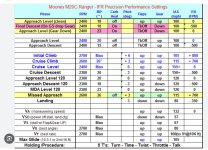
Operational communities that routinely operate near aerodynamic limits—carrier aviation, military tactical aviation, and flight test in particular—gradually converged on angle of attack as the primary maneuvering reference. Rather than thinking in terms of being a few knots fast or slow, pilots learned to think in terms of Fast, On-Speed, and Slow—an aerodynamic description of the wing's state relative to a reference angle of attack. Angle of attack defines the lift demand on the wing; power determines whether that demand can be sustained. It's a remarkably simple framework once you stop thinking in terms of airspeed.
That raises an interesting question. If the underlying physics are identical for an F/A-18 and an RV-7, why are we still teaching two different ways of thinking about aircraft control? The airplanes are obviously different, but the wing still obeys the same aerodynamic laws.
Over the past several years our FlyONSPEED team has been exploring that question. The attached paper isn't about a particular AOA system or avionics package. Instead, it asks whether general aviation would benefit from adopting a standardized operational interpretation of angle of attack similar to the Fast-On-Speed-Slow framework that has existed in operational aviation for decades. We believe the real opportunity isn't better sensors—we already have those. The opportunity is giving pilots a common aerodynamic language for managing both lift demand and energy.
We'd appreciate thoughtful feedback from and discussion with the VAF community. There are a lot of experienced engineers, instructors, civilian and military pilots; and builders here who have spent their lives thinking about these problems.
Standardizing Angle of Attack in General Aviation: The Fast–On-Speed–Slow Framework for Aircraft Control
Fly safe,
Vac
The problem, of course, is that the wing doesn't respond to airspeed. It responds to angle of attack. Airspeed is only a proxy, and it's a good one only under fairly specific conditions. As soon as we start changing load factor, weight, configuration, or maneuvering aggressively, the relationship between indicated airspeed and the wing's actual margin from stall begins to change.
Operational communities that routinely operate near aerodynamic limits—carrier aviation, military tactical aviation, and flight test in particular—gradually converged on angle of attack as the primary maneuvering reference. Rather than thinking in terms of being a few knots fast or slow, pilots learned to think in terms of Fast, On-Speed, and Slow—an aerodynamic description of the wing's state relative to a reference angle of attack. Angle of attack defines the lift demand on the wing; power determines whether that demand can be sustained. It's a remarkably simple framework once you stop thinking in terms of airspeed.
That raises an interesting question. If the underlying physics are identical for an F/A-18 and an RV-7, why are we still teaching two different ways of thinking about aircraft control? The airplanes are obviously different, but the wing still obeys the same aerodynamic laws.
Over the past several years our FlyONSPEED team has been exploring that question. The attached paper isn't about a particular AOA system or avionics package. Instead, it asks whether general aviation would benefit from adopting a standardized operational interpretation of angle of attack similar to the Fast-On-Speed-Slow framework that has existed in operational aviation for decades. We believe the real opportunity isn't better sensors—we already have those. The opportunity is giving pilots a common aerodynamic language for managing both lift demand and energy.
We'd appreciate thoughtful feedback from and discussion with the VAF community. There are a lot of experienced engineers, instructors, civilian and military pilots; and builders here who have spent their lives thinking about these problems.
Standardizing Angle of Attack in General Aviation: The Fast–On-Speed–Slow Framework for Aircraft Control
Fly safe,
Vac




 )
)


