

Van's Air Force

The definitive Van's Aircraft support community! Buying, building or flying an RV? Join our exclusive family of mentors and enthusiasts!

PMag update from Hartzell

Carl Froehlich

Well Known Member
Patron
Recently I had a good exchange with the Hartzell pMag program lead. Some highlights (my summary):
  • Emags are currently under active review by Hartzell Engineering. The approach is intentionally slow and methodical, with changes only implemented after thorough testing.
  • While the sale of Emag occurred in April 2025, the planned transition of engineering and production responsibilities has always been set for January 2026. Due to staffing constraints in Azle, Hartzell began assisting with customer service in late 2025.
  • Several engineering improvements have been implemented, including standardizing the tolerances of the rotor bearing bores and implementing new tooling to properly space the hall‑effect sensor from the magnet.
  • Hartzell is conducting ongoing testing related to operating temperatures. Although data gathering is ongoing, blast tubes will likely remain a recommended practice. Experimental aircraft vary widely in cowling design, airflow, installation orientation (pusher vs. puller), and other environmental factors, making operating temp more of an unknown than in the certified market. The thought is, just like traditional aircraft alternators, cooling fans and/or blast tubes can improve the life of the component.
  • Regarding the 200‑degree installation guidance: it is an operational limit, not a hard failure threshold. However, because end‑user installations differ so much there is no guarantee what temperatures a given aircraft will see without supplemental cooling. But the most likely time to see this color change would be after shut down during a heat soak.
  • The single temperature sticker is a fair criticism. We are evaluating options, including multi‑stage temperature indicators similar to the ones I recommended.
  • When posting pMag problems on the various RV threads Hartzell would appreciate the OP listing the associated pMag serial numbers. The point here is a “new” pMag may be several iterations old. The serial number will go a long way to identify a new issue vs an already identified (with and update) problem with a “new/old stock” pMag.
The question I left with Hartzell is about data on problems:
  • Most common repairs
  • Typical hours on pMags sent in for work
  • 100hr (now 500hr) bearing wear checks - how many fail?
Carl
 
The question I left with Hartzell is about data on problems:
  • Most common repairs
  • Typical hours on pMags sent in for work
  • 100hr (now 500hr) bearing wear checks - how many fail?
And while this is unrelated to reliability, I would kill for more programmability of timing advance. The stock timing curves are a very bad fit for me at 5500+ feet, and with 10:1 pistons. If Hartzell is willing to put some engineering resources into that, it would be more suitable for the experimental crowd.
 
Recently I had a good exchange with the Hartzell pMag program lead. Some highlights (my summary):
  • Emags are currently under active review by Hartzell Engineering. The approach is intentionally slow and methodical, with changes only implemented after thorough testing.
  • While the sale of Emag occurred in April 2025, the planned transition of engineering and production responsibilities has always been set for January 2026. Due to staffing constraints in Azle, Hartzell began assisting with customer service in late 2025.
  • Several engineering improvements have been implemented, including standardizing the tolerances of the rotor bearing bores and implementing new tooling to properly space the hall‑effect sensor from the magnet.
  • Hartzell is conducting ongoing testing related to operating temperatures. Although data gathering is ongoing, blast tubes will likely remain a recommended practice. Experimental aircraft vary widely in cowling design, airflow, installation orientation (pusher vs. puller), and other environmental factors, making operating temp more of an unknown than in the certified market. The thought is, just like traditional aircraft alternators, cooling fans and/or blast tubes can improve the life of the component.
  • Regarding the 200‑degree installation guidance: it is an operational limit, not a hard failure threshold. However, because end‑user installations differ so much there is no guarantee what temperatures a given aircraft will see without supplemental cooling. But the most likely time to see this color change would be after shut down during a heat soak.
  • The single temperature sticker is a fair criticism. We are evaluating options, including multi‑stage temperature indicators similar to the ones I recommended.
  • When posting pMag problems on the various RV threads Hartzell would appreciate the OP listing the associated pMag serial numbers. The point here is a “new” pMag may be several iterations old. The serial number will go a long way to identify a new issue vs an already identified (with and update) problem with a “new/old stock” pMag.
The question I left with Hartzell is about data on problems:
  • Most common repairs
  • Typical hours on pMags sent in for work
  • 100hr (now 500hr) bearing wear checks - how many fail?
Carl
Carl,
Thanks for the intel.
Daddyman58
 
Recently I had a good exchange with the Hartzell pMag program lead. Some highlights (my summary):
  • Emags are currently under active review by Hartzell Engineering. The approach is intentionally slow and methodical, with changes only implemented after thorough testing.
  • While the sale of Emag occurred in April 2025, the planned transition of engineering and production responsibilities has always been set for January 2026. Due to staffing constraints in Azle, Hartzell began assisting with customer service in late 2025.
  • Several engineering improvements have been implemented, including standardizing the tolerances of the rotor bearing bores and implementing new tooling to properly space the hall‑effect sensor from the magnet.
  • Hartzell is conducting ongoing testing related to operating temperatures. Although data gathering is ongoing, blast tubes will likely remain a recommended practice. Experimental aircraft vary widely in cowling design, airflow, installation orientation (pusher vs. puller), and other environmental factors, making operating temp more of an unknown than in the certified market. The thought is, just like traditional aircraft alternators, cooling fans and/or blast tubes can improve the life of the component.
  • Regarding the 200‑degree installation guidance: it is an operational limit, not a hard failure threshold. However, because end‑user installations differ so much there is no guarantee what temperatures a given aircraft will see without supplemental cooling. But the most likely time to see this color change would be after shut down during a heat soak.
  • The single temperature sticker is a fair criticism. We are evaluating options, including multi‑stage temperature indicators similar to the ones I recommended.
  • When posting pMag problems on the various RV threads Hartzell would appreciate the OP listing the associated pMag serial numbers. The point here is a “new” pMag may be several iterations old. The serial number will go a long way to identify a new issue vs an already identified (with and update) problem with a “new/old stock” pMag.
The question I left with Hartzell is about data on problems:
  • Most common repairs
  • Typical hours on pMags sent in for work
  • 100hr (now 500hr) bearing wear checks - how many fail?
Carl
Thanks for the update. Our -6 is getting both mags overhauled as we speak. One had significant slop in the shaft after less than 300 hours. High compression engine with counter weighted crank. Hope the upgraded bearing and internals hold up better.
 
Is there info about their intentions for long-term support of the pre-Hartzell units? Do or will they have similar expertise and availability to help walk people through tricky questions/diagnostics/tuning like Brad did (well for sure not that but anything close?)
 
Is there info about their intentions for long-term support of the pre-Hartzell units? Do or will they have similar expertise and availability to help walk people through tricky questions/diagnostics/tuning like Brad did (well for sure not that but anything close?)
The short answer (to my understanding) is yes, the support continues.

I note however you are implying that pMags are tricking and require tuning. I’ve been running them for well over 20 years, and find that following the install instructions is solid approach to having a good system.

But, on the subject of tuning I had several discussions with Brad (on the four cylinder pMags) as to why the pMags had the selectable timing advance (9 degrees max jumper in, 14 degrees jumper out). My understanding is the more aggressive advance table was not for our typical Lycoming engines.

On the subject of timing,
- All the articles I’ve read lead to 9 degrees of advance (low MP, high altitude) is the most advance typical installs like ours should use as the benefits drop off with more advance. I know some set parrallel valve Lycomings at a few degrees ATDC (so base timing is less than an 25 degrees BTDC) and are happy.
- On the six cylinder pMags the base and max timing advance is set on install (as it is variable, not a binary jumper in/jumper out). For my new RV-10 (CAS IO-540) I’ll start with base timing at ~23 degrees BTDC and max advance at ~30 degrees BTDC. I’ll also fly with the panel timing switch in “Fixed” (23 degrees) for the first few flights, then start flying with the switch in “Variable) and collect data.

Carl
 
On the subject of timing,
- All the articles I’ve read lead to 9 degrees of advance (low MP, high altitude) is the most advance typical installs like ours should use as the benefits drop off with more advance. I know some set parrallel valve Lycomings at a few degrees ATDC (so base timing is less than an 25 degrees BTDC) and are happy.
Except that for those of us who live high, all of that advance has been applied at our home airport elevations (or by pattern altitude). I'm partially compensating for thinner air up here by increasing my compression ratio, and I would like to add timing between, say, 6k to 10k feet. The current M.P. based advance does not do that, it dumps all the advance within a few thousand feet. IMHO, the designer of these mags needed to show the market - the vast majority of whom live near sea level - an impressive benefit. Many of them rarely fly higher than 6500'. They get 8.4 degrees of advance between ~4500 and 6500 feet, after which it's all done.

Where I live, pattern altitude is 6500'. I've been up over 16,500 on three flights in the last week, but my mags won't provide a single degree of additional timing between those altitudes. I think the only good answer is user-programmability.
 
If builders are willing to accept electrical dependency (like is required by SureFly/Lycoming EIS) - why not just install a system with complete programmability and zero moving parts?

Obviously the FAA is now comfortable with electrical dependency given that dual SureFly/EIS is now certified on a range of airframes and engines.

Not sure why anyone would go the pMag route anymore (versus SureFly) - given the inspection requirements and cost of overhaul when needed. (Not going to mention the questionable reliability)
 
.,..

Not sure why anyone would go the pMag route anymore (versus SureFly) - given the inspection requirements and cost of overhaul when needed. (Not going to mention the questionable reliability)

500 hour easy inspection doesn't feel too burdensome to me. The old bearings were a known issue, true. Beyond that, there are a ton of these mags in the wild and performing well. Is it fair to call their reliability "questionable"?
 
If you want a superior system with no moving parts and total programmability go with SDS.
I think SDS is a great product but as far as I know, PMags are the only EI that is not electrically dependent after the engine is running. Had a catastrophic electrical failure early on and the PMags kept the engine running till I landed. Yes there are redundant systems that can be installed, but for self powering simplicity, they are unmatched.
 
500 hour easy inspection doesn't feel too burdensome to me. The old bearings were a known issue, true. Beyond that, there are a ton of these mags in the wild and performing well. Is it fair to call their reliability "questionable"?
Not necessarily burdensome, but when there is another, lower cost option with zero inspections - then I think it’s worth considering that other option.

And I don’t think any of us know that the “ton of pMags” out there are performing well. I know in my case, 5 failures of one sort or another in a little over 500 hours is questionable reliability.
 
Well if I had 5 failures in 500 hours, I'd hate them also. :) So (y)

The total electrical independence is a huge feature to me, and there's nothing else like it that I know of.
 
Mine have been extremely reliable in flight, but.... 2 failures from over voltage 100+V, but kept running till landing at chosen airport. The bearing issues are what get me. 3 bearing replacements in each Pmag on our 7 with the -360 in 700 hours, and one with bearing issues on our -6 with 300 hours on them. All are upgraded now, so will see how that pans out.
 
Last edited:
I think SDS is a great product but as far as I know, PMags are the only EI that is not electrically dependent after the engine is running. Had a catastrophic electrical failure early on and the PMags kept the engine running till I landed. Yes there are redundant systems that can be installed, but for self powering simplicity, they are unmatched.
Agree, that's why my preferred setup is one mag and SDS CPI, basically all the benefits of EI without the risk.
 
Agree, that's why my preferred setup is one mag and SDS CPI, basically all the benefits of EI without the risk.
That’ll probably happen if I keep having bearing issues. All of mine are upgraded to the latest and greatest now so time will tell.
 
I think SDS is a great product but as far as I know, PMags are the only EI that is not electrically dependent after the engine is running. Had a catastrophic electrical failure early on and the PMags kept the engine running till I landed. Yes there are redundant systems that can be installed, but for self powering simplicity, they are unmatched.
The sds has an integrated battery mgmt function, including charge mgmt. Install a $20 5AH battery along with it and it is not dependent upon the ship power supply for at least 2 hours. Even with a pmag, I don’t see anyone flying around longer than that with no ship power.

Imo, this provides the same level of risk avoidance as the pmag, without having the bearings replaced every few hundred hours.
 
Last edited:
I think SDS is a great product but as far as I know, PMags are the only EI that is not electrically dependent after the engine is running. Had a catastrophic electrical failure early on and the PMags kept the engine running till I landed. Yes there are redundant systems that can be installed, but for self powering simplicity, they are unmatched.
The real travesty here is that they could be so much more than they are. Drop-in, self-powered mag replacements with fully programmable timing? Sign me up!

*yes, I would love full programmable EFI, but I'm not ready for an electrically-dependent aircraft.
 
The real travesty here is that they could be so much more than they are. Drop-in, self-powered mag replacements with fully programmable timing? Sign me up!

*yes, I would love full programmable EFI, but I'm not ready for an electrically-dependent aircraft.
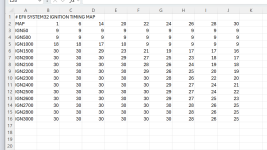
Agreed, an electrically dependent engine electrical backbone needs to be designed from the ground up to reduce single points of failure. It's almost impossible to drop in a EFI system into an airframe that was not designed for an electrical dependent engine. (My opinion) EFI systems ignition mapping can be changed to suit a particular engine operating environmental condition.

This is the standard mapping that so far has performed well, i.e. engine CHT's. 8 years of operation both angle valve and parallel valve engine.


Screenshot 2026-05-27 230802.png
 
Agreed, an electrically dependent engine electrical backbone needs to be designed from the ground up to reduce single points of failure. It's almost impossible to drop in a EFI system into an airframe that was not designed for an electrical dependent engine. (My opinion) EFI systems ignition mapping can be changed to suit a particular engine operating environmental condition.

This is the standard mapping that so far has performed well, i.e. engine CHT's. 8 years of operation both angle valve and parallel valve engine.


View attachment 118903
Not true in regards to the sds cpi 2 EI. We are discussing ei here. The battery plugs directly into the cpi box and totally self contained, including automated charging and switch over. No special wiring switches or systems required on the airframe. Dead simple and just as reliable as a pmag when ship power goes away. Sure the battery could fail, but then again pmags are far from exhibiting zero failures at that low percentage.

Yes, full Efii requires what you describe, but not the ei.
 
Last edited:
Dead simple and just as reliable as a pmag when ship power goes away.
Probably not too much of a stretch to say that CPI-2 with its integral battery backup (tested and replaced as needed), installed using best practices is more reliable than a pMag. No moving parts and even Carl will tell you that a well maintained battery is the most reliable thing you can install on your plane. https://vansairforce.net/threads/dual-battery-or-alternators.185276/

I’m not sure about the reluctance to go “electrically dependent”. The normally very conservative FAA is now comfortable with it for dual Surefly installations, so why not us?
 
Agree, that's why my preferred setup is one mag and SDS CPI, basically all the benefits of EI without the risk.
As an ignorant relative newcomer I find the SDS stuff more than a bit overwhelming. It looks fascinating.

Is SDS all or none or can it handle being paired with a Pmag?
 
And while this is unrelated to reliability, I would kill for more programmability of timing advance. The stock timing curves are a very bad fit for me at 5500+ feet, and with 10:1 pistons. If Hartzell is willing to put some engineering resources into that, it would be more suitable for the experimental crowd.
If Hartzell wants to certify the units, they will not allow user programmability of the ignition curve. The FAA would require them to extensively test each data point that can be changed. It is not financially feasible to allow this feature. I have a lot of experience with SureFly and this is why their unit is not user programable.

What is your issue with tuning? I have dual SureFly's on my 10:1 RV6 without issue in variable timing mode at altitude as a LOP operator. If you are a ROP operator I would suggest you run at base timing. The flame front in the richer mixture moves faster and creates max pressure at just the right point of the stroke.......if you are using base timing. While the SF is safe to use the variable timing as a ROP operator, you will create more heat in the cylinder.
 
As an ignorant relative newcomer I find the SDS stuff more than a bit overwhelming. It looks fascinating.

Is SDS all or none or can it handle being paired with a Pmag?
SDS is great if you want full programmability. But, there is a steep learning curve. And, if you are using both the ignition and fuel injection system it is an electron hog. With both fuel pumps running it can pull 30 amps. So, you need to have a robust electrical system with a big backup battery. No electrons, and the whirlygig on the front of the engine stops turning.
 
If Hartzell wants to certify the units, they will not allow user programmability of the ignition curve. The FAA would require them to extensively test each data point that can be changed. It is not financially feasible to allow this feature. I have a lot of experience with SureFly and this is why their unit is not user programable.
Having separate locked/unlocked software for certified and experimental does not seem prohibitive to me.

What is your issue with tuning? I have dual SureFly's on my 10:1 RV6 without issue in variable timing mode at altitude as a LOP operator. If you are a ROP operator I would suggest you run at base timing. The flame front in the richer mixture moves faster and creates max pressure at just the right point of the stroke.......if you are using base timing. While the SF is safe to use the variable timing as a ROP operator, you will create more heat in the cylinder.
Almost too much to rehash here, but I don't know anything about Surefly timing advance and know a fair amount about PMag timing advance. Suffice it to say that you're probably talking about a PV engine, and you probably live at sea level. I have an AV with 10:1 pistons and live at altitude.

The short version is that the most commonly recommended settings for an AV engine (jumper in, -2 teeth ≈ -5 degrees of retard) results in a peak timing of about 30 degrees, maybe a bit more. This ~30 degrees is reached either on the takeoff roll or at TPA at my airport elevation. From TPA to cruising altitudes in the rockies (not uncommonly 11.5k to 16.5k) I gain zero degrees of advance. The PMags are programmed to put all the advance in at manifold pressures that correspond to much, much lower altitudes.

I wouldn't mind 28-30 degrees of advance at, say 16.5k feet. I do mind that much at 6500 feet.

The P-Mag does not have a fixed timing mode. I can hack it with EICAD to get close to fixed timing, but then I don't get the presumed benefit of advance with increasing altitude, or advance for smoother starting/idle. If I retard much more than 5 degrees with variable timing, timing tops out at 25-28 degrees and idle is worse. The only thing that gains me is retarded timing ~21 degrees, if I go to very low elevation airports (I never do).

My very strong preference would be timing ~20 degrees at max MP at sea level, rising to 23-25 degrees at 6500, slowly rising further to 28-30 degrees around 10500-13500. This would help both ROP and LOP operation (although more with LOP). Manual increases above 30 degrees may benefit LOP even more at high enough altitudes. There's no way to get this with PMags, and I don't want the complexity of SDS right now.
 
As an ignorant relative newcomer I find the SDS stuff more than a bit overwhelming. It looks fascinating.

Is SDS all or none or can it handle being paired with a Pmag?
SDS is fully stand alone for one ignition system. No pairing of any kind. Will happily work next to ANY other ignition system, including Pmags and mags. If the goal is to avoid all of the issues with the Pmag outlined in this thread, I see no reason why you would want to do that though. If concernedwith elec dependence, pair it with a traditional mag. You will get 98% of the EI benefits with no risk.
 
SDS is great if you want full programmability. But, there is a steep learning curve. And, if you are using both the ignition and fuel injection system it is an electron hog. With both fuel pumps running it can pull 30 amps. So, you need to have a robust electrical system with a big backup battery. No electrons, and the whirlygig on the front of the engine stops turning.
I would argue that the learning curve for the SDS CPI is anything but steep. Very simple to program and few choices to make beyond your advance map. It even comes fully configured for a conservative curve, so pretty much just as plug and play as a pmag. Physical installation is more work, but quite manageable for those doing their own engine and airframe work.

The pmag learning curve can also be steep and painfull, due to its lack of flexibility. How many have come here complaining of excessive CHTs due to too much advance on the stock curve? How many threads here on TDC offsets on AV engines to match recommended timing. I would call that pretty steep as none of that is in the manual.

Agree that the EFII system fits your description, but this thread is all about EI.
 
Last edited:
SDS is great if you want full programmability. But, there is a steep learning curve.
If you are implying that there is a requirement to be an engine tuning master to use the SDS ignition product, I disagree. It works great right out of the box. If you DO decide to delve into the programming to eke out the best performance from every corner of the envelope, then yes, that takes some learning. That’s optional, however. But many of us have been down the road and the instructions and methods are found on this site…. Much like all of the tricks and spoofing methods to make Pmags run correctly are also available here.

Frankly, the Pmag used to hailed as the “drop in and forget” product, but many years of experience shows the SDS system to be more deserving of that title.
 
SDS is great if you want full programmability. But, there is a steep learning curve. And, if you are using both the ignition and fuel injection system it is an electron hog. With both fuel pumps running it can pull 30 amps. So, you need to have a robust electrical system with a big backup battery. No electrons, and the whirlygig on the front of the engine stops turning.
Just a slight clarification at least for EFII the complete system uses ~15 amps (6-cylinder system) and that is with one pump so another 4.1 amps for a second pump (if needed) I know some SDS and EFII users use both pumps for critical phase of flight. So, 20 amps to make sure the whirlygig keeps turning. (2 pumps running when only 1 is needed) And the learning curve is not steep.
 
It is good to see that the debate about SDS vs PMAG is anything but FINISHED. And each side of the debate go to the moon to convivence the other side, sometimes subjectively, of a superior product.
 
It is good to see that the debate about SDS vs PMAG is anything but FINISHED. And each side of the debate go to the moon to convivence the other side, sometimes subjectively, of a superior product.
I agree, it was going on to long, some peop[le won't give up, and either want the last word, or ego gratification that they won.

It just wastes everyone's time, be when it rears up in a good information post that gets hijacked by by the "mine is better than yours" gang.
 
Recently I had a good exchange with the Hartzell pMag program lead. Some highlights (my summary):
  • Emags are currently under active review by Hartzell Engineering. The approach is intentionally slow and methodical, with changes only implemented after thorough testing.
  • While the sale of Emag occurred in April 2025, the planned transition of engineering and production responsibilities has always been set for January 2026. Due to staffing constraints in Azle, Hartzell began assisting with customer service in late 2025.
  • Several engineering improvements have been implemented, including standardizing the tolerances of the rotor bearing bores and implementing new tooling to properly space the hall‑effect sensor from the magnet.
  • Hartzell is conducting ongoing testing related to operating temperatures. Although data gathering is ongoing, blast tubes will likely remain a recommended practice. Experimental aircraft vary widely in cowling design, airflow, installation orientation (pusher vs. puller), and other environmental factors, making operating temp more of an unknown than in the certified market. The thought is, just like traditional aircraft alternators, cooling fans and/or blast tubes can improve the life of the component.
  • Regarding the 200‑degree installation guidance: it is an operational limit, not a hard failure threshold. However, because end‑user installations differ so much there is no guarantee what temperatures a given aircraft will see without supplemental cooling. But the most likely time to see this color change would be after shut down during a heat soak.
  • The single temperature sticker is a fair criticism. We are evaluating options, including multi‑stage temperature indicators similar to the ones I recommended.
  • When posting pMag problems on the various RV threads Hartzell would appreciate the OP listing the associated pMag serial numbers. The point here is a “new” pMag may be several iterations old. The serial number will go a long way to identify a new issue vs an already identified (with and update) problem with a “new/old stock” pMag.
The question I left with Hartzell is about data on problems:
  • Most common repairs
  • Typical hours on pMags sent in for work
  • 100hr (now 500hr) bearing wear checks - how many fail?
Carl

I for one would like to encourage these kinds of useful posts like Carl provided. As a PMag user, I'm interested in as much information regarding the PMag as possible. VA posts have been instrumental in getting me up to speed with the PMag system as I'm sure it would with others.

This is great communication with Hartzell and the more positive momentum the better for future support, product improvements, etc. I have talked with Hartzell multiple times and found support extremely helpful. There's a lot of satisfied PMag users out there. Thank you Carl being thoughtful and sharing the information.
 
Last edited:
I wonder if the folks who experience repeated short life of hearings et. With Pmag’s is related to very specific combination of engine model variant and propeller. Or maybe more specifically some harmonic frequency range that is causing the problem.

Perhaps some sort of dynamic harmonic balancer equipment can be done on those planes with the history of repeated short life of play bearings.

Perhaps with enough testing sample this could prove or rule out the destructive harmonic frequency theory.

If it does turn out to be harmonic frequency range. Hopefully engineers could design bearing modifications to have a harmonic resonance that falls outside of normal aircraft engine frequencies.

I think a destructive harmonic resonance may explain why some have zero problems and others have repeated failures. Because the two planes have different harmonic frequencies with one being destructive to the Pmag bearings.

Just a theory.
 
is related to very specific combination of engine model variant and propeller. Or maybe more specifically some harmonic frequency range that is causing the problem.
Could be - and not to mention the time spent at particular RPMs. There are a lot of variables that could influence these results.
 
Well if I had 5 failures in 500 hours, I'd hate them also. :) So (y)

The total electrical independence is a huge feature to me, and there's nothing else like it that I know of.
Well, actually there is - two Slick or Bendix mags. Total redundancy and the chances of loosing both mags at once is practically zero. Can they nit-noid your 1960’s version tractor engine to burn fuel to a Prius standard? Nope, definitely not, but at what cost and what reliability sacrifice? That being said, I have a SureFly on the left and a Slick on the right on my RV6. I have improved my gas mileage a little and, I believe, given up very little in overall reliability. Is that worth it? I won’t know for a long time, but experimenting in this way has very little downside in my view. All of these EI’s are an experiment, and we won’t know the bottom line for a while.
 
Well let me say this, traditional mags also have a 500 hour inspection, so that's a wash. And they are known for multiple failure modes also, so lets not get crazy with the emphasis on reliability there :) There's a reason they put two of them in every airplane...

I'll take my super easy starting, great LOP operation, cheap automotive plugs, and brainless timing setup any day ;)
 
Well I just bought a thorp T18. Have not even completed the sale or got it home yet.

It has a O320b3b 160 HP. Either dual Pmags. One with about 30 hours on it and the other about 5 hours that replaced a traditional magneto.

The b3b has the flat engine mounts (perpendicular to the crank) not the conical. So I am told this style mount shakes or vibrates a bit more than conical mounts versions. . So I am a bit concerned that may have some impact to the Pmag bearings.

It also has a three blade Sensenich ground adjustable prop. So light and I read no means to add crush plate weight to ad some more smoothness to it. It has been dynamically balanced after the prop was added.

Thorps tend to be tail heavy and fuel burn shifts CG aft. So many thorp owners tend to want to move weight forward if they can.

Anyhow I will see how things go with the dual Pmags in my case.
 
Well I just bought a thorp T18. Have not even completed the sale or got it home yet.

It has a O320b3b 160 HP. Either dual Pmags. One with about 30 hours on it and the other about 5 hours that replaced a traditional magneto.

The b3b has the flat engine mounts (perpendicular to the crank) not the conical. So I am told this style mount shakes or vibrates a bit more than conical mounts versions. . So I am a bit concerned that may have some impact to the Pmag bearings.

It also has a three blade Sensenich ground adjustable prop. So light and I read no means to add crush plate weight to ad some more smoothness to it. It has been dynamically balanced after the prop was added.

Thorps tend to be tail heavy and fuel burn shifts CG aft. So many thorp owners tend to want to move weight forward if they can.

Anyhow I will see how things go with the dual Pmags in my case.
Saber can make you a solid brass prop extension, not sure what length you need for the Thorp but when I asked about one for my -6 I believe he said is was 23 pounds, vs 6 pounds for the standard aluminum one.
 
Saber can make you a solid brass prop extension, not sure what length you need for the Thorp but when I asked about one for my -6 I believe he said is was 23 pounds, vs 6 pounds for the standard aluminum one.
But can it be used with the sensenich ground adjustable prop/hub?

I want to do a new weight and balance for the airplane by putting it on scales. As calculations were used for removing steam gauge’sand vacuum pumps and installing dual Dynon skyview. As well as a light weight starter. I think it is close but I really would like to verify it with scales. Then I can determine given file and zero fuel as well as myself and my wife weight to determine max baggage. Particularly at zero fuel. Because the thorp has the header tank and CG moves aft with fuel burn. Most thorps are limited by the rear cg limit at zero fuel than gross weight. … or so I have been told.

Then I will have an idea if or how much of a prop weight might be needed.

I like the Pmag. So I am hoping that they are reliable. I am just thinking the smoother the vibration is the better for the mags as well as pretty much everything firewall forward but also including reduced pilot fatigue.
 
But can it be used with the sensenich ground adjustable prop/hub?

I want to do a new weight and balance for the airplane by putting it on scales. As calculations were used for removing steam gauge’sand vacuum pumps and installing dual Dynon skyview. As well as a light weight starter. I think it is close but I really would like to verify it with scales. Then I can determine given file and zero fuel as well as myself and my wife weight to determine max baggage. Particularly at zero fuel. Because the thorp has the header tank and CG moves aft with fuel burn. Most thorps are limited by the rear cg limit at zero fuel than gross weight. … or so I have been told.

Then I will have an idea if or how much of a prop weight might be needed.

I like the Pmag. So I am hoping that they are reliable. I am just thinking the smoother the vibration is the better for the mags as well as pretty much everything firewall forward but also including reduced pilot fatigue.
Yes, the Saber makes the prop extensions for the Sensenich GA props, it's what I have on my -6.
 
...The b3b has the flat engine mounts (perpendicular to the crank) not the conical. So I am told this style mount shakes or vibrates...
A minor correction... if the mount bolts in the rear case are parallel to the crank, that is known as the "conical" mount. Further identified by the much smaller rubber isolators. If the mount bolts are angled towards the center of the engine (not parallel), then that is a type of Dynafocal mount.

As for vibration- that is caused by the engine itself. The mount type only defines the amount of shaking that makes it into the airframe.
 
A minor correction... if the mount bolts in the rear case are parallel to the crank, that is known as the "conical" mount. Further identified by the much smaller rubber isolators. If the mount bolts are angled towards the center of the engine (not parallel), then that is a type of Dynafocal mount.

As for vibration- that is caused by the engine itself. The mount type only defines the amount of shaking that makes it into the airframe.
Yep. I did use the wrong term for the Mount. Just seems like the dynofocal which is. Round and points inward is cone like. So it makes more sense to to be conical. But that is just how my strange brain works.

Thanks for helping to expand my knowledge.
 
Back
Top