Van's Air Force

The definitive Van's Aircraft support community! Buying, building or flying an RV? Join our exclusive family of mentors and enthusiasts!

RV10: N997CZ Takes To The Skies

JamesClarkIV

Active Member
Sponsor
Here is a video of the first flight:


Here is a post describing the event:


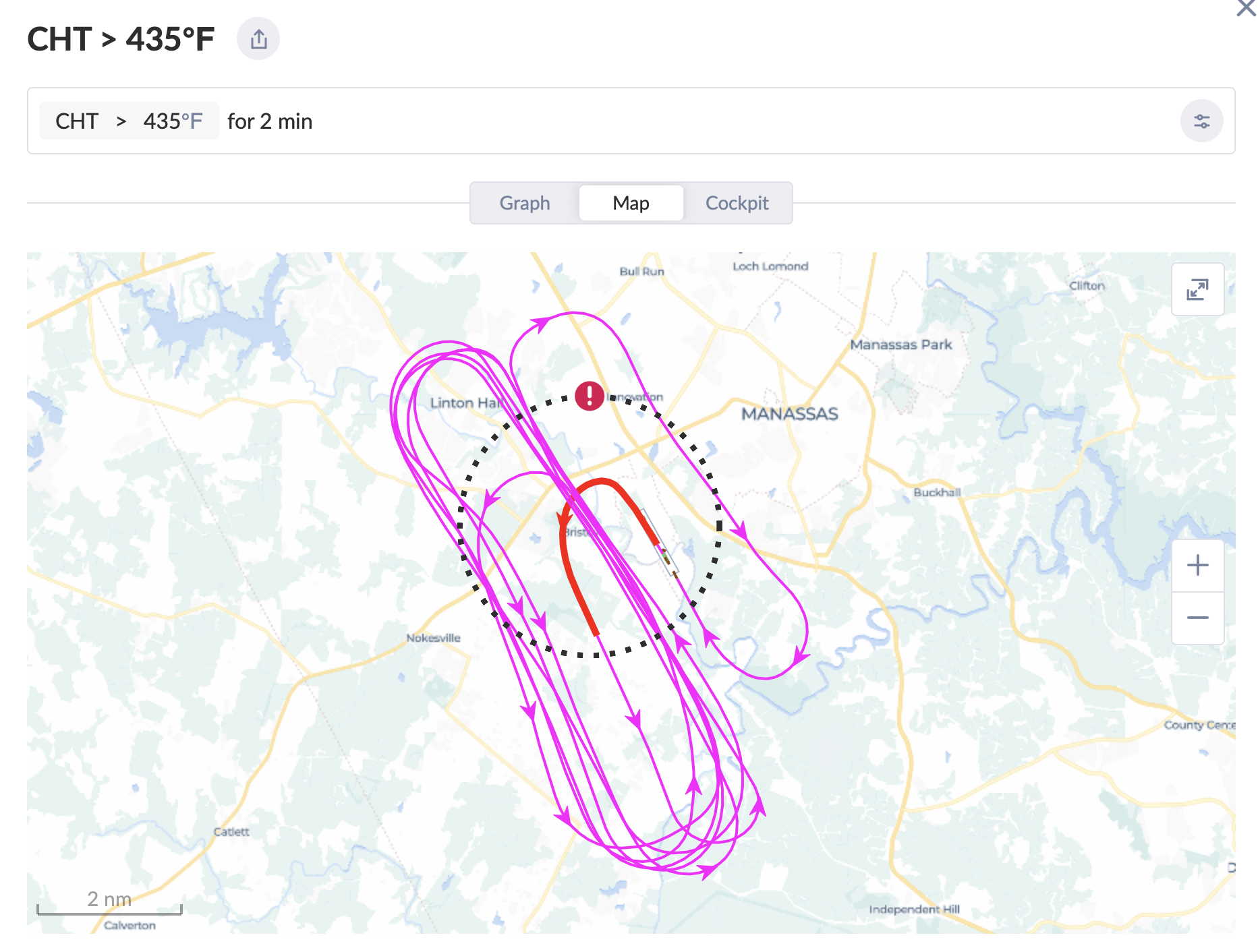
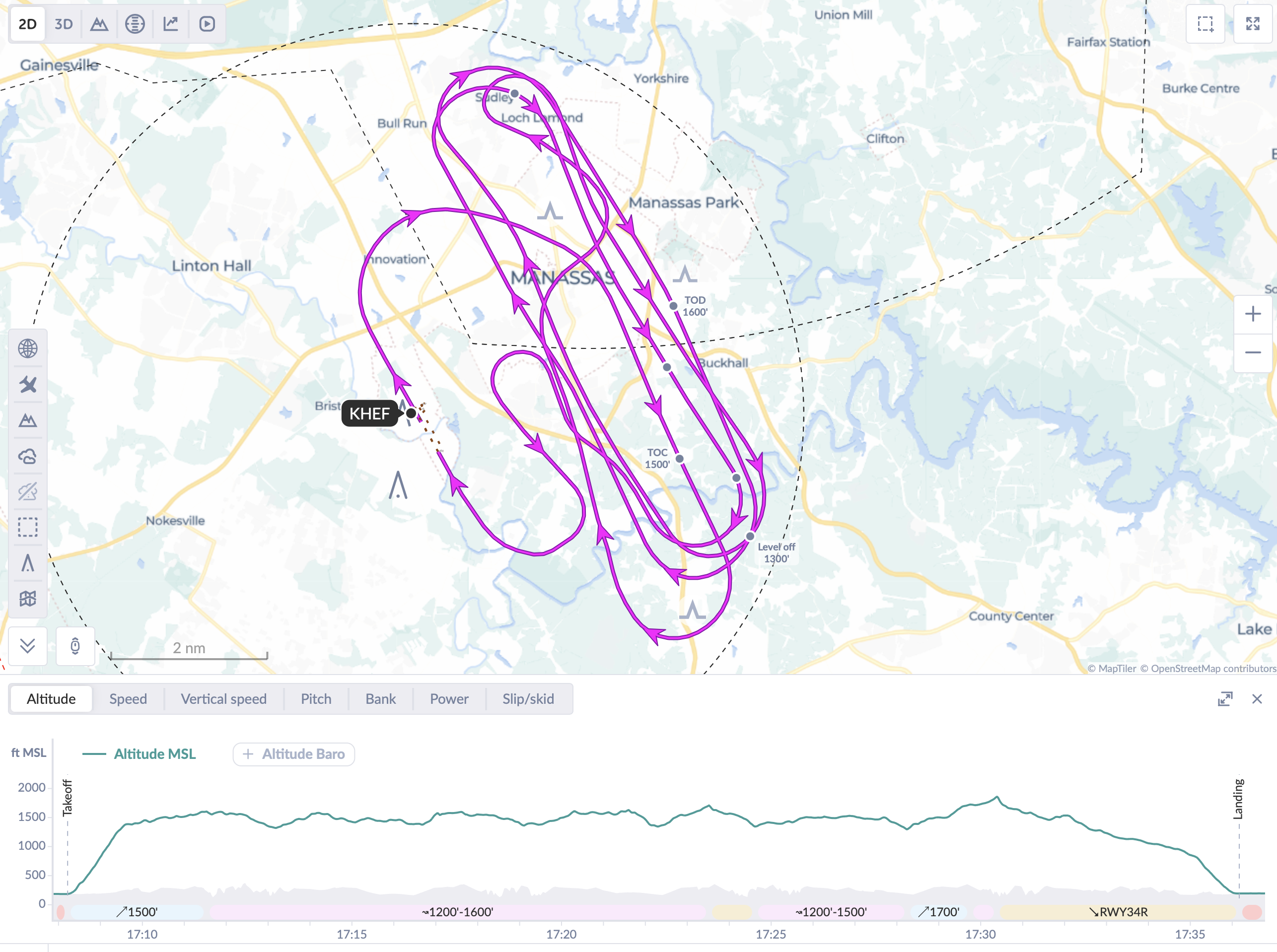
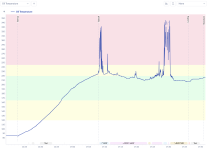
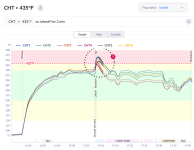
I'd be interested in your feedback on elevated CHTs, and the PFD/ARHS flip.
 
Here is a video of the first flight:


Here is a post describing the event:


I'd be interested in your feedback on elevated CHTs, and the PFD/ARHS flip.
Congrats!

Where are the GSU25s mounted?
 
Both GSU25s are mounted on the sub-panel directly forward of the PFD number one screen in the upper-left corner. I suspect there's a vibration difference between the two mounting locations, even though they are mounted directly adjacent to each other on the same subpanel. Since the engine is so new, I have not run the vibration test on the two GSUs yet.
 
FWIW I had vibration issues with them mounted there. (But I didn’t on my RV7) Eventually after trying 2 other places I found success putting them in the one place Garmin provide a mount for, yet explicitly recommended against.
On the back of the GDU.

IMHO the vibration testing on the ground is a waste of time. You can’t simulate full power and flight. Mine passed the on ground tests in all positions - yet in flight performed poorly.
 
Both GSU25s are mounted on the sub-panel directly forward of the PFD number one screen in the upper-left corner. I suspect there's a vibration difference between the two mounting locations, even though they are mounted directly adjacent to each other on the same subpanel. Since the engine is so new, I have not run the vibration test on the two GSUs yet.
Very possible. I have only one 25 and mounted it on that panel, but tucked it close into the upper corner, where it was rigid. I felt there wasn't enough stifness in the interior areas of that panel. It seemed to flex a good bit.
 
Mounting them elsewhere will be a big challenge, with the required rewiring work. I wonder if I could place a stiffener sheet under both of them and make that sub-panel area more rigid?
 
FWIW I had vibration issues with them mounted there. (But I didn’t on my RV7) Eventually after trying 2 other places I found success putting them in the one place Garmin provide a mount for, yet explicitly recommended against.
On the back of the GDU.

IMHO the vibration testing on the ground is a waste of time. You can’t simulate full power and flight. Mine passed the on ground tests in all positions - yet in flight performed poorly.
This is good info to have, thanks for posting it.
 
Very possible. I have only one 25 and mounted it on that panel, but tucked it close into the upper corner, where it was rigid. I felt there wasn't enough stifness in the interior areas of that panel. It seemed to flex a good bit.
It's funny, I have 2, both mounted fairly up and left, tucked into the corner like you. The #1 (problem child) is on top (tightest in sub panel corner/arc, and #2 AHRS is mounted directly below it (bit further from the edge, but not misbehaving). I do feel like they are performing worse than my RV7 setup as sometimes they also have 10-11 degree heading miscompute warnings.
 

Attachments

  • flightMap.png
    flightMap.png
    2.4 MB · Views: 17
  • OilTempGaugeOutages.png
    OilTempGaugeOutages.png
    262.2 KB · Views: 17
  • CHTs.png
    CHTs.png
    298.1 KB · Views: 17
It's funny, I have 2, both mounted fairly up and left, tucked into the corner like you. The #1 (problem child) is on top (tightest in sub panel corner/arc, and #2 AHRS is mounted directly below it (bit further from the edge, but not misbehaving). I do feel like they are performing worse than my RV7 setup as sometimes they also have 10-11 degree heading miscompute warnings.
Well, maybe the rigid point is passing along airframe vibration. The rigidity wouild allow greater transfer, I suupose. Maybe our logic was flawed and the flexibility away from the corner creates a dampining effect, like rubber does. Not an ME, so above my pay grade.
 
Well, maybe the rigid point is passing along airframe vibration. The rigidity wouild allow greater transfer, I suupose. Maybe our logic was flawed and the flexibility away from the corner creates a dampining effect, like rubber does. Not an ME, so above my pay grade.
Yeah, I'm not sure of the vibration mechanism either. I could either make it more rigid in place, with a stiffener sheet, or I could try a standoff sheet/mount that raised them off the sub-panel with some rubber grommets or something between the mounting sheet and the sub-panel...dunno which might work.
 
I've had the same issue. Have reinforced the sub-panel, that didn't help much.

IO-540 with the standard 2 blade Hartzell aluminum prop.

Then, my friend noticed the vertical pins in the lower cowling part would allow for some very little flex. One could feel that by just pushing the sides of the cowl against the firewall. (standard Vans supplied piano hinges)

I've then replaced the pins with slightly oversized pins and this reduced the vibrations significantly. -The issue disappeared and I haven't seen the AHARS drift since then. (30 hrs +)

Off topic: Additionally, my plan is to re-clock the prop according to the info I found on this forum. This should help as well..
 
Ah this brings back fond memories…
I also went to the trouble of rotating the GSUs between the two positions on the subpanel and also stiffening the sub panel with 063 angle. To no avail. One of them was always very bad and the other just bad sometimes at different RPM or power settings.
It was very clear when regressing the vibration versus the AHRS stability that vibration was causing the problem.

It’s been a few years but there’s a service bulletin also calling out GSUs that were subject to “acoustic noise energy” aka vibration too. Your GSUs may be subject to it.
I was let to believe that COVID supply chain issues resulted in different mems being used in a run of GSUs. Now while that may be an issue as well, it may still not solve your problem.
I went through 6 GSU25s in 3 different places before achieving a satisfactory result.
The root cause imho is Garmin’s guidance to mount the GSUs to the stiffest part of the airframe possible (and not the GDU) Given pretty much all of an aluminum airframe is going to be subjected to significant vibration and acoustic energy, I don’t believe that sufficient differentiation has been provided between the two.
It seems clear that at least in an RV context, mounting to the back of the GDU works. So they should remove that mounting restriction from the install manual - or at least explain the conditions in which that is or isn’t acceptable.
 
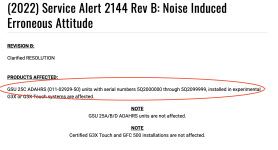
I was also having ADAHRS vibration related issues (wouldn't pass runup tests, miscompares in flight, etc.) even after I reinforced the subpanel area with an 0.063 doubler and added angled braces both to the firewall structure and also to the instrument panel. It turns out my GSU 25s had S/Ns that were affected by SB 2144 for acoustic noise (mentioned above). Garmin replaced both GSU 25s and now the runup tests pass and I haven't seen any errors in flights over the past 10 hr or so.
 
I was also having ADAHRS vibration related issues (wouldn't pass runup tests, miscompares in flight, etc.) even after I reinforced the subpanel area with an 0.063 doubler and added angled braces both to the firewall structure and also to the instrument panel. It turns out my GSU 25s had S/Ns that were affected by SB 2144 for acoustic noise (mentioned above). Garmin replaced both GSU 25s and now the runup tests pass and I haven't seen any errors in flights over the past 10 hr or so.
Thank you both for this super important info. I wasn't aware of the service bulletin, and I'll track it down to see if these are affected.
 
Data point: The SB didn't solve my problem (unit was upgraded to GSU 25D). Only after taking care of the cowl issue did..
 
Data point: The SB didn't solve my problem (unit was upgraded to GSU 25D). Only after taking care of the cowl issue did..
Same here.
Only moving them to the back of the GDU solved my issue. Which was vibration too like you.
Although you say it’s a “cowl issue” I’m not sure the mounting rationale or instructions are adequate if cowl hinge pins or whatever other random airframe feature cause sufficient vibration at just the right frequency to overwhelm the mems hardware/software combo.
For me that’s a GSU issue. Not an airframe issue. Theres always going to be noise and vibration
 
Same here.
Only moving them to the back of the GDU solved my issue. Which was vibration too like you.
Although you say it’s a “cowl issue” I’m not sure the mounting rationale or instructions are adequate if cowl hinge pins or whatever other random airframe feature cause sufficient vibration at just the right frequency to overwhelm the mems hardware/software combo.
For me that’s a GSU issue. Not an airframe issue. Theres always going to be noise and vibration
I'll look at both the cowl pin issue and potentially relocating the ADAHRS units. I think I've used thicker cowl pins than standard. I'm not sure the cowl pins I have could be any bigger in fit, especially the vertical ones along the rear edge of the cowl. They're a pretty tight fit as it is, but I'll give it a look. I very much appreciate all the feedback I'm getting on this issue.
 
How I isolated the cowl issue:

After the GSU 25C has been replaced with the 25D model there was no improvement.
I then fabricated a stiffener I installed on the backside of the subpanel.
I did the AHARS test on ground and it passed. The cowl was off at that time (oil change). I thought the stiffener made it. I went flying and the AHARS issue came back.
Then I thought it must have to do with the cowling and indeed, the AHARS test would pass with the cowl off only. Couldn't identify the real issue with the cowl.
Only after my friend pointed to the very little movement in the lower cowl - vertical pins.

Might not be your issue, but might help someone else..
 
I'll add that simply moving the GSU 25 might not be enough. Even when it was located aft of the baggage compartment on Van's "AHRS mount" I still struggled with GSU vibration quite a bit during phase 1. Garmin didn't find any smoking gun in the logs, and eventually I solved it bluntly by by adding metal and reinforcement.
 
I'll add that simply moving the GSU 25 might not be enough. Even when it was located aft of the baggage compartment on Van's "AHRS mount" I still struggled with GSU vibration quite a bit during phase 1. Garmin didn't find any smoking gun in the logs, and eventually I solved it bluntly by by adding metal and reinforcement.
Can I ask what that involved? Any pictures? Just heavier structure for the mount? Tied into the longerons or other?
 
Draker, thanks for the link to the additional thread with the wealth of data.
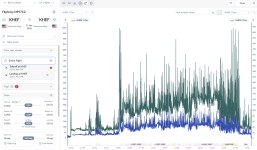
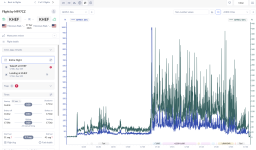
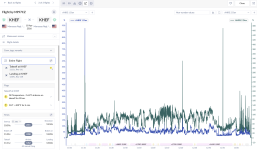
My %dev values look pretty bad so far:
#1 priority: prop balance.
 

Attachments

  • Flight1_Vib.png
    Flight1_Vib.png
    734.8 KB · Views: 5
  • Flight2Vibes.png
    Flight2Vibes.png
    714.6 KB · Views: 5
  • Flight3Vibes.png
    Flight3Vibes.png
    587.2 KB · Views: 5
I also just found out that both of my GSU25C fall in the affected range:
 

Attachments

  • GSU25C Service Alert.png
    GSU25C Service Alert.png
    168.4 KB · Views: 8
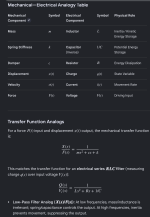
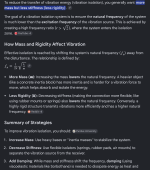
These two tables of mechanical transfer functions make me wonder about the stiffness recommendation. Antivibration camera mounts on drones use soft mounts (not rigid) and heavier mass (put the battery along with the camera on the isolated mount, put the disturbing vibratory source on the other side of the mount). These transfer functions seem to indicate a soft mount with heavy mass directly coupled to the ADAHRS would lower the resonant frequency. Seems like all agree on the mass damper, but what about the "spring" softness/rigidness?
 

Attachments

  • TransferFunctionAnalogs.png
    TransferFunctionAnalogs.png
    269.4 KB · Views: 3
  • softer_heaver.png
    softer_heaver.png
    384.8 KB · Views: 3
These two tables of mechanical transfer functions make me wonder about the stiffness recommendation. Antivibration camera mounts on drones use soft mounts (not rigid) and heavier mass (put the battery along with the camera on the isolated mount, put the disturbing vibratory source on the other side of the mount). These transfer functions seem to indicate a soft mount with heavy mass directly coupled to the ADAHRS would lower the resonant frequency. Seems like all agree on the mass damper, but what about the "spring" softness/rigidness?
As it turns out there was also a RV12 specific SB that indeed added rubber mounts to the GSU. Go figure.

 
My %dev values look pretty bad so far

I've written about this before:

The AHRS deviation values recorded in the G3X data log are only useful when the aircraft is stationary on the ground, or in totally unaccelerated flight in calm air. Any kind of maneuvering, power change, or even turbulence will pollute the data, since the numbers don't distinguish between movement due to vibration versus actual movement of the aircraft. So although different power settings can certainly have an effect on the AHRS, I would expect to see large values in the AHRS Deviation column any time the aircraft experiences any acceleration or rotation. It's only in truly steady-state flight that you can really make sense of this data.
 
As a follow up: https://jamessclarkiv.com/

I've balanced the prop....before: 0.57 IPS, after: 0.01 IPS....I rewired the CAN bus, no more CAN errors, I'm still getting AHRS#1 artificial horizon tumbling on each takeoff...sent latest data to Garmin...my GSU25C are both in the affected range.
 
As a follow up: https://jamessclarkiv.com/

I've balanced the prop....before: 0.57 IPS, after: 0.01 IPS....I rewired the CAN bus, no more CAN errors, I'm still getting AHRS#1 artificial horizon tumbling on each takeoff...sent latest data to Garmin...my GSU25C are both in the affected range.
As an additional data point, I added a 0.125" aluminum 1-piece doubler behind the two GSU25C ADAHRS mounted on the sub panel...I haven't flown again yet since, but I did do a ground static runup (never before done) and found that ADAHRS#1 fails, and ADAHRS#2 passes. The failure is on the #1 unit gyro reading (not the accelerometers and not the magnetometers). Now that both units are on a very stiff plate, I was considering swapping the two units location (same wires going to same units; such that #1 is now below #2 on the sub panel). I figure if the issue tracks the unit, it's a LRU problem, and if the problem stays with the same mounting location and now shows up on #2 box, it's a mounting location problem. But, just as I was about to undertake this issue, Garmin has offered an RMA number to send in ADAHRS#1 as part of the SB. I think I will try that first.
 
As an additional data point, I added a 0.125" aluminum 1-piece doubler behind the two GSU25C ADAHRS mounted on the sub panel...I haven't flown again yet since, but I did do a ground static runup (never before done) and found that ADAHRS#1 fails, and ADAHRS#2 passes. The failure is on the #1 unit gyro reading (not the accelerometers and not the magnetometers). Now that both units are on a very stiff plate, I was considering swapping the two units location (same wires going to same units; such that #1 is now below #2 on the sub panel). I figure if the issue tracks the unit, it's a LRU problem, and if the problem stays with the same mounting location and now shows up on #2 box, it's a mounting location problem. But, just as I was about to undertake this issue, Garmin has offered an RMA number to send in ADAHRS#1 as part of the SB. I think I will try that first.

I also did the same thing. Swapping the GSUs proved to it was the placement on the sub panel. (I can’t remember whether it was the one closest to the skin or the other one which was the culprit each time tho) I replaced my stiffener plate with two 3/4x3/4x1/8 angles coincident with the LRU mounting bolts. Didn’t fix it.
I’d suggest you don’t be lulled into a false sense of security by it passing the ground vibration test too. Mine would pass that then go haywire in flight at varying RPMs.

I’ve got a write up here somewhere. I’ll try search it for you.

What engine/prop/mag/EI setup do you have?
 
I also did the same thing. Swapping the GSUs proved to it was the placement on the sub panel. (I can’t remember whether it was the one closest to the skin or the other one which was the culprit each time tho) I replaced my stiffener plate with two 3/4x3/4x1/8 angles coincident with the LRU mounting bolts. Didn’t fix it.
I’d suggest you don’t be lulled into a false sense of security by it passing the ground vibration test too. Mine would pass that then go haywire in flight at varying RPMs.

I’ve got a write up here somewhere. I’ll try search it for you.

What engine/prop/mag/EI setup do you have?
IO-540-D4A5, Hartzell 2 Blade Constant Speed, SDS EI CPI2 (right side), Stock Mag on Left Side.

Also recently found some up/down movement in the cowl at the cowl pin hinges near top/center. I fabricated 2 new pins that are 0.120 vs 0.091, and I am able to get them installed (one with effort; one with a lot of effort). A vibrating/clicking noise at specific RPMs during ground runup may have been attributable to that cowl movement. Certainly the noise when pressed up/down manually was same/similar to the clicking heard while engine running. No addition starts/data since the cowl resin yet.
 
IO-540-D4A5, Hartzell 2 Blade Constant Speed, SDS EI CPI2 (right side), Stock Mag on Left Side.

Also recently found some up/down movement in the cowl at the cowl pin hinges near top/center. I fabricated 2 new pins that are 0.120 vs 0.091, and I am able to get them installed (one with effort; one with a lot of effort). A vibrating/clicking noise at specific RPMs during ground runup may have been attributable to that cowl movement. Certainly the noise when pressed up/down manually was same/similar to the clicking heard while engine running. No addition starts/data since the cowl resin yet.
Good stuff. I spent some time questioning whether my setup (D4A5 with 9:1, CAI, 3 blade, showplanes cowl, one mag, one EI ) was sufficiently unique. But it isn’t - and there’s been several 10s with this exact same issue with different FWFs. So I’m satisfied it’s an airframe specific situation.
I had no issue with GSUs on the sub panel in my RV7.
While it’s possible that its the cowl pins I think it’s unlikely. I suspect that most of the fleet has 090 pins.
I’ve got 120 v 090 on mine. If you pre bend them and have a generous taper toward the last inch or so, and lube them then you should have no problems.

Ultimately after coming up with lots of things that could vibrate I knew that deep in the back of my mind I’d never be happy shooting an approach knowing that some random vibrations from something as insignificant as a cowl pin could leave me without an AH.
The epiphany came when the RV12 “acoustic noise energy” (aka vibration) SB came out. Put simply in the context of all the mounting instructions that the manufacturer gives you - you are on your own. Garmin has done precisely zero research on particular experimental airframes to make sure you have a mounting position that has sufficient vibration or noise (however created) isolation.
They make it worse by prescriptively telling you where “not” to mount it (on the back of the GDU) when it appears that seems to be an almost universally successful mounting position.
They tell you it has to be as stiff as possible ( I had them mounted on the spar carry through at one stage - I challenge anyone to find a stiffer part of the airframe - no good) then solve the RV12 problem by mounting it on rubber bushes. Go figure.
Anyway… I enjoy reading your detailed analysis. Even if it does take me back to a very frustrating time 😉
 
Last edited:
Back
Top