

Van's Air Force

The definitive Van's Aircraft support community! Buying, building or flying an RV? Join our exclusive family of mentors and enthusiasts!

Filter Test Results

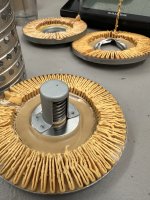
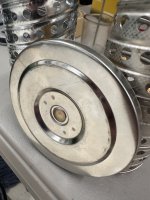
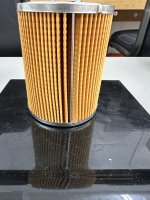
How important is the size of the internal oil filter bypass valve for our purposes? I decided to take apart one of the STP S8AXL (premium guard XL) oil filters that I was planning to use on my Lyc. IO-360 (98.7% @ 15 microns). The bypass valve was tiny compared to the Champion Aerospace 48108-1.

The diameters of the valves were about 9mm vs 18mm. This means the Champion valve’s surface area is 4x higher. I used a trigger pull gauge to see how much pressure it took to begin opening them and it was about 4 lbs for the STP vs 9 lbs for the Champion. I was using a 9mm bullet sitting on top of the valves to depress them with said trigger pull gauge. The STP is specified to open at 15 PSI, which I think is about the same as the champion. With a positive displacement oil pump, I guess the size of the valve shouldn’t matter if the math for the spring and valve area still works out to 15 psi? (I’ve read that journal bearing oil passages are much more restrictive than any filter media or bypass valve ever would be.)

I tried using some online calculators and it seems like even the smaller valve of the STP would still allow 10 gpm of oil flow if the filter media was completely clogged. I think that’s about peak flow from the Lycoming oil pump at 2700 rpm.

I’m not sure what to make of all this though. If the filter media became completely clogged with contamination I’d prefer to have full flow through the bypass valve available.

The STP did have about 15% more media area than the Champion (280 vs 240 sq in).

View attachment 98474
View attachment 98473
Respectfully, I believe you're overthinking this.

Flow is proportional the sq rt of the available delta P across the valve; something we don't know. If the system pressure was created by something other that a PD pump (something with a pump curve like a centrifugal pump) then these calcs and related component design becomes more important and involved.

The PD pump is gonna flow a relatively constant rate though pump slippage (not significant) will increase. The oil pump is directly coupled to the engine so there's no component to worry about over-amping. The filter will never completely clog so the overall (inverse) filter component flow coefficient (Cv) is the inverse of the sum of the two Cv's; element and bypass though I'm sure the bypass is designed for full flow.

While I can't prove it, I'm sure the bypass valve exists to protect the filter element integrity i.e. not blow it out and send DOD through the oil system vs ensuring oil flow to the system in case of a complete blockage in the element . So, why all the BS ramblings? There's nothing to worry about. Let's assume each OEM knows the collapse pressure of their elements and designed the rest accordingly, probably with a ton of margin.

My worthless $0.02 for the day.
 
Last edited:
How important is the size of the internal oil filter bypass valve for our purposes? I decided to take apart one of the STP S8AXL (premium guard XL) oil filters that I was planning to use on my Lyc. IO-360 (98.7% @ 15 microns). The bypass valve was tiny compared to the Champion Aerospace 48108-1.

The diameters of the valves were about 9mm vs 18mm. This means the Champion valve’s surface area is 4x higher. I used a trigger pull gauge to see how much pressure it took to begin opening them and it was about 4 lbs for the STP vs 9 lbs for the Champion. I was using a 9mm bullet sitting on top of the valves to depress them with said trigger pull gauge. The STP is specified to open at 15 PSI, which I think is about the same as the champion. With a positive displacement oil pump, I guess the size of the valve shouldn’t matter if the math for the spring and valve area still works out to 15 psi? (I’ve read that journal bearing oil passages are much more restrictive than any filter media or bypass valve ever would be.)

I tried using some online calculators and it seems like even the smaller valve of the STP would still allow 10 gpm of oil flow if the filter media was completely clogged. I think that’s about peak flow from the Lycoming oil pump at 2700 rpm.

I’m not sure what to make of all this though. If the filter media became completely clogged with contamination I’d prefer to have full flow through the bypass valve available.

The STP did have about 15% more media area than the Champion (280 vs 240 sq in).

View attachment 98474
View attachment 98473
I am sure Dan will confirm, but believe the std Lyc oil filter holder assembly has it's own pressure relief valve.
 
Mike’s response?

Crickets, but in fairness, the EAA moderator picks the audience questions. I assume he will see it eventually. This is the third time (at least) I've heard him make the same statement after telling everyone how great they are.

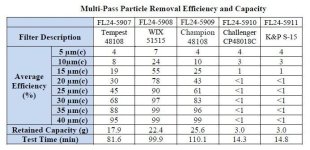
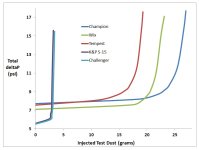
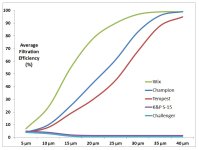
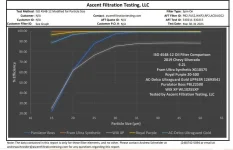
For those who are late to the party, the screens removed from a sample K&P and a Challenger were fundamentally the same when inspected under magnification. Neither screen is "laser perforated". Both are industry standard Dutch weave wire. Both failed to screen much of anything in the ISO 4548-12 standard 5 to 40 micron range (below), as expected for this type of screen, and both clogged very quickly on particles larger than 40 microns (3 grams total) , again as expected. Neither met the SAE ARP-1400 filtration standard set by Lycoming, Continental, et al way back in 1975...not even close.

Efficiency Results.jpg

DeltaP vs Load.jpg

Filtration Efficiency.jpg
 
A product review of the Challenger from a few days ago on the Aircraft Spruce website - This filter is very well designed and manufactured. I purchased it to go on a flight school C172 that gets about 14 oil Changes a year. Checking for metal is very easy and takes 30seconds. I read the information posted on the Van’s Air Force report, and the data showed that when it’s just put on after an oil change, that it performs as well as or superior to the other major brands in filtering ability even though the paper filters may work a little better after they’ve been in use while.

Not sure what this person is smoking...
 
I read the information posted on the Van’s Air Force report, and the data showed that when it’s just put on after an oil change, that it performs as well as or superior to the other major brands in filtering ability even though the paper filters may work a little better after they’ve been in use while.

Not sure what this person is smoking...

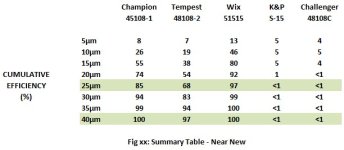
Here's reality. Efficiencies very early in the test...

Summary Near New.jpg

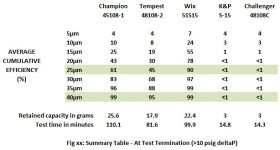
...and at termination. Note time to reach 10 psi, and how much material each held before reaching 10 psi:

Summary at 10 dP.jpg
 
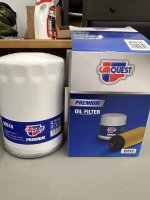
I’m going to use a premium guard made Carquest Premium on my next oil change for the IO-360. I liked it a little better than the Chinese made STP even though they are made by the same parent company. The Carquest premium has an absolute efficiency rating of 15 microns (98.7%) per their tech support line. I will probably hose clamp & safety wire the first few times for peace of mind. If you never hear from me again I guess it didn’t go well. Believe it or not these Vietnam made premium guard OEM filters are considered the best available on the car market right now when it comes to efficiency. $10. Fram and Wix (Mann + Hummel) seem to be in a race to the bottom; Fram (First Brand) just went bankrupt.
 

Attachments

  • IMG_6914.jpeg
    IMG_6914.jpeg
    1.6 MB · Views: 44
  • IMG_6913.jpeg
    IMG_6913.jpeg
    1.6 MB · Views: 38
  • IMG_6905.jpeg
    IMG_6905.jpeg
    1.7 MB · Views: 38
  • IMG_6893.jpeg
    IMG_6893.jpeg
    1.3 MB · Views: 42
Last edited:
; Fram (First Brand) just went bankrupt.
no surprise there. There reputation has been in the toilet for years from horrific quality due to massive cost cutting. Didn’t think wix was in the same place, but could be wrong on that. Conglomerates love to do that. Buy a company with a 50 year quality history, slash the coct of making them and ride the profit wave until the market figures it out and stop buying. That doesn’t mean mann is doing that with all their brands though.
 
no surprise there. There reputation has been in the toilet for years from horrific quality due to massive cost cutting. Didn’t think wix was in the same place, but could be wrong on that.

Fram made a comeback in the 2010’s and made a filter called the Ultra (now known as original or OG ultra if found in a closet or garage sale) that had an absolute efficiency in the single digits for $10. Then they got bought out by First Brands around 2020 who ruined it all, cheapened the filters and raised the prices, then bankruptcy last month.

Mann + Hummel did the same thing with Wix, acquiring them then implanting poor QC; relying on the past glory of the brand while cheapening the guts that the average Joe won’t see with lower performing filter media.

Don’t get me wrong, the Wix looks like it will still be a lot better than a Champion or Tempest, and needless to say a metal screen filter.
 
Fram made a comeback in the 2010’s and made a filter called the Ultra (now known as original or OG ultra if found in a closet or garage sale) that had an absolute efficiency in the single digits for $10. Then they got bought out by First Brands around 2020 who ruined it all, cheapened the filters and raised the prices, then bankruptcy last month.

Mann + Hummel did the same thing with Wix, acquiring them then implanting poor QC; relying on the past glory of the brand while cheapening the guts that the average Joe won’t see with lower performing filter media.

Don’t get me wrong, the Wix looks like it will still be a lot better than a Champion or Tempest, and needless to say a metal screen filter.
You seem knowledgeable on that industry. What do you think of purolator. That is what i have been using on the planes for the last 5 years when i moved away from napa and k&n hp1000
 
You seem knowledgeable on that industry. What do you think of purolator. That is what i have been using on the planes for the last 5 years when i moved away from napa and k&n hp1000

I just read BITOG too much.

Unfortunately Purolator is one of the brands Mann + Hummel acquired. They’ve been known as “tearolator” after a rash of filter media being discovered torn open from normal use during inspections. They also suffer from the louvers on their center cores being inadequately formed and closed off, potentially restricting flow to the engine. Lastly, their efficiency doesn’t seem to be that great, with the flagship “BOSS” testing at 35 micron absolute efficiency. So efficiency on par with a Champion or Tempest (but maybe without the build quality) and still a lot better than a Challenger, but unfortunately not as good as they might’ve been 15 years ago.

Notice the OG Fram Ultra here, sadly no longer available.
IMG_7106.webp
 
Have you seen much about Mobil 1? I haven’t seen them discussed as much. They look like a premium filter with a heavier housing.
I believe Champion Laboratories makes the Mobil 1 filters, along with the Amsoil filters. I've tried to get burst pressure numbers from the Amsoil folks, but they won't release them. Comparing the Mobil 1 with Amsoil side by side they appear virtually identical although I think the filter media is slightly different. One concern with these filters is how often they will go into bypass mode especially with cold oil.
 
I just read BITOG too much.

Unfortunately Purolator is one of the brands Mann + Hummel acquired. They’ve been known as “tearolator” after a rash of filter media being discovered torn open from normal use during inspections. They also suffer from the louvers on their center cores being inadequately formed and closed off, potentially restricting flow to the engine. Lastly, their efficiency doesn’t seem to be that great, with the flagship “BOSS” testing at 35 micron absolute efficiency. So efficiency on par with a Champion or Tempest (but maybe without the build quality) and still a lot better than a Challenger, but unfortunately not as good as they might’ve been 15 years ago.

Notice the OG Fram Ultra here, sadly no longer available.
View attachment 102094
thanks for that. maybe I will move to the wix versions.
 
The Amsoil EAO15 is the form factor equivalent of the WIX 1515 which has been used over the years. Amsoil claims 99% absolute efficiency at 20 microns using the ISO 4548-12 test standard. Here are the specs except for burst pressure. The Mobil 1 M1-301A I believe is very similar (99% at 30 microns) and has a burst pressure of 450 psi.


1763129309039.png
 
The Amsoil EAO filters are the same as a “Fram Synthetic Endurance” and are made by First Brands. The Royal Purple displayed in the graph I posted in reply 564 is also a Fram Endurance. As discussed Fram is owned by bankrupt First Brands and QC has been slipping. The main problem with the Synthetic endurance aka Amsoil EAO or Royal Purple is the bypass valve leaks unfiltered oil into the engine continuously due to its design and lack of proper sealing surface. Just search the internet for “Fram Flashlight Test”. Without this defect they could’ve been really good. I actually use Fram Endurances in my trucks but they take a cartridge filter and so they avoid the bypass valve problem since that’s part of the truck instead.

The Mobil 1 Filters are also Mann + Hummel so they are the same as Wix, Purolator, Motorcraft, etc and have the same problems with closed louvers, sloppy glue, torn media, poor efficiency (compared to top auto filters, still good compared to tempest/challenger).
 
Last edited:
The Amsoil EAO filters are the same as a “Fram Synthetic Endurance” and are made by First Brands. The Royal Purple displayed in the graph I posted in reply 564 is also a Fram Endurance. As discussed Fram is owned by bankrupt First Brands and QC has been slipping. The main problem with the Synthetic endurance aka Amsoil EAO or Royal Purple is the bypass valve leaks unfiltered oil into the engine continuously due to its design and lack of proper sealing surface. Just search the internet for “Fram Flashlight Test”. Without this defect they could’ve been really good. I actually use Fram Endurances in my trucks but they take a cartridge filter and so they avoid the bypass valve problem since that’s part of the truck instead.

The Mobil 1 Filters are also Mann + Hummel so they are the same as Wix, Purolator, Motorcraft, etc and have the same problems with closed louvers, sloppy glue, torn media, poor efficiency (compared to top auto filters, still good compared to tempest/challenger).
What about the k&n hp1002?
 
The Mobil 1 Filters are also Mann + Hummel so they are the same as Wix, Purolator, Motorcraft, etc and have the same problems with closed louvers, sloppy glue, torn media, poor efficiency (compared to top auto filters, still good compared to tempest/challenger).
Mobil 1 is Highline Warren as of February (no more MH). Supplier musical chairs, unfortunately.
 
It seems the oil filter companies are following the trend of pretty much all other industries, including Boeing. Cutting cost thru quality and QC to increase the shareholders value.
 
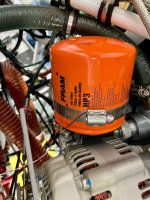
I just completed the annual and decided to replace my Tempest AA48108-2 and test this FRAM HP3 Oil Filter.

Prior to this last Tempest, I did install a Challenger type (can't remember the brand, not K&P) permanent filter for a few flights as I was curious and sort of scared of Tempest/Champion availability following the Covid...
Removed it as I didn't trust the gasket... Then the results came and that filter is now a table ornament...

Again, out of curiousness, I found the HP3 specifications similar to the Tempest (see below), except it does not have a torque nut and "ears" for safety wire.
Another difference is the need to oil the FRAM gasket prior to installation. Remember to wipe the base after, as it will be oily and could fool you in thinking there's a leak. (Happened to me...)
I tightened it ¾ turn as per instruction and added a probably useless clamp to safety wire it.
Only one hour on it for now.
Seems to be a reasonable replacement to Tempest and Champion, for about half the cost.

FRAM Racing Oil Filter Generic Marketing Pitch:
FRAM Racing® filters are designed with a heavy-gauge tapping plate and an extra-thick* steel can that is able to withstand the high pressure flexing caused by demanding driving conditions. A spiral-shaped center tube provides protection against collapse, and tough steel end caps add even more durability. A screen-over 22psi filter bypass valve provides additional protection against larger contaminants.
  • Compatible with all oil types, this filter is optimized for racing and high-performance street cars
  • Low-restriction synthetic blend racing media designed for high oil flow. The media features 94% efficiency @20 microns for excellent engine protection**
  • Maximum burst pressure: 350-500psi, depending on model***
  • Maximum operating pressure: 200psi on all models***
  • Recommended maximum oil flow: 10-18gpm, depending on model***
  • Silicone anti-drain back valve.

Model HP3 specs:

Height (Inch)3.763
Outside Diameter (Inch)3.677
Anti-Drain Back ValveYes
Bypass Relief ValveYes
Gasket Inside Diameter (Inch)2.460
Gasket Outside Diameter (Inch)2.814
Gasket Thickness (Inch)0.354
Gasket TypeBase
Attachment TypeSpin-On
Burst Pressure (Pounds per Square Inch)400.000
Bypass Relief Valve Setting (Pounds per Square Inch)16-28
Filter Media MaterialCellulose/Synthetic Blend
Inlet TypeThreaded
Thread SizeStandard
Torque NutNo
 

Attachments

  • IMG_0136.jpg
    IMG_0136.jpg
    1.9 MB · Views: 30
Last edited:
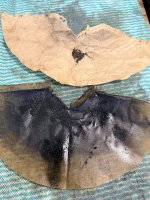
When Champion & Tempest filters couldn't be had for love nor money I switched to a K&P S15. While tidying up the hangar recently, I found a coffee filter with the remnants of an oil change from the K&P. I'd coincidentally just done an oil & filter change, & thought I'd compare the coffee filter results from the K&P with the Champion Filter paper element. When I cleaned the K&P I'd put the element in the ultrasonic cleaner with gas/petrol for about 20mins and periodically rolled the element to allow all the crud to fall out. I then poured the solvent through a coffee filter to collect & check the results.

My checking of the paper element doesn't usually involve much more than a visual inspection of the element with a magnifying glass and magnet. But this time I also ran the paper element through the ultrasonic cleaner in a bath of gas/petrol. I placed the pleats dirty side down & stretched them out to allow gravity help dislodge anything. It took considerably longer than the 20 mins to do the length of the filter element. I then also poured the gas from the ultrasonic cleaner through a fresh coffee filter.

The gas from the K&P filter drained through the coffee filter in probably less than 10 minutes. The gas from the Champion paper element too over 24 hours to drain through the coffee filter.

I thought the results were quite telling, and while totally unscientific unlike the testing @DanH did, I do think it provides a good visual comparison that clearly supports those original test results.

On first glance the K&P looks to have caught more carbon grit, but I thnk this is because it's collected together. Note how clean the coffee filter is. The coffee filter from the Champion filter is black with fine carbon that clogged it & caused the coffee filter to effectively block. That fine black carbon was caught by the paper element & removed from the oil in my engine. With the K&P it remained in suspension and circulating with the oil or settled out in the sump.

Don H
RV-6, O-320-D1A, ~715hours TT
IMG_0740.jpg
 
Thanks for sharing this. While it's what I would have expected to see, it's still startling to see the difference.
 
The Amsoil EAO15 is the form factor equivalent of the WIX 1515 which has been used over the years. Amsoil claims 99% absolute efficiency at 20 microns using the ISO 4548-12 test standard.
Do they actually claim "absolute efficiency" somewhere? I ask because ISO 4548-12 does not report absolute efficiency. In fact, the word absolute doesn't appear in the standard at all.
 
I thought the results were quite telling,...

...and exactly what I would expect. Remember, the screen mesh is more coarse than claimed, an industry standard 50x250 plain Dutch weave. Not a guess; I had samples checked at a respected screen calibration lab, independent of my own analysis and the ISO filter test lab.

Quoting the lab director..."The old rating for this mesh is 40um Nominal and approx. 60um Absolute. My engineer believes that if this material was tested in a filter cut point test, it would probably be rated a little larger opening."

Mesh screens do lend themselves to absolute ratings, as they exhibit a uniform single pore size. The primary use for screens in industry is sizing material on a pass or no-pass basis. Fibrous depth media is quite different.

Dutch Weave.jpg
 
I just completed the annual and decided to replace my Tempest AA48108-2 and test this FRAM HP3 Oil Filter.
Note- The parent company of Fram filters, First Brands Group, filed for Chapter 11 bankruptcy protection in September 2025. This is a really messy one. Fraud, missing assets, lots of litigation, etc.

All this disruption and shortage of liquidity (operating cash) are rarely positive for product quality. This makes me a little cautious toward new Fram production until there’s some more clarity on what exactly is going on.
 
Some of their documents still refer to “absolute efficiency”. More recent publications seem to have dropped the “absolute” adjective.


Thanks. That doc is more realistic, although detail is left to the imagination. For example, "99% at 20 microns" could be average efficiency for the duration of the test, or initial efficiency, which would be higher. Recall the efficiency of a depth media in a constant volume system deteriorates as the media loads with contaminant.

The 20 micron efficiency for the standard Wix filter we ran at the lab was 92 at 10 minutes and 57 at 100 minutes. All test points averaged 78.
 
Thanks. That doc is more realistic, although detail is left to the imagination. For example, "99% at 20 microns" could be average efficiency for the duration of the test, or initial efficiency, which would be higher. Recall the efficiency of a depth media in a constant volume system deteriorates as the media loads with contaminant.

The 20 micron efficiency for the standard Wix filter we ran at the lab was 92 at 10 minutes and 57 at 100 minutes. All test points averaged 78.
If you ever decide to do additional testing, I would be happy to contribute some $$ and a couple of the Amsoil filters. I'd like to see how they perform compared to the others. I believe they would do quite well with the possible exception of going into bypass initially with cold oil.
 
Heck, you don't need me. Anyone can arrange an ISO 4548-12 test. Only catch is the price, roughly $1500~$2000 per filter.
 
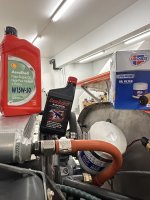
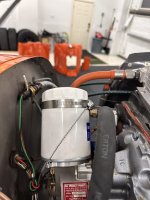
First time making the jump to a car filter. Trying out the CarQuest Premium 85515 made for Advance Auto Parts by OEM Premium Guard at the VAFI factory (Vietnam Advanced Filtration Inc). Rated 99.9% efficient at 25 microns and 98.7% (absolute) at 15 microns. Lyc IO-360. This filter has 30% more media area than Champion 48108-1, and it is a more efficient “synthetic resin” media type.

Ran up to 1800 and leak checked with cowling off. No leaks and Oil pressure steady at 85 psi the whole time since it was 10F outside; oil temp never got over 130 for the 7 minute ground run. Hose clamp safetied for superstition. Doubt it would move after hand tight + 3/4 turn with the strap wrench.
 

Attachments

  • IMG_7400.jpeg
    IMG_7400.jpeg
    1.3 MB · Views: 56
  • IMG_7401.jpeg
    IMG_7401.jpeg
    1.9 MB · Views: 55
Last edited:
Tagging "51624" search here to point oit, without cross posting, to not use a transmission filter based on "Wix Filter Alert" thread.
 
Back
Top