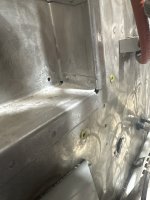
Balancing cost vs fire performance, it's hard to beat Firebarrier 2000+. As others have noted, the "Firebarrier" products at the big box stores are usually the latex versions, not silicone, and thus not suitable for our application.
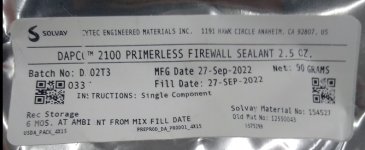
In 2023 I burned up a rather large pile of stainless steel sheets, with multiple firewall seam sealants. If you want an aerospace certified firewall sealant, I recommend Dapco 2100. Single part, convenient to use, works as well as the two-part aerospace choices. It's not significantly better than Firebarrier, but definitely costs more.
 No known firewall sealant will maintain a sealed seam in a Vans multi-part firewall when subjected to anything like the FAA standard fire test.
 The best you can hope for is good sealing during normal operations.
This unwelcome reality has little to do with sealant choice. It's a matter of material properties. When subjected to higher temperatures, three things happen.
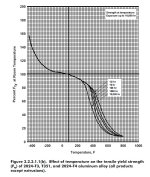
First, the aluminum rivets soften and melt. Here's a chart from an accepted design guide. Fty is tensile yield strength. It's down to 20% by 600F. At around 1100F aluminum rivets liquify. The fire standard is 2000F.
Second, the stainless sheet expands in the hot area while being constrained at the cooler sheet edges. The inevitable result is severe wrinkling along the length of the seam in the hot region. The forces involved quickly fail heat-softened rivets, and the seam spreads open. Here's an example, as observed over and over. The aluminum structural angle and rivet spacing is typical for an RV.
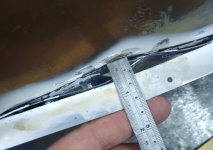
Third, fire flows through the gap, and the sealant itself begins to burn. Firewall sealants are rubber based or silicone based. When exposed to fire, they ablate and char, but neither is fireproof at the temperatures involved here, and they cannot maintain a seal when the gap grows to 10 or 20 or 30 times its original thickness.
Yes, I tried monel rivets. Even at half the standard rivet pitch, the stainless sheet still gaps enough to allow fire passage. However, there was one successful combination,
flanged stainless panels combined with monel rivets and Firebarrier 2000. The flanges stiffened the panel edges enough to kill the wrinkling and gapping. Unfortunately, flanging isn't an option for firewall panels as supplied in the kits.

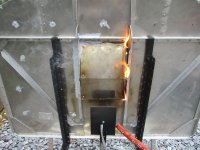
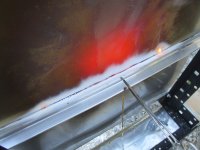
Cabin side, unshielded firewall, flanged seam, monel rivets, FB2000+ sealant. Forceps clamp a thermocouple. The light gray is silicone soot, as the sealant burns at a low level where exposed to air (note the tiny flame a minute or two into the test), but the seam did not open.
Which brings us back to sealants.
Do not use proseal. I was unable to establish an accurate ignition temperature for polysulfide sealant, but it is clearly way below that of any aerospace sealant or Firebarrier 2000. Plus it tends to liquify when heated,
boil out of the joint, and ignite even before the joint gaps open...in seconds.
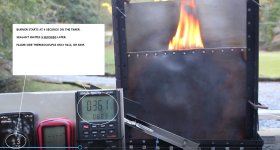
Here's an RV-7 full size test article. In this example, the front side is insulated/shielded, but even so, proseal doesn't work. The seam around the recess was sealed with Firebarrier 2000 at photo left, and proseal at photo right.