Van's Air Force

The definitive Van's Aircraft support community! Buying, building or flying an RV? Join our exclusive family of mentors and enthusiasts!

Unleaded Avgas - Thoughts?

These two ETBE based fuels (Swift 100R and LyondellBasell UL100E) should also prevent or eliminate sicky exhaust valve issues, unless it's caused by the oil or additives being used, especially in these Lycoming IO-390 engines that seem to be having so many occurrences of stuck valves.
 
I understand that the 94UL that’s been used a bunch in Europe is essentially 100LL with the lead removed. If that’s the case, I’d run that in a heartbeat today. Sure, the big bore turbo twin guys can’t run it, but every airplane except the L-39 I’ve owned in 30 years would eat it fine (and the L-39, being Soviet era, probably WOULD run on it, but I digress…).
UL94 is available at a bunch of airports in the US - here's the map. I put it in my RV-12 whenever I can get it.

100LL is going away in four years so I'd like to learn more about the three UL fuels under consideration
There are three 100-octane ones, but at least six fuels under discussion in this thread:
  • GAMI G100UL
  • Swift 100R
  • Lyondell UL100E (not yet commercially available)
  • Swift UL94
  • Ethanol-free mogas
  • Ethanol-containing mogas
The first three are the ones under consideration as a replacement for 100LL, but none of them are really drop-in... ETBE-based fuels (100R, UL100E) have detonation concerns at certain temperatures and spark advance settings, potentially requiring changes to timing and CHT redline, and G100UL has well-known materials compatibility concerns. It doesn't help anyone that the leadership at each of GAMI and Swift have each been loudly pointing out all the problems with the other's fuel, e.g. GAMI's talk at AirVenture 2024. I would imagine that a mixture of G100UL and 100R will probably run just fine in an engine as long as either one individually is compatible with that engine, but neither company seems likely to give any kind of approval to the other's product, so I doubt we'll ever see testing of that mixture.
 
In my area the best option for pump gas is 93E10 from Costco (a top tier fuel). Ethanol free unleaded is only offered at 87 octane.

In a perfect world, we would have Lycoming engine test stand data to answer the hard questions, Such as:
- For a parrallel valve, 8.5 compression engine do I need to establish any limitations on using 93E10 pump gas. If so, what limitations?
- If running 93E10 do I need to preclude using the winter blend (to avoid vapor lock)?
- For an angle head IO-360/390 type engine with 8.9 pistons, do I need to retard timing to ensure acceptable detonation margin? If so, what should I set for the new base timing?

I find it hard to believe Lycoming has not explored this type of test stand data. Every time I was able to corner a Lycoming rep asking such quesions I get the automatic response to reference their published engine fuel requirements.

I can only assume liability concerns drive this knowledge void.

We are left with antidotal information of what other people have tried. Not a great way to make decisions on machines that leave the ground.

Carl
Suspect lyc position will never change on this subject. Zero upside for them with all sorts of liability concerns.
 
More likely fluorosilicone elastomers - viton is common for O-rings, but anywhere you use a bellows-type diaphragm, a large flat piece of elastomer that has to move like in a pressure regulator or fuel flow controller (present in some form on all Bendix or AFP injection systems, and carburetors), the material of choice since 1987 (if memory serves) to replace standard rubber has been a flourosilicone variant. They don't care about ethanol or higher volatility fuels. I know that AFP is/was using fluorosilicone for fuel controller rebuilds, as I had them overhaul my (used) Bendix injection system on 2015 as I was assembling my FWF and that's what went into it.

These elastomers became the de-facto standard in the automotive world after the problems with natural rubbers became more apparent following the mandate for unleaded gasoline in the late 70's. The unleaded fuel has to be a slightly different mix of hydrocarbons to get the same anti-knock rating without the lead, and that mix was a little less friendly to natural rubber. The same problem is encountered today with ethanol mixes. I doubt you could even find a rebuild kit anymore with natural rubber diaphragms for anything larger than a lawn mower - and that, by the way, is precisely why small engines don't like fuel with ethanol.

And yes, I am that old. I lived through that, and remember it well. :cool:
What about the mechanical fuel pumps? The diaphragms stick out the side and they sure look like fiber reinforced natural rubber to me. Have you done research on what is being used there!
 
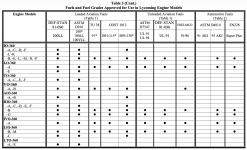
Lycoming does approve of automotive fuel in some of their engines. Here is just a snippet from their document:

Screenshot 2026-02-01 at 8.04.16 PM.png

And here is the complete document:
 

Attachments

Last edited:
Lycoming does approve of automotive fuel in some of their engines. Here is just a snippet from their document:

View attachment 108833

And here is the complete document:
If you read the details, it says auto gas cannot contain more than 1% oxygenates i.e. ethanol and others. Don’t know about your area, but non ethanol fuel is almost impossible to obtain in my state - one of the larger corn producing states. My state also stopped allowing 93 octane or put additive restrictions that keep suppliers from selling it here. We used to have 87, 91, and 93. Now it is 87, 89 and 91. Very few airports in my area sell mogas. A few have ul94, but also very limited.

I really wish i could use it. I fear that the new fuels are going to be substantially higher priced and that may push me to try harder.
 
Last edited:
Don’t know about your area, but non ethanol fuel is almost impossible to obtain in my state
We're lucky in that regard as non-ethanol premium (it's either 92 or 93) is fairly easy to find around here in Central Oregon. It's the only thing I'll run in my small engines.
 
What about the mechanical fuel pumps? The diaphragms stick out the side and they sure look like fiber reinforced natural rubber to me. Have you done research on what is being used there!
Greg (@airguy) addressed this here - probably ok:

 
Wanna abide to the manufacturer's recommendations? Wanna save a couple of $ flying 20 hours/year? Don't care about the environment? Never question anything you're being told? Assembled an "experimental" category craft but don't want to experiment? Afraid of loosing that precious and expensive new engine warranty?
Any doubt, then stay in the safe realms of history, and burn lead.
Of all of the whines you listed, I would say the bolded is an absolutely legitimate concern and should not be dismissed. If I had a brand new Lyco engine under warranty - you're damn right I'd be afraid of losing that.
 
I really wish i could use it. I fear that the new fuels are going to be substantially higher priced and that may push me to try harder.
Where is your experimental spirit?
91E10, that is what I have been using for years and is what's available here in CA at the local ARCO station.
See my tag line.
 
Greg (@airguy) addressed this here - probably ok:

I am familiar with what AFP does and have seen the flourosilicone diaphragm pieces in the spider and they do not look like those on the typical mech pumps. Those look like rubber to me. I thought greg had EFII, so he didn't have to worry about the mech pump. Maybe someone out there has researched this and can confirm.
 
Couple of things on this unleaded debate.... first of all I'm as environmentally friendly and conscious as anyone. I drive a Tesla, so I get the whole carbon footprint thing.

But why is it up to the EA community to be the beta testers for this?? Using unproven fuels that might potentially cause harm to the aircraft does NOT seem like a great idea. For those that have aircraft specifically built for using leaded fuels - I would say just leave them alone and grandfather them in like we do classic cars now. My feeling is the safety issues of all these O-rings going bad, fuel leaks, valves sticking, lower performance, and such are not worth the risk of trying these new fuels out in engines not modded for them. And I frankly have neither the time, desire or the skill to go and tear my engine down and fuel system down and do these mods. For those who WANT to do all that and/or new builders that want to build an unleaded friendly system from scratch - have a Nut!!

My belief is that it is the Certified market is where the rubber is going to meet the road. If these mandates to move to fully unleaded by 2030 stay in effect - then Lyco, Continential and the rest will design engines that will work fine. And the fuel industry will find the right fuel that works. They will be forced to work together to make it happen - otherwise they lose $$ and that is not something either are going to accept. Let the certified guys figure it out. But I'm not going to risk my airplane health or my life with something unproven.

Finally, isn't the benefit of going to unleaded fuels without a catalytic converter minimal? My understanding was the entire reason the auto industry went to unleaded was more to reduce smog pollution using the Catalytic converters and leaded fuel wouldn't work with them. The lead pollution aspect was a small edge benefit but nowhere near the main reason for the switch.

YMMV. Let the spears fly....
 
And I frankly have neither the time, desire or the skill to go and tear my engine down and fuel system down and do these mods.
The value of these discussions is determining the overall scope of the mods required to make various alternative fuels work. For some, this may be as simple as doing absolutely nothing. But understanding "why" some things need attention or not is the value of this site.

Do we know how differences in vapor pressure impact fuel plumbing?
Do we know the effect of ignition timing on power output rich or lean?
Do we know how the combustion chamber architecture difference between the angle valve and parallel valve impacts ignition timing? Did you even know there was a difference?
Do we know how oil temps, CHT or compression ratio impact detonation margin?

The answers to these questions exist on this forum if we are willing to dig, and the knowledge they provide allows a builder to make informed decisions about their airplane. I don't fault Doug or Lycoming or anyone else for failing to compile and publish a "how to" manual for the switch to an alternate fuel, but the info is out there.
 
I drive a Tesla, so I get the whole carbon footprint thing.
This statement actually proves that you don't.

My vehicle has a female electrical outlet under a door on my fender, as well, because buying electric was cheaper than buying gasoline in 2022 plus my fellow taxpayers were going to pony up $7,500 toward my purchase. But saving money does not equate to saving the world.

However this thread, or even this platform, is not the place to discuss where the electric used to charge a battery overwhelmingly comes from. Not to mention the methods and sources of the many materials to make the battery in the first place.
 
Couple of things on this unleaded debate.... first of all I'm as environmentally friendly and conscious as anyone. I drive a Tesla, so I get the whole carbon footprint thing.

But why is it up to the EA community to be the beta testers for this?? Using unproven fuels that might potentially cause harm to the aircraft does NOT seem like a great idea. For those that have aircraft specifically built for using leaded fuels - I would say just leave them alone and grandfather them in like we do classic cars now. My feeling is the safety issues of all these O-rings going bad, fuel leaks, valves sticking, lower performance, and such are not worth the risk of trying these new fuels out in engines not modded for them. And I frankly have neither the time, desire or the skill to go and tear my engine down and fuel system down and do these mods. For those who WANT to do all that and/or new builders that want to build an unleaded friendly system from scratch - have a Nut!!

My belief is that it is the Certified market is where the rubber is going to meet the road. If these mandates to move to fully unleaded by 2030 stay in effect - then Lyco, Continential and the rest will design engines that will work fine. And the fuel industry will find the right fuel that works. They will be forced to work together to make it happen - otherwise they lose $$ and that is not something either are going to accept. Let the certified guys figure it out. But I'm not going to risk my airplane health or my life with something unproven.

Finally, isn't the benefit of going to unleaded fuels without a catalytic converter minimal? My understanding was the entire reason the auto industry went to unleaded was more to reduce smog pollution using the Catalytic converters and leaded fuel wouldn't work with them. The lead pollution aspect was a small edge benefit but nowhere near the main reason for the switch.

YMMV. Let the spears fly....
My understanding, minimal cause I’m a dumb farmer, is that 1 (one, uno) company in the world makes the tetraethel (?) lead used in 100LL. The manufacturing is dangerous to health and environment and they are going to shutter the plant in 2030.
Unobtainable not mandates are taking 100LL off the table.

So if I was the last farmer in the world and I had to stop, folks had better quit laying blame, counting on government to magically make food and start figuring out real fast how they’re gonna eat or just give up.
Thankfully there are ways pioneered for us, I think you’re gonna have to just open your mind, research, take your pick and live with it, be glad you can still fly and tell everybody about the good old days when your RV-14 would fly 210 knots true before “they” took the lead out…..
 
Here is a list of airports with unleaded of any type available. The list gives the type of unleaded at each location.
Not surprising that only one airport listed here offers G100UL (San Jose of Santa Clara County), especially with all the negative test data on G100UL. I don't see Swift 100R yet, but Swift also manufactures and distributes UL94, which is the base fuel for 100LL, but without the Tetraethyl. Looking forward to seeing Swift 100R at the fuel pumps, which also contains additives to prevent valve seat recession and also uses UL94 as its base fuel.
 
My understanding, minimal cause I’m a dumb farmer, is that 1 (one, uno) company in the world makes the tetraethel (?) lead used in 100LL. The manufacturing is dangerous to health and environment and they are going to shutter the plant in 2030.
Unobtainable not mandates are taking 100LL off the table.

So if I was the last farmer in the world and I had to stop, folks had better quit laying blame, counting on government to magically make food and start figuring out real fast how they’re gonna eat or just give up.
Thankfully there are ways pioneered for us, I think you’re gonna have to just open your mind, research, take your pick and live with it, be glad you can still fly and tell everybody about the good old days when your RV-14 would fly 210 knots true before “they” took the lead out…..
I have a chicken or egg question (see what I did there). Is the plant closing because it's reached an end of life situation (cost to maintain and operate)? Or is it closing because of some government mandate?
 
Not surprising that only one airport listed here offers G100UL (San Jose of Santa Clara County), especially with all the negative test data on G100UL. I don't see Swift 100R yet, but Swift also manufactures and distributes UL94, which is the base fuel for 100LL, but without the Tetraethyl. Looking forward to seeing Swift 100R at the fuel pumps, which also contains additives to prevent valve seat recession and also uses UL94 as its base fuel.
Is valve seat recession still a thing on newer Lycomings? I'd have thought they'd have hardened seats like the rest of the internal combustion world by now.
 
Finally, isn't the benefit of going to unleaded fuels without a catalytic converter minimal? My understanding was the entire reason the auto industry went to unleaded was more to reduce smog pollution using the Catalytic converters and leaded fuel wouldn't work with them. The lead pollution aspect was a small edge benefit but nowhere near the main reason for the switch.
Absolutely correct! The reason in the 1970's for moving to unleaded fuel was that Tetraethyl leaded fuel would damage the catalytic converter. And oddly enough, my home airport (KPAE), which is a high-traffic GA airport, performed a third party lead testing in and around the airport (5-nm radius) only to find zero detectable lead -- the same results found in CA and CO at two other high-traffic GA airports. So, it appears that most all of the lead gets burned during combustion process anyway!
 
Is valve seat recession still a thing on newer Lycomings? I'd have thought they'd have hardened seats like the rest of the internal combustion world by now.
Well -- the University of North Dakota's aviation department discovered valve seat recession in their new Lycoming powered Cessna 172 fleet while using UL94 and then switched back to 100LL -- see Lycoming UND's valve seat recession investigation, which seems to point to high aromatic content in the fuel.

 
. I drive a Tesla, so I get the whole carbon footprint thing.

But why is it up to the EA community to be the beta testers for this??
We got a Tesla also it's the best car we've ever had, but the EV transition to mainstream did not take off without heavy subsidies. If the government really wanted to address the LEAD problem they would create a program to subsidize engine mods research needed to start using the new fuel. Or even better - fund/incentivize development for new engines to use the Jet A which has the logistics and lead problem already solved. Lycoming and friends are not going to spend their own money for R&D that is financially a dead end.
 
We got a Tesla also it's the best car we've ever had, but the EV transition to mainstream did not take off without heavy subsidies. If the government really wanted to address the LEAD problem they would create a program to subsidize engine mods research needed to start using the new fuel. Or even better - fund/incentivize development for new engines to use the Jet A which has the logistics and lead problem already solved. Lycoming and friends are not going to spend their own money for R&D that is financially a dead end.
Figuratively = Been there. Done that. Didn't even get the tee shirt.

It was called GAP. A small turbine and a JetA diesel were the two funded approaches. Guess how many are flying?

Text copied from search =

The GAP (General Aviation Propulsion) engine program, a NASA-sponsored initiative from the late 1990s/early 2000s, was designed to develop advanced, lightweight piston engines for small aircraft using technologies like non-replaceable cylinders. However, the program faced significant challenges, including higher-than-expected weight compared to traditional engines (like the IO-360) and potential developmental issues that delayed certification. By 2001, reports indicated the program hit roadblocks, with some interpretations suggesting it failed to meet performance goals, was hampered by restrictions on flight testing, and ultimately saw funding stopped.
Here is a breakdown of what happened to the GAP and related next-gen engine programs:
  • NASA GAP Program (Circa 2000): Developed by Teledyne Continental Motors (TCM) with five to six prototypes built and tested on a Cessna 337. It was considered "a long way from certification" due to technical issues, high weight, and the need for significant longevity testing.
 
NASA GAP Program (Circa 2000): Developed by Teledyne Continental Motors (TCM) with five to six prototypes built and tested on a Cessna 337. It was considered "a long way from certification" due to technical issues, high weight, and the need for significant longevity testing.
What are the odds that Rotax is working on larger, higher horsepower, engines to meet the unleaded future?

I feed mine 91E10, 93E10, UL94, ethanol free 90 in proportion with 93E10, and one time when I had just over a half tank of UL94 I filled up with the 87 at KAPT/Jasper, TN to make it home with required reserve, etc. and it handles any and all of these blends wonderfully and at 4 gph!
 
Last edited:
Standard mags?

One Slick and one Lightspeed III, AFP FI and boost pump plus Tempest mechanical fuel pump.
Also and probably most beneficial, a constant flow return line and overall a very cool running engine.

My motivation for using unleaded gasoline and experimenting with mogas was mainly because I can.
The threat of 100LL going away has been advertised for years and deadlines have come and gone.
The glacial pace of gumbiment approval is yet another reason to find an alternative before you are forced to put paint eating
"approved" fuel into your wing tanks.
At least on my installation, there is no need to make adjustments by switching from mogas to avgas since I carry both most of the time.
Only if I analyze engine data can I see a very small increase in EGTs (between 10 and 20 degrees) when switching between mogas and 100LL.
I find that I can lean just a bit more on mogas than 100LL before I notice roughness.
 
What about the mechanical fuel pumps? The diaphragms stick out the side and they sure look like fiber reinforced natural rubber to me. Have you done research on what is being used there!
Not on mechanical fuel pumps, sorry - I run dual electricals and removed the fuel heating device that is bolted to the engine block. It does more harm than good.
 
I am familiar with what AFP does and have seen the flourosilicone diaphragm pieces in the spider and they do not look like those on the typical mech pumps. Those look like rubber to me. I thought greg had EFII, so he didn't have to worry about the mech pump. Maybe someone out there has researched this and can confirm.
Greg started out with dual electric pumps (no mechanical) and Bendix injection, then at 800 hours I switched to full SDS EFI.
 
We got a Tesla also it's the best car we've ever had, but the EV transition to mainstream did not take off without heavy subsidies. If the government really wanted to address the LEAD problem they would create a program to subsidize engine mods research needed to start using the new fuel. Or even better - fund/incentivize development for new engines to use the Jet A which has the logistics and lead problem already solved. Lycoming and friends are not going to spend their own money for R&D that is financially a dead end.
💯 love my M3P. Best car I’ve ever owned too. But I doubt im saving the planet…
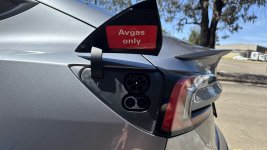
I joke to my friends that I need to run ROP to keep my household emissions up at 2024 levels.
IMG_5200.jpeg
 
Well -- the University of North Dakota's aviation department discovered valve seat recession in their new Lycoming powered Cessna 172 fleet while using UL94 and then switched back to 100LL -- see Lycoming UND's valve seat recession investigation, which seems to point to high aromatic content in the fuel.

Pretty unscientific. Also possible that the lycoming valve seats are of poor quality and can’t survive without lead. Lead is known to improve valve seat longevity. It is why the industry had to move to hardened seats when the lead went away in the 70’s. While there may be many planes at und, it is still one maintenance operation with standardized maintenance protocols as well as pilot usage protocols. Therefore really a sample size of one. Could be something unique they are doing that cause this issue when using that fuel that you or i wouldn't see.
 
Pretty unscientific. Also possible that the lycoming valve seats are of poor quality and can’t survive without lead. Lead is known to improve valve seat longevity. It is why the industry had to move to hardened seats when the lead went away in the 70’s. While there may be many planes at und, it is still one maintenance operation with standardized maintenance protocols as well as pilot usage protocols. Therefore really a sample size of one. Could be something unique they are doing that cause this issue when using that fuel that you or i wouldn't see.
Indeed this triggered a lot of consternation and the people providing the fuel were probably not too happy that they were not in the loop much sooner, since in the end it seems that there was nothing wrong with the fuel, from the limited info I have about this case. They say that there is no such thing as bad publicity, but not sure that the Swift people would agree.
 
I don’t know if this has been posted but here’s Lycomings take on unleaded and especially automotive fuels.

 
I have a chicken or egg question (see what I did there). Is the plant closing because it's reached an end of life situation (cost to maintain and operate)? Or is it closing because of some government mandate?
Reporting that I have seen says that the plant is reaching end-of-life and has to be retired, and company can’t justify rebuilding it.
 
💯 love my M3P. Best car I’ve ever owned too.
I've found that the "frunk" on my Model 3 is just the right size to hold a NATO jerry can. The Wavian one I have won't leak, even on its side in the frunk. I do get weird looks when I pull in to the gas station, though.
 
These two ETBE based fuels (Swift 100R and LyondellBasell UL100E) should also prevent or eliminate sicky exhaust valve issues, unless it's caused by the oil or additives being used, especially in these Lycoming IO-390 engines that seem to be having so many occurrences of stuck valves.
I have seen similar results with UL100E and Swift 100R. Cleaner burn helps reduce lead related deposits, so sticky exhaust valves show up less often, especially on IO 390s. It does not fix oil choice or poor operating habits, but as a fuel alone it seems to lower the risk compared to 100LL.
 
Reporting that I have seen says that the plant is reaching end-of-life and has to be retired, and company can’t justify rebuilding it.
I suspect the lack of justification is driven by the 2031 ban. The plant I'm working at now is going on 100yrs of operation. We rebuild them every so often based on the operational conditions in the same way we overhaul our Lycomings or replace the fabric on the Cub. Industrial outages or "Turnarounds" are what I do.

I'm all for a lead free alternative. Permitting the use of better oils and a cleaner operating power plant is a great idea. I am however annoyed at the dubious justification to make a change (legislate vs innovate). There are way worse chemicals used in making fuel and many other products we use every day. Look up HF Alky for instance (alky units are one of very few plant I try hard to avoid).
 
Pretty unscientific. Also possible that the lycoming valve seats are of poor quality and can’t survive without lead. Lead is known to improve valve seat longevity. It is why the industry had to move to hardened seats when the lead went away in the 70’s. While there may be many planes at und, it is still one maintenance operation with standardized maintenance protocols as well as pilot usage protocols. Therefore really a sample size of one. Could be something unique they are doing that cause this issue when using that fuel that you or i wouldn't see.
I agree -- but, at the same time, the results were compelling enough for Lycoming to investigate. I read the UND valve recession report myself, where they were seeing this issue across their entire fleet of 130 late model IO-360 Lycoming powered Cessna 172S aircraft. In the UND report, I noticed that their standard pilot operating procedure stated "power is generally set to 2,400–2,550 RPM for cruise, with leaning performed above 3,000 ft by adjusting the mixture to peak RPM or using EGT gauges to find peak, then enriching slightly". So, they might be operating a bit too close to peak EGT at the higher power settings. However, they didn't noticed valve recession issues while running 100LL using these same settings, so they switched back to 100LL.
 
Last edited:
I suspect the lack of justification is driven by the 2031 ban. The plant I'm working at now is going on 100yrs of operation. We rebuild them every so often based on the operational conditions in the same way we overhaul our Lycomings or replace the fabric on the Cub. Industrial outages or "Turnarounds" are what I do.

I'm all for a lead free alternative. Permitting the use of better oils and a cleaner operating power plant is a great idea. I am however annoyed at the dubious justification to make a change (legislate vs innovate). There are way worse chemicals used in making fuel and many other products we use every day. Look up HF Alky for instance (alky units are one of very few plant I try hard to avoid).
Hey - just telling you what I have read and understand from a bunch of meetings I have been in. The plant/company is in England, and their only actual customer for the product is aviation fuel (as I understand it). You can look them up and make a proposal for turning around their facility in 20309…and see what they say! 😉
 
Hey - just telling you what I have read and understand from a bunch of meetings I have been in. The plant/company is in England, and their only actual customer for the product is aviation fuel (as I understand it). You can look them up and make a proposal for turning around their facility in 20309…and see what they say! 😉
I've actually tried looking up more info, but I can't find much real info other than lead is the devil. From what I could find it's produced by more than one company, even one in Houston haha. I found a paper claiming most of Africa some of Asia and the Middle East still run on leaded fuel? So I'm having trouble sorting through what's correct :). You've been far more involved in the discussions than I have so I'll just have to accept that it is what it is.


I should walk upstairs and get an education on gasoline and octane from the process engineers. But we call their area the nursery cause almost all of them were in a college dorm room within the last few years.:ROFLMAO::ROFLMAO:
 
I agree -- but, at the same time, the results were compelling enough for Lycoming to investigate. I read the UND valve recession report myself, where they were seeing this issue across their entire fleet of 130 late model IO-360 Lycoming powered Cessna 172S aircraft. In the UND report, I noticed that their standard pilot operating procedure stated "power is generally set to 2,400–2,550 RPM for cruise, with leaning performed above 3,000 ft by adjusting the mixture to peak RPM or using EGT gauges to find peak, then enriching slightly". So, they might be operating a bit too close to peak EGT at the higher power settings. However, they didn't noticed valve recession issues while running 100LL using these same settings, so they switched back to 100LL.
30 ROP, which is probably where they are is the highest CHT range. That shouldn't be an issue in and of itself, but who knows. I am not sure I would trust lyc to say that their valve seats were not strong enough to survive without lead. Would expect them to simply say that the unleaded fuel was the cause. Fox / hen house thing. Like asking me to investigate whether or not my posts were insensitive or inflamatory. Kind of like using a plastic piston and then blaming the oils properties when it melts. They gave a not false answer, but not necessarilly the full story. Not accusing them, just skeptical. IMHO, there is no way that fuel itself causes valve recession. More variables involved. Heat or lubrication are the top contenders on my list.
 
I suspect the lack of justification is driven by the 2031 ban. The plant I'm working at now is going on 100yrs of operation. We rebuild them every so often based on the operational conditions in the same way we overhaul our Lycomings or replace the fabric on the Cub. Industrial outages or "Turnarounds" are what I do.

I'm all for a lead free alternative. Permitting the use of better oils and a cleaner operating power plant is a great idea. I am however annoyed at the dubious justification to make a change (legislate vs innovate). There are way worse chemicals used in making fuel and many other products we use every day. Look up HF Alky for instance (alky units are one of very few plant I try hard to avoid).
Sorry - I despise the use of AI in forums, but when I googled “company that makes tetraethyl lead”, I got this response:

Innospec Inc., a global specialty chemical company based in the UK and USA, is recognized as the world's sole remaining manufacturer of tetraethyl lead (TEL) for leaded gasoline
. Formerly known as The Associated Octel Company, Innospec produces TEL for specialized aviation fuel (100LL) and, until recently, for the last few remaining countries using leaded motor fuel.
Key details regarding the manufacturer of TEL:
  • Company Name: Innospec (previously Octel).
  • Manufacturing Site: The Ellesmere Port plant in the UK is the site of production.
  • Current Usage: While almost completely banned for road vehicles globally, TEL is still manufactured by Innospec for use in aviation gasoline (avgas).
  • Historical Context: Historically, TEL was produced by the Ethyl Corporation, formed by General Motors and Standard Oil of New Jersey.
  • Distribution: Innospec was previously accused of selling TEL to countries like Algeria, Iraq, Yemen, and North Korea,, but has ceased sales for motor gasoline.
The production of TEL by Innospec has faced scrutiny due to its high toxicity and environmental impact, leading to its near-total phase-out worldwide.

You can go to Wikipedia for a long discourse on the chemistry and history these stuff:


Most of what I know about TEL, the demise of 100LL, and the convoluted process of finding a replacement comes from not than a decade of reading (and talking to) Paul Bertorelli……
 
Wondering if you have done an in flight switch of mogas in one wing and 100LL in the other? I have, and the EGT and CHT behavior of the two fuels is very noticeable. Disclaimer - my experiment was with California summer blend auto fuel from the corner gas station.

It does run, but clearly the two fuels I used need their own distinct ignition and mixture maps to run “right”.
Tried this today, and could not see anything material when changing from 100LL to MOGAS. Flew at 5500, 6500, and 7500. RPM at 2400 and 2500. FF from about 8.5 up to 10.5. Tested at peak EGT and just a tad bit lean of peak.

This MOGAS is delivered from a pump at the airport, so is probably not the same as corner gas station gasoline. I'll have to try that next, first BP 98 and then BP 95.

1770160111861.png
 
Tried this today, and could not see anything material when changing from 100LL to MOGAS. Flew at 5500, 6500, and 7500. RPM at 2400 and 2500. FF from about 8.5 up to 10.5. Tested at peak EGT and just a tad bit lean of peak.


This MOGAS is delivered from a pump at the airport, so is probably not the same as corner gas station gasoline. I'll have to try that next, first BP 98 and then BP 95.

View attachment 109040

Thanks for the follow up. Did you happen to take note of your ignition timing during the switching?

The “gasoline” (using that term very loosely) from California is an unknown witches brew that probably varies in chemical makeup from County to County, so hard to consider my experience a baseline for comparison. But it does give me hope the stuff I can get here in AZ is better/more suitable for aviation use.
 
This MOGAS is delivered from a pump at the airport, so is probably not the same as corner gas station gasoline

Maybe not on your field, but on mine it is.
I made some investigation a couple of years ago, and found out that the dino juice delivered to our airfield pump is also supplied to the local auto gas pumps in the region.
 
Did you happen to take note of your ignition timing during the switching?
I didn't watch the timing, unfortunately. And my EI Commander does not log to my EFIS - something the EngineBridge can do. Typically when flying under these conditions I see between 25 and 28 degrees, and often as high as 32 degrees. Looks like I'll have to run another test!
 
Innospec Inc., a global specialty chemical company based in the UK and USA, is recognized as the world's sole remaining manufacturer of tetraethyl lead (TEL) for leaded gasoline
These guys claim to produce TEL in China: http://www.tdschem.com/ so we'll probably keep seeing 100LL for the coming decades no matter what happens to the UK plant.

We need to stop dragging this out, rip off the bandaid, and modify our engines to support unleaded/mogas. We in the experimental world can lead the rest of aviation. The tech exists, we're just not pushing it. I can think of 1000s of excuses to not do it, just like there are 1000s of reasons to not build an airplane.
 
Sorry - I despise the use of AI in forums, but when I googled “company that makes tetraethyl lead”, I got this response:

Innospec Inc., a global specialty chemical company based in the UK and USA, is recognized as the world's sole remaining manufacturer of tetraethyl lead (TEL) for leaded gasoline.......
(Sarcasm font = on) I now think less of you. (off)

This is the kind of topic that the "AI" enhanced search engines are good for. On the other hand, the people that blindly use such to bolster a technical position can be dangerous to themselves and anyone that accepts their "positions". Someone here recently did such when stating a position on Hi-loks; a great product and build option. The "AI" related info that was posted was obviously mostly, gathered from the OEM's literature. What could be wrong, right?

No mention of application anywhere in the regurgitation. Applying the wrong material (titanium) or a head designed for shear application in tension could very easily have some catastrophic consequences.

Enhanced "AI" search engines can be a great tool as long as you respect its limitations and your own. It can also be fun here at work when someone uses such to try and make their presentations/points/arguments/etc. Scratching the surface with some strategic questions can reveal a lot of dumb-a$$, laziness, or both sometimes but then again, I'm easily amused.
 
(Sarcasm font = on) I now think less of you. (off)

This is the kind of topic that the "AI" enhanced search engines are good for. On the other hand, the people that blindly use such to bolster a technical position can be dangerous to themselves and anyone that accepts their "positions". Someone here recently did such when stating a position on Hi-loks; a great product and build option. The "AI" related info that was posted was obviously mostly, gathered from the OEM's literature. What could be wrong, right?

No mention of application anywhere in the regurgitation. Applying the wrong material (titanium) or a head designed for shear application in tension could very easily have some catastrophic consequences.

Enhanced "AI" search engines can be a great tool as long as you respect its limitations and your own. It can also be fun here at work when someone uses such to try and make their presentations/points/arguments/etc. Scratching the surface with some strategic questions can reveal a lot of dumb-a$$, laziness, or both sometimes but then again, I'm easily amused.
My day job is engineering in the oilfield - the green kids coming out of college try to use AI for everything, the results are usually pretty amusing. You can separate the wheat from the chaff pretty quickly.
 
Like many of you, I'm following the transition to unleaded Avgas with interest. I've found some lively discussion around the internet but very little here on VAF. I find that odd so I thought I'd start a new thread here.

Just to get some discussion going, the unleaded fuels currently being considered have shown some potential drawbacks - both real and perceived. Here are my concerns in order:

1- Fuel tank sealant compatibility
As stressful as it was to build my fuel tanks, if there is even a 1% chance that a candidate fuel will cause tank sealant to fail resulting in fuel tanks leaks, I won't use it. Instead, I'd probably sell my airplane and buy something with fuel bladders or something that isn't damaged by the fuel. No way I'm removing the tanks, removing the existing sealant and re-applying something else.

2- Paint damage
Paint damage caused by spilled/leaking fuel is almost as serious a concern to me. I will be paying a good chunk of change to get my airplane painted next year and if a new unleaded fuel ruins my paint job, I will not be a happy camper.

3- Engine timing changes
Any changes that might be required to ignition timing don't concern me too much. I think we have some leeway as experimental builders to adjust timing. I know that will reduce performance but I'm naively thinking I'll have some "overhead" to work with (215HP). I know the certified folks are saying this is a deal breaker.

4- O-ring deterioration
O-rings - little concern. Swapping o-rings doesn't seem like a big deal but again, I'm naive on this one as well.

5- Miscibility (mixing fuels)
This could be a problem initially but I'm not worried about it. During the transition, I'll just avoid mixing fuels if that ends up being an issue. Inconvenient? Yeah. Deal breaker? Not for me.
If I’m not mistaken George Brawly talked about all of these including the mixing of fuel (they did very extensive mixing tests) and at least that one is a non issue with his fuel. I am personally not interested in perceived issues, only real ones.
 
If I’m not mistaken George Brawly talked about all of these including the mixing of fuel (they did very extensive mixing tests) and at least that one is a non issue with his fuel. I am personally not interested in perceived issues, only real ones.
Yes he did talk about it and that point I can be comfortable with. He also made a lot of other statements without a lot of substantiation that didn't feel very comforting. I'll take wagers that G100UL will fade away quickly. While I typically will root for the perceived underdog, my money here is on scientific approach and validation vs folksy bombastic verbosity.
 
Back
Top