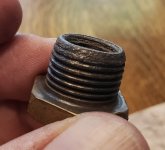



There are a number of discussions in this forum about the need for and type of anti-seize compound that should be used on spark plugs. For this thread, I'm specifically discussing aviation spark plugs (18mm, from Champion or Tempest) - I know that those of you using automotive spark plugs with adapters face additional complexities.
Per Lycoming's SI 1042 AI, they say ""Use a copper-based anti-seize compound or engine oil on spark plug threads starting two full threads from the electrode, but DO NOT use a graphite-based compound." I reached out to Lycoming and received this response:
"The reason Lycoming prohibits graphite-based anti-seize is not primarily because of the spark plug. It's because graphite can promote galvanic corrosion when in contact with aluminum cylinder heads. Lycoming's cylinder heads are aluminum alloy, and the spark plug threads ultimately engage steel inserts installed in that aluminum structure. Graphite is electrically conductive and can act as a noble material in a galvanic couple, accelerating corrosion of adjacent aluminum under certain conditions."
Conversely, the anti-seize sold under Champion and Tempest labels are graphite-based compounds that are recommended in their service instruction / service bulletins. In Tempest 1710 Rev E, they say a clean, dry installation is recommended, but if you do use an anti-seize compound, you should use theirs (Tempest T556, which is graphite-based). Champion's Aviation Service Manual V6-R has some specific instructions (apply sparingly, don't get it on the electrodes) and while it doesn't recommend a specific compound by name, the picture is of Champion P/N 2612, which is a graphite-based compound. Tempest SB-005 warns against over use of anti-seize, and specifically mentions copper fouling of the plugs, without saying "don't use copper based anti-seize."
Tribal lore on this forum has advocates for using engine oil on the threads (supported by Lycoming SI 1042 AI), and an equal number of advocates who swear that using anything will just gum up the threads. There seem to be just as many people who have "been using graphite-based compounds for 40 years with no issues" as there are folks who "never had any problems installing plugs with no anti-seize," and a lesser number who are complying with Lycoming's guidance for copper-based anti-seize.
A confounding factor is that the answer that seems "least wrong" to me (based on the potential for bad stuff happening) - using a small amount of engine oil on the threads - then introduces ambiguity around the torque value of the spark plug, since you've now lubricated the threads.
I guess I just wanted to get all the facts in one place and solicit input - given all of these conflicting recommendations, what did you choose, and why? And what accommodations (e.g. torque value modifications) do you implement?
Perhaps this is a non-issue, and a careful application of oil, anti-seize, or non-application are all equally subject to working just fine or causing a very low-probability issue. I'm interested to hear your thoughts.
Per Lycoming's SI 1042 AI, they say ""Use a copper-based anti-seize compound or engine oil on spark plug threads starting two full threads from the electrode, but DO NOT use a graphite-based compound." I reached out to Lycoming and received this response:
"The reason Lycoming prohibits graphite-based anti-seize is not primarily because of the spark plug. It's because graphite can promote galvanic corrosion when in contact with aluminum cylinder heads. Lycoming's cylinder heads are aluminum alloy, and the spark plug threads ultimately engage steel inserts installed in that aluminum structure. Graphite is electrically conductive and can act as a noble material in a galvanic couple, accelerating corrosion of adjacent aluminum under certain conditions."
Conversely, the anti-seize sold under Champion and Tempest labels are graphite-based compounds that are recommended in their service instruction / service bulletins. In Tempest 1710 Rev E, they say a clean, dry installation is recommended, but if you do use an anti-seize compound, you should use theirs (Tempest T556, which is graphite-based). Champion's Aviation Service Manual V6-R has some specific instructions (apply sparingly, don't get it on the electrodes) and while it doesn't recommend a specific compound by name, the picture is of Champion P/N 2612, which is a graphite-based compound. Tempest SB-005 warns against over use of anti-seize, and specifically mentions copper fouling of the plugs, without saying "don't use copper based anti-seize."
Tribal lore on this forum has advocates for using engine oil on the threads (supported by Lycoming SI 1042 AI), and an equal number of advocates who swear that using anything will just gum up the threads. There seem to be just as many people who have "been using graphite-based compounds for 40 years with no issues" as there are folks who "never had any problems installing plugs with no anti-seize," and a lesser number who are complying with Lycoming's guidance for copper-based anti-seize.
A confounding factor is that the answer that seems "least wrong" to me (based on the potential for bad stuff happening) - using a small amount of engine oil on the threads - then introduces ambiguity around the torque value of the spark plug, since you've now lubricated the threads.
I guess I just wanted to get all the facts in one place and solicit input - given all of these conflicting recommendations, what did you choose, and why? And what accommodations (e.g. torque value modifications) do you implement?
Perhaps this is a non-issue, and a careful application of oil, anti-seize, or non-application are all equally subject to working just fine or causing a very low-probability issue. I'm interested to hear your thoughts.