Van's Air Force

The definitive Van's Aircraft support community! Buying, building or flying an RV? Join our exclusive family of mentors and enthusiasts!

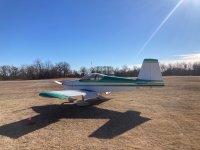
RV-7A with Rotary "Renesis" 13B

dlomheim

Well Known Member
I purchased an RV-7A the end of Sept. and then took 30 days to meet insurance requirements, but finally got it home. I then spent the next month making it airworthy (brakes, tires, oil, etc.), and have now finally begun getting to know it a bit. Since I've been building a 9A with a 13B since 1999 (#90116), it's nice to have this 7A rotary to fly, while I finish building the 9A! Empty weight: 1107 lbs., est. HP 180, Prop: Cato 76X88, Total Time: 928 hrs., PSRU: Tracy Crook's "C" model w/2.85 ratio, fuel: 87 oct. auto fuel with 1.5 ounces of marvel mystery and 1.5 ounces 2 cycle oil added per 5 gallons of fuel. Cruises 175 TAS at 7-8K, and est. 8.5-9.5 gph. As I fly it more, I'll be able to get some updated numbers.

Doug

RV-7A w/RX-8 13B Flying
RV-9A w/RX-7 13B FWF
RV-3A w/O-290"G" sold
 

Attachments

  • RV7A small.jpg
    RV7A small.jpg
    799.5 KB · Views: 387
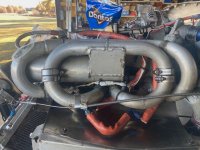
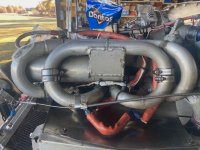
  • Intake Manifold Side.jpg
    Intake Manifold Side.jpg
    120.7 KB · Views: 391
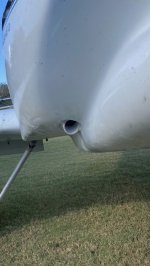
I now have flown the Renesis powered RV-7A I purchased last Sept for about 13.5 hrs. with a 4.0 logged yesterday. Over the 4.0 hrs. I burned an avg. of 8.5 gph while cruising about 160 mph TAS, at 5500 ft. Thus far the engine fires up every time after only turning 1-1.5 blades, whether hot or cold. The oil is running a higher than I'd like in climb out (@210 degrees), but it drops down to 185 degrees while cruising. I still am going to experiment by adding a "shark" like air exits on the oil cooler side of the cowling, or possible add a turning vane to the intake to pull some more air from the water radiator side, since water runs cool at 145 degrees on a regular basis.
If you're looking for a nice airport restaurant in KS, check out the Lloyd Stearman Field restaurant, on the north end of the airport. :)
 

Attachments

  • 43 mph headwind.jpg
    43 mph headwind.jpg
    120.4 KB · Views: 121
  • Sunsetting.jpg
    Sunsetting.jpg
    41.8 KB · Views: 118
  • Stearman Rampg.jpg
    Stearman Rampg.jpg
    77 KB · Views: 121
I've been flying the RV-7A fairly regularly since January and finally hit 50 hrs. on the hobbs meter, and therefore pulled the cowling off and drained the Mobile One oil. The Renesis 13B lost/burned zero (0) oil over the last 50 hrs., and visual of everything under "the hood" looked pretty good, and no worse for wear owing to the 963 hrs. now on this installation.

Since the cowling was off I also did a compression test on both rotors which yielded 88 95 89 (#1), and 89 92 91 (#2), and as a rule of thumb (on rotaries), 80+ PSI shows the engine is still pretty tight and producing good HP.

Doug
 
snipped since water runs cool at 145 degrees on a regular basis. snipped
145 degrees for coolant temp is considerably below what Mazda designed the cooling system to run at. Any concerns there? Are you using a thermostat in the cooling system?
 
I like reading this as I was a Rotary specialist in the 90's. Some day I may go for it, but for now, I'll live vicariously through you.
 

Attachments

  • 20230904_184104.jpg
    20230904_184104.jpg
    2.4 MB · Views: 111
  • 20210917_190150.jpg
    20210917_190150.jpg
    1.1 MB · Views: 109
145 degrees for coolant temp is considerably below what Mazda designed the cooling system to run at. Any concerns there? Are you using a thermostat in the cooling system?
This installation now has 965 hrs. and has thus far shown no ill effects of slightly cooler water temps. I am looking for a water/oil intercooler to install this winter which would better narrow the gap between water/oil temps; according to those who have done that on their installations.
 
A buddy from Colorado stopped by with his RV-8A powered by a "Powersport" 215 hp Rotary 13B engine. It's not too often when two flying rotary powered RV's get together! :)
 

Attachments

  • RV7A RV8A.jpg
    RV7A RV8A.jpg
    115.8 KB · Views: 93
is this typical of the 13b in an rv?
It is fairly typical from what I've learned from others flying RV's with the 13B / Renesis installations. Most have reported they can cruise between 7.5 and 9.5K feet at 160-165 mph with a fuel burn between 8-9 GPH, depending on how aggressively their particular installation will allow them to lean.
 
It is fairly typical from what I've learned from others flying RV's with the 13B / Renesis installations. Most have reported they can cruise between 7.5 and 9.5K feet at 160-165 mph with a fuel burn between 8-9 GPH, depending on how aggressively their particular installation will allow them to lean.
Thanks
 
It is fairly typical from what I've learned from others flying RV's with the 13B / Renesis installations. Most have reported they can cruise between 7.5 and 9.5K feet at 160-165 mph with a fuel burn between 8-9 GPH, depending on how aggressively their particular installation will allow them to lean.
Additional data point: From 5/10-9/27 I burned 358 gallons and flew 42.9 hrs. = 8.3 GPH of 87 E10 fuel from Sams (avg. $2.359 / gallon). I also pre-mix 1.5 ounces of marvel mystery and 1.5 ounces of 2 cycle oil per 5 gallon jug, so that is an additional cost over and above the fuel purchases. My normal cruising speed is 150-155 mph TAS. I hope to knock out some higher altitude cross country trips in the future to see how efficient it is (or not) at 10-13K.
 
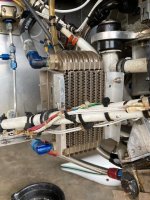
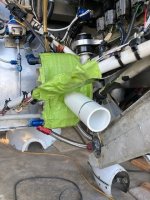
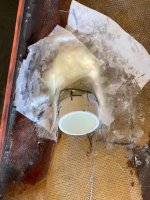
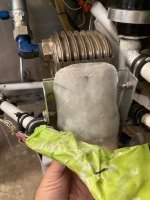
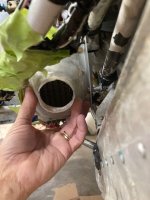
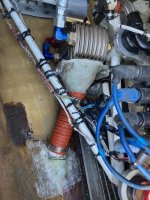
After buying this 7A last Sept and flying it home, oil temps have been something that required constant management since the red line for rotaries is about 215 degrees. On 95+ degree Oklahoma days, I consistently had to reduce power to 20-21 inches and climb at 120+ mph, until dropping OAT allowed temps to fall below 205, etc. Since the a/c is currently down for its' annual condition inspection, and I recently obtained an oil cooler off of an IO-360, I decided to install that in series after the stock Mazda cooler and see what help that might provide. Fortunately I had a large open area on the plugs side of the engine bay, so installed the cooler there and used modeling clay to fashion a plenum to accept a 2 inch SCAT tube. Also added a scoop through the cowling and connected it all up and performed a :15 ground run. That short run with a few minutes at WOT showed an oil temp drop of 15-20 degrees, with a high of only 160 degrees where as before I would have already been up to 180. Once the condition inspection is finished I'll perform an initial flight test and validate final temp improvement (or not).
 

Attachments

  • OIl Cooler Mounted.jpg
    OIl Cooler Mounted.jpg
    90 KB · Views: 60
  • Oil 2 inch PVC.jpg
    Oil 2 inch PVC.jpg
    85.3 KB · Views: 57
  • Scoop Fiberglass Peel Ply.jpg
    Scoop Fiberglass Peel Ply.jpg
    97.4 KB · Views: 46
  • Trim Plenum.jpg
    Trim Plenum.jpg
    69.2 KB · Views: 41
  • Plenum hose end.jpg
    Plenum hose end.jpg
    57.1 KB · Views: 45
  • Scoop Plenum Connected.jpg
    Scoop Plenum Connected.jpg
    149.1 KB · Views: 44
  • Scoop finished.jpg
    Scoop finished.jpg
    69 KB · Views: 61
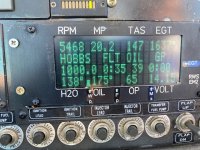
Fun flight today from OK City to Wichita and the "Stearman Field", where they have a nice restaurant on the north end. On the trip home the RV-7A turned over 1,000 hrs. on the hobbs of "rotary" powered engine time; which was a great accomplishment by the original builder (Dennis Haverlah); who first flew it in 2007. Zoom-zoom!

Doug

RV-7A Mazda Renesis
RV-9A Project (Converting from Mazda 13B to Superior IO-360...
 

Attachments

  • Renesis 1000 hrs .jpeg
    Renesis 1000 hrs .jpeg
    122 KB · Views: 10
Very few auto conversions reach 1000 hours, that is certainly a milestone. Most fall prey to either cooling or gearbox issues before then.
 
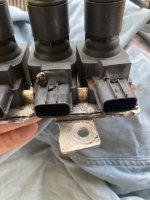
Just prior to Christmas I did one final flight before downing the a/c to pull the Catto and return it to CA for a refurbishment. I flew up to Wichita, KS to the restaurant on Stearman Field, and when the engine would not start. Selected the "B" computer and it fired right up and ran smoothly, so brought it home and pulled the prop as planned and began searching for a computer "fix". A rotary buddy happened to have a Tracy Crook "EC-2" set up for the Renesis, so I purchased and installed that, and was finally back to flying in April, until a loss of power incident set me back again. I had forgotten that each EC-2 was set up specially for the type of igniters / coils as specified by the customer, and the original computer used Mazda Renesis coils, while the new computer was set up with increased dwell to support GM LS-1s. After six hours of operations, I was ten miles south of the field when power dropped from 5400 rpm to only 4,000 at WOT. That was just enough to maintain level flight or descend about 50 fpm, so I made to home base easily, and immediately did a compression check. Compression which had been in the upper 70's to upper 80's was only in the 50-60 psi range, so determined to crack the engine open and replace seals and springs, etc. I also checked the coils, and discovered that two showed signs of internal heat damage with "bubbled" plastic; and father research reminded me that I was using the wrong coils! My previous RV-9A project with an '86 RX-7 (13B) engine was issuing in the corner of the hanger, and was set up for LS-1 coils, so it was a fairly simple task to make a new bracket and install them on the Renesis. I hope to finish the engine rebuild / "re-stacking" in a another two weeks and have it flying again by the end of July... TBD.

 

Attachments

  • Coils cooked.jpeg
    Coils cooked.jpeg
    61 KB · Views: 11
Back
Top