



mulde35d
Well Known Member
I am sure i will stir a hornets nest, but thought it important to share my experience. While rigging my RV-10 flaps I decided to set zero degrees at the angle that extended the upper and lower wing surface as flat. In other words, the flaps are an extension of the wings with no change in angle while laying a straight edge along the surface. From this position they could go up 3.85 degrees, also called the reflex position (-3 degrees). I understand the reflex position to change the wing chord line with an intended result of a pitch up. This would then allow for less downward lift on the tail thereby reducing drag and increasing airspeed. But thats not what happens. When the flaps are moved to reflex the nose pitches down, thereby requiring more downward lift and an increase in drag on the tail. I realize this has a lot to do with my particular aircrafts CG and configuration, but it came out pretty standard for RV-10's.
During my latest cross-country while very stable I moved the flaps from zero degrees to -3 degrees (reflex) three time and let the aircraft stabilize. Each time the airspeed decreased 1-2 knots and returned to the higher airspeed when placed back at zero.
My 2 cents, when rigging your flaps, airlerons, and wingtips. Set your flaps such that they are at zero degrees to your wings surface, then set your ailerons flush with your flaps (also zero degrees). Then make any final adjustments to your wingtips to be flush with the ailerons. Assuming your control surfaces don't have a significant amount of twist, this should provide a stable starting point for final in flight rigging with the least amount of drag for cruise flight. Obviously still follow Vans Instructions, but Van's provides very little info on flap and aileron angles, so hopefully this helps
A picture of the reflex position is below. I set zero degrees at the point where the flaps and upper chamber are flush (no change in angle). Needless to say, not planning to ever use reflex on the RV-10.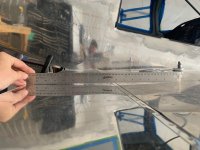
During my latest cross-country while very stable I moved the flaps from zero degrees to -3 degrees (reflex) three time and let the aircraft stabilize. Each time the airspeed decreased 1-2 knots and returned to the higher airspeed when placed back at zero.
My 2 cents, when rigging your flaps, airlerons, and wingtips. Set your flaps such that they are at zero degrees to your wings surface, then set your ailerons flush with your flaps (also zero degrees). Then make any final adjustments to your wingtips to be flush with the ailerons. Assuming your control surfaces don't have a significant amount of twist, this should provide a stable starting point for final in flight rigging with the least amount of drag for cruise flight. Obviously still follow Vans Instructions, but Van's provides very little info on flap and aileron angles, so hopefully this helps
A picture of the reflex position is below. I set zero degrees at the point where the flaps and upper chamber are flush (no change in angle). Needless to say, not planning to ever use reflex on the RV-10.
Last edited:


