Van's Air Force

The definitive Van's Aircraft support community! Buying, building or flying an RV? Join our exclusive family of mentors and enthusiasts!

Open Source EI for Lycoming??

OK, sorry! I continue to spam this thread. For internal power...
Gee, I yanked that big coil out of the SLICK magneto...
If I put it back in... the unit already has a spinning magnet... The coil is 375uH if that helps anyone estimate how much power is available.
Ideas are contributions - Logos are spam..........
 
My 0.02 is self generation feels like scope drift. Perfect the enemy of good, etc.

I guess it depends on your personal preferences; I can't imagine ever replacing my magnetoes with something that requires external power. And I'm still waiting for a self-powered electronic ignition with fixed timing and proper aircraft quality connectors.
 
Does anyone have a lightspeed

I'm in a similar boat with the Lightspeed. However, the usual supported timing teeth values are things like "36-1". That's a 36 tooth wheel, with 1 missing tooth. The missing tooth allows the system to determine TDC (by knowing the location of the missing tooth). Other wheels are things like the 60-2. More teeth allows greater timing precision, particularly as the engine accelerates. [Not a big deal in our application I know].

My current thinking is to either add magnets to the wheel, making it a 12-1, or it may work with a 4-1 --- or clone the wheel with holes where we want. If someone has a loose wheel to send me I can CAD up a design with holes where we want them. SendCutSend cost to cut the wheel is probably $40 for one (including shipping). You'd need to press in your own magnets, but those tiny magnets are inexpensive when I was looking in 2024.
36-1 isn't the only way to do this as CPI and Lightspeed have demonstrated using hall effect sensors and magnets on the flywheel. Doesn't work with Megajolt, but there are other ways to skin the cat it would seem. Hall effect on the flywheel is much hardier, at least to me, than anything spinning in the mag hole.

As far as self generation is concerned, I have already been flying with electrically dependent ignitions using two batteries. Others have extra alternators etc. An EI doesn't necessarily need a lot of back up battery to give some reasonable amount of redundancy.
Ed
 
. Hall effect on the flywheel is much hardier, at least to me, than anything spinning in the mag hole.
Edit: Sorry, thought you sad harder, when you actually said hardier.

I have built both. Magnets on the flywheel is many orders of magnitude easier than a mag hole device if you want long term reliability. Just look at all the bearing problems pmag has. These are not easy to design or build to a high quality level.
 
Last edited:
Be careful about personal preferences. The trick is recognizing what the majority want, warts and all.
 
Before totally reinventing the wheel I'd take a look at the Microsquirt. Cheapish, small self contained package designed for FWF environment with full tuner studio support, can do sequential on 4 cylinders. Firmware can be modified (I modified one to manage control pressure - mixture - in my Bosch Jetronic CIS Porsche 930).
 
I guess it depends on your personal preferences; I can't imagine ever replacing my magnetoes with something that requires external power. And I'm still waiting for a self-powered electronic ignition with fixed timing and proper aircraft quality connectors.
Slick is developing an electronic mag. When I looked at it 2 years ago, it self generated power at 100 RPM. It is still vapor ware at the moment but I keep hoping for an announcement as we enter show season
 
Be careful about personal preferences. The trick is recognizing what the majority want, warts and all.
Ah, but the majority didn't settle on one model RV either or build them exactly to plans with no variance. Perhaps it would be worth developing open source EI in more than one flavor. Some want self generation, others, myself included, don't care about that. My belief is that an electrically dependant engine can be reliably provided with electrons without having the EI do it. Some like the idea of mounting the pickup(s) in a mag hole. I prefer hall effect. In my own case, I already have reliable pickups. The same pickup setup for Lycomings is available from LS, though I can't say if they would sell them to non customers of their ignitions. I don't have any experience with any of the off the shelf ECUs and don't really know where to start with integrating one with my existing pickups. If it develops that someone here has some guidance towards that, it certainly doesn't preclude the development of Megajolt or other based systems using missing tooth wheels. I think both approaches have merits.
Ed
 
I'd like to have a programable ignition with switchable advance maps (for LOP) using my existing Lightspeed mini sensors. They have trigger points at 0* and 39* BTDC.
Ed

If your using the Plasma II, II+, or III ignition adjustment by +/- 5 degrees can be achieved with a 10k pot (analog adjustment) or a switch and fixed resistor(s) (discrete adjustment(s)) connected across pins 6 and 13 of the Lightspeed controller “output” connector. This is not a full map switch, but will get you more advance when high and lean if desired.


I haven’t done it yet, but am working towards implementing a cockpit selectable LOP mode this way.

PJC
 
Re: simplicity/reliability vs self generation

Replacing my first mag I want simplicity//low weight and user tunable timing maps.

Replacing then second mag I want self generation and reliability. Safe, default, fixed timing is fine.

I suspect these are 2 different products.

PJC
 
If your using the Plasma II, II+, or III ignition adjustment by +/- 5 degrees can be achieved with a 10k pot (analog adjustment) or a switch and fixed resistor(s) (discrete adjustment(s)) connected across pins 6 and 13 of the Lightspeed controller “output” connector. This is not a full map switch, but will get you more advance when high and lean if desired.


I haven’t done it yet, but am working towards implementing a cockpit selectable LOP mode this way.

PJC
It would be nice to be able to retard the LSE slightly for CHT control on hot climbs or advance a bit for LOP, but the pot wouldn't really do that. From the LSE install manual:
Pins-5, 6, and 13:
These pins are normally not used and should be left open.
This timing bias feature should only be used for research on special application
engines and always in conjunction with a timing display. In this case, a 10k linear
potentiometer can be installed per the output connector diagram to bias the existing
timing by +/- 5 degrees when the engine is operating at or near the mid-point of its
timing range. The potentiometer cannot expand the Plasma CDI ‘s normal 22
degrees of timing range. For this reason, the timing cannot be retarded further
during take-off since the system is already near the minimum timing advance.
Similarly, on the advanced end of the timing range, you cannot increase the total
advance during a low power descent.

A check of their website this morning reveals that they aren't selling the pot anymore, just the Simpson display. They are also selling the FDS EFIS adapter which would help with knowing what the timing is, but doesn't do anything about modifying that.

I really like the CPI for its configurable and switchable map. A homebuilt solution that provided that kind of flexibility and could be done using my existing pickups would be great.
Ed
 
It would be nice to be able to retard the LSE slightly for CHT control on hot climbs or advance a bit for LOP, but the pot wouldn't really do that. From the LSE install manual:
Pins-5, 6, and 13:
These pins are normally not used and should be left open.
This timing bias feature should only be used for research on special application
engines and always in conjunction with a timing display. In this case, a 10k linear
potentiometer can be installed per the output connector diagram to bias the existing
timing by +/- 5 degrees when the engine is operating at or near the mid-point of its
timing range. The potentiometer cannot expand the Plasma CDI ‘s normal 22
degrees of timing range. For this reason, the timing cannot be retarded further
during take-off since the system is already near the minimum timing advance.
Similarly, on the advanced end of the timing range, you cannot increase the total
advance during a low power descent.

A check of their website this morning reveals that they aren't selling the pot anymore, just the Simpson display. They are also selling the FDS EFIS adapter which would help with knowing what the timing is, but doesn't do anything about modifying that.

I really like the CPI for its configurable and switchable map. A homebuilt solution that provided that kind of flexibility and could be done using my existing pickups would be great.
Ed
The Lightspeed 22 degree timing curve (while running) ranging from 20-42 degrees BTDC ought to address any reasonable setting you might require. (Although you do only get +/- 5 degrees from the pre-programmed Lightspeed curve based on MAP and RPM using the pot adjustment). You can also shift the curve up or down by clocking the sensor pickups relative to TDC.
 
... For internal power...
Gee, I yanked that big coil out of the SLICK magneto...
If I put it back in... the unit already has a spinning magnet... The coil is 375uH if that helps anyone estimate how much power is available.
So, I put the coil back in, connected the primary to my DVM, and spun it with my older cordless drill (which doesn't run very fast - rated 600 rpm). That would be 1200 rpm engine crank speed.

Result? >>>> About 3.0 volts AC.

So, sadly, using the Slick's coil as a way to produce ignition power is not practical.

A custom coil which would fit in in place of the normal one could be an option, but I'd think the price of something like that would be unreasonable. It could be home-made, but that would definitely put it out of the average person's skill and/or interest.
 
Does anyone else remember the G3i units. I thought the first ones used a Slick case with parts from a Mallory car ignition. They still have a website.
 
Does anyone else remember the G3i units. I thought the first ones used a Slick case with parts from a Mallory car ignition. They still have a website.
There's a recent YouTube video on a Cozy fatal accident (California) you should check out.
 
Back to my Slick magneto conversion... thinking about the pickup. Larry noted that the VR sensors are noise sensitive and need shielded wire. But if you want EDIS, the VR sensor DanH mentioned would be the way to go.

As I'm thinking MicroSquirt, I can use a Hall sensor.
Trolling the internet for options, I see there are 'tooth sensing' hall sensors (detects passing iron), so you don't need a magnet wheel. [Trying to put a dozen magnets into 1.75" wheel to fit the magneto seems like a no go]

One that's been used is the Allegro 617. Very inexpensive (under $10). Max ambient 150C. Self calibrates and so the gap can be 0.4 to 2.5 mm.

Datasheet at https://www.allegromicro.com/~/media/files/datasheets/ats617-datasheet.pdf
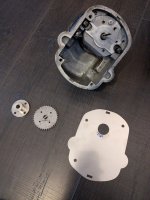
As a reminder, see the picture for the toothed wheel I've prototyped

Thoughts anyone on using this Hall sensor & wheel?

EDIT: looking at it further I realize I need larger teeth to support the Allegro 617. I think a 24-1 wheel meets the specs. [No problem with MicroSquirt, that can be specified.]

PXL_20260313_205100657a.jpg
 
Last edited:
Back to my Slick magneto conversion... thinking about the pickup. Larry noted that the VR sensors are noise sensitive and need shielded wire. But if you want EDIS, the VR sensor DanH mentioned would be the way to go.

As I'm thinking MicroSquirt, I can use a Hall sensor.
Trolling the internet for options, I see there are 'tooth sensing' hall sensors (detects passing iron), so you don't need a magnet wheel. [Trying to put a dozen magnets into 1.75" wheel to fit the magneto seems like a no go]

One that's been used is the Allegro 617. Very inexpensive (under $10). Max ambient 150C. Self calibrates and so the gap can be 0.4 to 2.5 mm.

Datasheet at https://www.allegromicro.com/~/media/files/datasheets/ats617-datasheet.pdf
As a reminder, see the picture for the toothed wheel I've prototyped

Thoughts anyone on using this Hall sensor & wheel?

EDIT: looking at it further I realize I need larger teeth to support the Allegro 617. I think a 24-1 wheel meets the specs. [No problem with MicroSquirt, that can be specified.]

View attachment 112918
When I made my first pick up with an old slick frame, I just made a 1/4" thick, round aluminum disk. Drilled a center hole for the attachment and drilled 3 holes for magnets. You can get magnets at digikey that are about 1/8 dia and 3/16 long. set disk on flat surface, fill holes with epoxy and insert magnets, then be sure magnets get pushed down as you want them level with surface. Digikey also sells very small sensors that can be potted in whatever mounting attacment you make. Be aware that magnets are polar and the correct end must be installed to face the sensor. Hardest part is drilling the holes, as the pattern needs to be pretty precise. Can't remember the distance tolerances that I tested, but think I was close to .050" from sensor surface to magnets, but believe it was still working at well over 1/8".

I have a rotary table and can make things like this very precise. You can send me your disk and I can drill it for you.
 
As I'm thinking MicroSquirt, I can use a Hall sensor.
Trolling the internet for options, I see there are 'tooth sensing' hall sensors (detects passing iron), so you don't need a magnet wheel. [Trying to put a dozen magnets into 1.75" wheel to fit the magneto seems like a no go]
You don't need 12, you need 2 or maybe 1. There two magnets on the back of my flywheel for my Protek EI, I ran a MS on my Porsche with one using the distributor before I had the flywheel cut.
 
You don't need 12, you need 2 or maybe 1. There two magnets on the back of my flywheel for my Protek EI, I ran a MS on my Porsche with one using the distributor before I had the flywheel cut.
no, you don't need 12, especially when not dealing with rapid acceleration.. Don't believe you can go less than 4-1 on MS software, maybe 3-1 for 6 cyl configs. number of positions must be divisible, by # of cylinders, IIRC. Possible they allow 2-1, but don't think so. Systems using 1 or 2 magnets have different sw algorythms to deal with that. I wouldn' go less than 4-1.
 
Last edited:
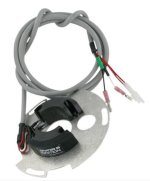
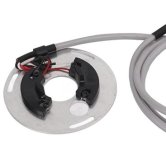
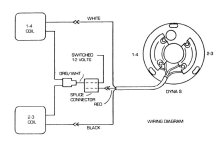
At the very simple end, install a Dyna S (~$175) or its Amazon equivalent (~$79) in a Slick mag case. It would also require two 3-ohm coils. Result would be a fixed timing waste fire 4 cyl ignition. Run it with an impulse Slick or Bendix on the other side.

Not an original idea. Sonex flies the setup on their AeroVee (last picture)

ScreenHunter_3172 Mar. 20 15.12.jpgScreenHunter_3173 Mar. 20 15.13.jpg

ScreenHunter_3171 Mar. 20 15.10.jpg

ScreenHunter_3165 Mar. 15 16.00.jpg
 
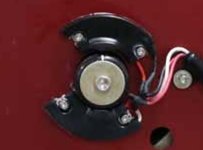
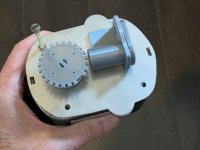
Update: Working on Hall trigger in the Slick housing. 3D print mockup parts...
Sensor is a 55505 from Littelfuse, which is under $30.
To meet sensor tooth size specs, the wheel is a 24-1

PXL_20260322_202535089a.jpg
 
My latest price estimate for putting a Hall Sensor into a Slick housing - updated 2026 prices. Of course if you have a Slick mag laying about you'd save $. My estimated core is a 4200 series, they show up on eBay periodically. I think the 4300 series housing is identical enough for the sensor plate to drop in. I've included $60 for new bearings...

Only things not included would be your fuse / breaker / power wires. Otherwise this is a full EI system!


Speeduino with Hall in Slick Mag housing --- 2026 prices
ComponentCostDescription
Speeduino Ocelot (UA4C) Controller$187Board
WM Tronics
Ocelot Harness Kit: Connector, Pins$15WM Tronics
Ocelot Case Kit$30WM Tronics
Slick Conversion Parts$45Send-Cut-Send
Magneto (used)$1004200 series Slick, estimated
New Bearings$60estimate
Hall Sensor 55505$36DigiKey w/Shipping
Coil, Bosch (2000 GTI)$65032 905 106 / Beru BR-032905106E AutoHaus AZ w/shipping
Spark Plug Wire Harness$54Accel 8-cylinder kit ACC-4041
Spark Plug Adapters$140LSE @ Spruce
Spark Plugs$50
TOTAL782
 
I guess it depends on your personal preferences; I can't imagine ever replacing my magnetoes with something that requires external power. And I'm still waiting for a self-powered electronic ignition with fixed timing and proper aircraft quality connectors.

Help me understand. If you are good with a mechanical solution, and you want fixed timing, why not just run a mag? What does EI buy you?

My thinking is that EI buys me freedom from bearings, harmonics, shafts, heat/vibration related failures, but in order to get there the mechanical part needs to be dead simple, which is why I really like magnets in the flywheel. No teeth meshing, no parts that depend on hardening, nothing wears..... The ability to change timing is completely secondary.
 
Help me understand. If you are good with a mechanical solution, and you want fixed timing, why not just run a mag? What does EI buy you?

I am currently running two magnetos. If there was a drop-in replacement that offered better reliability and lower total cost of ownership, I would certainly consider it. It would need to be self-powered, but I don't need variable timing. I choose not to install P-Mags, for reasons of personal preference.

I'll be interested to see if the Lightning magneto ever turns into a real product, as their marketing bullet points certainly seem to line up with my requirements. But I don't want to be an early adopter either!
 
I wish I had time to contribute, but I already paid the money for an SDS CPI-2 and it does everything I want, also day job is crazy!

I do want to pass on some thoughts to the project though, but since I have no dog in the hunt, they may be off base.

1. I wouldn't screw with the mega squirt stuff. From what I understand there is a company behind it and not true open source.

2. The speeduino stuff seems to have a much better license.

3. The speedunino runs on a standard mega 2650 so you can buy a more industrial version that probably doesn't have cheap clone chips and will survive heat and cold here: https://www.rugged-circuits.com/microcontroller-boards/rugged-mega-et it also has input protection, a much more sane power system, and you can use hall or VR.

4. The speeduino shield schematic is here: https://github.com/speeduino/Hardware/blob/main/v0.4/SMD/Latest/v0.4.4d.pdf If you designed your own, you could just install the two IXDN602 ignition drivers and related passives shown on page two, as well as the MAX9926 chip if you want to use VR instead of hall effect.

5. Putting the pickup in the mag hole is undesirable for two reasons.
5.1 It doesn't work on 6cyl engines unless you have a gear setup.
5.2 It takes a fairly straight forward electrical solution and converts it into an electrical and mechanical solution. Some may argue that the mechanical is easy, the electrical is hard, and to those people I'd say, not when you are dealing with vibration and heat... also see emagair.

6. If you design a daughterboard/hat that plugged right into the mega 2560, then you could also design in a charge controller using one of the zillion charger ICs, then build yourself a housing that also has a 3s2p (6 cell) 18650 battery holder and charge it to 80% and never more. That will last forever if you use quality cells and would probably power a 6cyl for more than 2 hours. Cells weigh 9oz. If you want to be really redneck (and also brilliant) make the housing such that you can click on a Dewalt or Milwaukee M18 or 20v battery, then use a dc-dc converter chip to get the right voltage. It's easy to know the battery is good when you used it to screw your deck together the previous weekend :cool:

At the end of the day you would have a completely self contained/powered box that plugs into a coil and pickup. Would that compel the emag crowd? I doubt it, because for some reason having well maintained battery backup is less than a generator (and all of the related mechanical complexity) in their eyes. Also, the install is more than put device in mag hole.

In other words, building inexpensive EI is fun and cool, but everybody else will keep buying emags (and some SDS).

 
I am currently running two magnetos. If there was a drop-in replacement that offered better reliability and lower total cost of ownership, I would certainly consider it. It would need to be self-powered, but I don't need variable timing. I choose not to install P-Mags, for reasons of personal preference.

I'll be interested to see if the Lightning magneto ever turns into a real product, as their marketing bullet points certainly seem to line up with my requirements. But I don't want to be an early adopter either!

Okay, I'm of the same mind, I also wouldn't install anything that I wasn't convinced was more reliable.

In my case, I'm much more concerned about mechanical reliability than battery backup reliability, thus self powered isn't a pro, it's a con.

I'm using an CPI-2 but instead of using the little dedicated battery, I terminate the battery side on an EarthX ETZ5G, setup a pad mount 8 amp alternator to charge it, then also use it in place of the TCW backup battery in my garmin setup. The battery is tested at every startup because I boot my avionics from it.

Hopefully that's not too much thread drift, but it does show how you can have a generator powering your EI without an emag.
 
Help me understand. If you are good with a mechanical solution, and you want fixed timing, why not just run a mag? What does EI buy you?

Freedom from $$$$ 500-hour inspections, e-gaps, points that wear, condensers that fail, distributor rotors that wear/arc. Plus there's the likelihood of a stronger spark that might help with additional leaning for some.

Anyone who's priced a new mag lately has seen that it's certainly a lot more expensive than Bryan's estimates for the home-brewed EI.
 
Just an update... the idea isn't dead yet :)
I have the 55505 Hall Sensor in hand. Note this sensor has a built in magnet, so you don't need magnets in the toothed wheel.
I've sent off an order to SendCutSend for bracket, plate, and 12-1 trigger wheel for converting a Slick mag (which I already had).

The further brainstorm was...
For the fixed timing crowd, we don't need Speeduino and the complexity of Tuner Studio configuration.
All we need is a wheel decoder, and some logic to fire the coil at an appropriate time. That logic can run on an Arduino Mega, an ESP32, etc.
I've got some (very preliminary) code to do fixed 25 BTDC timing, and starting retard.
Yes it is 4 cylinder only.

That subtracts about $150 from the estimate above.

Note - there is no reason why this couldn't work with a 12-1 wheel in the flywheel - should someone design a suitable wheel and hall sensor pickup mount. It could be cheaper yet as you ditch the need for a core Slick mag.
 
Just an update... the idea isn't dead yet :)
I have the 55505 Hall Sensor in hand. Note this sensor has a built in magnet, so you don't need magnets in the toothed wheel.
I've sent off an order to SendCutSend for bracket, plate, and 12-1 trigger wheel for converting a Slick mag (which I already had).

The further brainstorm was...
For the fixed timing crowd, we don't need Speeduino and the complexity of Tuner Studio configuration.
All we need is a wheel decoder, and some logic to fire the coil at an appropriate time. That logic can run on an Arduino Mega, an ESP32, etc.
.
be carefull here. There is a fair amount of detail beyond just firing a coil, like managing dwell time. If you don’t do that, you will burn up the coil. Also, fixed timing is no good. You MUST retard the advance on startup and more logic there on exactly when that is happening
 
be carefull here. There is a fair amount of detail beyond just firing a coil, like managing dwell time. If you don’t do that, you will burn up the coil. Also, fixed timing is no good. You MUST retard the advance on startup and more logic there on exactly when that is happening
Yup. I'm aware of needing to manage dwell. Basically need to know current rpm (or crank degrees per second), know how much in the future the ignition point needs to be, and then subtract off the amount of dwell time. Thus knowing when to start dwell so that when dwell should end we are at the correct coil firing point.

Fixed timing... well, what do you call a magneto with no impulse coupling? Someone wanted simple. Oh, you want to be able to use this thing to start the engine too? [OK, lots of tongue in cheek there!!!] Yes, code outline has detection of low speed (cranking), and will not fire the plugs until TDC plus coil dwell time.

Once Pete reviews the code, and we do some bench checking--- per the Open Source idea, the code will be public for all to critique. And to determine suitability for use.
 
Progress continues. 12-1 wheel for magneto conversion has arrived and looks good.

Starting to consider an optional sensor for MAP (MP). Suggestions? I'm finding sensors that are either $70, or are obsolete. Keep in mind the sensor needs to be read by a 3.3 volt microcontroller.
 
Starting to consider an optional sensor for MAP (MP). Suggestions? I'm finding sensors that are either $70, or are obsolete. Keep in mind the sensor needs to be read by a 3.3 volt microcontroller.

You'll probably find a whole bunch of sensors that read from 0.5 to 4.5V, so you'll probably have to plan for a voltage divider to make your A/D inputs happy.

Bosch makes 1 Bar and 2.5 Bar MAP sensors that you can buy at the local auto store for under 30 bucks, I think they are fairly well-regarded.
 
Progress continues. 12-1 wheel for magneto conversion has arrived and looks good.

Starting to consider an optional sensor for MAP (MP). Suggestions? I'm finding sensors that are either $70, or are obsolete. Keep in mind the sensor needs to be read by a 3.3 volt microcontroller.
Something like the Honeywell HSCMRNN1.6BASA3? Still $48 though. 1.6 bar accommodates some turbocharging, SPI serial interface. Or the HSCMRNN030PA2A3. 30 PSIA, I2C interface, $43 (DigiKey). Both run on 3-3.6VDC.
 
Last edited:
Progress continues. 12-1 wheel for magneto conversion has arrived and looks good.

Starting to consider an optional sensor for MAP (MP). Suggestions? I'm finding sensors that are either $70, or are obsolete. Keep in mind the sensor needs to be read by a 3.3 volt microcontroller.
I wonder if a 2 position timing setup might be easier - 24 deg for takeoff and 28 for cruise? Skip the cost and complexity of sensors and timing curves. Easy to have the software read a switch to set the timing at 2 values.

Just want fixed timing? - skip the switch and run at 20 or 25 deg btdc.

We've got a start on the software - it has a web interface to set parameters, Bryan is doing the heavy lifting with the trigger.

AP1GczOrvZ8bchRbq__ardFWNDATBjnMwAJq_M1q1KvK6jlNI0v5j14ayuBv7ieJ-sY9KltF0NY6Dq8s8xEp2dTr74inwQBzHDMhb0BCJyZb2PmLRWUqmpPHI7f8MtzZRJAOs2ZJVMSWCxH_fvbvPzoTVt5prQ=w407
 
I could possibly assemble a whole kit with all that stuff included and tested, minus the mj and wires, plugs, etc. and include mj config instructions to make it all work.

Let me know if there is interest in that.
I'm definitely interested. I want to put a single mag in my dual mag hole and eliminate the single point may drive failure mode.
 
I'm definitely interested. I want to put a single mag in my dual mag hole and eliminate the single point may drive failure mode.
Maybe Pete can get an idea of potential interest. It will take some effort to design and layout, as I didn't make a drawing when I built mine for the 10. Think I still have the drawings for the mag hole unit, but not the HE frame. If there is enough interest, I am willing to create the kit, but unsure that I want to do it for just one. Also, in the middle of a kitchen rehab, so couldn't do this untill late May.

Pete, I have kind of lost track of where your ideas are going. Are you proceeding with something that will be using standard Hall Effect sensors and can support 12-1 arrangements?
 
Maybe Pete can get an idea of potential interest. It will take some effort to design and layout, as I didn't make a drawing when I built mine for the 10. Think I still have the drawings for the mag hole unit, but not the HE frame. If there is enough interest, I am willing to create the kit, but unsure that I want to do it for just one. Also, in the middle of a kitchen rehab, so couldn't do this untill late May.

Pete, I have kind of lost track of where your ideas are going. Are you proceeding with something that will be using standard Hall Effect sensors and can support 12-1 arrangements?
Larry, at this point we would support 12-1 Hall effect on the flywheel, or in a mag drive unit. Missing tooth (tentatively) at 60 degrees BTDC.
The 12-1 wheel would be common for all large pully Lycomings flywheels...
However, I suspect that Gearhead51 probably has an H2AD... the nose area of that case is completely different than other Lycomings, so the mount would be different for the Hall sensor.
Hall sensor I'm currently using in the prototype mag drive pickup is a 55505-00-02-A (available from Mouser and Digikey).

From there - he can use either the Speeduino off the shelf, or our ESP32 based controller.

EDIT: Larry, I also made a 3D prototype of the 55505 which is handy for looking at mounting possibilities w/o purchasing a 55505. I can send you the .stl file if you'd like.
 
However, I suspect that Gearhead51 probably has an H2AD... the nose area of that case is completely different than other Lycomings, so the mount would be different for the Hall sensor.
My engine is a O-360A1F6D from Cardinal with a Bendix 3000. I will keep the dual mag running with 1 side grounded in parallel with the EI until I need to swap it for a 1200 series... That's the plan at least.

I'd like to find a file for the sensor holder that connects to the case. I think that's something we could get from send cut send if I had a file.
 
My engine is a O-360A1F6D from Cardinal with a Bendix 3000. I will keep the dual mag running with 1 side grounded in parallel with the EI until I need to swap it for a 1200 series... That's the plan at least.

I'd like to find a file for the sensor holder that connects to the case. I think that's something we could get from send cut send if I had a file.
Where is the fuel pump located on that engine? Up front like H2AD, or in the rear like most Lycomings?
 
I wonder if a 2 position timing setup might be easier - 24 deg for takeoff and 28 for cruise? Skip the cost and complexity of sensors and timing curves. Easy to have the software read a switch to set the timing at 2 values.

Just want fixed timing? - skip the switch and run at 20 or 25 deg btdc.

We've got a start on the software - it has a web interface to set parameters, Bryan is doing the heavy lifting with the trigger.

AP1GczOrvZ8bchRbq__ardFWNDATBjnMwAJq_M1q1KvK6jlNI0v5j14ayuBv7ieJ-sY9KltF0NY6Dq8s8xEp2dTr74inwQBzHDMhb0BCJyZb2PmLRWUqmpPHI7f8MtzZRJAOs2ZJVMSWCxH_fvbvPzoTVt5prQ=w407
Hopefully that's going to be a web app or both Android and iOS will be supported?
 
My engine is a O-360A1F6D from Cardinal with a Bendix 3000. I will keep the dual mag running with 1 side grounded in parallel with the EI until I need to swap it for a 1200 series... That's the plan at least.

I'd like to find a file for the sensor holder that connects to the case. I think that's something we could get from send cut send if I had a file.
You can't just hang a sensor off a fixture up there. If the belt breaks, it would likely rip the sensor off the fixture. I machine out a channel for the wires and cover it with a plate. Wires are even more open to belt damage. I also machine out a cavity for the sensor and bed it in epoxy and machine flat again. There are tolerances on magnet distance, so even if the sensor bent a bit, result is the same - no ignition. Just not robust IMO.
 
Larry, at this point we would support 12-1 Hall effect on the flywheel, or in a mag drive unit. Missing tooth (tentatively) at 60 degrees BTDC.
If you are going to support magnets on the flywheel, the SW will need a configurable sensor position (degrees before or after TDC, depending on the decoder arrangement you are using). Fixed may work with what you are building, as you can spin the mag case around, but magnets in the flywheel will require a configurable setting. Depending upon your plans, you may also want to code for 6 cyl options, as the decoder will be different and need support for 3 triggers.
 
EDIT: Larry, I also made a 3D prototype of the 55505 which is handy for looking at mounting possibilities w/o purchasing a 55505. I can send you the .stl file if you'd like.
That unit is way too large to fit behind the flwheel, at least if you want it nicely nest behind the flywheel. The ones I used were 1/4 X 3/16 x 1/8. They get potted into the fixture.
 
If you are going to support magnets on the flywheel, the SW will need a configurable sensor position (degrees before or after TDC, depending on the decoder arrangement you are using). Fixed may work with what you are building, as you can spin the mag case around, but magnets in the flywheel will require a configurable setting. Depending upon your plans, you may also want to code for 6 cyl options, as the decoder will be different and need support for 3 triggers.
Not sure I understand why the toothed wheel, or magnets, can't be setup for missing tooth at 60 BTDC.

At this point the idea is KISS (keep it simple). I just don't see that much demand for 6 cylinder units... and in any case they could install a Speeduino or a Megasquirt controller.

Also I'm not following how losing a belt would rip the thing off if it is installed inside the flywheel pulley similar to the Lightspeed ring. I'm guessing you are thinking to mount the trigger wheel outside the pulley?
 
Hopefully that's going to be a web app or both Android and iOS will be supported?
yes - web app hosted on an access point on the ignition controller (if we use an ESP32 - it has wifi and bluetooth built in) would work for IOS, android, windows, linux - if you have a wifi connection and a browser - you should be able to connect. That is the plan
 
If you are going to support magnets on the flywheel, the SW will need a configurable sensor position (degrees before or after TDC, depending on the decoder arrangement you are using). Fixed may work with what you are building, as you can spin the mag case around, but magnets in the flywheel will require a configurable setting. Depending upon your plans, you may also want to code for 6 cyl options, as the decoder will be different and need support for 3 triggers.
I'm pretty sure we can do this in software - that said I have not looked at it yet
 
Not sure I understand why the toothed wheel, or magnets, can't be setup for missing tooth at 60 BTDC.

At this point the idea is KISS (keep it simple). I just don't see that much demand for 6 cylinder units... and in any case they could install a Speeduino or a Megasquirt controller.

Also I'm not following how losing a belt would rip the thing off if it is installed inside the flywheel pulley similar to the Lightspeed ring. I'm guessing you are thinking to mount the trigger wheel outside the pulley?
I put magnets in the 12 holes in the ring gear suuport. Drilling 11 holes in the pulley groove takes this out of the hands of the avg joe, at least without a jig. No real easy way to make a mount that goes inside the pulley that can easilly by centered without removing the prop and flywheel. To make a simple kit it is best to use existing holes, as they are already layed out symmetrically. These positions leave the sensor exposed to damage from a broken belt. In my opinion, this is simpler and more reliable than making and mounting a toothed wheel. It’s your project; i was just offering to make a kit that anyone could install. If not interested, that is fine. Either way, doing something up at the flywheel is going to require a configurable set point. You can’t adjust things up there like you can by spinning the mag case. SW setting is the correct way to do this.
 
I put magnets in the 12 holes in the ring gear suuport. Drilling 11 holes in the pulley groove takes this out of the hands of the avg joe, at least without a jig. No real easy way to make a mount that goes inside the pulley that can easilly by centered without removing the prop and flywheel. To make a simple kit it is best to use existing holes, as they are already layed out symmetrically. These positions leave the sensor exposed to damage from a broken belt. In my opinion, this is simpler and more reliable than making and mounting a toothed wheel. It’s your project; i was just offering to make a kit that anyone could install. If not interested, that is fine. Either way, doing something up at the flywheel is going to require a configurable set point. You can’t adjust things up there like you can by spinning the mag case. SW setting is the correct way to do this.
I see.
I think in my plane I have some of those holes filled with bolts for balancing.
 
Back
Top