


Hi everyone,
I'm looking for some second opinions on what I just found in my oil screen during my third oil change post-top overhaul.
Engine & History:
- Engine: Lycoming O-320-E1A.
- Time: 70 hours total running time since a top overhaul where 4 new cylinders were installed.
- Previous Oil Changes: 1st change at 10 hours, 2nd change at 30 hours, and this 3rd change at 70 hours (meaning this oil ran for 40 hours).
- Oil Used: I have been running AeroShell 100 Straight Mineral oil for the entire 70 hours, but I am now switching to AeroShell W100.
- Engine Monitors: Oil pressure is rock solid at 90–100 PSI, and CHTs are great (e.g., CHT #3 is running cool at 320°F).
The Findings:
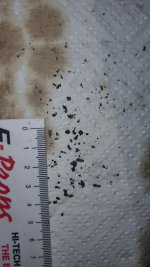
Upon pulling the oil screen, I found a heavy amount of dry, black carbon flakes. However, I also isolated two specific types of metal contaminants:
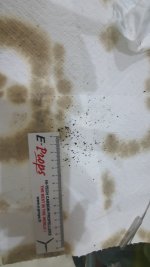
- Non-Magnetic Aluminum Flakes: I found 3 distinct metallic flakes that are completely non-magnetic. Looking at the scale, the largest one is quite flat, elongated, and measures roughly 4-5 mm in length.
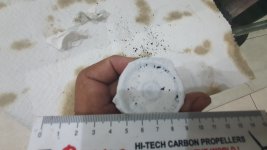
- Weakly Magnetic Fuzz/Dust: A lot of the black flakes and fine dust attached themselves to a strong neodymium magnet. It looks like standard ferrous break-in fuzz/sludge mixed with carbon.
Pictures Attached:
- (Overview of the debris on paper towel)
- (Close-up of the 3 aluminum pieces next to a ruler)
- (The fine ferrous fuzz reacting to the magnet)
Given that the engine has 70 hours on the top overhaul and ran for 40 hours on this specific oil cycle, do you consider the size of that 5 mm aluminum flake acceptable per Lycoming SI 1492, or should I be worried about piston scuffing / wrist pin plug wear?
My plan right now is to scope the cylinders, run the new AeroShell W100 for a short 10-hour cycle, and pull the screen again to check for any active making of metal.
Would love to hear your thoughts or if anyone has seen similar flashing/shavings drop this late into a top overhaul.
Thanks,
Pecks1472


