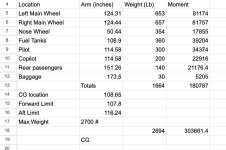
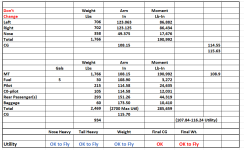
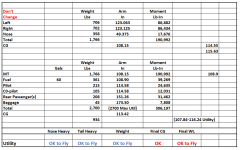
I would be interested seeing your W&B. I went with a composite prop and Earth X batteries just to keep the gross weight as low as possible. I did have a full interior done which makes my 10 a little fat. Add to that built in O2 and a B&C pad mount alternator. I did not want to exceed the maximum design gross weight as some have done as this reduces safety margines. Attached is an example of my 10.
View attachment 120827View attachment 120826
I will post a copy for you tomorrow. The heavy hartzell is a help here. I am pretty stock and use 2 pc680 type batteries. My O2 system is built in, but the tank is not. Even have a sensor tied to efis to monitor fill. I use E bottles that get placed in a permanent cradle that sit directly behind the rear seat backs. I was unwilling to spend major money on an FG bottle and would not consider putting AL bottles behind the bulkhead for CG reasons. I like that i can remove the bottles, as i refill at home, not my hanger. I also often carry two bottles on Colorado trips. I can install a bottle in under a minute or two. The O2 bottle is only 6 lbs and at the location i picked, does not create a real hit on CG.
I have nice seats, but otherwise no real interior. Wasn’t looking for an airborne BMW, just a low cost four place airplane. I am a bit frugal in that regard. I was also unwilling to spend $4k on seats, so i did my own upholstery. Lot of work making the templates, but they came out very nice and rival pics i have seen of the expensive stuff. Actually better than some as there is zero voids or puckering that i have seen in pics. They are ultra leather, which is tough as nails and a fraction of the weight of leather. I find them more comfortable than leather, but that is a personal preference.
My empty weight, ready to fly, with tool bag and fire extinguisher(mounted way fwd on top of the tunnel cover) is 1640. So, with full tanks, i am right at 2000. I set gross at 2800 , but have only gone over 2700 once or twice. Personal risk tolerance here. I just believe there is plenty of margin and willing to eat into it a couple of percentage points.
All of these choices keep weight behind the c of g low and net the fwd bias. The primary benefit is getting to gross, even the 2800, without busting the aft limit in most loading scenarios. While i am willing to accept what I consider a very small risk going to 2800, i will NOT exceed the aft cg, which i consider to be a far more serious risk and didn’t want to be tempted, as I suspect some are, trying to get 4 people in the porkier planes. No interest in self teaching myself how to get out of a flat spin. My son once threw a bag much heavier than he declared in the baggage area of my 6. Did NOT enjoy the control feel. Literally felt like i had to push the stick to flare. I now put a hand on everything that goes in the back of any plane.
All about balancing priorities. Would love AC on those August flights droning along under the bravo, but i tell my passengers one of you wouldn’t be able to make this flight if i had AC.
I could go lithium to lower the weight, but so far have not needed more capacity than i have and that would require more ballast for solo flights. Built to plans, the 10 is well set in regards to cg imo. Once you start adding things, it moves in the wrong direction if 4 person travel is a goal.