


After finishing up Phase I, I decided that I'd pull several things apart and do a good inspection before moving forward. Part of this inspection was a compression test and borescope pictures.
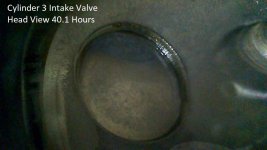
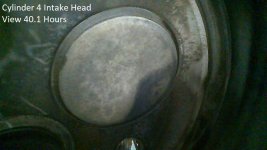
The compression test came out very well at 79/80 on all four cylinders. However, when I got to working with the borescope, I found a couple of anomalies. At issue is a couple of what look like burn marks on the intake valves on cylinders #3 and #4.
I subscribed to Savvy, sent the pictures in for each cylinder and all came back as "Satisfactory". I sent a note back asking them to take another look at the intake valves on cylinders #3 and #4 and got the following reply back, "Intake valves generally do not burn, the spots on these valves are likely fuel stains that occur after the engine shut down".
The pictures I sent to Savvy are below.
The compression test came out very well at 79/80 on all four cylinders. However, when I got to working with the borescope, I found a couple of anomalies. At issue is a couple of what look like burn marks on the intake valves on cylinders #3 and #4.
I subscribed to Savvy, sent the pictures in for each cylinder and all came back as "Satisfactory". I sent a note back asking them to take another look at the intake valves on cylinders #3 and #4 and got the following reply back, "Intake valves generally do not burn, the spots on these valves are likely fuel stains that occur after the engine shut down".
The pictures I sent to Savvy are below.
- IO-390
- 40.1 Total Hours Tach Time
