

Van's Air Force
You are using an out of date browser. It may not display this or other websites correctly.
You should upgrade or use an alternative browser.
You should upgrade or use an alternative browser.
How well do 9’s cruise at high altitudes with fixed-pitch prop?
- Thread starter Duncannon
- Start date

Norman CYYJ
Well Known Member
Exceptionally well.I know these fixed-pitch vs. constant-speed props have been done to death but I figured I’d simply ask; how well do 9/9A’s cruise at high altitudes, between 13k-17k feet?

ChiefPilot
Well Known Member
The airframe isn’t as big of a deal at those altitudes as the prop is, and you will have to choose your compromise with a FP prop. A climb prop, for example, will be RPM limited at those altitudes I.e. you hit an RPM limit before you get to full throttle. A tall cruise prop will do better but it will take you a relatively long time to get there.
No 9 experience, but have heard that the 9 wing does very well at those altitudes. From my research, On same airframes/engines, FP props will meet or exceed cruise speeds on comparable quality CS props. What you give up is typically climb rate and TO distance. I have FP on my 6 and very happy with it. I don't get thrown back in my seat on TO roll and climb a bit slower, but saved a fortune and my cruise speeds are right at the norm for other 6's. It is a catto. I ama bit climb pitched. This provides a better climb rate and allows me to hit 2700 up high for better high altitude cruise speeds. Works well for me as I always cruise LOP. If I tried ROP at 8k', I would overspeed. FPs do very well at their designed mission. However, there are compromises outside that mission.
Last edited:
150 TAS or a knot or two over for me at 15500 and ~7 gph or high 6.something. O-320 with the 3 blade catto prop. i don’t get the perfect fuel distribution with the carb. fuel injected probably would do better.
About the same here with an IO-320 and 2 blade cruise-pitched Catto -- 150 true, 6.7-7.0 gph.

Not my experienceA climb prop, for example, will be RPM limited at those altitudes I.e. you hit an RPM limit before you get to full throttle. A tall cruise prop will do better but it will take you a relatively long time to get there.
Lower pitch allows WOT and a higher rpm which at the low MP available provides a higher hp than would otherwise be possible.
In old RV-4 and 6 construction manuals, Van wrote about this….. that a prop biased strongly towards climb performance at low altitude is also a cruise prop at high altitude.
Benefit ing from this does require being comfortable cruising at high rpm, but most people with a fixed pitch that get good speed performance are typically doing that.
The only downside is that oil temp tends to run just a bit higher than it would if the rpm were lower with a constant speed.
Exceptionally well.
Our 9A was very happy cruising 12-15k DA.
My altitude limits based on my O2 level using on board oxygen bottle.
From my log, best XC fuel burn observed was 6.5pgh at ~150kts TAS.
Catto 2 blade FP, 150 hp O-320-E2D, no speed mods (taped gaps, 3d printed fairings, screw heads fore and aft…)
Last edited:

I'm very happy with the performance of my 160 HP, FP prop RV-9A at higher altitudes. It's configured much like the original 160 HP, FP metal Sensenich prop on the factory RV-9A demonstrator. However, I think it's less about the prop itself and much more about its 28-foot Roncz high aspect-ratio airfoil, which is very different than the other shorter winged, lower aspect radio RV models.
9A with a Catto 3 blade and Titan IO-370. I normally cruise 9K-13K feet, 2400 RPM, about 7 GPH LOP, 160 KTAS (2400 RPM seems to be the smoothest setting for the engine /prop).I know these fixed-pitch vs. constant-speed props have been done to death but I figured I’d simply ask; how well do 9/9A’s cruise at high altitudes, between 13k-17k feet?
Others have mentioned the wing on the 9, probably the best above 10K that Vans makes.
If I remember correctly, Vans fastest plane in cruise some years ago (not sure of the altitude) was a RV 8 with a FP Sensenich prop (?90 inches).
The 9A factory demonstrator has always had a constant speed prop, but there is nothing keeping a fixed pitch that get example from having equivalent speed performance at a given altitude range with a properly match propeller.It's configured much like the original 160 HP, FP metal Sensenich prop on the factory RV-9A demonstrator.
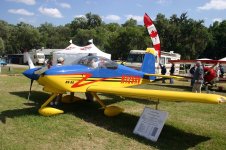
Not arguing…. But since I built a large portion of N129RV, did some of the initial flight testing, and inspected and maintained it after its initial certification for 22 years, I assure you I know what propellers it had on it through its history.When my wife and I went to the Arlington EAA fly-in (summer of 2000), shortly after Vans introduced their 160 HP, RV-9A version (N129RV ), the airplane clearly had a fixed pitch prop, exactly as recommended by the build instructions back then (i.e. the Sensenich 70CM7S9-0-79). We had a nice long discussion about that with Vans design engineer back then (Ken Kroger). That's why we decided to use Vans RV-9A recommended engine and propeller type. Vans Aircraft might have changed it later in time to a CS prop, but definitely not back then. And Scott, I ask that you please refrain from arguing -- it doesn't make you or Vans Aircraft look any better.
View attachment 117181
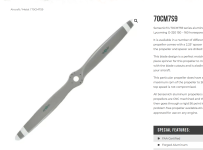
View attachment 117180
It flew initially with a three blades (white) MT constant speed propeller.
When the airplane was 8 to 9 years old or so, I don’t remember the exact time, the MT propeller needed some work and it was found that with the cost of the repairs and out and back shipping to an MT propeller facility was more expensive than just installing a new Hartzell constant speed so that is when it got the two blade Hartzel.
There was a company RV-9A of sorts that had a Sensenich fixed pitched propeller.
It was the proof of concept prototype that had been built using the damaged air frame from the original RV-6B.
It has never been considered fully representative of the airplane that was delivered as a kit and isn’t typically used for any performance comparison because it was built with a 118 hp Lycoming O-235 L2C. The same engine that was used in the Cessna 152.
This airplane was lost in an accident prior to first flight of N129RV
This photo was taken at Sun and Fun 2004
Attachments
Last edited:

Pictures looks like a Hartzell prop? I don't think Hartzell produced a fixed pitch prop in the early 2000's? I've seen N129RV with a MT CS prop many years ago?When my wife and I went to the Arlington EAA fly-in (summer of 2000), shortly after Vans introduced their 160 HP, RV-9A version (N129RV ), the airplane clearly had a fixed pitch prop, exactly as recommended by the build instructions back then (i.e. the Sensenich 70CM7S9-0-79). We had a nice long discussion about that with Vans design engineer back then (Ken Kroger). That's why we decided to use Vans RV-9A recommended engine and propeller type. Vans Aircraft might have changed it later in time to a CS prop, but definitely not back then. And Scott, I ask that you please refrain from arguing -- it doesn't make you or Vans Aircraft look any better.
View attachment 117181
View attachment 117180
Edit: Thanks, Scott, for the update.
Last edited:
Simple question -- what propeller do you see in the Arlington WA, EAA Fly-in photo that I posted previously above -- of N129RV? This is the same Sensenich 70CM7S9-0-79 propeller that Vans recommended to us and other builders for the RV-9A at that time -- we built ours from 2000 to 2004.Not arguing…. But since I built a large portion of N129RV, did some of the initial flight testing, and inspected and maintained it after its initial certification for 22 years, I assure you I know what propellers it had on it through its history.
It flew initially with a three blades (white) MT constant speed propeller.
When the airplane was 8 to 9 years old or so, I don’t remember the exact time, the MT propeller needed some work and it was found that with the cost of the repairs and out and back shipping to an MT propeller facility was more expensive than just installing a new Hartzell constant speed so that is when it got the two blade Hartzel.
There was a company RV-9A of sorts that had a Sensenich fixed pitched propeller.
It was the proof of concept prototype that had been built using the damaged air frame from the original RV-6B.
It has never been considered fully representative of the airplane that was delivered as a kit and isn’t typically used for any performance comparison because it was built with a 118 hp Lycoming O-235 L2C. The same engine that was used in the Cessna 152.
This airplane was lost in an accident prior to first flight of N129RV
This photo was taken at Sun and Fun 2004
To my eyes, the decal on the blades looks exactly like the one used by Hartzell.Simple question -- what propeller do you see in the Arlington WA, EAA Fly-in photo that I posted previously above -- also of N129RV? This is the same Sensenich 70CM7S9-0-79 propeller that Vans recommended to us and other builders for the RV-9A at the time -- we built ours from 2000 to 2004.
The other telling indicator is that the blades have squared off tips.
Sensenich has never made a propeller for RV’s with squared off tips
Attachments

What fixed pitch prop did Vans recommend for the RV-9A back in 2000? Was it the Sensenich 70CM7S9-0-79 fixed pitch propeller? This is the same prop listed in my RV-9A builders instructions. Scott, the OP was asking how a FP propeller (not a CS prop) performs at higher altitudes. And, since I have one and installed Vans recommended FP prop (Sensenich 70CM7S9-0-79) for the RV-9A that I built, I answered his question from my own 22-years of experience building and flying a FP, 160 HP RV-9A.To my eyes, the decal on the blades looks exactly like the one used by Hartzell.
The other telling indicator is that the blades have squared off tips.
Sensenich has never made a propeller for RV’s with squared off tips
This was my thought process as well; being able to increase RPMs with a C/S prop could potentially give better performance.Not my experience
Lower pitch allows WOT and a higher rpm which at the low MP available provides a higher hp than would otherwise be possible.
In old RV-4 and 6 construction manuals, Van wrote about this….. that a prop biased strongly towards climb performance at low altitude is also a cruise prop at high altitude.
Benefit ing from this does require being comfortable cruising at high rpm, but most people with a fixed pitch that get good speed performance are typically doing that.
The only downside is that oil temp tends to run just a bit higher than it would if the rpm were lower with a constant speed.
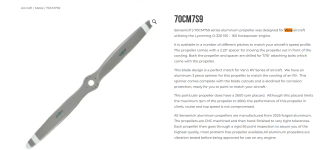
It looks like your cut-n-paste got clipped-off for "propeller was designed for Vans aircraft" part -- see full prop Sensenich listing below:Pictures looks like a Hartzell prop? I don't think Hartzell produced a fixed pitch prop in the early 2000's? I've seen N129RV with a MT CS prop many years ago?
View attachment 117184
Edit: Thanks, Scott, for the update.
Right -- there is no doubt that a CS prop works better across the range, but the initial cost and ongoing hub and prop maintenance costs much more! Given that, I find the prop that Vans and Sensenich developed together for the RV-9 and other models using the O-320 150 and 160 HP works amazingly well at high and low altitudes. A prop needs to be designed, matched and tested to the specific aircraft type used, or else prop resonance and failure can occur down the road.This was my thought process as well; being able to increase RPMs with a C/S prop could potentially give better performance.
Last edited:
ExactlyNo, the picture was meant to show what a fixed pitch Sensenich 70CM7S9 looks like. It is not the prop in the picture you posted. That is a CS Hartzell prop as stated in my comment 15, and I don't believe Scott was "arguing" with you. Just trying to state the facts so others aren't confused. But yes, this prop will work with a RV-9 as Scott stated.
The VAF forums and other internet sources are full of incorrect information.
VAF is a large enough info data base that AI is using it for a lot of its content. I have seen bad info being spread by ChatGPT and others based on posts here in VAF.

So a lot of my posts are made to help the forums contain valid info.
My posts in this thread weren’t meant to degrade the use of a fixed pitch prop or anyone that chose to do so.
My personal RV-6A has a fixed pitch prop and it performs fantastically for what I need the airplane to do.
A constant speed wouldn’t make it any faster than it is now other than at low altitudes, which doesn’t matter to me because I am always higher when I want to go fast.
Only occasionally when heavy at higher density altitudes do I wish I had a constant speed, but that has never limited me flying in a given situation to where I would make the switch.
My 180 hp RV-6A with a Sensenich fixed pitch, will turn about 2650 rpm WOT at a DA of around 14000, at a TAS of about 170 kts.This was my thought process as well; being able to increase RPMs with a C/S prop could potentially give better performance.
A constant speed wouldn’t likely help it be any faster.
I’m glad you posted your experience John.What fixed pitch prop did Vans recommend for the RV-9A back in 2000? Was it the Sensenich 70CM7S9-0-79 fixed pitch propeller? This is the same prop listed in my RV-9A builders instructions. Scott, the OP was asking how a FP propeller (not a CS prop) performs at higher altitudes. And, since I have one and installed Vans recommended FP prop (Sensenich 70CM7S9-0-79) for the RV-9A that I built, I answered his question from my own 22-years of experience building and flying a FP, 160 HP RV-9A.
All I did was post a minor correction to a detail you included.
It was not meant as a personal attack.
Sorry if you took it that way.
You have posted a photo of a Hartzell constant speed propeller…
This was not the point -- the point was that the RV-9A, using the O-320 160 HP engine, had the Sensenich 70CM7S9-0-79 fixed pitch prop spec'd-in. And, it was originally the recommended FP prop for the RV-9/9A by design. Certainly, it must have been tested on the RV-9A because it's listed in the Sensenich catalog for Van's RV's with that engine type. In addition, Ken Krueger (design engineer on the RV-9A) went into great detail with us at the Arlington WA EAA fly-in in 2000 on the reasons this prop was the "perfect match" (according to Ken) for the RV-9/9A! So, that was actually the point here for the OP. So, let's try to stay on topic for the sake of the OP's question.You have posted a photo of a Hartzell constant speed propeller…
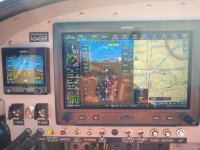
I'm Oshkosh bound at 9500, not quite up in the teens, with a bit of a tailwind making 165 kts over the ground. Note, I keep the G3X in mph for indicated and true airspeeds (per the book V speeds) and ground speed in kts.
On other trips, I climb to 11500 and performance is similar.
I flew the factory demo 9A back in '04 and it had the MT CS prop.
On other trips, I climb to 11500 and performance is similar.
I flew the factory demo 9A back in '04 and it had the MT CS prop.
The suitability of a specific part recommendation can be determined in a number of different ways.Certainly, it must have been tested on the RV-9A because it's listed in the Sensenich catalog for Van's RV's with that engine type.
In this instance it was likely done via extrapolation using existing data (totally acceptable in some circumstances) by comparing performance data of the constant speed RV-9A to the data of other RV models that had been flown with both a fixed pitch and constant speed propellers.
The first instance of a Sensenich fixed pitch propeller being installed on a Vans RV-9(A) was when the tail dragger prototype made its first flight in 2002.
Attachments

Thankfully, actual flight testing of the Sensenich fixed pitch propeller was done on an actual RV-9(A) demonstrator well before we installed our 160HP, RV-9A Sensenich fixed pitch prop back in 2004. I must say that Ken Krueger, design engineer on the RV-9(A), had many highly positive words regarding the Sensenich 70CM7S9-0-79 fixed pitch prop match-up to the 160 HP, RV-9(A) when we talked with him at the Arlington WA fly-ins during the early 2000's. I feel it's better coming from an actual design engineer than the techs and/or sales people at Van's. Ken Krueger is one "sharp dude" when it comes to aircraft design, and it was a major loss to Van's Aircraft to lose Ken, who went on to design the Vashon Ranger!The first instance of a Sensenich fixed pitch propeller being installed on a Vans RV-9(A) was when the tail dragger prototype made its first flight in 2002.


Last edited:
Ouchwhen we talked with him at the Arlington WA fly-ins during the early 2000's. I feel it's better coming from an actual design engineer than the techs and/or sales people at Van's.
But now your comments are making more sense, since or initial post said you talked with Ken at the 2000 Arlington fly-in

That RV is the one that now has the 916is mounted.The suitability of a specific part recommendation can be determined in a number of different ways.
In this instance it was likely done via extrapolation using existing data (totally acceptable in some circumstances) by comparing performance data of the constant speed RV-9A to the data of other RV models that had been flown with both a fixed pitch and constant speed propellers.
The first instance of a Sensenich fixed pitch propeller being installed on a Vans RV-9(A) was when the tail dragger prototype made its first flight in 2002.
This makes my brain hurt slightly because I cannot tell the tailwind component without pulling up a calculator.I keep the G3X in mph for indicated and true airspeeds (per the book V speeds) and ground speed in kts.
Looks like about 8.5 kts. not that it's super important.
CorrectThat RV is the one that now has the 916is mounted.
It was converted to a 9A, and then shipped to Lockwood with no engine installed.
We kept our previous K35 Bonanza at Arlington WA for 12-years, so we attended numerous Arlington Fly-ins over the years, especially when it was the Northwest EAA Fly-in Event. That's actually what got my wife (also a pilot) and I interested in building an RV along with knowing some of the nicer, more helpful folks at Vans Aircraft like Ken Krueger and Rian Johnson. Otherwise, we would have built a Glasair by Standard-Hamilton also located at Arlington WA. The show stopped being sponsored by the EAA after the pink General Aviation News twin Baron dug both props into the dirt while taxiing on the grass. After the GA News sued the EAA for the incident, Arlington stopped being sponsored by the EAA and became much lesser. We moved to a hangar at Paine Field (KPAE) WA, where we completed our RV-9A and keep it hangered. As a matter of fact, we few today for lunch to KS09 Port Townsend. You should consider getting-up and flying more yourself Scott.But now your comments are making more sense, since or initial post said you talked with Ken at the 2000 Arlington fly-in
If you touch the X-wind window on the G3X, it changes to display the direct tailwind and crosswind components.This makes my brain hurt slightly because I cannot tell the tailwind component without pulling up a calculator.
Looks like about 8.5 kts. not that it's super important.
Last edited:
jselvatici
Well Known Member
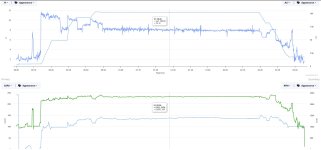
Screenshot from the data uploaded to Savvy. O-320 carbureted fix pitch catto 3 blade prop. I might be able to lean a bit more, who knows.
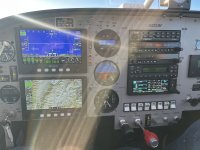

This sheet is my 9a w O-320 test card. I am testing the Catto 2B Ground Adjustable Composite Prop vs the metal Sensenich FP and comparing to the EAA CAFE report on the 9a that had a MT composite CS 3B prop installed. I LOVE the smoothness of the composite props!
Attachments
At 2580 rpm, you didn’t have a problem with low revs.View attachment 117374
O-360, dual Pmag, Catto prop.
