Van's Air Force

The definitive Van's Aircraft support community! Buying, building or flying an RV? Join our exclusive family of mentors and enthusiasts!

G3X Oil Temperature Offset

RV8Squaz

Well Known Member
The oil temperature on my G3X is reading consistently 15° +/- 2° F high throughout the range from near freezing to near boiling. For example, prior to engine start if the CHT’s and EGT’s are all reading about 50°F, the oil temperature reads 65°F. I replaced the probe with a new identical Garmin oil temperature probe RTD 5/8-18 UNF-3A, p/n 494-70004-00 and it behaves the same way. I checked the readings of both, the old and new probes, by immersion in a water bath. I compared the reading against an extremely accurate digital thermometer, a ThermoWorks ThermoPop, accurate to +/- 1°F. I checked the readings at 40° and 200°F. The indication on the G3X is approximately 15° higher throughout the range with either the old probe or the new probe.

Any idea what might be going on here?

Thanks for your help!
 
The oil temperature on my G3X is reading consistently 15° +/- 2° F high throughout the range from near freezing to near boiling. For example, prior to engine start if the CHT’s and EGT’s are all reading about 50°F, the oil temperature reads 65°F. I replaced the probe with a new identical Garmin oil temperature probe RTD 5/8-18 UNF-3A, p/n 494-70004-00 and it behaves the same way. I checked the readings of both, the old and new probes, by immersion in a water bath. I compared the reading against an extremely accurate digital thermometer, a ThermoWorks ThermoPop, accurate to +/- 1°F. I checked the readings at 40° and 200°F. The indication on the G3X is approximately 15° higher throughout the range with either the old probe or the new probe.

Any idea what might be going on here?

Thanks for your help!
G3X, IM, rev AW, pdf pg 279. Garmin p/n 494-70004-00 (UMA temperature sensors without the "R" designation are not compatible).

Good luck
 
Are you sure you have the correct sensor configuration selected?
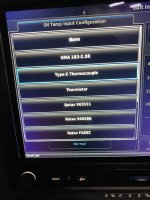
I do. I checked it. I have UMA 1B3-2.5R selected. And just for fun, I tried the Type K Thermocouple selection. It didn’t work. I didn’t try the others. The attached picture shows when I tried the Type K Thermocouple selection, not what I actually have selected.

Thanks for your help Matt.
 

Attachments

  • IMG_3405.jpeg
    IMG_3405.jpeg
    2.1 MB · Views: 23
G3X, IM, rev AW, pdf pg 279. Garmin p/n 494-70004-00 (UMA temperature sensors without the "R" designation are not compatible).

Good luck
Both probes are that specific Garmin p/n. The new one was purchased from Spruce two days ago, so I would hope it has the “R” designation. I’ll check for markings when I get back to the hangar later today.

Thanks for your help!
 
When I first power up the avionics inside of a hangar with a cold (ambient temperature) engine, I see very good agreement between all the temperature probes in the G3X system including the oil temperature.

The most common cause for a slightly elevated oil temperature measurement (aside from a failed probe) is probably added resistance in the cabling/connections between the GEA 24 and the UMA 1B3-2.5R oil temperature probe. Only a little over 3 ohms of added resistance would result in a 15F error.

I would start by removing the J243 connector on the GEA 24 and measure the resistance between pins 32,33 to which the oil temperature probe should be connected. At the same time take note of the temperature of the oil temperature sensor by whatever means is available.

You can also disconnect the oil temperature sensor and make the resistance measurement directly at the sensor to see if the cabling and any connection to the sensor is adding resistance which would cause an elevated reading.

You can also lookup in a PT100 RTD resistance versus temperature chart to see what the resistance should be at this temperature to verify that the probe is working correctly. To go along with your previous measurements, the probe should read 101.736 ohms at 40F and 135.974 ohms at 200F.

Steve
 
Last edited:
When I first power up the avionics inside of a hangar with a cold (ambient temperature) engine, I see very good agreement between all the temperature probes in the G3X system including the oil temperature.

The most common cause for a slightly elevated oil temperature measurement (aside from a failed probe) is probably added resistance in the cabling/connections between the GEA 24 and the UMA 183-2.5R oil temperature probe. Only a little over 3 ohms of added resistance would result in a 15F error.

I would start by removing the J243 connector on the GEA 24 and measure the resistance between pins 32,33 to which the oil temperature probe should be connected. At the same time take note of the temperature of the oil temperature sensor by whatever means is available.

You can also disconnect the oil temperature sensor and make the resistance measurement directly at the sensor to see if the cabling and any connection to the sensor is adding resistance which would cause an elevated reading.

You can also lookup in a PT100 RTD resistance versus temperature chart to see what the resistance should be at this temperature to verify that the probe is working correctly. To go along with your previous measurements, the probe should read 101.736 ohms at 40F and 135.974 ohms at 200F.

Steve
That is really great info Steve. I can now see how a little resistance can have such an impact. I have both probes disconnected, so I’ll check them first. Since the problem is common to both probes, I’m betting it’s the wiring or a problem at the connector. I’ll check that too.

Thank you very much!
 
TC leads and (especially) junctions create error but it’s hard to get around either. For our apps, it’s an exercise in getting the error down to an acceptable level.

We’re stuck with one (multiple) junction per TC because of the short flying lead length from the device proper. Make sure those junctions are clean and insulated with the provided insulation. Ambient heat at the junctions affects the reading. Radiant heat realized at the junctions has way more error inducing potential and there’s a lot of hot metal in the area.

Good luck and keep us informed please.
 
My Garmin Oil Temperature sensor failed a month ago (read 250 degrees on last part of flight, then red X next day). My buddies also failed after a few hundred hours. Since my engine only has 80 hours on it (as does the sensor) we contacted garmin to see if they had any issues with their sensors. They claimed no issues. I can’t speak to the quality overall of their sensors but was a little perturbed that mine failed so quickly. I ordered the Garmin replacement and it’s actually reading about 15 degrees lower than my original one did - which I would expect as normal with my larger oil cooler. Could all be coincidence or randomness but I don’t think the quality control is great on these at this time. I’m sure people will tell you the standard - hook up another sensor for comparison data. Doesn’t exactly answer your original post, but my point is the quality control and reliability of these sensors could be wonky.
 
Last edited:
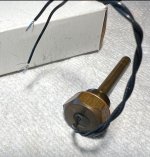
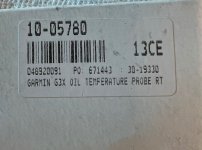
I have the exact same problem. It looks like Aircraft Spruce shows the Part that Garmin Specs but sends a different model .
 

Attachments

  • IMG_1356.jpeg
    IMG_1356.jpeg
    506.4 KB · Views: 39
  • IMG_1355.jpeg
    IMG_1355.jpeg
    302 KB · Views: 37
That is really great info Steve. I can now see how a little resistance can have such an impact. I have both probes disconnected, so I’ll check them first. Since the problem is common to both probes, I’m betting it’s the wiring or a problem at the connector. I’ll check that too.

Thank you very much!
Jerry,

Another quick check you can make to test your oil temperature probe is to put it in an ice bath.

I took an old probe that I had removed from my aircraft after 10 yrs of flying and tested it this morning in an ice bath. It read 100.1 ohms at 32F with my Fluke multimeter. As you probably know, a PT100 RTD is spec'd to read 100 ohms at 0C (32F), so what this probe read is real close.

When I removed this probe from my plane I was having a problem with occasional spikes in oil temperature during flight. I think the real issue was not the probe but slightly dirty/oily contacts on the connector contacts I was using at the time.

Steve
 
Last edited:
Same problem, different system. Ground was my issue. Cht/egt 15 lower than oil most of the time. I needed to make the ground at the instrument, vs a closer or perceived better ground point.
 
Jerry,

Another quick check you can make to test your oil temperature probe is to put it in an ice bath.

I took an old probe that I had removed from my aircraft after 10 yrs of flying and tested it this morning in an ice bath. It read 100.1 ohms at 32F with my Fluke multimeter. As you probably know, a PT100 RTD is spec'd to read 100 ohms at 0C (32F), so what this probe read is real close.

When I removed this probe from my plane I was having a problem with occasional spikes in oil temperature during flight. I think the real issue was not the probe but slightly dirty/oily contacts on the connector contacts I was using at the time.

Steve
Thanks to you and Freemasm, I am making some progress. I think I found my problem. I believe it's some resistance at the Molex connector.

At 42°F the old and new probes read 102.6 and 102.7 ohms respectively. At 185°F they read 133.4 and 133.6 ohms. According to the PTD100 chart, I should be seeing 102.1 ohms at 42°F and 132.8 ohms at 185°F. In any case, it doesn't appear to be an issue with either probe.

I disconnected the J243 connector at the GEA 24. The probe temp was now 40°F and the resistance was 101.9 ohms. I measured the resistance at the pins 32 and 33 at the connector and it was 105.7 ohms which correlates to 14.6°C or 58°F. That's approximately the difference I was seeing. I measured the resistance of each wire from the appropriate J243 pin to the pin at Molex connector half in the engine compartment. One lead measures 1.2 ohms and the other 2.2 ohms for a total of 3.2 ohms. All fingers are pointing to the Molex connector half that is attached to the harness.

This makes sense now because my problem started after I replaced the original, original oil temp probe. Prior to my panel upgrade, the probe harness went all the way from the probe directly to an electro-mechanical gauge on the panel with no connector in between. The harness had a braided metal jacket. We did the panel upgrade to the G3X and retained that probe and harness. It's the same style probe. At some point later, that original, original probe started going intermittent. I suspected it was a broken wire where the metal jacket entered the potting compound on the probe. There's a lot of movement there which I will explain in a minute. So we replaced the probe with the "old" one I was referring to earlier. Obviously, we had to cut the original probe's harness through the metal jacket and put a Molex connector there. A few months later when summer hit, that's when I noticed the abnormally high oil temp.

The reason I have the Molex connector there and not something more permanent is because it makes life much easier during oil changes. The engine is an AEIO-540 mounted on my Extra. The engine has a pressure screen and not an oil filter. Because of the screen, I do oil changes every 25 hours. During contest season, that's every other month! The screen is installed in a housing that also includes the oil temp probe. Having the ability to disconnect the oil temp probe makes maneuvering the housing much easier and reduces my chances of oil spillage. It's this maneuvering that caused all the movement of the wires coming out of the probe's potting compound base.

Sounds like the best resolution might be replace the Molex connector with some solder sleeves or butt splices and just suck it up trying to maneuver the oil pressure screen housing.

I'll let you know once I get it resolved. Thanks for everyone's help!

Jerry

P.S. Why the heck would they design something so sensitive to a couple of ohms?! Geez.
 
Last edited:
+1 for Deutsch connectors; Molex, not so much…
The only molex i have on th plane is the one that mates to the ph aviation flap motor. I was too lazy to change the flap motor connector, but i see that connector failure in the future so already have the duetsch connector for it.
 
I can install an AMP butt splice (using the proper crimper) in a fraction of the time of a connector or soldering, with 100% reliability.
Every connector is a another potential failure point, high resistance is a failure, don’t care how how good a connector it is.
 
Last edited:
I can install an AMP butt splice (using the proper crimper) in a fraction of the time of a connector or soldering, with 100% reliability.
Every connector is an another potential failure point, high resistance is a failure, don’t care how how good a connector it is.
Did you read the op’s reason for having a connector?
 
Did you read the op’s reason for having a connector?
Yes, perhaps a better routing of the wires could have avoided his issue in the first place? (rhetorical question).
My point was simply a properly installed butt splice is a more reliable connection than any connector.
I’m not necessarily trying to fix the OP’s problem, but using this forum so others can learn things to avoid.
I get that folks like fancy connectors and black (or red) boxes, but that doesn’t make them better or more reliable than simple.
(Never seen a properly installed butt splice fail, but I’ve seen plenty of connector problems)
 
Last edited:
Thanks to you and Freemasm, I am making some progress. I think I found my problem. I believe it's some resistance at the Molex connector.

At 42°F the old and new probes read 102.6 and 102.7 ohms respectively. At 185°F they read 133.4 and 133.6 ohms. According to the PTD100 chart, I should be seeing 102.1 ohms at 42°F and 132.8 ohms at 185°F. In any case, it doesn't appear to be an issue with either probe.

I disconnected the J243 connector at the GEA 24. The probe temp was now 40°F and the resistance was 101.9 ohms. I measured the resistance at the pins 32 and 33 at the connector and it was 105.7 ohms which correlates to 14.6°C or 58°F. That's approximately the difference I was seeing. I measured the resistance of each wire from the appropriate J243 pin to the pin at Molex connector half in the engine compartment. One lead measures 1.2 ohms and the other 2.2 ohms for a total of 3.2 ohms. All fingers are pointing to the Molex connector half that is attached to the harness.

This makes sense now because my problem started after I replaced the original, original oil temp probe. Prior to my panel upgrade, the probe harness went all the way from the probe directly to an electro-mechanical gauge on the panel with no connector in between. The harness had a braided metal jacket. We did the panel upgrade to the G3X and retained that probe and harness. It's the same style probe. At some point later, that original, original probe started going intermittent. I suspected it was a broken wire where the metal jacket entered the potting compound on the probe. There's a lot of movement there which I will explain in a minute. So we replaced the probe with the "old" one I was referring to earlier. Obviously, we had to cut the original probe's harness through the metal jacket and put a Molex connector there. A few months later when summer hit, that's when I noticed the abnormally high oil temp.

The reason I have the Molex connector there and not something more permanent is because it makes life much easier during oil changes. The engine is an AEIO-540 mounted on my Extra. The engine has a pressure screen and not an oil filter. Because of the screen, I do oil changes every 25 hours. During contest season, that's every other month! The screen is installed in a housing that also includes the oil temp probe. Having the ability to disconnect the oil temp probe makes maneuvering the housing much easier and reduces my chances of oil spillage. It's this maneuvering that caused all the movement of the wires coming out of the probe's potting compound base.

Sounds like the best resolution might be replace the Molex connector with some solder sleeves or butt splices and just suck it up trying to maneuver the oil pressure screen housing.

I'll let you know once I get it resolved. Thanks for everyone's help!

Jerry

P.S. Why the heck would they design something so sensitive to a couple of ohms?! Geez.
So I did some more troubleshooting today. I guess I was a bit confused on what probe was changed when. I looked at some old pictures and the original probe and harness prior to the panel upgrade were indeed replaced during the panel upgrade. However, I'm not entirely sure what p/n probe was put in during the panel upgrade. The newly installed probe that I was having difficulty with was either discarded or put into a removed parts bin somewhere. In any case, I think I have either the wrong probe or the wrong harness/wiring type. I'll get to that in a minute.

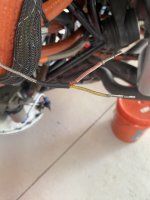
The Molex connector is not the issue. Today I measured the resistance across the connector and there is zero resistance across the connector. The crimps on the sockets and pins looked real good. I once again measured the resistance from the sockets in the J243 connector to the sockets in the Molex connector. The yellow wire associated with pin 33 measured 2.5 ohms and the red wire associated with pin 32 measured 0.8 ohms. I think I have the wrong wiring for the type of probe I have. I have probe p/n 494-70004-00. This is the probe specified in the EIS kit. The installation manual specifies a twisted shielded pair, MIL-C-27500. The harness I have, has red and yellow insulated wires with an exterior braided metal shield, eerily similar to the harness provided with the probe p/n 494-70009-00. That looks like thermocouple type wire. See pictures below. I added clear heat shrink over the red and yellow braided fabric insulation as it was beginning to fray from being manipulated.

IMG_3467.jpeg

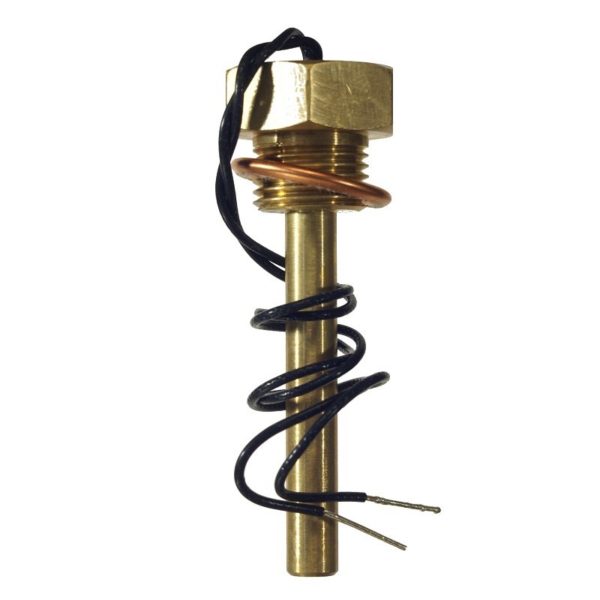
This is the probe I have, p/n 494-70004-00:

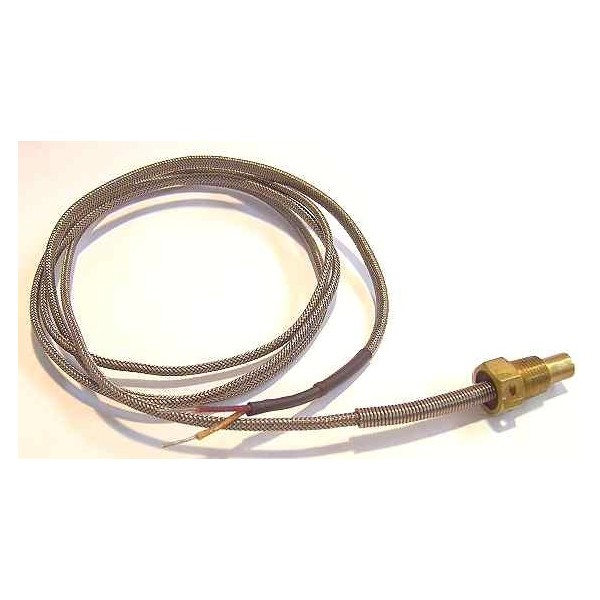
The harness looks like the one pictured here for p/n 494-70009-00:

So what do you guys think? I don't think I should have a thermocouple type harness with my current probe. Do you think the avionics shop may have originally installed the 70009 probe with that harness and then when the probe started acting up, it was replaced with the 70004 probe?

Thank you!

Jerry

 
So I did some more troubleshooting today. I guess I was a bit confused on what probe was changed when. I looked at some old pictures and the original probe and harness prior to the panel upgrade were indeed replaced during the panel upgrade. However, I'm not entirely sure what p/n probe was put in during the panel upgrade. The newly installed probe that I was having difficulty with was either discarded or put into a removed parts bin somewhere. In any case, I think I have either the wrong probe or the wrong harness/wiring type. I'll get to that in a minute.

The Molex connector is not the issue. Today I measured the resistance across the connector and there is zero resistance across the connector. The crimps on the sockets and pins looked real good. I once again measured the resistance from the sockets in the J243 connector to the sockets in the Molex connector. The yellow wire associated with pin 33 measured 2.5 ohms and the red wire associated with pin 32 measured 0.8 ohms. I think I have the wrong wiring for the type of probe I have. I have probe p/n 494-70004-00. This is the probe specified in the EIS kit. The installation manual specifies a twisted shielded pair, MIL-C-27500. The harness I have, has red and yellow insulated wires with an exterior braided metal shield, eerily similar to the harness provided with the probe p/n 494-70009-00. That looks like thermocouple type wire. See pictures below. I added clear heat shrink over the red and yellow braided fabric insulation as it was beginning to fray from being manipulated.

View attachment 79836

This is the probe I have, p/n 494-70004-00:

The harness looks like the one pictured here for p/n 494-70009-00:

So what do you guys think? I don't think I should have a thermocouple type harness with my current probe. Do you think the avionics shop may have originally installed the 70009 probe with that harness and then when the probe started acting up, it was replaced with the 70004 probe?

Thank you!

Jerry

I apologize but I don't have an answer. just more questions to add to the confusion. An RTD is an active device. a small amount of current passes through the device and the change in resistance (as a function of T) is translated into Temperature in the associated instrumentation. It uses "standard" wiring. A Thermocouple is a bimetallic junction that induces millivolt potential as a product of T. Both devices you listed are labeled as RTDs on the vendor page titles but one (and your pic above) obviously have TC leads and is listed as a type K TC in the verbiage below the title. Obviously both cannot be correct. BTW, because the very low potential of TCs allows any junction to induce (sometimes significant) error.

Take everything back to parade rest and forget any assumptions you've made so far -> Question the compatibility of the device/connection/device settings. Re-read the questions/comments from mburch and avanza. The device you have is a TC, not an RTD.

Edit = Was able to find a pic. For our applications, the only OEM acceptable connection for TCs that I'm aware of are ring terminals connected by a threaded fastener. TC lead (not wiring) from the aforementioned junction to the I/F device (Garmin GEA 24 here).
 

Attachments

  • TC junc.jpg
    TC junc.jpg
    488.5 KB · Views: 10
Last edited:
I apologize but I don't have an answer. just more questions to add to the confusion. An RTD is an active device. a small amount of current passes through the device and the change in resistance (as a function of T) is translated into Temperature in the associated instrumentation. It uses "standard" wiring. A Thermocouple is a bimetallic junction that induces millivolt potential as a product of T. Both devices you listed are labeled as RTDs on the vendor page titles but one (and your pic above) obviously have TC leads and is listed as a type K TC in the verbiage below the title. Obviously both cannot be correct. BTW, because the very low potential of TCs allows any junction to induce (sometimes significant) error.

Take everything back to parade rest and forget any assumptions you've made so far -> Question the compatibility of the device/connection/device settings. Re-read the questions/comments from mburch and avanza. The device you have is a TC, not an RTD
Thank you Freemasm. Just to be clear, the picture above is of the harness in the plane. The probe that I have is p/n 494-70004-00 with the two black wires. That’s why I think I may have the wrong harness.
 
Thank you Freemasm. Just to be clear, the picture above is of the harness in the plane. The probe that I have is p/n 494-70004-00 with the two black wires. That’s why I think I may have the wrong harness.
My apologies. Missed that. IMHO, this discovery would prompt me to do some further, broader investigating. Just saying.
 
The red/yellow wire is thermocouple wire for use with a type K oil temp probe, can’t use it with the Garmin RTD oil temp probe.
Avionics shop should know that!
 
Last edited:
The red/yellow wire is thermocouple wire for use with a type K oil temp probe, can’t use it with the Garmin RTD oil temp probe.
Avionics shop should know that!
I agree. I think there is a strong possibility that they installed the 70009 probe during the panel upgrade. Then, when I had my I intermittent problems, they put in a 70004 probe which is the probe I currently have. I believe that because I remember the braided metal shield and the spring going right up to probe. The tech should have caught that.
 
I agree. I think there is a strong possibility that they installed the 70009 probe during the panel upgrade. Then, when I had my I intermittent problems, they put in a 70004 probe which is the probe I currently have. I believe that because I remember the braided metal shield and the spring going right up to probe. The tech should have caught that.
FIXED!

Although, I'm ashamed to say it was mostly my fault. There was indeed a problem with the probe originally installed during the panel upgrade 2.5 years ago. The problem developed in the spring last year. I supplied the replacement probe to the avionics shop. I did that because I felt it was well past any warranty and they had really done a lot for me already without charge. When I selected the 494-70004-00 probe with the two black wires, I simply looked up the part number in the EIS kit contents. I did not correlate it with the existing probe or the documentation they had given me. My bad. I gave the probe to the VP of the shop. The VP in turn gave it to the technician to install. They did not charge me for the labor BTW.

The technician should have noticed that the customer supplied probe was not of the same type. In addition, he had to have changed the configuration setting from Type K Thermocouple to UMA 1B3-2.5R to get it to work with the probe I supplied. His bad.

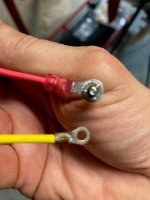
Also. it turns out that they did not use the 494-70009-00 probe during the initial installation as I suspected. They had used a UMA T3B3-2.5, which is indeed a Type K thermocouple probe. The shop gave me a new probe to install. It came with ring terminals so I just ended up cutting the Molex connector off the harness and crimping on a set of ring terminals. I put it together with screws, lock washers, nuts, and heat shrink. The new probe has a much longer lead than the one with two black wires. So I'm able to maneuver the pressure screen housing without taking the connection apart. I switched the configuration back to Type K Thermocouple and the oil temp reads accurately, within a degree or two F. Success!

Thank you all for your help. I wouldn't have been able to get this done as easily without the various clues.
 
Back
Top