Van's Air Force

The definitive Van's Aircraft support community! Buying, building or flying an RV? Join our exclusive family of mentors and enthusiasts!

Final Report N74MS RV 6

The investigator should have consulted with someone that actually knows something about RV's.

The photos in the Docket show pretty clearly that the ball joint on the left side of the exhaust system, is what appears to have failed.
Not a slip joint.
 
The report said the pilot died of Smoke inhalation. I sorta read that as he was incapacitated prior to the crash. From the pics, it didn't look like the canopy was open very far. Is it possible to open an RV-6 slider canopy in flight? If so, I would have thought that might have relieved some of the smoke and fumes in the cockpit issue.
 
Pretty sloppy. There is an obvious error in the first sentence. An in-flight what?
 
I read this report a few months ago when I was researching inflight fires. A big part of my current panel upgrade is also reworking penetrations and other “fire” measures. (Aluminum heat box getting changed out for stainless, etc….)
Without speculation, as nobody will ever know why, the pilot continued to fly for quite some time, finally landing after it was too late.
I am convinced that regardless of the measures one takes to mitigate the inflight fire scenario, the only thing you can buy is a bit more time.
After reading this, I contemplated getting rid of my quick change plug. However, there are other potential sources of a continuous supply of oil to feed a fire. Fuel can be shut off. Oil can not be.
This example is a very rare set of circumstances that may never be repeated.
By the way, my research showed inflight fires are very rare and even more so for RV’s.
 
The report said the pilot died of Smoke inhalation. I sorta read that as he was incapacitated prior to the crash.

Anyone aware of a cockpit photo taken prior to the accident? You know, the typical panel and seats shot?
 
In a local RV-6 fire during runup, the pilot was unaware he was on fire until bystanders alerted him. Perhaps because flames and smoke were blown under the plane. All wiring and all plumbing were burnt as well as the sheet metal from bottom cowl to under pilot were deformed.

Therefore, my speculation is that pilot in this case might not have known what was going on and its seriousness.

I’m a survivor of a number of inflight fires and it’s no fun! ( military aircraft)
 
As I prepare to swap out my engine this fall, my plan is to update a few items. One of those is to better address the firewall. Currently my cable and wire penetrations just go through plastic grommets sealed with high temp RTV. I have foam insulation on the backside of the firewall... will be removed. These were common practice's when I built mine. I already have Dan's new stainless firewall kit.
I have the oil quick drain installed on my engine now, but after reading this, I'm not sure I want this on the new engine. How do we inspect the exhaust ball joint? What makes it fail/come apart? How many RV's use this exact same setup? I would guess 70% or more of the fleet are setup this way. What other oil drain options are there?
If the O-ring can melt due to an exhaust pipe failure you are screwed? I know there are a lot of failure modes that can kill you, but this one is diabolical.
It is certainly giving me pause...
 
I have a few inputs open in my EMS and am considering adding a thermocouple near the exhaust exit. This could be programmed to alarm at a given temperature.
Thoughts?
 
As I prepare to swap out my engine this fall, my plan is to update a few items. One of those is to better address the firewall. Currently my cable and wire penetrations just go through plastic grommets sealed with high temp RTV. I have foam insulation on the backside of the firewall... will be removed. These were common practice's when I built mine. I already have Dan's new stainless firewall kit.
I have the oil quick drain installed on my engine now, but after reading this, I'm not sure I want this on the new engine. How do we inspect the exhaust ball joint? What makes it fail/come apart? How many RV's use this exact same setup? I would guess 70% or more of the fleet are setup this way. What other oil drain options are there?
If the O-ring can melt due to an exhaust pipe failure you are screwed? I know there are a lot of failure modes that can kill you, but this one is diabolical.
It is certainly giving me pause...
Considering the same. Putting back the stock oil drain plug.
What’s the big deal pulling a plug a couple times a year? Alway thought these were kind of silly, but all the kids were doing it right?
 
Considering the same. Putting back the stock oil drain plug.
What’s the big deal pulling a plug a couple times a year? Alway thought these were kind of silly, but all the kids were doing it right?
I agree and will just leave it the way Lycoming ships it. The question remains how do we inspect the ball joint? I have never done anything to it...
 
I read this report a few months ago when I was researching inflight fires. A big part of my current panel upgrade is also reworking penetrations and other “fire” measures. (Aluminum heat box getting changed out for stainless, etc….)
Without speculation, as nobody will ever know why, the pilot continued to fly for quite some time, finally landing after it was too late.
I am convinced that regardless of the measures one takes to mitigate the inflight fire scenario, the only thing you can buy is a bit more time.
After reading this, I contemplated getting rid of my quick change plug. However, there are other potential sources of a continuous supply of oil to feed a fire. Fuel can be shut off. Oil can not be.
This example is a very rare set of circumstances that may never be repeated.
By the way, my research showed inflight fires are very rare and even more so for RV’s.
At my CI this week, the mechanic recommended I install a fire extinguisher. IIRC if you blow off a Halon bottle, you need to be on O2 or have some Protective Breathing Equipment on- and the RV8 canopy doesn't have a vent. So I'm wondering about that.

I have given some thought to installing a fire system like we have on race cars- Halon bottle with 3 or 4 nozzles- usually one over the engine, one over the fuel cell, one in the driver's compartment. But we have the same issue with the Halon gas. I thought I read somewhere about someone installing one on an RV?

Seems in this case, even if he did have such a system, it might douse the flames for a minute but all of that air flowing through the cowling would clear out the halon pretty quick and there's nothing to stop re-ignition.

That quick drain melting and loss of oil pressure might have been his first indication that something was wrong. Things probably unfolded very quickly after that. Sad.
 
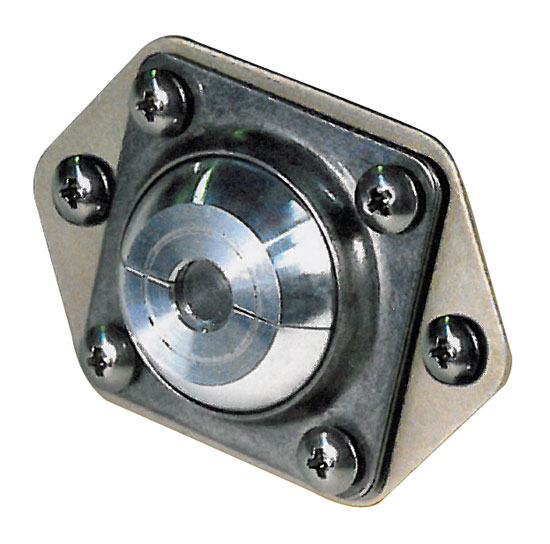
Additional examination of the
exhaust system indicated that the left exhaust pipe was a slip fit design and that no exhaust
pipe clamp was present. This evidence indicated that the source of the thermal distress event
was most likely an exhaust system leak that impinged on the oil quick drain, melting the O-
rings and resulting in the oil draining from the engine and subsequently igniting.

I replaced the standard quick drain with Fumoto T-202N. I believe it uses spring loaded metal ball , no O-rings. It looks like Fumoto now has newer models.
 
I agree and will just leave it the way Lycoming ships it. The question remains how do we inspect the ball joint? I have never done anything to it...
I've sent in a few exhaust systems for ball joint replacement; they should rotate freely but not have any 'play' or looseness in them.
 
I replaced the standard quick drain with Fumoto T-202N. I believe it uses spring loaded metal ball , no O-rings. It looks like Fumoto now has newer models.
This is the one I use, never a big fan of the safeair one.
 
That’s the same quick drain as my excavator. Ordered one and will swap out the safeair.
 
I've sent in a few exhaust systems for ball joint replacement; they should rotate freely but not have any 'play' or looseness in them.
I will inspect this when I remove it in the fall. Curious just what that looks like (loosness)? Do I send it back to Vetterman for an overhaul of sorts after 2,300 hours?


This is the one I use, never a big fan of the safeair one.
I currently have the safeair installed probably going to remove it next oil change. No idea where the original Lycoming plug is. I'll give the Fumoto a look.
 
I will inspect this when I remove it in the fall. Curious just what that looks like (loosness)? Do I send it back to Vetterman for an overhaul of sorts after 2,300 hours?


I currently have the safeair installed probably going to remove it next oil change. No idea where the original Lycoming plug is. I'll give the Fumoto a look.
Should be no fore/aft/lateral movement.
Be sure to check all flanges as well, seen plenty of cracks in this area as well.

I also like the Fumoto because it drains faster, larger opening.
 
Last edited:
At my CI this week, the mechanic recommended I install a fire extinguisher. IIRC if you blow off a Halon bottle,

Engine compartment fires have some interesting angles.

The issue with discharging cabin Halon is smoke followed by re-ignition. It will momentarily stop open flame, but in doing so will add an unbreathable substance to the already unbreathable atmosphere. As soon as oxygen returns, a red hot firewall will re-ignite whatever it was previously heating on the cabin side. If you installed Darwin Award material on the cabin side of the firewall, Halon will not fix it without first extinguishing the heat source in the engine compartment.

Seems in this case, even if he did have such a system, it might douse the flames for a minute but all of that air flowing through the cowling would clear out the halon pretty quick and there's nothing to stop re-ignition.

Pretty sure I did the math and posted it previously. Yes, 30+ cubic feet of air flowing through the cowl per second would require a very large Halon bottle to be effective.

I'll argue the best fire protection is passive, requiring no action from the pilot beyond the fundamentals...pull the mixture, close the fuel valve, stop the prop if possiible, and fly the airplane.

That quick drain melting and loss of oil pressure might have been his first indication that something was wrong. Things probably unfolded very quickly after that. Sad.

As a practical matter, replace the valve o-rings with Viton, or another elastomeric with even more heat resistance.

I have a few inputs open in my EMS and am considering adding a thermocouple near the exhaust exit. This could be programmed to alarm at a given temperature.
Thoughts?

Fire lights and similar have long been considered a Good Thing. The risk is a false positive, apparently considered acceptable by folks who get paid to contemplate these things.
 
As I prepare to swap out my engine this fall, my plan is to update a few items. One of those is to better address the firewall. Currently my cable and wire penetrations just go through plastic grommets sealed with high temp RTV. I have foam insulation on the backside of the firewall... will be removed. These were common practice's when I built mine. I already have Dan's new stainless firewall kit.
I have the oil quick drain installed on my engine now, but after reading this, I'm not sure I want this on the new engine. How do we inspect the exhaust ball joint? What makes it fail/come apart? How many RV's use this exact same setup? I would guess 70% or more of the fleet are setup this way. What other oil drain options are there?
If the O-ring can melt due to an exhaust pipe failure you are screwed? I know there are a lot of failure modes that can kill you, but this one is diabolical.
It is certainly giving me pause...

IMG_8361.jpeg
 
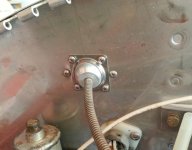
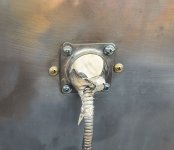
For retrofit, these should provide a reasonable amount of shielding over the fire stop and grommet to keep the fire stop in place as it chars, per a well known “expert” here.
I would guess not as good as a steel pass through filled with intumescent material.
However, I am trying to improve my firewall without reworking everything.
Buy myself a bit more time…..
 
I continue to be amazed by the lack of interest and knowledge of how critical a proper firewall is. Despite all the testing and writing that Dan has done I would speculate that less than 10% of all RV's have an OPTIMUM firewall. Additionally many items forward of the firewall do not get proper consideration. The #1 issue is the engine driven fuel pump. Many builders and far too many A&P's do not know the proper procedures for installing the hoses and fittings for the engine driven fuel pump.
 
Prevent the fire in the first place by paying attention to detail, replacing old hoses, removing cowling and thoroughly inspecting exhaust systems at least every 50 hrs.
I try to remove the top cowl of my Tailwind every 10 hours. Mostly to check the exhaust which has cracked a number of times. The exception is my annual trip to Oshkosh and points east where the engine has not gotten a close inspection for 25-30 hours.
I haven't seen any mention of Mouse Milk which is the recommended lubricant for the exhaust ball joints. I don't recall if there is a recommended interval for lubing the ball joints???
Another issue is the tailpipe supports. I believe in a minimal amount of free movement at the aft end of tailpipe.
 
I have the oil quick drain installed on my engine now, but after reading this, I'm not sure I want this on the new engine. How do we inspect the exhaust ball joint? What makes it fail/come apart? How many RV's use this exact same setup? I would guess 70% or more of the fleet are setup this way. What other oil drain options are there?
If the O-ring can melt due to an exhaust pipe failure you are screwed? I know there are a lot of failure modes that can kill you, but this one is diabolical.
It is certainly giving me pause...
Check out the fumoto drain valves. They are a traditional steel ball valve. Have one on my 6A.
 
Another issue is the tailpipe supports. I believe in a minimal amount of free movement at the aft end of tailpipe.
i am in the opposite camp. I have my aft pipes secured to the engine mount, not the engine. The lyc shake helps to exercise the ball joints and keep them free. My 6 has 1600 hours now and the ball joints are still free moving. Just another opinion for consideration.
 
I don't recall the details, but the Rutan Canard folks had some kind of low temperature wire in the aft of the engine bay. IIRC, it melts then it activates a fire alarm. If you think an RV guy doesn't know he's got a fire, imagine being in a Cozy, etc. Maybe it was just solder?
 
I don't recall the details, but the Rutan Canard folks had some kind of low temperature wire in the aft of the engine bay. IIRC, it melts then it activates a fire alarm. If you think an RV guy doesn't know he's got a fire, imagine being in a Cozy, etc. Maybe it was just solder?
I ordered some of these to do just that. I’m just not sure the optimal place to mount it under the cowl.

Thermal cutoff digikey
 
i am in the opposite camp. I have my aft pipes secured to the engine mount, not the engine. The lyc shake helps to exercise the ball joints and keep them free. My 6 has 1600 hours now and the ball joints are still free moving. Just another opinion for consideration.
An exhaust system that is not well supported to the engine will tend to crack at the cylinder flanges.
(The entire weight of the system is being supported by the small flange welds).
‘Excercising’ the ball joints excessively will definitely tend to wear them quicker.
 
An exhaust system that is not well supported to the engine will tend to crack at the cylinder flanges.
(The entire weight of the system is being supported by the small flange welds).
‘Excercising’ the ball joints excessively will definitely tend to wear them quicker.
Good point. However, the supports have rubber tube based hangers, so not sure they are really carrying any weight, just limiting movement.
 
I don’t think my ball Joints are located whereby a failure would affect the quick drain. They’re a good distance away.
Is there any indication in the report as to what the exhaust configuration was? Mine is a Vetterman Cross Over, typical for many RV’s.
 
The risk is a false positive, apparently considered acceptable by folks who get paid to contemplate these things.
Most production systems have at least two loops, from what I have read. If I know I have a fire I'll land anywhere "now" - but what if I get just an indication? Will I believe it and put my aircraft in a field or a lake based on a red light and a buzzer? I think a well-tested production-grade system might be interesting. Not sure I'm sufficiently confident in my skills and experience to roll my own - but I am watching this space...
 
Most production systems have at least two loops, from what I have read. If I know I have a fire I'll land anywhere "now" - but what if I get just an indication? Will I believe it and put my aircraft in a field or a lake based on a red light and a buzzer? I think a well-tested production-grade system might be interesting. Not sure I'm sufficiently confident in my skills and experience to roll my own - but I am watching this space...
I think it could be as simple as an alarm on the EFIS. Like I mentioned, I have several open positions on my EMS for a thermalcouple input. Pretty simple to place it at the exit where I believe the best indication would be. Develop a temp map flying for a while and set a reasonable limit to trigger the alarm.
Personally, if I did get an alarm, I would not jump to conclusions until I had other symptoms, but I might take some action, like descending, or whatever based on circumstances.
I’m not sure it would buy much time regardless.
 
I don’t think my ball Joints are located whereby a failure would affect the quick drain. They’re a good distance away.
Is there any indication in the report as to what the exhaust configuration was? Mine is a Vetterman Cross Over, typical for many RV’s.
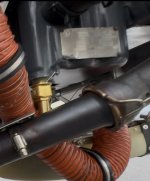
they seem to be close enough to 0320 quick drain with the stock rv9 exhaust

if NTSB believes the o-rings melted leading to oil loss and fire should they immediately issue a recommendation to AD this particular oil drain design. a life was lost..
 

Attachments

  • IMG_1904.jpeg
    IMG_1904.jpeg
    175.8 KB · Views: 173
they seem to be close enough to 0320 quick drain with the stock rv9 exhaust

if NTSB believes the o-rings melted leading to oil loss and fire should they immediately issue a recommendation to AD this particular oil drain design. a life was lost..
The drain is not at fault; Its the close proximity to the exhaust that is the root cause. Don't think they issue ADs on experimental aircraft. Up to the manufacturer to understand heat sensitivity of components and protect them accordingly.
 
they seem to be close enough to 0320 quick drain with the stock rv9 exhaust

if NTSB believes the o-rings melted leading to oil loss and fire should they immediately issue a recommendation to AD this particular oil drain design. a life was lost..

Looks like you have the Komoto drain. The Saf-air drain has an O-ring. From a previous post it seems as though the Komoto does not use an O-ring for the seal. Can anyone verify this for certain? I have the Saf-air installed on my 9A and that is what was installed on the accident aircraft. Your exhaust ball joint is much different than mine. Yours appears to have a clamp/hangar as part of it? Do you know who the exhaust manufacturer was?
 
I see lots of discussion about fire warning systems. I'm curious about the "what then?" If you're cruising along at 9500' MSL, and your engine catches fire (and it's not a fuel-fed fire that you can mitigate by shutting off the fuel valve), it's gonna be a few minutes before you get on the ground. Smoke, fumes, heat, flames in the cockpit? Maybe. This all weighs into my personal decision - I wear a parachute every time I fly, as do my passengers. There are too many scenarios - fire, engine loss over the Sierras/at night/IFR, structural failure, control failure - that can't be solved no matter how skilled you are at dead-sticking an RV into a field. I also won't fly passengers whom I judge incapable of bailing out in such an eventuality, as I don't want to have to choose between trying to land a burning aircraft and abandoning a passenger. My RV-8A has quick-release pins on the canopy rollers so I can jettison it; I understand that it can't be opened in flight.

I realize all this is a personal risk management decision, and not everyone will feel the same. But I'm coming off of 26 years/5000 hours of flying attack helicopters, 24 combat deployments, and about half of that time in a single-engine helicopter (AH-6) with plenty of night overwater training. You'll never eliminate risk, but you sure can minimize it beyond flying a single-engine experimental aircraft (especially one that you didn't build yourself, like mine) with no way to leave the aircraft behind.

I just read an excellent article by someone you may have heard of... I strongly agree with his points. Unusual Attitude

 
Prevent the fire in the first place by paying attention to detail, replacing old hoses, removing cowling and thoroughly inspecting exhaust systems at least every 50 hrs.
I would say THIS ^^ is the #1 prevention mechanism. I change my oil about every 30-40 hrs, and every single time I have the cowl off - I put a screwdriver or wrench on every single fitting I can get to in the engine compartment, visually inspect every lead and hose and just generally give the entire motor and accessories a really good eyeball with a shoplight in my hand.

@Taltruda shamed me into taught me to do this when I bought my first RV and I think its the only way to go.
 
I see lots of discussion about fire warning systems. I'm curious about the "what then?" If you're cruising along at 9500' MSL, and your engine catches fire (and it's not a fuel-fed fire that you can mitigate by shutting off the fuel valve), it's gonna be a few minutes before you get on the ground. Smoke, fumes, heat, flames in the cockpit? Maybe. This all weighs into my personal decision - I wear a parachute every time I fly, as do my passengers. There are too many scenarios - fire, engine loss over the Sierras/at night/IFR, structural failure, control failure - that can't be solved no matter how skilled you are at dead-sticking an RV into a field. I also won't fly passengers whom I judge incapable of bailing out in such an eventuality, as I don't want to have to choose between trying to land a burning aircraft and abandoning a passenger. My RV-8A has quick-release pins on the canopy rollers so I can jettison it; I understand that it can't be opened in flight.

I realize all this is a personal risk management decision, and not everyone will feel the same. But I'm coming off of 26 years/5000 hours of flying attack helicopters, 24 combat deployments, and about half of that time in a single-engine helicopter (AH-6) with plenty of night overwater training. You'll never eliminate risk, but you sure can minimize it beyond flying a single-engine experimental aircraft (especially one that you didn't build yourself, like mine) with no way to leave the aircraft behind.

I just read an excellent article by someone you may have heard of... I strongly agree with his points. Unusual Attitude

I don’t believe there have been any successful bail outs from any model of RV. That’s some 12,000 airplanes with who knows how many hundreds of thousands of hours.
Buy a lottery ticket. People do win those, so, perhaps, someday…..
I respect your choice and thank you for your service.
 
I don’t believe there have been any successful bail outs from any model of RV. That’s some 12,000 airplanes with who knows how many hundreds of thousands of hours.
Buy a lottery ticket. People do win those, so, perhaps, someday…..
I respect your choice and thank you for your service.
Do we know how many bailout attempts there have been in RV's?? I was not aware there were zero successful ones. Hmmm, I was just researching parachutes after having read Doug's article.
 
In 1999 there was an RV-8 that caught fire in flight. The pilot did get out, but unfortunately he was not wearing a chute. The NTSB said that the fire may have been so intense in the cockpit to be intolerable (the WWI scenario before chutes were widely used). Here is the NTSB Final Report.

https://app.ntsb.gov/pdfgenerator/R...tID=20001212X19358&AKey=1&RType=HTML&IType=FA
Well, there’s one. I would take that over burning up. I just hope I can realize the outcome and at least enjoy my last moments. Not making light of a personal tragedy.
 
I just read an excellent article by someone you may have heard of... I strongly agree with his points. Unusual Attitude

Excellent article. I agree with most all of his points as well. Although I admit to having broken some of those on occasion like High-speed/low passes down runways and wearing shorts and t-shirts in the 120 deg F summer flying here in the west.

The one thing I'm surprised he doesn't address - given his super pedantic attitude on fire-retardant clothing is the use of Helmets. I wear a helmet with Visor on EVERY flight! I wear it for two reasons: 1) bump protection, not only in the even of a crash - but I've hit some unexpected turbulence that has bounced my head pretty hard into the canopy of my RV-8. I hit one pocket recently that I was REALLy happy I had a helmet on. 2) the other reason is the helmet along with the visor offers good eye/face protection in the event you take a large bird through the windscreen.

Actually, I wear a helmet for a 3rd reason.... when I'm doing even gentleman aerobatics, my bose headset tends to slide off my sweaty head at the most inopportune times like at the top of a loop. Its REALLY annoying!
 
Back
Top