

Van's Air Force

The definitive Van's Aircraft support community! Buying, building or flying an RV? Join our exclusive family of mentors and enthusiasts!

Emergency landing RV14A exhaust weld failure

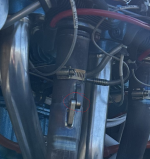
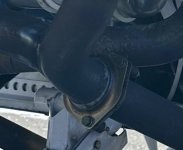
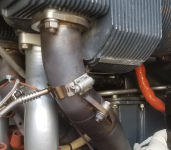
Flying my new RV14A home yesterday with 45 hours on the IO-390-EXP. Landed at the first leg of the trip, full power take off and then heard a steady banging from the engine at 1,000 feet AGL. CO2 alarm from the G3X. Closed cabin heat, opened cabin vents, reduced thrust and CO2 levels started falling. Removed the cowl and found that the entire weld holding the flange to the pipe had failed under cylinder 2.

Took it off, sent it to Vetterman to weld it back up. Inspected the other three flanges and I think the welds on those are too thin. Once I get the RV home, I will remove the remaining three flanges and have them beefed up as well.

I believe that Vans has a video showing how they changed the exhaust on the 390-EXP to get 5 more hp out of the engine. Has anyone out there seen a failure like this? This engine and kit were from 2022.
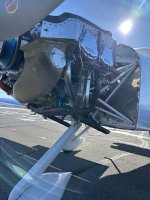
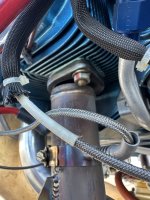
IMG_4590.jpegIMG_4586.jpeg
 

Attachments

  • IMG_4585.jpeg
    IMG_4585.jpeg
    1.9 MB · Views: 286
Flying my new RV14A home yesterday with 45 hours on the IO-390-EXP. Landed at the first leg of the trip, full power take off and then heard a steady banging from the engine at 1,000 feet AGL. CO2 alarm from the G3X. Closed cabin heat, opened cabin vents, reduced thrust and CO2 levels started falling. Removed the cowl and found that the entire weld holding the flange to the pipe had failed under cylinder 2.

Took it off, sent it to Vetterman to weld it back up. Inspected the other three flanges and I think the welds on those are too thin. Once I get the RV home, I will remove the remaining three flanges and have them beefed up as well.

I believe that Vans has a video showing how they changed the exhaust on the 390-EXP to get 5 more hp out of the engine. Has anyone out there seen a failure like this? This engine and kit were from 2022.
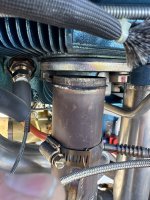

View attachment 80904View attachment 80905
Yeah: niece welding bead that was doing pretty much nothing. Is this a Vetterman exhaust?
 
Yeah: niece welding bead that was doing pretty much nothing. Is this a Vetterman exhaust?
No. Called Vetterman and it is not one of his. I watched a YouTube video awhile ago that had a Vans rep explaining that Vans changed the exhaust on the EXP model to squeeze another 5hp out of it. If they did this to save weight I’d rather have the old system with heavier components. I’ve never seen the old system so I have nothing to compare mine with.

Vetterman will receive my flange in a couple of days and weld it back up. I’ll be mobile again in a week, but then I’m going to send the rest down to him to re-weld once I get back to home base.
 
Make sure your alternate air plate is fully closed, as it appears that it worked it way just slightly aft. That upper part is usually in-between the bent over tab. Probably due to vibration.
 
You might want to alert Vans.
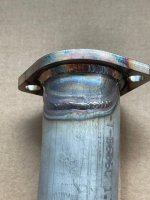
While it’s difficult to inspect for “cold” welds on a finished product, there are some tell tale signs. The flange should show a “ring” around the circumference of the weld radiating out 1/4” or so onto the flange. The outside of that ring should fade to a “blue’ish” color on stainless steel.
I’m not at the hangar so I can’t take pics, but even on my 1000 hour exhaust, it is still evident. Perhaps someone has a newish flange that would show folks what to look for, assuming it is done correctly.
In welding school, we were required to saw through our welds and use a die penetrant to inspect them. In addition, we put them in a special tool that pulled apart the piece. If the weld broke before the base metal separated, you failed. Obviously not an option here but it was a great training tool.
 
You might want to alert Vans.
While it’s difficult to inspect for “cold” welds on a finished product, there are some tell tale signs. The flange should show a “ring” around the circumference of the weld radiating out 1/4” or so onto the flange. The outside of that ring should fade to a “blue’ish” color on stainless steel.
I’m not at the hangar so I can’t take pics, but even on my 1000 hour exhaust, it is still evident. Perhaps someone has a newish flange that would show folks what to look for, assuming it is done correctly.
In welding school, we were required to saw through our welds and use a die penetrant to inspect them. In addition, we put them in a special tool that pulled apart the piece. If the weld broke before the base metal separated, you failed. Obviously not an option here but it was a great training tool.
Tom Berge was my transition trainer into the RV14A. He will be talking to Vans about the issue. I figure he can answer technical questions from Vans better than I can as I am not a builder.
 
I would have been really surprised if it was a Vetterman, their work is among the best I’ve seen.
Keep in mind that rewelding is ok in a pinch, but will not be as good as new.
I’d personally ask for a replacement system if the welds are all defective.
 
I would have been really surprised if it was a Vetterman, their work is among the best I’ve seen.
Keep in mind that rewelding is ok in a pinch, but will not be as good as new.
I’d personally ask for a replacement system if the welds are all defective.
I agree. I didn't think it was a Vetterman system just from the LOOKS of the flange welds, even on cylinder #4 that isn't broken (yet). It does take talent to weld lightweight material (exhaust pipe) onto heavy material (flange) but if someone is putting this on the market, they should have figured that out by now and be GOOD at it. The Vetterman team has been in business for decades for a REASON!! I have an early 4 stack exhaust in SuzieQ and have had ZERO problems! Larry and I were building our -4s at about the same time, as I remember. When you talk to them about welding the system you have now, ask THEM if it is a good idea if the welds should be redone or if the system should be junked and a new one put on. You've had PLENTY of experience with breaking exhaust systems. You probably aren't really interested in doing THAT again!! :oops:
 
That weld should meet AWS D17.1 class B spec which I doubt it did. The thin wall to a thick flange can be tricky to weld but still no excuse for an aircraft weldment to fail like that.
 
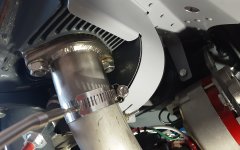
Had this style ball joint clamp on a past airplane. They tend to wear through the clamp bolts where they pass through the plates. The fix is to fit the clamp plates with cut down top hat bushings, if they don't already come that way. Just keep an eye on them.

ScreenHunter_2702 Feb. 14 22.24.jpg
 
That weld looks pretty but had ZERO penetration. Someone needs some instruction in welding.
+1
About to sat that. That kind of weld is challenging for a novice, as you need to dwell quite a bit longer on the flange side on each stroke due to its thicknes. Major rookie mistake. Clint is a top shelf, skilled welder and would be more than surprised to see this kind of work came from him. If these are vetterman parts, maybe he bow has an appprentice.
 
Last edited:
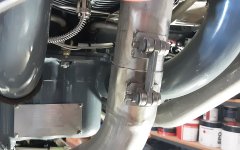
Besides the weld not appearing to have penetrated, why the missing bolt/nut at the joint below?

View attachment 80908
Clint uses alignment pins ther, not bolts. The pipe are held from rotating via other means and this joint type allows for a bit of movement, avoiding stress cracking. I don’t think he likes bolts, as to many builders over do the torque and then the tubes cannot move.
 
Last edited:
For interest, here are a couple of pics of a Vetterman crossover exhaust on O-320. The bolts and lock nuts that link the pipes were in the kit.

20250215_121348.jpg20250215_121413.jpg
 
Clint uses alignment pins there, not bolts. The pipe are held from rotating via other means and this joint type allows for a bit of movement, avoiding stress cracking. I don’t think he likes bolts, as to many builders over do the torque and then the tubes cannot move.
Interesting. Clint's old boss, Larry Vetterman, made the system on my -6 back in 2002 and he specified bolts. And, yeah, mine are properly torqued and that joint is effectively rigid. I wonder when the pins became a thing? Here's my system:

1739599933856.png
 
Flying my new RV14A home yesterday with 45 hours on the IO-390-EXP. Landed at the first leg of the trip, full power take off and then heard a steady banging from the engine at 1,000 feet AGL. CO2 alarm from the G3X. Closed cabin heat, opened cabin vents, reduced thrust and CO2 levels started falling. Removed the cowl and found that the entire weld holding the flange to the pipe had failed under cylinder 2.

Took it off, sent it to Vetterman to weld it back up. Inspected the other three flanges and I think the welds on those are too thin. Once I get the RV home, I will remove the remaining three flanges and have them beefed up as well.

I believe that Vans has a video showing how they changed the exhaust on the 390-EXP to get 5 more hp out of the engine. Has anyone out there seen a failure like this? This engine and kit were from 2022.


View attachment 80904View attachment 80905

When you reinstall your exhaust be sure to use a very good anti-seize at all slip joints. I have tried many types, mouse milk, copper based, etc… I prefer the Nickel based products like Permatex 77124.
 
Had this style ball joint clamp on a past airplane. They tend to wear through the clamp bolts where they pass through the plates. The fix is to fit the clamp plates with cut down top hat bushings, if they don't already come that way. Just keep an eye on them.

View attachment 80918
I did have to do some modification to both of them. Secondary pipes were too loose and I could see small wear marks on the lower cowling from contact. Tightened up the springs until they bottomed out. Helped the problem but did not fix completely. Ended up taking it apart and shaving off 1/8” from the secondary pipe at the joint. Reassembled and now the tips can move, but not too much. This was done two days before the flange break, but was not a factor in the flange break.
 
When you reinstall your exhaust be sure to use a very good anti-seize at all slip joints. I have tried many types, mouse milk, copper based, etc… I prefer the Nickel based products like Permatex 77124.
Thank you for the info. I was wondering what to use to reinstall. It was not fun in -10 below windchill out on the ramp to take off the cowling and then fight that exhaust with bare hands. Although I think that my teeth chattering and shaky hands helped as good as an air hammer would have.
 
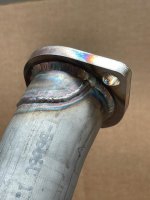
Went to check my -7 pipes, found this, should I be concerned ?

pipe 1.jpeg
 

Attachments

  • pipe 2.jpeg
    pipe 2.jpeg
    105.6 KB · Views: 74
  • pipe 3.jpeg
    pipe 3.jpeg
    103.3 KB · Views: 70
Went to check my -7 pipes, found this, should I be concerned ?

View attachment 80935
That appears to be a repair. Anything in the logs? How many hours on it?
Welds look decent and appear to have good penetration on the flange.
I also noticed that the weld is going to interfere with the washer on the stud. This is pretty common but is one of the factors that separates Vetterman from others. Smaller better welds on the Vetterman.
 
That appears to be a repair. Anything in the logs? How many hours on it?
Welds look decent and appear to have good penetration on the flange.
I also noticed that the weld is going to interfere with the washer on the stud. This is pretty common but is one of the factors that separates Vetterman from others. Smaller better welds on the Vetterman.
I think Vetterman started adding those 'saddles' to add strength and help prevent cracking.
 
RE: post 22.There was a guy in the Denver area making custom exhaust systems in the late 70's. His systems used that exact same link.
 
Had this style ball joint clamp on a past airplane. They tend to wear through the clamp bolts where they pass through the plates. The fix is to fit the clamp plates with cut down top hat bushings, if they don't already come that way. Just keep an eye on them.

View attachment 80918
Hi Dan,
Do you remember the detail of the fix, what size bushing you used? Looks like the smallest OD possible is 5/16 and I am wondering if there will be enough meat left around the hole to add that size bushing to it.
 
That appears to be a repair. Anything in the logs? How many hours on it?
Welds look decent and appear to have good penetration on the flange.
I also noticed that the weld is going to interfere with the washer on the stud. This is pretty common but is one of the factors that separates Vetterman from others. Smaller better welds on the Vetterman.
Jon, it's still on the box, waiting Lycoming engine.
 
Looks like something from Amazon made in China. Stick with Vetterman - 25 years and not a single issue.. good as new.
My Vetterman exhaust in my RV7 cracked after two years, I wonder if he had those made in China.
But I was very happy with his response as he took care of it without any fuss.
 
Interesting. Clint's old boss, Larry Vetterman, made the system on my -6 back in 2002 and he specified bolts. And, yeah, mine are properly torqued and that joint is effectively rigid. I wonder when the pins became a thing? Here's my system:

View attachment 80922
the Vett exh on my 6A had pins. The one for my 10 had bolts. The instructions for the 10 were clear that the bolts should be barely snug and NOT to tighten them. The bolt was to be able to rotate.
 
My Vetterman exhaust in my RV7 cracked after two years, I wonder if he had those made in China.
But I was very happy with his response as he took care of it without any fuss.
The only Vetterman I've seen cracked are the one that either didn't have the supports installed or they were installed incorrectly.
 
Exhausts are highly stressed and a known likely point of failure in piston aircraft. There have been countless failures across all makes and models. Some with very bad outcomes.
Saying brand x is better than brand y or “I’ve never seen a brand x fail” is counterproductive as it distracts people from the above.
I’ve seen and repaired many exhaust failures over the years.
The bottom line is you should inspect every inch of your exhaust like your life depends on it every time you have the cowls off.
 
Back
Top