

Van's Air Force
You are using an out of date browser. It may not display this or other websites correctly.
You should upgrade or use an alternative browser.
You should upgrade or use an alternative browser.
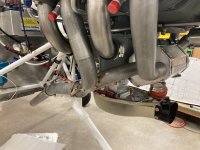
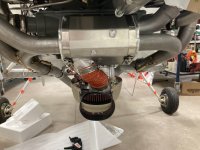
Can exhaust pipes be beautiful?
- Thread starter cgeyman
- Start date


rmarshall234
Well Known Member
Can exhaust pipes be beautiful? Not for long..
Take them and have them ceramic coated. It's good for 1,800 degrees. I'm having mine done for $350.Can exhaust pipes be beautiful? Not for long..
rmarshall234
Well Known Member
Should improve performance toohave them ceramic coated. It's good for 1,800 degrees. I'm having mine done for $350.
Not to open a huge debate, but coatings and wraps prevent pipes from shedding heat, which is an important mechanism in our engines for heat dissipation. I know a bunch of ROTAX guys reported wrapping their exhaust pipes thinking they were helping control temps under their cowls. Their exhaust pipes ended up collapsing around the sharper bends.
Last edited:

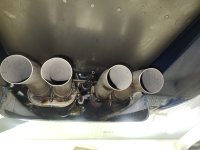

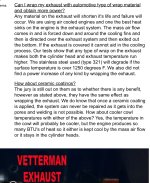

What's the latest in high-temp paint technology these days? (I assume paint would have a lower effect on heat dissipation than the aforementioned coatings?) Curious if a paint been invented that can stand up to this kind of heat yet?coatings and wraps prevent pipes from shedding heat, which is an important mechanism in our engines for heat dissipation.

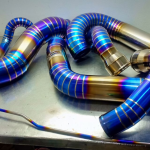

A friend of mine, who is heavily involved in drag racing, coated his "zoomies" (headers) with a light application of linseed oil before the first engine start. That was seven years ago. A couple weeks ago when I was over at his shop, the "headers" still look very nice. After the first engine start they turned to a medium gold color. Except for the area extending to about 5-6 inches from the mounting flanges the linseed oil treatment has held up very well. It's still a medium gold color but darkens more toward the exhaust ports. For inspection purposes and to save weight, he eventually coated his entire dragster frame with linseed oil and had it baked in a powder coating oven. And again, after seven years it has held up superbly! If anyone is interested, I will post pictures of the drag car and headers.
As a side note, I plan on using the linseed oil treatment on the headers of the RV-6 I have under construction.
Enjoy,
Chuck Brietigam
RV-6xxl
As a side note, I plan on using the linseed oil treatment on the headers of the RV-6 I have under construction.
Enjoy,
Chuck Brietigam
RV-6xxl

I have had all my three RVs ceramic coated and seen great results. I land and I can touch the exhaust with no problem. Keeps the lower cowl much cooler.Take them and have them ceramic coated. It's good for 1,800 degrees. I'm having mine done for $350.

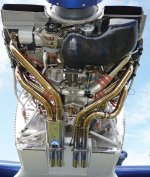
I wouldn’t monkey too much with the exhaust.
I’ve had 4 cracks welded up over 20y and 2 RVs.
All different root causes.
One of those was lucky not to have been a real problem.
Not compromising its properties plus the ability to inspect and repair as necessary imho is far more important than aesthetics.
That said, this does look cool.
I’ve had 4 cracks welded up over 20y and 2 RVs.
All different root causes.
One of those was lucky not to have been a real problem.
Not compromising its properties plus the ability to inspect and repair as necessary imho is far more important than aesthetics.
That said, this does look cool.


rmarshall234
Well Known Member
I agree with the guy that said the beauty of an exhaust is in the sound. I have a beautiful looking exhaust system made by Clinton at Custom Aircraft Exhaust and everyone tells me how great my airplane sounds. The exhaust looks great to me but I haven’t heard it from the ground. Few of them have seen the exhaust.
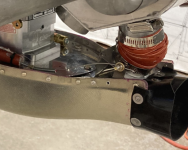
As for performance with a wrapped system….when racing at Reno we found a speed improvement by wrapping our 4 into 1 exhaust. I would think CC would provide the same. Performance almost always comes at a cost to longevity and reliability.
YMMV
As for performance with a wrapped system….when racing at Reno we found a speed improvement by wrapping our 4 into 1 exhaust. I would think CC would provide the same. Performance almost always comes at a cost to longevity and reliability.
YMMV

As for performance with a wrapped system….when racing at Reno we found a speed improvement by wrapping our 4 into 1 exhaust.
Consider the physics. Increasing gas temperature increased the speed of sound. Put another way, it changed wave velocity and thus the timing of the desired negative at valve overlap. Apparently it was a little late, and an earlier arrival was better. No real surprise, given most well made pipes have length and diameter tuned for peak torque RPM, less than your race RPM. Probably could have shortened the primaries and gotten the same result.
rmarshall234
Well Known Member
Interesting. After wrapping the pipes, we got an even greater speed increase by increasing the length of the stinger. So much so, that everyone laughed at us but the performance increased speaked for itself. We were now running just under 4400 rpm. All these ideas were from someone higher than my pay grade but I can speak to the results. It was fun.Consider the physics. Increasing gas temperature increased the speed of sound. Put another way, it changed wave velocity and thus the timing of the desired negative at valve overlap. Apparently it was a little late, and an earlier arrival was better. No real surprise, given most well made pipes have length and diameter tuned for peak torque RPM, less than your race RPM. Probably could have shortened the primaries and gotten the same result.
