

Van's Air Force

The definitive Van's Aircraft support community! Buying, building or flying an RV? Join our exclusive family of mentors and enthusiasts!

Borescope images

cgarts1

Well Known Member
Patron
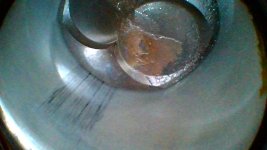
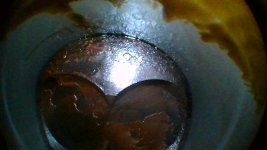
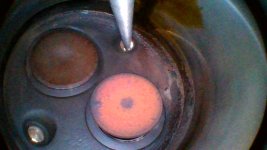
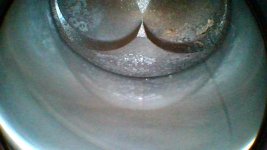
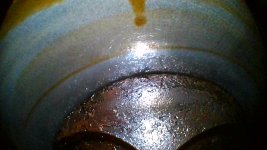
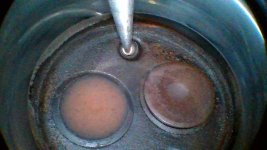
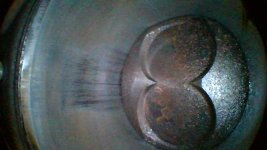
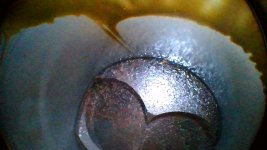
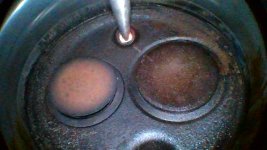
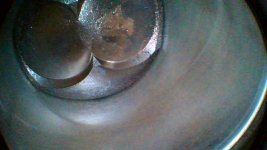
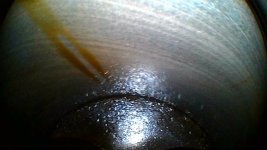
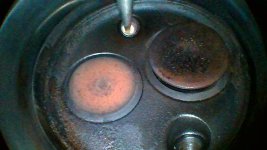
So I did a compression check week and number 4 was 69/80. Others were normal. This is my first time doing the borecope thing and I don't know really know what I'm looking at.The images are in order with (2) cylinder pics and (1) of the valves for each. Looks like there is some scuffing from the piston pin on cylinders 1 and 4. At 140 hrs I haven't seen any metal in the filter or screen. Advice greatly appreciated.
 

Attachments

  • S20250504_0008.jpg
    S20250504_0008.jpg
    86.5 KB · Views: 308
  • S20250504_0009.jpg
    S20250504_0009.jpg
    79 KB · Views: 294
  • S20250504_0010.jpg
    S20250504_0010.jpg
    91.6 KB · Views: 250
  • S20250504_0011.jpg
    S20250504_0011.jpg
    82.9 KB · Views: 242
  • S20250504_0012.jpg
    S20250504_0012.jpg
    116.7 KB · Views: 231
  • S20250504_0013.jpg
    S20250504_0013.jpg
    106.2 KB · Views: 235
  • S20250504_0014.jpg
    S20250504_0014.jpg
    96 KB · Views: 239
  • S20250504_0015.jpg
    S20250504_0015.jpg
    108.3 KB · Views: 230
  • S20250504_0016.jpg
    S20250504_0016.jpg
    118.9 KB · Views: 210
  • S20250504_0017.jpg
    S20250504_0017.jpg
    86.3 KB · Views: 209
  • S20250504_0018.jpg
    S20250504_0018.jpg
    95 KB · Views: 203
  • S20250504_0019.jpg
    S20250504_0019.jpg
    105.4 KB · Views: 310
So I did a compression check week and number 4 was 69/80. Others were normal. This is my first time doing the borecope thing and I don't know really know what I'm looking at.The images are in order with (2) cylinder pics and (1) of the valves for each. Looks like there is some scuffing from the piston pin on cylinders 1 and 4. At 140 hrs I haven't seen any metal in the filter or screen. Advice greatly appreciated.
I'm curious if you meant scuffing on clylinder one and three, and the scuffing is on the top side of the clyinder?
 
Chuck...
When looking at the valve reliefs in the piston, they are at 3 and 9 o-clock position in relation to the spark plug hole. The top and bottom of the cylinder is where the spark plug is. Please check again.
 
I have these on my new overhaul. 1 cyl came up mid 60s and all the others were mid to high 70s. Ran it another 50 hrs and they are all mid to high 70s and the scuffing is slowly fading. I agree its strange and no definitive reason. Lots of assumptions of course.
 
Chuck...
When looking at the valve reliefs in the piston, they are at 3 and 9 o-clock position in relation to the spark plug hole. The top and bottom of the cylinder is where the spark plug is. Please check again.
Gotcha. So the scuffs can't be caused from the pins. I need to get some better pics of them and see if it's scratches.
 
When you do your compression checks, do you rock the propeller back and forth slightly while at/near top dead center? This rocking is standard procedure on Continentals, and I have watched while a little rocking back and forth makes the compression jump from 63/80 to 69/80. Presumably it is letting the rings settle in a little bit. I haven't really seen it make much difference on a Lycoming, but then again, I have not really seen a concerning compression on a Lycoming. Mine are always 77--79. But give it a try. Otherwise, it may just be a piece of crud on a valve seat, and if you run the engine for 5 minutes then re-do the test, you may get a happier answer.
 
Some useful info here on how to take good borescope images, less info on how to interpret them. Anyone have a resource that shows good/bad images of valves, cylinder walls, etc. for reference?

 
Thanks for all the help guys. I did rick the prop back and forth and 70 was the best I could get. I'm not too concerned about the "low" compression. From the research I did earlier the valves appear to be normal. I appreciate the video David. I'll get a better image of the scuffing and confirm they aren't deep scratches. No intention on grounding the aircraft or pulling cylinders at this point.
 
#1 exh valve appears to be showing early stages of a hot spot. An area where there is a small gap where the valve meets the seat, making that spot hotter due to less heat transfer. At minimum, watch this for progression and even better would be to lap it in place and hope it improves.

Several cylinders have excessive amounts of oil . Pics of walls are too poor to see much, but suspect moderate to heavy glazing on the walls. If there is no glazing, there are probably issues with the oil rings.

I wouldn’t worry for a second about the compression now. If it shows the same after three tests,than it is reflective of reality. However, 69/80 is not something you should be concerned with.

Scuffs are too large to be from the pins, unless they are severely worn and that would be obvious from oil filter analysis. Not much to be done about this except to watch progress. Does it get worse or better over time. This tells you if it was a past event or ongoing problem.
 
Last edited:
#1 exh valve appears to be showing early stages of a hot spot. An area where there is a small gap where the valve meets the seat, making that spot hotter due to less heat transfer. At minimum, watch this for progression and even better would be to lap it in place and hope it improves.

Several cylinders have excessive amounts of oil . Pics of walls are too poor to see much, but suspect moderate to heavy glazing on the walls. If there is no glazing, there are probably issues with the oil rings.

I wouldn’t worry for a second about the compression now. If it shows the same after three tests,than it is reflective of reality. However, 69/80 is not something you should be concerned with.

Scuffs are too large to be from the pins, unless they are severely worn and that would be obvious from oil filter analysis. Not much to be done about this except to watch progress. Does it get worse or better over time. This tells you if it was a past event or ongoing problem.
Thank you for this. If I find that cylinders are indeed glazed should I hone and re-ring? They are NuChrome with about 140 hrs.
 
Thank you for this. If I find that cylinders are indeed glazed should I hone and re-ring? They are NuChrome with about 140 hrs.
Sorry, but have no experience with chrome cylinders and it is possible that the oil in there is typical. Though it didn't seem to be there on all of them. Tough working off a couple pics. Maybe someone with more experience can guide you.
 
Thank you for this. If I find that cylinders are indeed glazed should I hone and re-ring? They are NuChrome with about 140 hrs.
What is your oil consumption now? If it’s 10-15 hours per quart, I wouldn’t hone and re-ring…it’s fairly normal! I’d only think you were glazed if you were down in the 4 (or less) hours per quart.
 
What is your oil consumption now? If it’s 10-15 hours per quart, I wouldn’t hone and re-ring…it’s fairly normal! I’d only think you were glazed if you were down in the 4 (or less) hours per quart.
Oil consumption has always been high. Around a quart every 4 hours. None on the belly and it never fouls plugs.
 
Oil consumption has always been high. Around a quart every 4 hours. None on the belly and it never fouls plugs.
I figured that based on the qty of oil i saw in the cylinders. If you see that much oil, you usually have a pretty high burn rate due to either the rings or the wall. In a steel cylinder, I would be 95% confident it is glazing, but i just don’t know the behavior and challenges of chrome.

It is not likely to improve, so options are to deal with it forever or hone and re ring, paying closer attention to chts in the first few hours. I am not sure if you can just hone chrome cylinders. A question for someone who has worked with them
 
Last edited:
Back
Top