

Van's Air Force

The definitive Van's Aircraft support community! Buying, building or flying an RV? Join our exclusive family of mentors and enthusiasts!

Pre-buy oil analysis conundrum

RogerH

Well Known Member
Recently considered purchasing an approximately 305 hour IO-390 powered experimental Glasair Sportsman 2+2. (Just too old to wait out the full RV-15 timeframe) During the initial due-diligence process I noticed a log entry noting a November 2025 exhaust valve reaming on the #4 cylinder. When questioned about it the seller indicated he suspected a stuck valve, that cylinder's EGT had recently zeroed out hence he did the work. I should have but I did not think at the time to ask if he had checked for a bad sensor.

About six hours of flight time after the reaming (43 hours on the oil) the seller had sent an oil sample to Blackstone. The report showed an almost doubling from the previous analysis of Iron, Copper, Lead, Chromium, and Aluminum. Compared to the language in reports I've routinely had done on my other planes Blackstone definitely expressed a higher level of concern.

When I spoke to the seller about the significant increases he dismissed the concern because "the filter had been cut and revealed no metal". I don't know what I don't know about exhaust-valve reaming but unless the reaming was overdone and/or the engine has other issues why would any, much less multiple metal readings jump significantly ?

Oh, and when I left a message for the A&P who did a recent condition inspection on the plane, who I had spoken to before, to get his input it was "crickets".

The plane was very well equipped, checking all the boxes on personal wants & needs but my spidey-sense told me to RUN, don't walk away!

Have my School of Hard Knocks experiences finally payed off or am I missing something?
 
I went and looked at my oil analysis before and after reaming the #2 exhaust valve on my IO-360.

The after report said the Iron, Copper, Lead, Chromium, and Aluminum were all within the normal variance range. Only silicone was slightly elevated and could have been due to the reaming or an improper fitting air filter according to Blackstone Lab.

Something changed on that IO-390 and maybe if the mechanic doing the reaming was sloppy it could account for those numbers.
The engines talking, just have to figure out what it's saying.
 
I went and looked at my oil analysis before and after reaming the #2 exhaust valve on my IO-360.

The after report said the Iron, Copper, Lead, Chromium, and Aluminum were all within the normal variance range. Only silicone was slightly elevated and could have been due to the reaming or an improper fitting air filter according to Blackstone Lab.

Something changed on that IO-390 and maybe if the mechanic doing the reaming was sloppy it could account for those numbers.
The engines talking, just have to figure out what it's saying.
Thanks, that data helped. Yes, the silicone readings on my -4 will start to creep up when the K&N filter needs cleaning and fresh oil as well.
 
I would say trust your Spidey senses. Some things just don't make sense. If an EGT "zeroed out" to the point that ignition wasn't taking place, the engine would be running extremely rough. Not just kinda rough. Which goes back to the other comment about was it just a bad probe. Or was something else going on and the owner was not telling the full story about why he did the procedure? It all could be perfectly innocent and everything is legit, but there are red flags waving. And how did the mechanic ream the valve guide? My understanding is that reaming the guide is more of a cleaning procedure than cutting metal per se, so there should be minimal (if any) metals in the oil. Did the A&P get sloppy and cut some metal out? Was a lapping compound used in lieu of some other lubricant? If he cut all five of those metals in one reaming procedure, I'd be concerned. Even if he didn't and it's coming from somewhere else, I'd still be concerned.
 
BINGO to all of the above. It’s possible it’s all perfectly straightforward and aboveboard but I don’t feel like making a several hundred thousand $ bet to find out in case it wasn’t.
 
Pretty sure there is no aluminum in a valve guide. Would suspect a good bit of lead in the build up taken out of the guides. Doubt it would be enough to double though. All the other elements would be of concern to me and I would assume they are NOT from the guide cleaning.
 
My spider senses would be alert, tingling, but still inquiring after the plane.
The date of the oil sample is Important as is the hours on the engine since then. This info was not shared here.
Another Sample could be obtained especially if many more hours were put on the oil.
Ignorant people perform faulty Sampling ALL the time. They don’t catch midstream, they reuse the same hose that was used on other planes, and they might not recognize that blackstone sells a kit to sample from the top.
It is not shared, but an engine inspection could be performed which. Might better address concerns or alleviate fears. Prebuy via telephone not so effective at this.
Glasair plane not really material to the discussion and should have been left out per the OPs disclosure concerns. As it is, enough info is shared to quickly guess which plane this is with less than a minute of sleuthing.
Personally identifying information can be obscured from an oil report.
Firm data on a report allows more fully informed forum responses.
Location might be important also, not shared.


Oil analysis is only an isolated part of the overall picture. The forum has only been given a very limited part of that picture.

I’m going to switch computers to edit and add some images to make some points. No prior data available.

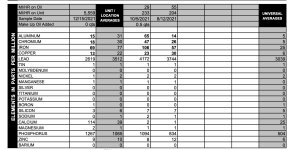
The earlier dated data is from a plane of undisclosed type and tail number. Note the spikes in lab values, so bad that blackstone called me! Oil Sampling error from a long time Ap/ia. Quickly corrected. I could easily claim the numbers had nearly doubled.

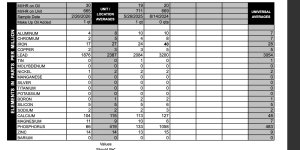
More recent data from a plane with known corrosion and inactivity. Nearly everyone online said to avoid (the internets said to run from the plane). The plane has been tended to and flown more and the oil has improved.Image 5-31-26 at 04.04.jpegImage 5-31-26 at 04.05.jpeg
 
Last edited:
Pretty sure there is no aluminum in a valve guide. Would suspect a good bit of lead in the build up taken out of the guides. Doubt it would be enough to double though. All the other elements would be of concern to me and I would assume they are NOT from the guide cleaning.
Wrote too quickly. Some bronze alloys use aluminum, but they also contain elements not on your list and definitely no iron. The general mix of elements make me strongly believe this is not related to guide reaming, even if totally messed up. Something else happened or is happening. Way too difficult to say if it is a serious issue or not. Copper and chromium is biggest concern as that points to bearings or a bronze alloys of some variety.
 
Just here to say the Sportsman is an excellent airplane! Very stable IFR platform. A good used Glastar is an even better value if you can find a good one. I sold my -9A for a Glastar and other than the speed (135kn vs 155kn) I don’t miss a thing. Hope it works out.
 
People see zebras when they hear hoofbeats. The best way not to lose money on an airplane purchase is to never purchase an airplane but there is no such thing as a perfect airplane. I would request another sample be taken, reassess from there and make what you believe to be an appropriate counter-offer keeping in mind that anything can be fixed.
 
IMO oil analysis is only good for monitoring long term trends, and personally I put very little value in it.
That's interesting Walt. As someone who is getting ready to start monitoring engine health and it talking to me....why is long trend monitoring with oil analysis of little value? You have a lot of experience so I would like to hear your approach on this. Is there a better way or key parameters to monitor that are a better feedback from the engine? I've heard essentially the same about compression checks on engines...semi useful but not an absolute as an indicator and depends how they are done (warmed up etc). Also, if there are some that swear by oil analysis lets hear it and why?
 
That's interesting Walt. As someone who is getting ready to start monitoring engine health and it talking to me....why is long trend monitoring with oil analysis of little value? You have a lot of experience so I would like to hear your approach on this. Is there a better way or key parameters to monitor that are a better feedback from the engine? I've heard essentially the same about compression checks on engines...semi useful but not an absolute as an indicator and depends how they are done (warmed up etc). Also, if there are some that swear by oil analysis lets hear it and why?
I think what Walt is saying is that it is good ONLY for long trend monitoring and that he puts little value in a "one off" analysis.
 
Have the cylinders borescoped. A cylinder issue can explain the metals, but this can be then negotiated if you want the plane.

BTW, important to note once again, silicone is not silicon. Silicone is a polymer. Silicon, as in oil analysis, is an element and usually associated with dirt/grit in the engine. Silicone, even if in engine, does not produce silicon.
 
That's interesting Walt. As someone who is getting ready to start monitoring engine health and it talking to me....why is long trend monitoring with oil analysis of little value? You have a lot of experience so I would like to hear your approach on this. Is there a better way or key parameters to monitor that are a better feedback from the engine? I've heard essentially the same about compression checks on engines...semi useful but not an absolute as an indicator and depends how they are done (warmed up etc). Also, if there are some that swear by oil analysis lets hear it and why?
I think what Walt is saying is that it is good ONLY for long trend monitoring and that he puts little value in a "one off" analysis.
Long term trend monitoring may give some indication that an engine is wearing out.
One time shot=pretty useless.

However, I will add that I've never seen or heard of anyone ever removing/overhauling an engine based on oil analysis alone.
Oil analysis is not a crystal ball. Good compressions, oil pressure, no metal in the filter/screens you should probably keep flying it.
 
I've always heard silicone=sand= mostly normal.

In general, anyone that does anything to the engine when probe values goes to zero should not be used as a reliable resource unless they first change the probes.
 
That's interesting Walt. As someone who is getting ready to start monitoring engine health and it talking to me....why is long trend monitoring with oil analysis of little value? You have a lot of experience so I would like to hear your approach on this. Is there a better way or key parameters to monitor that are a better feedback from the engine? I've heard essentially the same about compression checks on engines...semi useful but not an absolute as an indicator and depends how they are done (warmed up etc). Also, if there are some that swear by oil analysis lets hear it and why?

I've said variations on this in earlier eras, can repeat it here:

As a discipline, oil analysis comes from heavy industry, where high-value income-earning diesels use it as part of their preventative maintenance programs.

The theory is that your earth mover or haul truck or mining shovel earns $$$$ per minute, and minimizing downtime is a commercial imperative. So if you take an oil sample and match the results against manufacturer data ("this alloy is only used in the bearing cones in the transmission pump" etc) then you know which components are wearing out before the next maintenance interval, and you can have changeover parts ready to swap-in next time it comes into the shop.

If you send oil from your 3406E to Caterpillar, they'll tell you exactly which parts you need to replace. And you'll be able to replace them too: Everything up to and including crank main bearings can generally be replaced in situ in less than a day without removing the engine from the machine. Minimal downtime, high preparation, zero fuss. Happy customer.

We don't operate our engines like that.

For a start, you can't replace most of the wearing components without splitting the case, at which point you're doing a full IRAN and have no idea what parts you'll need on-hand until it's been inspected. Normal downtime for an engine rebuild in this era seems to be 4 - 5 months regardless of how much prep you put into it.

Also, Lycoming hasn't seen fit to publish manufacturer data about how to interpret an oil sample. So we get back raw ppm counts of various elemental metals, and we look at it and go, "Well what the heck does any of that mean?" which is why we get threads like this instead of actual diagnostics.

And thirdly, we do have actual manufacturer data about how to tell if the engine is fit for continued service. Lycoming publishes procedures for continuing maintenance (which don't require oil sample analysis) and have thresholds for things like valve guide wobble, operational pressures, and the maximum allowable quantity of metal shavings in oil filters.

Basically, we're not set up to get the benefits of oil analysis that the heavy diesel guys get, which is why (as Walt observes) nobody ever condemns an engine on the basis of an oil sample.

If you get a "bad" analysis with elevated metal content, what do you do with it?

Answer: We don't trigger anything invasive or violent for such a tenuous sign. Just replenish it with fresh oil and a new filter, and fly it for another 25 or 50 hours, then cut the filter open and have a look, in accordance with Service Bulletin 480F.

Which is what you were going to do even if you didn't do oil analysis. That's what we do every time we change the oil, right?

So not only are you not making a decision to condemn the engine on the basis of oil analysis, you're also not making other operational changes or maintenance practice changes. The oil analysis isn't informing decisions about what's going on or what to do next.

So why do it?

Pieces of metal large enough to have serial numbers are picked up in the suction screen, which we check during oil changes. Smaller pieces of metal shaved off bearings, impellers, valve guides, lifters, camshafts etc end up in the pleats of the oil filter alongside carbon fragments and sand crystals, which we inspect every 25 or 50 hours. Those deposits trigger more intensive and invasive inspections, and possible tear-down, but according to Lycoming maintenance practices, documentation and data, the metal which gets through the filter and picked up in the Blackstone report is too small to care about. If they don't care about it, why should you?

The most noticeable effect of airplane engine oil analysis isn't increased engine longevity or reliable failure prediction; It's centi-threads on web forums debating what's wrong with an engine even though it meets manufacturers' specifications, has clean filters, and makes rated power; And an uneasy nameless nagging doubt about whether an accident is lethally imminent just because a microscopic trace number went up in a report.

- mark
 
If you get a "bad" analysis with elevated metal content, what do you do with it?
I'll keep this really short to not waste everyone's time but after checking my oil every 50 hours (every other oil change, 15 years) I would send it in after the next oil change (25 hours) and if the number continued to look "suspicious" do it once more at 10 hours and if the same STOP FLYING the engine until tear down. The metal is coming from somewhere. BTW they have picked up an air filter that was not properly seated and convinced me that higher water content which after I started pulling my oil dipstick up slightly after every flight magically went back to 0.0%. Cheap insurance, follow the data.
 
Last edited:
I've said variations on this in earlier eras, can repeat it here:

As a discipline, oil analysis comes from heavy industry, where high-value income-earning diesels use it as part of their preventative maintenance programs.

The theory is that your earth mover or haul truck or mining shovel earns $$$$ per minute, and minimizing downtime is a commercial imperative. So if you take an oil sample and match the results against manufacturer data ("this alloy is only used in the bearing cones in the transmission pump" etc) then you know which components are wearing out before the next maintenance interval, and you can have changeover parts ready to swap-in next time it comes into the shop.

If you send oil from your 3406E to Caterpillar, they'll tell you exactly which parts you need to replace. And you'll be able to replace them too: Everything up to and including crank main bearings can generally be replaced in situ in less than a day without removing the engine from the machine. Minimal downtime, high preparation, zero fuss. Happy customer.

We don't operate our engines like that.

For a start, you can't replace most of the wearing components without splitting the case, at which point you're doing a full IRAN and have no idea what parts you'll need on-hand until it's been inspected. Normal downtime for an engine rebuild in this era seems to be 4 - 5 months regardless of how much prep you put into it.

Also, Lycoming hasn't seen fit to publish manufacturer data about how to interpret an oil sample. So we get back raw ppm counts of various elemental metals, and we look at it and go, "Well what the heck does any of that mean?" which is why we get threads like this instead of actual diagnostics.

And thirdly, we do have actual manufacturer data about how to tell if the engine is fit for continued service. Lycoming publishes procedures for continuing maintenance (which don't require oil sample analysis) and have thresholds for things like valve guide wobble, operational pressures, and the maximum allowable quantity of metal shavings in oil filters.

Basically, we're not set up to get the benefits of oil analysis that the heavy diesel guys get, which is why (as Walt observes) nobody ever condemns an engine on the basis of an oil sample.

If you get a "bad" analysis with elevated metal content, what do you do with it?

Answer: We don't trigger anything invasive or violent for such a tenuous sign. Just replenish it with fresh oil and a new filter, and fly it for another 25 or 50 hours, then cut the filter open and have a look, in accordance with Service Bulletin 480F.

Which is what you were going to do even if you didn't do oil analysis. That's what we do every time we change the oil, right?

So not only are you not making a decision to condemn the engine on the basis of oil analysis, you're also not making other operational changes or maintenance practice changes. The oil analysis isn't informing decisions about what's going on or what to do next.

So why do it?

Pieces of metal large enough to have serial numbers are picked up in the suction screen, which we check during oil changes. Smaller pieces of metal shaved off bearings, impellers, valve guides, lifters, camshafts etc end up in the pleats of the oil filter alongside carbon fragments and sand crystals, which we inspect every 25 or 50 hours. Those deposits trigger more intensive and invasive inspections, and possible tear-down, but according to Lycoming maintenance practices, documentation and data, the metal which gets through the filter and picked up in the Blackstone report is too small to care about. If they don't care about it, why should you?

The most noticeable effect of airplane engine oil analysis isn't increased engine longevity or reliable failure prediction; It's centi-threads on web forums debating what's wrong with an engine even though it meets manufacturers' specifications, has clean filters, and makes rated power; And an uneasy nameless nagging doubt about whether an accident is lethally imminent just because a microscopic trace number went up in a report.

- mark
The above nailed it. We did this in the airline business for the exact same reason, the material science and monitoring processes are there to effectively perform ‘preventative’ mntc. Engine accessories like fuel/hyd pump’s were often changed based on sampling.
 
Last edited:
I'll keep this really short to not waste everyone's time but after checking my oil every 50 hours (every other oil change, 15 years) I would send it in after the next oil change (25 hours) and if the number continued to look "suspicious" do it once more at 10 hours and if the same STOP FLYING the engine until tear down. The metal is coming from somewhere. BTW they have picked up an air filter that was not properly seated and convinced me that higher water content which after I started pulling my oil dipstick up slightly after every flight magically went back to 0.0%. Cheap insurance, follow the data.
Just curious, are you saying have you “stopped flying” and overhauled your engine based on oil analysis?
 
Just curious, are you saying have you “stopped flying” and overhauled your engine based on oil analysis?
No, but I would not be comfortable flying myself and family until I found the answer to the issue. That is what I am saying. I also cut and inspect my oil filter every time. Everyone has personal minimums, erratic oil results is one of mine. The data is telling me something, just need to understand the root cause. Cheap insurance and for me one of mine.
 
Last edited:
I've said variations on this in earlier eras, can repeat it here:

As a discipline, oil analysis comes from heavy industry, where high-value income-earning diesels use it as part of their preventative maintenance programs.

The theory is that your earth mover or haul truck or mining shovel earns $$$$ per minute, and minimizing downtime is a commercial imperative. So if you take an oil sample and match the results against manufacturer data ("this alloy is only used in the bearing cones in the transmission pump" etc) then you know which components are wearing out before the next maintenance interval, and you can have changeover parts ready to swap-in next time it comes into the shop.

If you send oil from your 3406E to Caterpillar, they'll tell you exactly which parts you need to replace. And you'll be able to replace them too: Everything up to and including crank main bearings can generally be replaced in situ in less than a day without removing the engine from the machine. Minimal downtime, high preparation, zero fuss. Happy customer.

We don't operate our engines like that.

For a start, you can't replace most of the wearing components without splitting the case, at which point you're doing a full IRAN and have no idea what parts you'll need on-hand until it's been inspected. Normal downtime for an engine rebuild in this era seems to be 4 - 5 months regardless of how much prep you put into it.

Also, Lycoming hasn't seen fit to publish manufacturer data about how to interpret an oil sample. So we get back raw ppm counts of various elemental metals, and we look at it and go, "Well what the heck does any of that mean?" which is why we get threads like this instead of actual diagnostics.

And thirdly, we do have actual manufacturer data about how to tell if the engine is fit for continued service. Lycoming publishes procedures for continuing maintenance (which don't require oil sample analysis) and have thresholds for things like valve guide wobble, operational pressures, and the maximum allowable quantity of metal shavings in oil filters.

Basically, we're not set up to get the benefits of oil analysis that the heavy diesel guys get, which is why (as Walt observes) nobody ever condemns an engine on the basis of an oil sample.

If you get a "bad" analysis with elevated metal content, what do you do with it?

Answer: We don't trigger anything invasive or violent for such a tenuous sign. Just replenish it with fresh oil and a new filter, and fly it for another 25 or 50 hours, then cut the filter open and have a look, in accordance with Service Bulletin 480F.

Which is what you were going to do even if you didn't do oil analysis. That's what we do every time we change the oil, right?

So not only are you not making a decision to condemn the engine on the basis of oil analysis, you're also not making other operational changes or maintenance practice changes. The oil analysis isn't informing decisions about what's going on or what to do next.

So why do it?

Pieces of metal large enough to have serial numbers are picked up in the suction screen, which we check during oil changes. Smaller pieces of metal shaved off bearings, impellers, valve guides, lifters, camshafts etc end up in the pleats of the oil filter alongside carbon fragments and sand crystals, which we inspect every 25 or 50 hours. Those deposits trigger more intensive and invasive inspections, and possible tear-down, but according to Lycoming maintenance practices, documentation and data, the metal which gets through the filter and picked up in the Blackstone report is too small to care about. If they don't care about it, why should you?

The most noticeable effect of airplane engine oil analysis isn't increased engine longevity or reliable failure prediction; It's centi-threads on web forums debating what's wrong with an engine even though it meets manufacturers' specifications, has clean filters, and makes rated power; And an uneasy nameless nagging doubt about whether an accident is lethally imminent just because a microscopic trace number went up in a report.

- mark
Great post! Will add one point. Early on, I tried this a couple times out of curiosity. Started seeing glitter in my filter. Oil analysis came back with smily faces - all good. Next filter looked like someone poured a bottle of glitter in my oil. Piston pin caps were self destructing. Leason learned, they use mass spectrometers that can only see microscopic pieces. They COMPLETELY miss large particles. So please don't use tools like this for identifying major issues; Need to do manual filter inspections. These tools are purely trend analysis.
 
No, but I would not be comfortable flying myself and family until I found the answer to the issue. That is what I am saying. I also cut and inspect my oil filter every time. Everyone has or should have personal minimums, erratic oil results is one of mine. The data is telling me something, just need to understand the root cause. Cheap insurance and for me one of mine.
Thats part of the problem with Oil analysis, gives you something to worry about but you don't do anything other than worry!
 
As the OP, closing the loop, I just want to say thanks all for your input.

As of yesterday, the seller reported borescoping revealed some cylinder rust with a clean oil filter but nothing more. Other posters tolerance levels may differ but I'm uncomfortable committing several hundred thousand $'s on a plane with 300 hours showing higher than "normal" wear based on, yes, just oil analysis.

If I already owned the aircraft I'd fly it and monitor accordingly which is what the current owner is doing. The seller will be sharing future oil analysis reports and with that data, assuming it hasn't sold in the interim, that will help inform my future decisions.

In the interim, the search for a 135kt+ cruise, at least modestly, backcountry capable model continues while being fortunate enough to have access to UT skies in my RV-4.
1780413915898.png
Again, thanks for all the comments. VAF forums are a great resource. (y)
 
As the OP, closing the loop, I just want to say thanks all for your input.

As of yesterday, the seller reported borescoping revealed some cylinder rust with a clean oil filter but nothing more. Other posters tolerance levels may differ but I'm uncomfortable committing several hundred thousand $'s on a plane with 300 hours showing higher than "normal" wear based on, yes, just oil analysis.

If I already owned the aircraft I'd fly it and monitor accordingly which is what the current owner is doing. The seller will be sharing future oil analysis reports and with that data, assuming it hasn't sold in the interim, that will help inform my future decisions.

In the interim, the search for a 135kt+ cruise, at least modestly, backcountry capable model continues while being fortunate enough to have access to UT skies in my RV-4.
View attachment 119356
Again, thanks for all the comments. VAF forums are a great resource. (y)

My plane had cylinder wall rust when I bought it.
 
I'll keep this really short to not waste everyone's time but after checking my oil every 50 hours (every other oil change, 15 years) I would send it in after the next oil change (25 hours) and if the number continued to look "suspicious" do it once more at 10 hours and if the same STOP FLYING the engine until tear down.

What does "suspicious" mean in that context, though?

Lycoming hasn't published any data to say what normal microscopic wear patterns are. For all you know, the new data is completely normal and the old trend was a bit weird but better than expected.

Carrying out an engine tear down on the basis of an oil analysis is a $30,000+ cost and 4+ months downtime incurred on superstition and make-believe. There's nothing objective about it.

"... an uneasy nameless nagging doubt about whether an accident is lethally imminent just because a microscopic trace number went up in a report."

Now, if you'd said, "Number went up, so I stuck a boroscope up the dipstick hole to see if I could see the cam," that might be different. But still based on superstition, because Lycoming hasn't published any data to differentiate microscopic trace cam lobe wear from microscopic trace oil pump impeller wear or rod journal wear or whatever. "Number go up" and you have no idea what to look at, its diagnostic value is approximately zero.

Imagine spending the cost of a new pickup truck on an engine teardown, and never finding out that the source of your trace metal was the tip of the fuel pump plunger where it contacts the cam on its idler gear in the accessory case. A field-replaceable consumable part. There's no way to know, though.

What we do know is that if an engine is legitimately wearing out, there'll be significant quantities of shavings in the oil filter at least 50 hours before anything lets go. So as long as you're inspecting the pleats during oil changes -- which we all do already! -- you have your desired "cheap insurance." You can skip the oil analysis without any safety implications whatsoever.

- mark
 
yes. i think newt made a great post indicating the limited value of that info in our cases. so, iron is up 50%; Where is it coming from and what do you do about it?
Good question and the first part unknown and to what we do about it might vary by individual and their personal risk tolerance. Providing the reading is not a contaminated sample or analysis error, all we know is it's coming from "somewhere". Now what to do about it? I'll use my IO-390 as an example. Background ~800 hours and 16 oil sample analysis. Performance has been perfect (knock on wood) and no signs of morning sickness (I do watch EGT rise on start-up to convince myself that would be the first sign of the syndrome) but not conclusive. If I saw a significant rise in say iron as suggested, I would plot the data and review the upper control limit and if a statistically significant number do as I stated earlier, nothing and submit a sample next oil change (25 hrs., typically I was submitting a sample every other oil change). Later (soon) I would take the top cowling off and borescope cylinders and dip stick to see anything obvious but not more with the borescope. This is provided the filter cut performed earlier looked "OK" and no issues. I would probably also do a compression check since it's easy. (If you have a suggestion would love to hear it) Now if the second sample continued to show an increasing iron content and the filter showed nothing, I would seek professional advice or maybe therapy or both. The iron or other key metal (My oil analysis company checks 17) it's coming from somewhere, now to find.

The key for at least me is I agree 100% that this is not an absolute science and trends matter, BUT one needs to be submitting samples regularly to see a trend. If you can see trends with no data also willing to learn. ;)
 
Last edited:
Good question and the first part unknown and to what we do about it might vary by individual and their personal risk tolerance. Providing the reading is not a contaminated sample or analysis error, all we know is it's coming from "somewhere". Now what to do about it? I'll use my IO-390 as an example. Background ~800 hours and 16 oil sample analysis. Performance has been perfect (knock on wood) and no signs of morning sickness (I do watch EGT rise on start-up to convince myself that would be the first sign of the syndrome) but not conclusive. If I saw a significant rise in say iron as suggested, I would plot the data and review the upper control limit and if a statistically significant number do as I stated earlier, nothing and submit a sample next oil change (25 hrs., typically I was submitting a sample every other oil change). Later (soon) I would take the top cowling off and borescope cylinders and dip stick to see anything obvious but not more with the borescope. This is provided the filter cut performed earlier looked "OK" and no issues. I would probably also do a compression check since it's easy. (If you have a suggestion would love to hear it) Now if the second sample continued to show an increasing iron content and the filter showed nothing, I would seek professional advice or maybe therapy or both. The iron or other key metal (My oil analysis company checks 17) it's coming from somewhere, now to find.

The key for at least me is I agree 100% that this is not an absolute science and trends matter, BUT one needs to be submitting samples regularly to see a trend. If you can see trends with no data also willing to learn. ;)
It is tough without guidelines and that was newts point. I picked iron because it is a good example of who knows. Could be from surface rust on cylinder walls and rings - no big deal. Could be oil pump impeller coming apart - huge issue. Could be lifter or lobe wear. Could be a gear in the accy case. Point is the analysis does little to tell you where to look or if the amount is high enough to be an issue. For example, you can wear away a lot of material from cylinder walls and no threat at all. Lose a much smaller amount from oil pump impellers and a bad day is in your immediate future. Point is, you need good old fashioned troubleshooting. You can say, yeah but they tell me the numbers are going up, but that isn’t meaningful unless they also tell how much is too much and they can’t do that because they don’t know what part it is coming from.
 
Bottom line for me is I’d rather spend that money on something of value, like 100LL :rolleyes:
Sometimes ignorance is bliss , I sleep better not worrying about how many molecules of iron in my oil.
I’ve had folks bring me reams of engine data when doing a CI, my only question to them is the engine is running good ?
Otherwise what makes you think I want to pour over all that data looking for a problem?
I call it data obsession.
 
Last edited:
Thats part of the problem with Oil analysis, gives you something to worry about but you don't do anything other than worry!
YEEESSS -- and, unless I find metal partials in my oil filter or oil sump screen during an oil change, I don't worry much. But, don't forget to check those. (y)
 
Last edited:
YEEESSS -- and, unless I find metal partials in my oil filter or oil sump screen during an oil change, I don't worry much. But, don't forget to check those. (y)
To add to this, if you find more material in your filter than there should be, there are worthwhile steps. In my case, I was able to detrermine all that glitter was Aluminum and zeroed in on pin caps. But that material removed from filter can also be sent to a lab for analysis; That analysis won't miss the big pieces as I mentioned above. Once you have identified the content, you can give that to lyc to help potentially find the source. While they don't publish the data, they do know the elemental composition of each component. Won't always get a specific answer, but still helpfull in initial targetting. Then there is tribal knowledge. particle size and shape can also be a clue. For example, cam spalling creates a pretty unique shape of debris in its later stages.

Also, Lyc has guidelines on the amount of metal found in a filter and how much should be considered necessry for a teardown. Its in an SI somewhere.
 
Back
Top