

Van's Air Force

The definitive Van's Aircraft support community! Buying, building or flying an RV? Join our exclusive family of mentors and enthusiasts!

Solo Riveting

Dougnabbit

Active Member
Patron
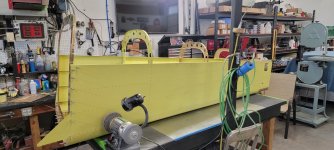
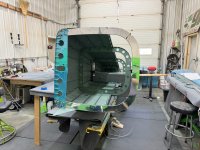
Example of riveting that can occur effectively without the use of the traditional riveting method (rivet gun, bucking bar, and 2 people).
1780086288735.jpeg1780086288735.jpeg


No everyone has convient access to a building buddy but our builds must continue! Clemson Aeronautics and the CARD-2 system could be a VERY useful tool for one person operation. Note the reach. Note the foot operated pedal ($16) allowing BOTH hands free.
 
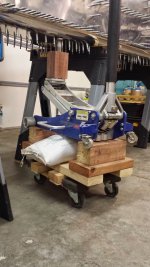
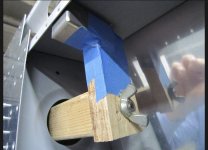
I built a back rivet partner. I called him Homer. Basically a platform for my 3 ton hydraulic jack with a block and bucking bar. It was super slow. Insert a rivet. Tape. Place Homer. Bang. One rivet at a time, but it worked solo.
 
I built a back rivet partner. I called him Homer. Basically a platform for my 3 ton hydraulic jack with a block and bucking bar. It was super slow. Insert a rivet. Tape. Place Homer. Bang. One rivet at a time, but it worked solo.
You wouldn’t have a picture of Homer would you Larry
 
Example of riveting that can occur effectively without the use of the traditional riveting method (rivet gun, bucking bar, and 2 people).

View attachment 119036View attachment 119036


No everyone has convient access to a building buddy but our builds must continue! Clemson Aeronautics and the CARD-2 system could be a VERY useful tool for one person operation. Note the reach. Note the foot operated pedal ($16) allowing BOTH hands free.
I have been using the same setup (Clemson Aeronautics and DRDT for dimpling and it has made a huge difference in the speed and ease on my body. I have the same setup of the foot operated system and love it.
 
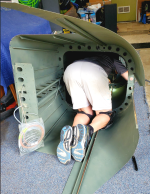
I shot all but about 50 rivets in my RV-4 solo. center rib of upper skin in tailcone and a short row in the wing lower skin close-up. Once you trust the rivet gun in both hands, it goes well. Fortunately for me, I made my living as a structures guy on airlines, so it was a non-event. Most of my build was at night while my kids were in bed, no help around anyway...When you have the desire, anything can be done. Helpers are always nice, but often it leads to distractive chatter talk and beverage sampling...working solo seems to move faster in my opinion.
 
As they say necessity. Sweetie was out of town. The trick was holding the rivet so it didn't fall out while adding the tape and moving Homer. I used a spring paper clip. 😁

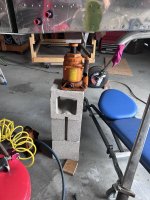
I still have the cradle. Dang thing comes in handy when the jack won't reach.
View attachment 119057
So Larry. Are you using the jack on a rivet basically as a back rivet plate. I think thats what you’re doing in this pic.
 
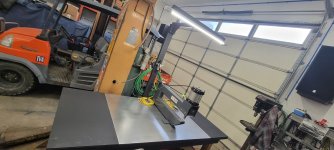
Here's my Solo solution. I sunk a huge piece of 3/16 steel into a build table for back riveting. I was able to back rivet pretty much the entire tailcone on my own. If there's a part that allows back riveting, that's what I do. I find back riveting make a much flatter set rivet.
 

Attachments

  • Screenshot_20260530_054951_Gallery.jpg
    Screenshot_20260530_054951_Gallery.jpg
    275.5 KB · Views: 65
  • Screenshot_20260530_054638_Gallery.jpg
    Screenshot_20260530_054638_Gallery.jpg
    448.4 KB · Views: 68
  • Screenshot_20260530_053910_Gallery.jpg
    Screenshot_20260530_053910_Gallery.jpg
    387.6 KB · Views: 65
Here's my Solo solution. I sunk a huge piece of 3/16 steel into a build table for back riveting. I was able to back rivet pretty much the entire tailcone on my own. If there's a part that allows back riveting, that's what I do. I find back riveting make a much flatter set rivet.
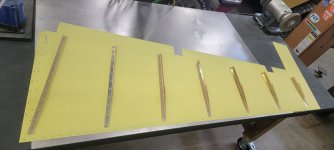
I was thinking about something like this. What did you do for clecos? I am wondering in the tailcone if they are really necessary of if you can just tape a row of rivets in the skin, lay the stiffner over it, and back rivet it.
 
Know that some parts that have a slight curve, so be careful here with using a table. I use a cframe with the gun mounted, so it can handle curves. Or for the bottom skin on my 14, I just bucked it normally. I did back rivet with a back rivet bar on my first emp, but for me normal bucking came out better.
 
Last edited:
I was thinking about something like this. What did you do for clecos? I am wondering in the tailcone if they are really necessary of if you can just tape a row of rivets in the skin, lay the stiffner over it, and back rivet it.
I just taped the row of rivets and flipped it onto the plate, rivet away. I used the rivet set below from Cleaveland Tool, it'll force the skin down around the rivet while being set.
 

Attachments

  • [RSB35] Back Rivet Set.jpg
    [RSB35] Back Rivet Set.jpg
    44.2 KB · Views: 5
Here's my Solo solution. I sunk a huge piece of 3/16 steel into a build table for back riveting. I was able to back rivet pretty much the entire tailcone on my own. If there's a part that allows back riveting, that's what I do. I find back riveting make a much flatter set rivet.
Thank you for sharing those pictures, but how much did this cost in materials and labor?
 
Thank you for sharing those pictures, but how much did this cost in materials and labor?
Had it cut here in Nashville at a local steel supply, best I recall it was $130.00ish. The plate is 48" X 34.5". Used 1/4ish thin plywood on each side of the plate to make the table even. The table is built out of 2x6's, plate is laid on the 2x6's. The only issues I ever have is spot rust on the plate, I just clean it up with a DA sander and 220 paper. Can't really paint the palte and then rivet on it...
 
Had it cut here in Nashville at a local steel supply, best I recall it was $130.00ish. The plate is 48" X 34.5". Used 1/4ish thin plywood on each side of the plate to make the table even. The table is built out of 2x6's, plate is laid on the 2x6's. The only issues I ever have is spot rust on the plate, I just clean it up with a DA sander and 220 paper. Can't really paint the palte and then rivet on it...
I was asking about the DRDT2 looking like machine will that big air cylinder, how much did that cost?
 
Here's another method I have used.

Two EAA tables end to end.
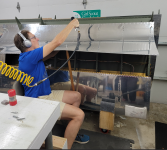
Place the fuse on wood blocks. The height should be a little higher than the height of the back rivet bar or plate. The excess space is filled with soft foam. Just a little so any pressure makes the assembly contact the plate. You want to be able to insert a rivet or row of rivets and tape them. When you push down, the rivet will contact the rivet bar or plate. Drive the shop head.
 
I was asking about the DRDT2 looking like machine will that big air cylinder, how much did that cost?
Ahhh, the pneumatic dimplier. I built it so relatively inexpensive, parts came from EBAY and Amazon. It has proven to be the best time saving tool I have! You can absolutely walk through the biggest skin. I've attached the video from where I had just completed building it. I've built an entire 10 with it now.

 
Ahhh, the pneumatic dimplier. I built it so relatively inexpensive, parts came from EBAY and Amazon. It has proven to be the best time saving tool I have! You can absolutely walk through the biggest skin. I've attached the video from where I had just completed building it. I've built an entire 10 with it now.

Any more information you can provide on building your C-Frame? Like was that a DRDT2 and you converted it, or you built it from scratch?
The size of the air cylinder? how much pressure can you get out of it? is the cylinder sufficient for bucking rivets too?
 

Any more information you can provide on building your C-Frame? Like was that a DRDT2 and you converted it, or you built it from scratch?
The size of the air cylinder? how much pressure can you get out of it? is the cylinder sufficient for bucking rivets too?
Built from scratch, you must have a metal lathe. The holder of the top die was made from a 3/8 bolt, and the lower die holder is just 1/2 steel. Specs on the cylinder are below. There's a link to Amazon with a similar cylinder, likely work but haven't tried it. The pedal and air solenoid control also came from Amazon.

SMC 100 MM bore X 50 MM stroke pneumatic cylinder CDA1BN100-50​


Built from scratch, you must have a metal lathe. The holder of the top die was made from a 3/8 bolt, and the lower die holder is just 1/2 steel. Specs on the cylinder are below. There's a link to Amazon with a similar cylinder, likely work but haven't tried it. The pedal and air solenoid control also came from Amazon.

SMC 100 MM bore X 50 MM stroke pneumatic cylinder CDA1BN100-50​

So if you apply 100 psi of air pressure the result is about 1200 psi on the ram, am I correct on that? that's Considering the bore is around 4 inches, so the surface area would be around 12 square inches, 100 psi X 12 = 1200 psi
 
Back
Top