

Van's Air Force

The definitive Van's Aircraft support community! Buying, building or flying an RV? Join our exclusive family of mentors and enthusiasts!

Rivet orientation, how to understand the KAI

Hello, first time builder here !

I've been trying to understand how to figure out the rivet orientation (for solid universal rivets) from the RV-15 KAI for a couple hours without much success. I read through VAF and found the general rule:

1. The visible side
2. The side with the thinnest material
3. The side with the easiest access
4. The side that is easiest to drill out later
5. The front or top sides

Question 1: not sure that 1. and 2. should be inverted

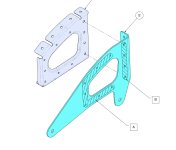
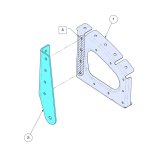
In the KAI, there are areas that are hatched (here from flaps assembly) :
Capture d’écran 2026-05-31 à 10.46.51.jpg
Capture d’écran 2026-05-31 à 10.47.00.jpg

Question 2: do the hatched area give the orientation, for example the manufactured head is on the hatched part. or it's just hatched to be easy to show and there is no hidden intention behind ?

Thanks for your feedbacks !

Gilles
 
I had the same questions as I saw pictures of builders putting the rivets in different orientations.
It was suggested that orientation on the thinest material is not as critical with pulled rivets.

I do the following:

The side with the thinnest material
The side with the easiest access
The front or top sides
 
Hello, first time builder here !

I've been trying to understand how to figure out the rivet orientation (for solid universal rivets) from the RV-15 KAI for a couple hours without much success. I read through VAF and found the general rule:

1. The visible side
2. The side with the thinnest material
3. The side with the easiest access
4. The side that is easiest to drill out later
5. The front or top sides

Question 1: not sure that 1. and 2. should be inverted

In the KAI, there are areas that are hatched (here from flaps assembly) :
View attachment 119183
View attachment 119184

Question 2: do the hatched area give the orientation, for example the manufactured head is on the hatched part. or it's just hatched to be easy to show and there is no hidden intention behind ?

Thanks for your feedbacks !

Gilles
The hatched areas are highlighting the holes that are being riveted that were described in the text on that page.
Often times this will be obvious, but at times holes need to be left open for attaching other parts in later steps.
 
I had the same questions as I saw pictures of builders putting the rivets in different orientations.
It was suggested that orientation on the thinest material is not as critical with pulled rivets.

I do the following:

The side with the thinnest material
The side with the easiest access
The front or top sides
Standard practice is to try and use the manufactured head on the thinnest material, front, or top. That said, for a properly driven solid rivet, it does not matter.

Note that if the plans SPECIFY an orientation, there is a specific reason for it, and it should be complied with.
 
My first priority is access to the various types of riveting processes. If I can back rivet that comes first. Then pneumatic squeeze, hand squeeze and finally buck. In the last, orientation is determined by where the gun will fit and how I can hold that gun. The bucking bar is usually the easiest to get located correctly. And the last of the last is two person riveting which tools will fit where but then I must also decide who has the best skill level for the gun and/or the bucking bar.
 
Back
Top
