

Van's Air Force

The definitive Van's Aircraft support community! Buying, building or flying an RV? Join our exclusive family of mentors and enthusiasts!

MagniX proposes Electric RV-10

EdH

Well Known Member
Just dropped into my inbox… I'll admit, an Electric RV-10 wasn't on my bingo card for Sun 'n Fun news this year.


magniX-RV-10.jpg
  • magniX is integrating magniAIR as part of a full magniX powertrain into a Van’s Aircraft RV-10 kit plane scheduled for first flight this year
  • magniAIR is designed initially for experimental as well as light sport aircraft and electric flight trainers

Everett, WA & Lakeland, FL – April 14, 2026 - magniX, the company powering the electric aviation revolution, today announced the launch of the magniAIR electric engine for general aviation, initially targeted at the class of aircraft used for recreational flying and flight training. magniX is integrating the magniAIR as part of a full magniX powertrain into a Van’s Aircraft RV-10 kit plane scheduled for first flight later this year with the motor available to purchase in 2027. The company is currently exhibiting the RV-10 and a range of its other products at the SUN ‘n FUN Aerospace Expo in Lakeland, Florida, U.S.
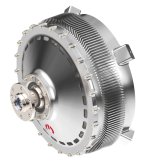
magniAir_rendering.jpg

magniAIR leverages magniX’s groundbreaking engine architecture, industry leading safety and fault handling capabilities, and unrivaled flight experience to bring the electric age to general aviation. magniAIR will deliver class-leading power-to-weight of 175 kW at 55kg and can be seamlessly integrated as part of a full magniX powertrain into a range of aircraft in that class.

Bringing Electric Flight to Kit Plane Builders and Enthusiasts
magniX is the only company offering a fully-integrated powertrain comprising electric engines, power electronics, and the industry-leading Samson battery product. Electric propulsion offers a lower cost of operation than traditional combustion engines due to its lack of fuel usage and reduced maintenance requirements. magniAIR will initially bring these benefits to kit plane builders and enthusiasts, breaking down barriers to airplane ownership and popularizing recreational flying.

With the Federal Aviation Administration’s (FAA’S) Modernization of Special Airworthiness Certification (MOSAIC) rules expected to widen the definition of light sport aircraft (LSA) and enable a broader range of use cases, magniAIR is positioned to meet this opportunity as well. Among its prime applications is the electrification of flight trainers, addressing the growing cost of obtaining a pilot's license. It is also targeted at adjacencies in eVTOLs and defense.

“We are very excited to bring the marvel of electric flight to a new segment of the market,” said Reed Macdonald, CEO of magniX. “magniAIR electric engines coupled with our industry-leading Samson batteries can be used for any application currently powered by a 120-175 kW piston engine. Thanks to magniX’s full powertrain, integration is simple and cost effective, bringing electric flight to kit plane builders and enthusiasts.”
 
Just dropped into my inbox… I'll admit, an Electric RV-10 wasn't on my bingo card for Sun 'n Fun news this year.


View attachment 115120
  • magniX is integrating magniAIR as part of a full magniX powertrain into a Van’s Aircraft RV-10 kit plane scheduled for first flight this year
  • magniAIR is designed initially for experimental as well as light sport aircraft and electric flight trainers

Everett, WA & Lakeland, FL – April 14, 2026 - magniX, the company powering the electric aviation revolution, today announced the launch of the magniAIR electric engine for general aviation, initially targeted at the class of aircraft used for recreational flying and flight training. magniX is integrating the magniAIR as part of a full magniX powertrain into a Van’s Aircraft RV-10 kit plane scheduled for first flight later this year with the motor available to purchase in 2027. The company is currently exhibiting the RV-10 and a range of its other products at the SUN ‘n FUN Aerospace Expo in Lakeland, Florida, U.S.

View attachment 115121

magniAIR leverages magniX’s groundbreaking engine architecture, industry leading safety and fault handling capabilities, and unrivaled flight experience to bring the electric age to general aviation. magniAIR will deliver class-leading power-to-weight of 175 kW at 55kg and can be seamlessly integrated as part of a full magniX powertrain into a range of aircraft in that class.

Bringing Electric Flight to Kit Plane Builders and Enthusiasts
magniX is the only company offering a fully-integrated powertrain comprising electric engines, power electronics, and the industry-leading Samson battery product. Electric propulsion offers a lower cost of operation than traditional combustion engines due to its lack of fuel usage and reduced maintenance requirements. magniAIR will initially bring these benefits to kit plane builders and enthusiasts, breaking down barriers to airplane ownership and popularizing recreational flying.

With the Federal Aviation Administration’s (FAA’S) Modernization of Special Airworthiness Certification (MOSAIC) rules expected to widen the definition of light sport aircraft (LSA) and enable a broader range of use cases, magniAIR is positioned to meet this opportunity as well. Among its prime applications is the electrification of flight trainers, addressing the growing cost of obtaining a pilot's license. It is also targeted at adjacencies in eVTOLs and defense.

“We are very excited to bring the marvel of electric flight to a new segment of the market,” said Reed Macdonald, CEO of magniX. “magniAIR electric engines coupled with our industry-leading Samson batteries can be used for any application currently powered by a 120-175 kW piston engine. Thanks to magniX’s full powertrain, integration is simple and cost effective, bringing electric flight to kit plane builders and enthusiasts.”
I for one, would like to know why they call it an "engine".?
 
Be nice to know all the specs -- total weight of the motor and batts, estimated endurance, recharge time, airframe and engine mount mods required to account for a much lighter engine, etc, etc. Google says that 175KW is roughly 234 HP. That's great at altitude but it will be an anemic climb getting up there to take advantage not to mention mediocre takeoff performance at best. That said, it does pique my interest but methinks as the 10 is a X/C cruiser, the performance specs will have to be pretty close to a standard IO-540 powered 10 to make it a seller.
 
Yeah, same guys that supplied the electric motor to Harbour Air for their electric Beaver aircraft in December 2019. Still not in commercial service, still not flying passengers, still a one or two place Beaver due to the weight of the batteries. Need an order of magnitude improvement in battery technology (power density) before electric aircraft are a reality.
 
Be nice to know all the specs -- total weight of the motor and batts, estimated endurance, recharge time, airframe and engine mount mods required to account for a much lighter engine, etc, etc. Google says that 175KW is roughly 234 HP. That's great at altitude but it will be an anemic climb getting up there to take advantage not to mention mediocre takeoff performance at best. That said, it does pique my interest but methinks as the 10 is a X/C cruiser, the performance specs will have to be pretty close to a standard IO-540 powered 10 to make it a seller.
consider that the 234 HP will be 234 HP regardless of air pressure. The rated engine power of a traditional engine is at sea level and specific conditions. Meaning. might be mediocre at paper spec level but surprising in specific scenarios. like high density altitude. (from available HP perspective) same thing for high altitude cruise. constant HP availability regardless of "manifold pressure".

I believe the real challenge are 3: constant speed prop implementation, range and charging station. It just wont be practical in the real world, for a few years. And maybe they are using the RV-10 as a proof of concept so that they can use "passenger weight allowance" for batteries..
 
The truth is that these days the electric motor problem is pretty well solved; we know how to build a compact electric motor that turns electricity into torque with very good efficiency. The sticking point, as always, is where the electric power comes from... battery technology is improving, but the best available battery still stores only a fraction of the energy of an equivalent weight (or volume) of fossil fuel. So when I see a company trying to sell an application for their electric motor, my first question is always: "sounds great, but what revolution in battery technology are you proposing that will make the thing viable?"
 
Let’s do some math!

First: Max weight of the batteries. A lightweight RV-10 weighs 1600 lbs empty. An IO-540 weighs, what, 400 lbs, give or take? The electric motor apparently weighs 55 kg (about 120 lbs) so the other 280 lbs (which used to be IO-540 weight) can become batteries. This means that the empty airplane (minus batteries) now weighs 1320 lbs. If the max gross weight is 2700 lbs, and you want to be able to carry 400 lbs of people (Let’s be realistic: This will be a two-seater), that leaves up to 980 lbs for the batteries.

The “Samson 400” batteries supposedly have an energy density of 400 Wh per kg, or 181 Wh per lb. Multiply this by 980 lbs and you get 177,808 Wh.

The motor, at max power, uses 175 kiloWatts, i.e. 175,000 Wh per hour. So, at max power, you have a hair over one hour of flight time (Edit: generously assuming 100% efficiency), and that’s before we start talking about reserve requirements.

(If fuel reserve requirements are half an hour at cruise power, and if cruise power is defined as 50% for this airplane, then that’s about a quarter of the juice in the batteries).

So now, the questions are:

1) Will most of the flight be done at… 75% power? 50%? 30%? Depends on whether you’re doing pattern work or cross-country.

2) If you’re using this for flight-training: How many touch-and-goes do you get per charge, exactly? Five? Ten? If I recall correctly, most training flights are about an hour and a half, so, there’s going to be some “range anxiety” there...

It's no wonder that a lot of "electric" aircraft use range extenders i.e. generators that burn fuel, or fuel cells that "burn" hydrogen, instead of just batteries. Still better (for the environment and for the hourly costs) than just a piston engine, but not quite as 100% clean as "electric airplane" implies. (Edit 2: Of course, in order to be useful for the RV-10, the generator would have to burn fuel at a decent fraction of the rate that an IO-540 would, e.g. mabe 15-ish gallons over the course of 2 hours, to double the endurance of the airplane. Even at a higher RPM, it would still have to be a decent fraction of the weight of an airplane piston engine, like maybe 100-ish pounds? I don't know much about generators. But just those 15 gallons are yet another 90 lbs...)
 
Last edited:
It's no wonder that a lot of "electric" aircraft use range extenders i.e. generators that burn fuel, or fuel cells that "burn" hydrogen, instead of just batteries. Still better (for the environment and for the hourly costs) than just a piston engine, but not quite as 100% clean as "electric airplane" implies. (Edit 2: Of course, in order to be useful for the RV-10, the generator would have to burn fuel at a decent fraction of the rate that an IO-540 would, e.g. mabe 15-ish gallons over the course of 2 hours, to double the endurance of the airplane. Even at a higher RPM, it would still have to be a decent fraction of the weight of an airplane piston engine, like maybe 100-ish pounds? I don't know much about generators. But just those 15 gallons are yet another 90 lbs...)
The problem is converting fuel to rotational energy, then to electricity, then back to rotational energy isn't very efficient when a load is relatively constant. Following your math with some assumptions. A 10 min climb followed by cruising at 66% (roughly matching 60% of a Lyc) would give you an hour and a half flight if the descent was a chop & drop. Add a 3500w generator and you get maybe 15 more minutes for giving up another 40lbs useful load.

On the other hand, an Extra NG with 850hp and a 20 min flight time like the radio controlled mini versions I used to fly would be a hoot! Or maybe an electric formula 1 class at the air races. 2 laps at 400mph would be sporty.
 
A Tesla model 3 80kwh battery weighs 1000lbs and would only get you a half hour flight time. Hydrogen fuel cell storage is also heavy to take Into the air with you. I love the innovation but am doubtful it has any real application at this point.
 
I love innovation and new gadgets but this push for electric motors in aviation cracks me up. If this thing can't fly at least 500 miles and be recharged in 30 minutes at the majority of airports, what's the point? If the range is 250 miles and it takes 2 hours to recharge and only 1% of airports have charging facilities, who will buy it? Who in the world invests in these companies???
 
A lot of negative comments, and, imho, deservedly so. But I do take issue with post #3 describing ‘anemic’ climb rates and ‘mediocre’ take off performance. Remember Vans #2 RV demonstrator had a 230 HP TCM engine, and, while no one wanted it, I never heard ‘anemic climb rate’ or ‘mediocre takeoff’ stated as a reason.
 
A lot of negative comments, and, imho, deservedly so. But I do take issue with post #3 describing ‘anemic’ climb rates and ‘mediocre’ take off performance. Remember Vans #2 RV demonstrator had a 230 HP TCM engine, and, while no one wanted it, I never heard ‘anemic climb rate’ or ‘mediocre takeoff’ stated as a reason.
And to further expand on your point, 234 HP is 90% of 260, or 90% of the sea level power that the -10 is designed for, which is not that much of a power hit. Once the plane climbs through 3500' however, 234 Hp is more than a N/A 260 HP O-540 is capable of making which should improve climb performance. Now, if gross weight is increased substantially to accommodate the 600+ lbs of extra battery weight (over full fuel tanks), then that will certainly have a negative impact on climb performance...

Skylor
 
Let’s do some math!

First: Max weight of the batteries. A lightweight RV-10 weighs 1600 lbs empty. An IO-540 weighs, what, 400 lbs, give or take? The electric motor apparently weighs 55 kg (about 120 lbs) so the other 280 lbs (which used to be IO-540 weight) can become batteries. This means that the empty airplane (minus batteries) now weighs 1320 lbs. If the max gross weight is 2700 lbs, and you want to be able to carry 400 lbs of people (Let’s be realistic: This will be a two-seater), that leaves up to 980 lbs for the batteries.

The “Samson 400” batteries supposedly have an energy density of 400 Wh per kg, or 181 Wh per lb. Multiply this by 980 lbs and you get 177,808 Wh.

The motor, at max power, uses 175 kiloWatts, i.e. 175,000 Wh per hour. So, at max power, you have a hair over one hour of flight time (Edit: generously assuming 100% efficiency), and that’s before we start talking about reserve requirements.

(If fuel reserve requirements are half an hour at cruise power, and if cruise power is defined as 50% for this airplane, then that’s about a quarter of the juice in the batteries).

So now, the questions are:

1) Will most of the flight be done at… 75% power? 50%? 30%? Depends on whether you’re doing pattern work or cross-country.

2) If you’re using this for flight-training: How many touch-and-goes do you get per charge, exactly? Five? Ten? If I recall correctly, most training flights are about an hour and a half, so, there’s going to be some “range anxiety” there...

It's no wonder that a lot of "electric" aircraft use range extenders i.e. generators that burn fuel, or fuel cells that "burn" hydrogen, instead of just batteries. Still better (for the environment and for the hourly costs) than just a piston engine, but not quite as 100% clean as "electric airplane" implies. (Edit 2: Of course, in order to be useful for the RV-10, the generator would have to burn fuel at a decent fraction of the rate that an IO-540 would, e.g. mabe 15-ish gallons over the course of 2 hours, to double the endurance of the airplane. Even at a higher RPM, it would still have to be a decent fraction of the weight of an airplane piston engine, like maybe 100-ish pounds? I don't know much about generators. But just those 15 gallons are yet another 90 lbs...)
Engineering logic and math. Who'da thunk the numbers don't really work?
 
A lot of negative comments, and, imho, deservedly so. But I do take issue with post #3 describing ‘anemic’ climb rates and ‘mediocre’ take off performance. Remember Vans #2 RV demonstrator had a 230 HP TCM engine, and, while no one wanted it, I never heard ‘anemic climb rate’ or ‘mediocre takeoff’ stated as a reason.
Bob I agree. I flew the Continental powered RV10 (checked out by Mr. RV Checker-outer himself and it flew surprisingly fine.
 
Just dropped into my inbox… I'll admit, an Electric RV-10 wasn't on my bingo card for Sun 'n Fun news this year.


View attachment 115120
  • magniX is integrating magniAIR as part of a full magniX powertrain into a Van’s Aircraft RV-10 kit plane scheduled for first flight this year
  • magniAIR is designed initially for experimental as well as light sport aircraft and electric flight trainers

Everett, WA & Lakeland, FL – April 14, 2026 - magniX, the company powering the electric aviation revolution, today announced the launch of the magniAIR electric engine for general aviation, initially targeted at the class of aircraft used for recreational flying and flight training. magniX is integrating the magniAIR as part of a full magniX powertrain into a Van’s Aircraft RV-10 kit plane scheduled for first flight later this year with the motor available to purchase in 2027. The company is currently exhibiting the RV-10 and a range of its other products at the SUN ‘n FUN Aerospace Expo in Lakeland, Florida, U.S.

View attachment 115121

magniAIR leverages magniX’s groundbreaking engine architecture, industry leading safety and fault handling capabilities, and unrivaled flight experience to bring the electric age to general aviation. magniAIR will deliver class-leading power-to-weight of 175 kW at 55kg and can be seamlessly integrated as part of a full magniX powertrain into a range of aircraft in that class.

Bringing Electric Flight to Kit Plane Builders and Enthusiasts
magniX is the only company offering a fully-integrated powertrain comprising electric engines, power electronics, and the industry-leading Samson battery product. Electric propulsion offers a lower cost of operation than traditional combustion engines due to its lack of fuel usage and reduced maintenance requirements. magniAIR will initially bring these benefits to kit plane builders and enthusiasts, breaking down barriers to airplane ownership and popularizing recreational flying.

With the Federal Aviation Administration’s (FAA’S) Modernization of Special Airworthiness Certification (MOSAIC) rules expected to widen the definition of light sport aircraft (LSA) and enable a broader range of use cases, magniAIR is positioned to meet this opportunity as well. Among its prime applications is the electrification of flight trainers, addressing the growing cost of obtaining a pilot's license. It is also targeted at adjacencies in eVTOLs a

“We are very excited to bring the marvel of electric flight to a new segment of the market,” said Reed Macdonald, CEO of magniX. “magniAIR electric engines coupled with our industry-leading Samson batteries can be used for any application currently powered by a 120-175 kW piston engine. Thanks to magniX’s full powertrain, integration is simple and cost effective, bringing electric flight to kit plane builders and enthusiasts.”
Pictures are always deceptive but would that motor fit under the cowl of an RV? My perception is you couldn’t see over it
 
consider that the 234 HP will be 234 HP regardless of air pressure. The rated engine power of a traditional engine is at sea level and specific conditions. Meaning. might be mediocre at paper spec level but surprising in specific scenarios. like high density altitude. (from available HP perspective) same thing for high altitude cruise. constant HP availability regardless of "manifold pressure".

I believe the real challenge are 3: constant speed prop implementation, range and charging station. It just wont be practical in the real world, for a few years. And maybe they are using the RV-10 as a proof of concept so that they can use "passenger weight allowance" for batteries..
One of the advantages of an electric motor is probably doesn’t need a constant speed prop. You get maximum torque at 0 rpm. It’s going to accelerate like an electric car. You would probably be able to descend like crazy using dynamic braking charging the battery. Maybe even be able to reverse thrust.
 
Last edited:
Let’s do some math!

First: Max weight of the batteries. A lightweight RV-10 weighs 1600 lbs empty. An IO-540 weighs, what, 400 lbs, give or take? The electric motor apparently weighs 55 kg (about 120 lbs) so the other 280 lbs (which used to be IO-540 weight) can become batteries. This means that the empty airplane (minus batteries) now weighs 1320 lbs. If the max gross weight is 2700 lbs, and you want to be able to carry 400 lbs of people (Let’s be realistic: This will be a two-seater), that leaves up to 980 lbs for the batteries.

The “Samson 400” batteries supposedly have an energy density of 400 Wh per kg, or 181 Wh per lb. Multiply this by 980 lbs and you get 177,808 Wh.

The motor, at max power, uses 175 kiloWatts, i.e. 175,000 Wh per hour. So, at max power, you have a hair over one hour of flight time (Edit: generously assuming 100% efficiency), and that’s before we start talking about reserve requirements.

(If fuel reserve requirements are half an hour at cruise power, and if cruise power is defined as 50% for this airplane, then that’s about a quarter of the juice in the batteries).

So now, the questions are:

1) Will most of the flight be done at… 75% power? 50%? 30%? Depends on whether you’re doing pattern work or cross-country.

2) If you’re using this for flight-training: How many touch-and-goes do you get per charge, exactly? Five? Ten? If I recall correctly, most training flights are about an hour and a half, so, there’s going to be some “range anxiety” there...

It's no wonder that a lot of "electric" aircraft use range extenders i.e. generators that burn fuel, or fuel cells that "burn" hydrogen, instead of just batteries. Still better (for the environment and for the hourly costs) than just a piston engine, but not quite as 100% clean as "electric airplane" implies. (Edit 2: Of course, in order to be useful for the RV-10, the generator would have to burn fuel at a decent fraction of the rate that an IO-540 would, e.g. mabe 15-ish gallons over the course of 2 hours, to double the endurance of the airplane. Even at a higher RPM, it would still have to be a decent fraction of the weight of an airplane piston engine, like maybe 100-ish pounds? I don't know much about generators. But just those 15 gallons are yet another 90 lbs...)
Thanks for doing the math for us 😉
 
My 2 cents. This is just a guy that wanted to go to Sun n fun and write it off on taxes as a “business expense” 🤣

Non-viable nonsense
 
I’m pro-electric. I’ve been driving all electric since 2018 - not just local day-to-day driving, but lots of long road trips too, including multiple coast-to-coast runs (across the northern states in December, no less). I’m never going back. The technology needed for cars is there and it has been for years.

I’m cautiously optimistic about Harbor Air’s use case. It’s pushing the limits of what’s viable, but with their very short flights and built-in opportunities for recharge time while waiting for the next scheduled flight, it seems like it could be an overall win once you take the maintenance reduction into account. Maybe.

But an RV-10? I don’t see how this makes any sense. The only use cases in aviation where electric is viable are with very very short legs… Harbor Air’s business case in the Seattle area is pretty unique because of the island environment, although electric propulsion seems promising for students beating up the pattern too. But for how most RV pilots fly (including me in my RV-12), this really feels like trying to fit a square peg in a round hole.
 
I’m pro-electric. I’ve been driving all electric since 2018 - not just local day-to-day driving, but lots of long road trips too, including multiple coast-to-coast runs (across the northern states in December, no less). I’m never going back. The technology needed for cars is there and it has been for years.

I’m cautiously optimistic about Harbor Air’s use case. It’s pushing the limits of what’s viable, but with their very short flights and built-in opportunities for recharge time while waiting for the next scheduled flight, it seems like it could be an overall win once you take the maintenance reduction into account. Maybe.

But an RV-10? I don’t see how this makes any sense. The only use cases in aviation where electric is viable are with very very short legs… Harbor Air’s business case in the Seattle area is pretty unique because of the island environment, although electric propulsion seems promising for students beating up the pattern too. But for how most RV pilots fly (including me in my RV-12), this really feels like trying to fit a square peg in a round hole.
…and harbor air is having battery issues.

Until battery tech catches up, an electric -10 makes no sense at all.
 
Its an answer to a problem that doesn't exist to my thinking, limited endurance compared to conventional engine, long recharge time compared to refueling AVGAS, undoubted weight penalty on useful load, almost certainly extortionately expensive given the likely numbers sold, un proven reliability and if the manufacture goes bust no support going forwards. Why go down this route???
 
Let’s do some math!

First: Max weight of the batteries. A lightweight RV-10 weighs 1600 lbs empty. An IO-540 weighs, what, 400 lbs, give or take? The electric motor apparently weighs 55 kg (about 120 lbs) so the other 280 lbs (which used to be IO-540 weight) can become batteries. This means that the empty airplane (minus batteries) now weighs 1320 lbs. If the max gross weight is 2700 lbs, and you want to be able to carry 400 lbs of people (Let’s be realistic: This will be a two-seater), that leaves up to 980 lbs for the batteries.

The “Samson 400” batteries supposedly have an energy density of 400 Wh per kg, or 181 Wh per lb. Multiply this by 980 lbs and you get 177,808 Wh.

The motor, at max power, uses 175 kiloWatts, i.e. 175,000 Wh per hour. So, at max power, you have a hair over one hour of flight time (Edit: generously assuming 100% efficiency), and that’s before we start talking about reserve requirements.

(If fuel reserve requirements are half an hour at cruise power, and if cruise power is defined as 50% for this airplane, then that’s about a quarter of the juice in the batteries).

So now, the questions are:

1) Will most of the flight be done at… 75% power? 50%? 30%? Depends on whether you’re doing pattern work or cross-country.

2) If you’re using this for flight-training: How many touch-and-goes do you get per charge, exactly? Five? Ten? If I recall correctly, most training flights are about an hour and a half, so, there’s going to be some “range anxiety” there...

It's no wonder that a lot of "electric" aircraft use range extenders i.e. generators that burn fuel, or fuel cells that "burn" hydrogen, instead of just batteries. Still better (for the environment and for the hourly costs) than just a piston engine, but not quite as 100% clean as "electric airplane" implies. (Edit 2: Of course, in order to be useful for the RV-10, the generator would have to burn fuel at a decent fraction of the rate that an IO-540 would, e.g. mabe 15-ish gallons over the course of 2 hours, to double the endurance of the airplane. Even at a higher RPM, it would still have to be a decent fraction of the weight of an airplane piston engine, like maybe 100-ish pounds? I don't know much about generators. But just those 15 gallons are yet another 90 lbs...)
Not to mention that there will be a big effect on CG by removing 280 lbs from the nose.

I will be interested to see if they if they offset with a long engine mount a la the Lockwood RV-9 with Rotax 916iS. I'm sure the rear seats will be empty, if installed at all.
 
The only use cases in aviation where electric is viable are with very very short legs… Harbor Air’s business case in the Seattle area is pretty unique because of the island environment, although electric propulsion seems promising for students beating up the pattern too.

Yeah, I see flight training as the main application for this kind of thing. All you need is to be able to fly for about an hour...

But I do remember the MagniX people talking about how many flights around the world are less than 200 miles. There are multiple places like Alaska and various island environments where people do get around by short flights. It's not as large a market as big mainstream airlines, but if you imagine a small airplane that could do those short flights while burning zero fuel, you should be able to see the appeal (despite the hits in useful load and turn-around time).

Why go down this route???

Because a joule of energy from the power grid is a lot cheaper than a joule of energy at the fuel pump. There are disadvantages, but there are advantages. (Maybe not in an RV-10 but in a Beaver-on-floats or a Caravan...)

Not to mention that there will be a big effect on CG by removing 280 lbs from the nose. I will be interested to see if they if they offset with a long engine mount a la the Lockwood RV-9 with Rotax 916iS. I'm sure the rear seats will be empty, if installed at all.

I figured that ~280 lbs of batteries will go into the nose, and much of the remaining ~700 lbs will go on the rear seats!
 
One of the advantages of an electric motor is probably doesn’t need a constant speed prop. You get maximum torque at 0 rpm. It’s going to accelerate like an electric car. You would probably be able to descend like crazy using dynamic braking charging the battery. Maybe even be able to reverse thrust.

Regenerative charging on the way down is a great idea and I think it has been tested. I hadn't thought of using negative RPM for reverse thrust but that sounds doable too.

However, I do think a prop with variable pitch will still be beneficial. When flying slowly, the air hits the blades at a different angle than when flying quickly (unless the RPM goes up by the same factor as the airspeed, which I don't think it can, because that would require more torque and more power, plus there are compressibility effects at the tips and all that), so you'll want to re-orient the blades for maximum thrust (or maximum efficiency)... I think. I could be wrong. I'll think more about it.
 
Last edited:
So….musings from a guy who has actually been flying an electric airplane for about three years…..

All the nay-sayers about this particular application (engine/airframe) being a non-starter are probably right - the math proves it. However, Sonex flew an electric Sonex about fifteen years ago that had enough battery power to go once around the pattern. Fast-forward a dozen (or so years) and Gabe DeVault (followed by us) fly electric Xenos’s that can fly under power for forty-five minutes. The original electric Sonex was pushed into a corner as useless. But…it taught people something. If folks don’t TRY something, then they will never LEARN anything that will improve the technology and move the ball downfield.

The critics are absolutely correct - the battery technology isn’t there to make this even remotely useful in this configuration. But if folks don;t start tinkering with it, and just throw rocks at others that are tinkering with it, we never learn a thing, never progress. An “airplane” with a 12 HP engine that flies ten feet up for 120 feet? Pretty useless - might as well give up and go back to building bicycles Wilbur….

Ol’ Teddy…Love him or hate him, he’s always relevant…..

“It is not the critic who counts; not the man who points out how the strong man stumbles, or where the doer of deeds could have done them better. The credit belongs to the man who is actually in the arena, whose face is marred by dust and sweat and blood; who strives valiantly; who errs, who comes short again and again, because there is no effort without error and shortcoming; but who does actually strive to do the deeds; who knows great enthusiasms, the great devotions; who spends himself in a worthy cause; who at the best knows in the end the triumph of high achievement, and who at the worst, if he fails, at least fails while daring greatly, so that his place shall never be with those cold and timid souls who neither know victory nor defeat.”​


Nope - whatever is displayed at SnF this week is hardly going to be useful (if it even flies) - but I rraise a glass to the folks willign to spend time and money tinkering with it.

Now I gotta go put a charge on that Xenos and take it around the patch….
 
"...There are multiple places like Alaska and various island environments where people do get around by short flights. It's not as large a market as big mainstream airlines, but if you imagine a small airplane that could do those short flights while burning zero fuel, you should be able to see the appeal (despite the hits in useful load and turn-around time)..."
Good luck getting people to ride in this in Alaska in winter with no way to provide cabin heat.
 
Spot on. There will come a day when electric aviation is widespread. Most of us probably won't still be flying, but the day will still come. Many of these things are the same things people were saying about electric vehicles (myself included) 10-20 years ago. They were right at the time, but not forever.


So….musings from a guy who has actually been flying an electric airplane for about three years…..

All the nay-sayers about this particular application (engine/airframe) being a non-starter are probably right - the math proves it. However, Sonex flew an lectrci Sonex about fifteen years ago that had enough batteyr power to go once aroudn the attern. Fast-forward a dozen (or so years) and Gabe DeVault (followed by us) fly electric Xenos’s that can fly under power for forty-five minutes. the original electric Sonex was pushed into a corner as useless. But…it taught people something. If folks don’t TRY something, then LEARN anything that will improve the technology and move the ball downfield.

The critics are absolutely correct - the battery technology isn’t there to make this even remotely useful in this configuration. But if folks don;t start tinkering with it, and just throw rocks at others that are tinkering with it, we never learn a thing, never progress. An “airplane” with a 12 HP engine that flies ten feet up for 120 feet? Pretty useless - might as well give up and go back to building bicycles Wilbur….

Ol’ Teddy…Love him or hate him, he’s always relevant…..

“It is not the critic who counts; not the man who points out how the strong man stumbles, or where the doer of deeds could have done them better. The credit belongs to the man who is actually in the arena, whose face is marred by dust and sweat and blood; who strives valiantly; who errs, who comes short again and again, because there is no effort without error and shortcoming; but who does actually strive to do the deeds; who knows great enthusiasms, the great devotions; who spends himself in a worthy cause; who at the best knows in the end the triumph of high achievement, and who at the worst, if he fails, at least fails while daring greatly, so that his place shall never be with those cold and timid souls who neither know victory nor defeat.”​


Nope - whatever is displayed at SnF this week is hardly going to be useful (if it even flies) - but I rraise a glass to the folks willign to spend time and money tinkering with it.

Now I gotta go put a charge on that Xenos and take it around the patch….
 
Spot on. There will come a day when electric aviation is widespread. Most of us probably won't still be flying, but the day will still come. Many of these things are the same things people were saying about electric vehicles (myself included) 10-20 years ago. They were right at the time, but not forever.
Just think of the safety discussions occurring here when the battery power density reaches the level needed to make electric aircraft practical. You think a lipo battery is bad, increase the power density by five times!:eek:
 
New ideas and technology are meant to provide new capabilities or improvements to existing technology. The modern electric car has benefited from new battery chemistry so EV's now provide some benefits over ICE vehicles in some situations.

How does an electric RV-10 improve on an ICE version? Range? No. Refueling time? No. Useful load? No. Cost to operate? Maybe, depending on the cost delta between the two power plants.

I'm absolutely not opposed to new technology. I buy new gadgets all the time and many of them provide very little in the way of improvements over what I already had (although the robot lawnmower I just bought is a HUGE improvement!). Some of us just don't understand what exactly an electric RV-10 offers over a piston version.

wheres-the-beef-burger-king.gif
 
Last edited:
News from Toyota regarding solid state battery technology: https://www.toyota-europe.com/news/2023/battery-technology
  • First cars: 2027–2028 launch window, likely Lexus or high‑end Toyotas, low volume at first.
  • Range: roughly 600–750 miles (about 1,000–1,200 km) per charge for early solid‑state packs, with higher stretch targets later.
  • Fast charge: about 10 minutes from near empty to around 80% on an ~800 V platform.
  • Energy density: roughly 450–500 Wh/kg at the cell level, about double many current EV batteries.
  • Pack weight example: on prototype‑style estimates, about 262 kg for ~90 kWh vs about 360 kg for a comparable lithium‑ion pack (around 100 kg / 220 lb lighter for the same energy).
  • Factory status: new sulphide solid‑electrolyte and solid‑state production lines are ramping in the mid‑to‑late 2020s, with true large‑scale mass production more likely around 2030 and beyond.
My take is it is optimistic. Still very interesting.
 
New ideas and technology are meant to provide new capabilities or improvements to existing technology. The modern electric car has benefited from new battery chemistry so EV's now provide some benefits over ICE vehicles in some situations.

How does an electric RV-10 improve on an ICE version? Range? No. Refueling time? No. Useful load? No. Cost to operate? Maybe, depending on the cost delta between the two power plants.

I'm absolutely not opposed to new technology. I buy new gadget all the time and many of them provide very little in the way of improvements over what I already had (although the robot lawnmower I just bought is a HUGE improvement!). Some of us just don't understand what exactly an electric RV-10 offers over a piston version.

View attachment 115248
I don't disagree with your thoughts BUT I agree with Paul's statements, too.

People that try new things, even if they fail, LEARN and progress can and will be made.

If no-one tries anything new, progress stagnates...
 
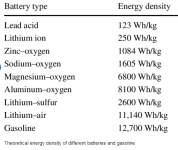
Here's a theoretical (ie. most favorable) chart of battery chemistry energy densities compared to gasoline. Like I said above, until battery energy density is an order of magnitude greater than it is today, it is not a reasonable power storage device for aircraft. The electric motor technology as proven by MagniX and others is reasonable in terms of energy density and efficiency, but the total system, motor, controller and battery is not. Remember that in the early 1900s, three automotive powertrains were competing: gasoline ICE, steam, and battery-electric. Gasoline ICE won that competition and went on to have over 100 years of technological development in terms of design, materials, fuels and lubricants, and efficiency. The development of battery technology has nearly tripled the energy density between the mid 1990 and 2020, but the rate of energy density may be limited by the chemistry, not the development dollars.
The chart below is from this source:

1776293389896.png

Here's an interesting NASA paper on battery performance for electrified aircraft.
https://ntrs.nasa.gov/api/citations/20220009109/downloads/Tiede_SpecificEnergyDensity_FINAL (1).pdf
 
If no-one tries anything new, progress stagnates...
I agree completely! However, in this case, there is nothing new here. They plan to put existing technology that is very well understood into an existing airframe. Just go back a few posts in this thread and you'll see even laypeople can do the math here and estimate power density, range, battery volume and weight, etc. Since it's existing technology, we know recharge times will be long. We know basically no airports have charging infrastructure. We know range and useful load will be severely impacted.

If they want to do this just because they can, that's cool. I have no problem with that! Kinda like stuffing six big block engines on a tractor. Very cool but not many farmers are gonna buy one.
 
I agree completely! However, in this case, there is nothing new here. They plan to put existing technology that is very well understood into an existing airframe. Just go back a few posts in this thread and you'll see even laypeople can do the math here and estimate power density, range, battery volume and weight, etc. Since it's existing technology, we know recharge times will be long. We know basically no airports have charging infrastructure. We know range and useful load will be severely impacted.

If they want to do this just because they can, that's cool. I have no problem with that! Kinda like stuffing six big block engines on a tractor. Very cool but not many farmers are gonna buy one.
True, nothing new but they are learning. Failure is a learning experience.
 
I agree completely! However, in this case, there is nothing new here. They plan to put existing technology that is very well understood into an existing airframe. Just go back a few posts in this thread and you'll see even laypeople can do the math here and estimate power density, range, battery volume and weight, etc. Since it's existing technology, we know recharge times will be long. We know basically no airports have charging infrastructure. We know range and useful load will be severely impacted.

If they want to do this just because they can, that's cool. I have no problem with that! Kinda like stuffing six big block engines on a tractor. Very cool but not many farmers are gonna buy one.
The beauty <hopefully> is that battery technology will improve. In 3 years (or 5 or 50), the battery technology will develop to the point where this is a practical concept. And if this goes forward, we'll have a bit more experience to better understand the challenges of battery power in aircraft applications.
 
Here's a theoretical (ie. most favorable) chart of battery chemistry energy densities compared to gasoline. Like I said above, until battery energy density is an order of magnitude greater than it is today, it is not a reasonable power storage device for aircraft. The electric motor technology as proven by MagniX and others is reasonable in terms of energy density and efficiency, but the total system, motor, controller and battery is not. Remember that in the early 1900s, three automotive powertrains were competing: gasoline ICE, steam, and battery-electric. Gasoline ICE won that competition and went on to have over 100 years of technological development in terms of design, materials, fuels and lubricants, and efficiency. The development of battery technology has nearly tripled the energy density between the mid 1990 and 2020, but the rate of energy density may be limited by the chemistry, not the development dollars.
The chart below is from this source:

View attachment 115262

Here's an interesting NASA paper on battery performance for electrified aircraft.
https://ntrs.nasa.gov/api/citations/20220009109/downloads/Tiede_SpecificEnergyDensity_FINAL (1).pdf

And what percentage of the has power is actually converted to forward motion. A number of people like to only think about the 30% of the energy converted to rotational energy, but the often forget about the additional drag created to cool and remove the 70% of energy expelled as heat.

I am NOT an engineer. But a number of years ago someone posted the performance data of two Pipistrel airplanes. One was electric, the other had a Rotax engine. From what I recall, in cruise, the electric motor was consuming roughly 10% of the energy of the Rotax at the same speed. Gas engines, and removing that much heat takes a lot of energy.

The reason I bring this up, yes battery tech needs to improve. Just not nearly as much as many people think.

Tim
 
I went to the MagniX display today at SNF, and after talking to one of their reps, I love the idea. But with the current technology that we know about - or think we know about - it can’t possibly work in any normal useful GA power system that we are used to and take for granted. The limitations are too severe right now, but wish them luck. I didn’t get a feeling about how deep their pockets are, but I’m skeptical.
 
News from Toyota regarding solid state battery technology: https://www.toyota-europe.com/news/2023/battery-technology
  • First cars: 2027–2028 launch window, likely Lexus or high‑end Toyotas, low volume at first.
  • Range: roughly 600–750 miles (about 1,000–1,200 km) per charge for early solid‑state packs, with higher stretch targets later.
  • Fast charge: about 10 minutes from near empty to around 80% on an ~800 V platform.
  • Energy density: roughly 450–500 Wh/kg at the cell level, about double many current EV batteries.
  • Pack weight example: on prototype‑style estimates, about 262 kg for ~90 kWh vs about 360 kg for a comparable lithium‑ion pack (around 100 kg / 220 lb lighter for the same energy).
  • Factory status: new sulphide solid‑electrolyte and solid‑state production lines are ramping in the mid‑to‑late 2020s, with true large‑scale mass production more likely around 2030 and beyond.
My take is it is optimistic. Still very interesting.
If that actually comes to pass, I'd likely buy one. I have no problem at all with the concept of electric power.

BUT- some of these range/endurance/fast charge claims seem pretty optimistic.
 
Last edited:
And what percentage of the has power is actually converted to forward motion. A number of people like to only think about the 30% of the energy converted to rotational energy, but the often forget about the additional drag created to cool and remove the 70% of energy expelled as heat.

I am NOT an engineer. But a number of years ago someone posted the performance data of two Pipistrel airplanes. One was electric, the other had a Rotax engine. From what I recall, in cruise, the electric motor was consuming roughly 10% of the energy of the Rotax at the same speed. Gas engines, and removing that much heat takes a lot of energy.

The reason I bring this up, yes battery tech needs to improve. Just not nearly as much as many people think.

Tim
I've flown that pipistrel airplane. yeah, gasoline engines have to have complicated cooling systems, but so does that airplane. The main ship batteries are liquid cooled with anti-freeze and electric pumps, a small radiator, etc.

And yeah, gasoline engines are horribly in-efficient, but an electric solution would have to be more efficient than is physically possible with today's technology for it to even come close.
 
I laugh as we are quick to rag on Lycoming for being ancient technology, but also quick to rag on anyone trying something new. Gotta try something sometime, as has been said it's all a learning experience. I'm sure plenty of people thought the wright brothers would fail, and their first design was anything but practical.
 
And what percentage of the has power is actually converted to forward motion. A number of people like to only think about the 30% of the energy converted to rotational energy, but the often forget about the additional drag created to cool and remove the 70% of energy expelled as heat.

I am NOT an engineer. But a number of years ago someone posted the performance data of two Pipistrel airplanes. One was electric, the other had a Rotax engine. From what I recall, in cruise, the electric motor was consuming roughly 10% of the energy of the Rotax at the same speed. Gas engines, and removing that much heat takes a lot of energy.

The reason I bring this up, yes battery tech needs to improve. Just not nearly as much as many people think.

Tim

Battery-electric vehicles can approach (maybe exceed) 90% efficiency in terms of turning battery energy into power, while gasoline internal combustion engines are well under 50% efficiency in real world use. Because of this, energy density of batteries, while still need to improve significantly for practical usage in aircraft (15-20x over existing Lion densities), they never have to achieve the energy density of gasoline for equal performance.

Skylor
 
Battery-electric vehicles can approach (maybe exceed) 90% efficiency in terms of turning battery energy into power, while gasoline internal combustion engines are well under 50% efficiency in real world use. Because of this, energy density of batteries, while still need to improve significantly for practical usage in aircraft (15-20x over existing Lion densities), they never have to achieve the energy density of gasoline for equal performance.

Skylor
And that was a big increase over the external combustion engine.
 
I realize that the RV-10 information says that it will be battery-powered... However, there have already been test-flights (in an R44) of a hydrogen fuel-cell system to power this motor. So far, the endurance is short because they're using gaseous hydrogen, but they plan to start using liquid hydrogen, at which point the endurance could be over 2 hours (presumably for a fuel cell and hydrogen tank that, in total, weigh close to what the battery weighs).

 
I realize that the RV-10 information says that it will be battery-powered... However, there have already been test-flights (in an R44) of a hydrogen fuel-cell system to power this motor. So far, the endurance is short because they're using gaseous hydrogen, but they plan to start using liquid hydrogen, at which point the endurance could be over 2 hours (presumably for a fuel cell and hydrogen tank that, in total, weigh close to what the battery weighs).

Un huh. The article states the remaining obstacle is regulatory--riiiight. No real mention of the fact that no infrastructure exists to support LH fueling.
 
Un huh. The article states the remaining obstacle is regulatory--riiiight. No real mention of the fact that no infrastructure exists to support LH fueling.
I'm not so sure about that. It very well may be easier to construct liquid hydrogen fueling stations than to get any kind of permission from the FAA, that's credible. :cool:
 
I'm not so sure about that. It very well may be easier to construct liquid hydrogen fueling stations than to get any kind of permission from the FAA, that's credible. :cool:
Be that as it may, I don’t see this going anywhere unless the car/truck industry leads the way, economies of scale and all that.
 
Back
Top