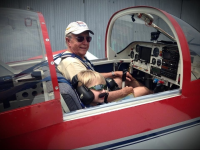
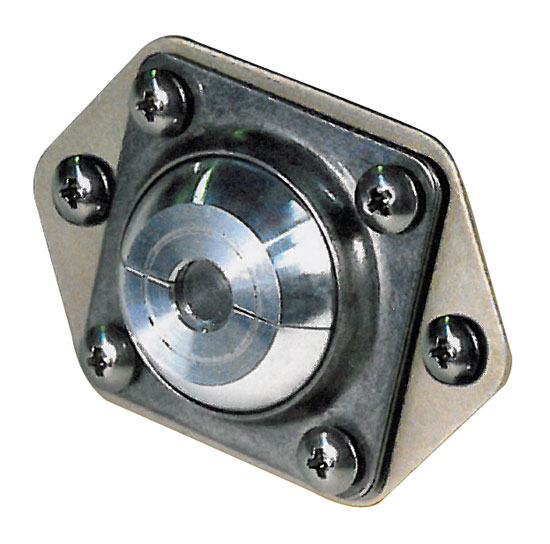
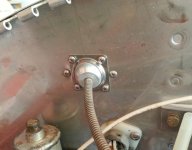
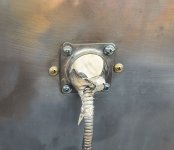
I see lots of discussion about fire warning systems. I'm curious about the "what then?" If you're cruising along at 9500' MSL, and your engine catches fire (and it's not a fuel-fed fire that you can mitigate by shutting off the fuel valve), it's gonna be a few minutes before you get on the ground. Smoke, fumes, heat, flames in the cockpit? Maybe. This all weighs into my personal decision - I wear a parachute every time I fly, as do my passengers. There are too many scenarios - fire, engine loss over the Sierras/at night/IFR, structural failure, control failure - that can't be solved no matter how skilled you are at dead-sticking an RV into a field. I also won't fly passengers whom I judge incapable of bailing out in such an eventuality, as I don't want to have to choose between trying to land a burning aircraft and abandoning a passenger. My RV-8A has quick-release pins on the canopy rollers so I can jettison it; I understand that it can't be opened in flight.
I realize all this is a personal risk management decision, and not everyone will feel the same. But I'm coming off of 26 years/5000 hours of flying attack helicopters, 24 combat deployments, and about half of that time in a single-engine helicopter (AH-6) with plenty of night overwater training. You'll never eliminate risk, but you sure can minimize it beyond flying a single-engine experimental aircraft (especially one that you didn't build yourself, like mine) with no way to leave the aircraft behind.
I just read an excellent article by someone you may have heard of... I strongly agree with his points.
Unusual Attitude