

Van's Air Force

The definitive Van's Aircraft support community! Buying, building or flying an RV? Join our exclusive family of mentors and enthusiasts!

Experience with the Lockwood Rotax 916 Package

hk1232

Member
I'm about to order my engine and prop, but before I pull the trigger on the traditional Lycoming directly from Vans I wanted to revisit the community and see whether anyone has gone down the Lockwood / Rotax path.

I was excited when the combo was announced a couple years back but the initial price tag for the whole package (engine, prop, et al) was literally double the Lycoming / Hartzell combo directly from Vans. It seems hard to justify the difference and it is really more of a want than a need.

So,
1. Has anyone ordered this and have a story to tell?
2. Are there major pieces included in the Lockwood solution that I didn't price into the traditional alternative that dramatically reduces the cost differences?
3. Is there some reasonable TCO where the cost gap between the two erode?
4. Is this so much more plug-and-play that I should position in my mind as paying a premium for a quick-build equivalent?
 
I really wanted one for the performance when they first announced it - and I assumed they actually wanted to sell some kits. Then I saw the price, and realized that no, they never really intended to sell many kits.
 
I looked at it and punched some numbers when I was looking at a project. Fuel burn with the engine isn't significantly less, while you can burn mogas, unless you 'haul you own', there aren't a lot of airports that carry mogas. I concluded that the couple gallons an hour on a long cross country, would take a long time to recoup the benefits of the Rotax.

The other factor, having owned other planes with a Rotax, service is few and far between unless you are near a major city. Granted, I have done most everything by myself, as many of you also do, but if you're on a cross country and have an issue, you may be in a predicament finding help. I have gone back to the old standby Lyc/Cont. engines for this reason. I still have a RANS S-7 with a 912, but it is mainly my quasi STOL bushplane that I keep at my propert here in the northwoods.

The cost defferential of the Lockwood FWF kit, vs going with the old standard Lyc, is a LOT of gas money. On those long cross countries and you have an issue, most airports have a guy that can help out instead of them having the 'deer in the headlights' look when you tell them you have a Rotax that needs looking at. JMHO.

Having said this, I am still intriqued with the Lockwood offering even though I have decided against it for now.
 
The firewall forward includes the cowling, it's comprehensive. Ian has brought it to Petit Jean twice and offers rides. He says they have a few dozens sold. It's a nice kit! I'm installing a 916 on my new SuperCub build, it's becoming a favorite in the STOL community.

Don't forget to upgrade your account, tis the season! https://vansairforce.net/account/upgrades
 
I took the leap last week. I'm so excited! Now I just need to find a cost effective 9A as no way I want to wait a year for a kit. So... if anybody has an unfinished project or kit out there, please contact me.

Is it expensive, yes, and I'm having problems making the numbers work, but it is a super complete kit. And it seems to me, if specs confirm as advertised, the efficiency and speed at altitude will be fantastic. And, I live in Colorado and Florida, so a it seems to me, most people seem to be discounting the performance, particularly out West. I watched the Telluride video on RV916.com and it sold me. As an added bonus, my initial phone interactions with Lockwood's Phil and Tisha have been outstanding. I want to do business with people like them!

I'm all on in 916is -- and maybe I'm missing something? Lastly, regarding Cub on 916, yes that could be awesome too and I've literally and physically gone down that path. I learned the very hard way. Unless you move engine mount massively forward (on an existing Lycoming design) like Lockwood did, you will have problems with CG when all the weight is removed from the firewall forward. Not to mention poor cooling. Put an even lighter prop on it, and the problem gets even worse. Tandem seating? Forget it.

Just my two cents and JMHO.
 
I took the leap last week. I'm so excited! Now I just need to find a cost effective 9A as no way I want to wait a year for a kit. So... if anybody has an unfinished project or kit out there, please contact me.

Is it expensive, yes, and I'm having problems making the numbers work, but it is a super complete kit. And it seems to me, if specs confirm as advertised, the efficiency and speed at altitude will be fantastic. And, I live in Colorado and Florida, so a it seems to me, most people seem to be discounting the performance, particularly out West. I watched the Telluride video on RV916.com and it sold me. As an added bonus, my initial phone interactions with Lockwood's Phil and Tisha have been outstanding. I want to do business with people like them!

I'm all on in 916is -- and maybe I'm missing something? Lastly, regarding Cub on 916, yes that could be awesome too and I've literally and physically gone down that path. I learned the very hard way. Unless you move engine mount massively forward (on an existing Lycoming design) like Lockwood did, you will have problems with CG when all the weight is removed from the firewall forward. Not to mention poor cooling. Put an even lighter prop on it, and the problem gets even worse. Tandem seating? Forget it.

Just my two cents and JMHO.
Welcome to VAF! I think you'll find the 916 is an amazing powerplant. Dragged a Carbon Cub to 37,000 feet not long ago. The Rotax engines are different in many ways from the Lycomings & Contis that are the legacy backbone of GA. But different does not mean bad or unreliable. There is a learning curve, but hey we do this for the educational fun don't we? Best of luck with your project, keep us up to date. - JJR
 
I took the leap last week. I'm so excited! Now I just need to find a cost effective 9A as no way I want to wait a year for a kit. So... if anybody has an unfinished project or kit out there, please contact me.

Is it expensive, yes, and I'm having problems making the numbers work, but it is a super complete kit. And it seems to me, if specs confirm as advertised, the efficiency and speed at altitude will be fantastic. And, I live in Colorado and Florida, so a it seems to me, most people seem to be discounting the performance, particularly out West. I watched the Telluride video on RV916.com and it sold me. As an added bonus, my initial phone interactions with Lockwood's Phil and Tisha have been outstanding. I want to do business with people like them!

I'm all on in 916is -- and maybe I'm missing something? Lastly, regarding Cub on 916, yes that could be awesome too and I've literally and physically gone down that path. I learned the very hard way. Unless you move engine mount massively forward (on an existing Lycoming design) like Lockwood did, you will have problems with CG when all the weight is removed from the firewall forward. Not to mention poor cooling. Put an even lighter prop on it, and the problem gets even worse. Tandem seating? Forget it.

Just my two cents and JMHO.
Really excited to see this post, and hope that you will share the experience as you work through the project.

I had an RV-916 super high on my list for 'next build' and it's probably a more appropriate selection for me based on the mission. I'm starting a -15, but the whole time I think the RV-916 is going to be in the back of my mind like the one that got away.
 
I took the leap last week. I'm so excited! Now I just need to find a cost effective 9A as no way I want to wait a year for a kit. So... if anybody has an unfinished project or kit out there, please contact me.
To put some time perspective on this, the RV-9A tail kits are in stock, the wing kit has an 8-week lead time, and both the fuselage and finish kits are running 22 weeks. Yes, the Quickbuild options take longer (39 weeks, currently, for the fuse and wing), but we're really proud of the fact that we got the lead times down on most of the kits!
 
To put some time perspective on this, the RV-9A tail kits are in stock, the wing kit has an 8-week lead time, and both the fuselage and finish kits are running 22 weeks. Yes, the Quickbuild options take longer (39 weeks, currently, for the fuse and wing), but we're really proud of the fact that we got the lead times down on most of the kits!
Thank you for the detailed update & congratulations on the lead time reduction. That's great news, but unfortunately, I'm only interested in the Quickbuild kits at this point in my life, as 39 weeks seems like, well, a lifetime! My RV-10 is EAB from Flyer Brazil. Are you at liberty to elaborate on whether the RV-9A QB kits come from Brazil or the Philippines & if there is any hope of pulling in those lead times as well? Lastly, (since I'm here), I have an RV-15 wing kit ordered, but only interested in it for floats. Any updated info on RV-15 float options/capabilities/attach points, etc.. I'm assuming structural attach points designed by default out of the gate...?
 
Anyone know if the airspeeds were ever revisited by Van's for the Lockwood setup? I remember reading in one of the early articles that Van's was kicking around a change, given the Rotax will push the 9 along far faster at altitude.
 
Anyone know if the airspeeds were ever revisited by Van's for the Lockwood setup? I remember reading in one of the early articles that Van's was kicking around a change, given the Rotax will push the 9 along far faster at altitude.
Faster at altitude is going to be an issue for busting Vne. Unless there is some kind of magic the engineers can “redesign”, I would not want to be busting Vne. Whether down low, where there are physics at play that are going to mean pushing the engine harder, or, up high, where the thinner air allows the engine to push the airframe closer to Vne easier, the airframe traveling through the air will be a serious limit to the speed no matter what altitude. The True Airspeed, the actual speed at which the airframe is traveling through the air, does not change just because there is a different engine propelling the airframe through that air.
 
Faster at altitude is going to be an issue for busting Vne. Unless there is some kind of magic the engineers can “redesign”, I would not want to be busting Vne. Whether down low, where there are physics at play that are going to mean pushing the engine harder, or, up high, where the thinner air allows the engine to push the airframe closer to Vne easier, the airframe traveling through the air will be a serious limit to the speed no matter what altitude. The True Airspeed, the actual speed at which the airframe is traveling through the air, does not change just because there is a different engine propelling the airframe through that air.
Here's a snip from Paul's article I was referencing. Was just curious if Van's did indeed officially change their approval language.

Now a word on never-exceed speeds, or Vne. Lockwood is working with Van’s and the two are getting comfortable with a “split Vne” concept. Most RV pilots now know (because Van’s has published this many times) that Vne for most of their airplanes is actually determined as a true airspeed to prevent flutter. The RV-9’s Vne is typically set at 185 knots, but Van’s is close to approving a flutter-limited airspeed of 200 knots—but you also have to observe an indicated airspeed limit of 185 knots. (That is, Vne is 185 KIAS or 200 KTAS, whichever comes first.)

Getting in, you’ll hardly notice anything different about the airplane. Until you start it up. That’s because aside from the dorsal fin, this is pure RV-9A from the firewall aft.
The only place where you are likely to see an IAS that high is close to the ground in a dive. So, practically speaking, it’s not a concern. But just like the faster RV brothers, the RV-9 with a Rotax now has to be flown carefully because it is very easy to drop the nose in the descent from a high-altitude cruise and end up right at the even higher 200-KTAS Vne. Incidentally, the limits are not yet officially approved, but they are moving in that direction.
 
Yes, I too was/am concerned about flutter and I asked Lockwood about that, but I just can't remember what we discussed. I do know that they apparently, along with Van's I believe (but don't quote me on that) have spin tested it, and it checked out well. My current understanding is that Vne is always a True Airspeed, but I could be wrong.

I'm also thinking about possible mountain wave gust/G loading at altitude & speed. In fact (save the negative comments), I'm even "considering" a chute since it makes my wife happy & we are talking about the bleeding edge here for experimental. Per Lockwood, there is a net 80 lbs of savings so it maybe would be a wash, but I have not looked into it yet, especially how it may impact the CG that they worked so hard to keep centered by extending that nose. Not to mention, this makes the costing math even worse, as in might as well just go buy a VL-3 or even a Sling, or a ...?

Thanks for the info on the 9a Sidewinder. I did see that, but that airframe work is a bridge too far for me to cross, as I will be at my patience and technical limits just with the firewall forward and panel stuff. I'm in S. Fl. close to Lockwood, so I asked if they would just do a conversion for me, but the said they don't currently have the resources, but may one day consider that as an option.
 
I'm about to order my engine and prop, but before I pull the trigger on the traditional Lycoming directly from Vans I wanted to revisit the community and see whether anyone has gone down the Lockwood / Rotax path.

I was excited when the combo was announced a couple years back but the initial price tag for the whole package (engine, prop, et al) was literally double the Lycoming / Hartzell combo directly from Vans. It seems hard to justify the difference and it is really more of a want than a need.

So,
1. Has anyone ordered this and have a story to tell?
2. Are there major pieces included in the Lockwood solution that I didn't price into the traditional alternative that dramatically reduces the cost differences?
3. Is there some reasonable TCO where the cost gap between the two erode?
4. Is this so much more plug-and-play that I should position in my mind as paying a premium for a quick-build equivalent?


Well, I’ll take the bait. Here’s my two cents.

I like the 9 with a lycoming.

I really like the more expensive Rotax and will choose that route if possible.

Why …

  1. Super easy to start hot, warm, cold … high or Low DA
  2. It runs easily on unleaded fuel (newer lycomings can too)
  3. It can do a sustained climb without overheating
  4. It is quite (airports don’t get noise complaints with the public wanting the airport shutdown)
  5. The turbo keeps power going all the way to where you need IFR and oxygen
  6. I’ve flown to Oshkosh 5 times in an RV-12 from California round trip and the 912 ULS/iS ran perfectly
  7. It runs lean of peak automatically giving me more time to manage other flight responsibilities
  8. Zara Rutherford flew a Rotax powered plane around the world
  9. Mike Blythe and James Pitman have flown a Rotax powered plane all over the world and built their company around the engine
  10. Rotax dominates the light sport market with 10,000 engines in service
  11. The 916iS is the culmination of decades of testing and improvement with significant USA based support
  12. There are enough folks familiar with Rotax, finding someone to fix it hasn’t been an issue
  13. Nothing is perfect, but Rotax has earned my respect
  14. Choice is good; competition inspires innovation and choice for the marketplace
  15. A Rotax powered RV-9(A) combines a proven airframe with a modern engine resulting in a fantastic plane with fixed gear that insurance companies like and don’t have to charge exorbitant premiums
Anyway, hope that helps. And no matter what you choose, the RV will bring out that wonderful grin! 😃✌🏻
 
  1. I’ve flown to Oshkosh 5 times in an RV-12 from California round trip and the 912 ULS/iS ran perfectly
I've flown my RV9A from Texas to Oshkosh 9 times and it ran perfectly. This really doesn't mean anything or convey value.


  1. Zara Rutherford flew a Rotax powered plane around the world
  2. Mike Blythe and James Pitman have flown a Rotax powered plane all over the world and built their company around the engine
  3. Rotax dominates the light sport market with 10,000 engines in service
  4. The 916iS is the culmination of decades of testing and improvement with significant USA based support
This is just marketing, also does not convey value.

I'm not against the Rotax - it's a great choice - but facts are facts, and marketing is marketing.
 
Well, I’ll take the bait. Here’s my two cents.

I like the 9 with a lycoming.

I really like the more expensive Rotax and will choose that route if possible.

Why …


  1. There are enough folks familiar with Rotax, finding someone to fix it hasn’t been an issue
Anyway, hope that helps. And no matter what you choose, the RV will bring out that wonderful grin! 😃✌🏻
Unfortunately, that isn't the case up here in the northern part of Minnesota. There may be authorized repair places, but they are quite a ways away from my location. I've flown from my place to the west coast twice in the past couple of years delivering airplanes, the last trip in a rotax powered RANS S7, doubt I would have found anyplace that would have been able to help if I had an issue on the flight. They are great engines, but if you have an issue, can be a bugger.

As a side note, I am looking at the possibility of running the 916 or an Edge Performance engine on my next (possible) project which will be a Bad Lands Traveler. As was mentioned, it will probably need an ungainly looking extended engine mount to help with the CG.
 
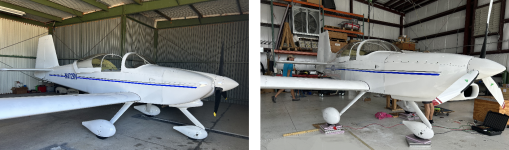
It's flying about 10 hours now. A turbo RV-9 is a nice upgrade. We are still expanding the envelope, but have flight tested to the 200 KTAS red line Vne that Lockwood and VANs allow for. We just got IFR cert so we can test at altitude soon.
 
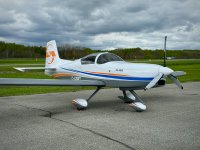
If you can make it through all the ads, here's another walkaround of the Rotax. I'd still love the setup, but my stomach flips a bit with the cost. Maybe plane #2.

RV9A Rotax
 
Damnit. I'm going to end up having to find a way to justify this project...

I don't need 190 knots at FL190. But I really, really want it.
I'm with you. It's great to see a customer version of this plane getting finished up and I can't wait to see more. I have the RV-916 is the top of my list to own and fly, but I was more interested in building the '15. I really hope I manage to finish this one and take on a 3rd.
 
I know Lockwood said it was "in discussion" a long time ago, but did Van's ever come out with new recommendations on the -9 speeds? Given the amount of guidance over the years about speed increase dangers in the 9 by people adding 20 hp, I'm curious what has changed the perspective. From what I gather, the Lockwood package didn't change much at all from a structural standpoint (outside of FWF and tail fiberglass), and the Rotax seems to go well beyond what putting a -360 on the 9 does. So what's the new guidance that now lets people confidently talk about hitting 190+ knots?
 
I know Lockwood said it was "in discussion" a long time ago, but did Van's ever come out with new recommendations on the -9 speeds? Given the amount of guidance over the years about speed increase dangers in the 9 by people adding 20 hp, I'm curious what has changed the perspective. From what I gather, the Lockwood package didn't change much at all from a structural standpoint (outside of FWF and tail fiberglass), and the Rotax seems to go well beyond what putting a -360 on the 9 does. So what's the new guidance that now lets people confidently talk about hitting 190+ knots?
Brandon,

Phil Lockwood worked with the Vans Engineering Team to approve an increase the RV-9 True Airspeed Vne to 200 kts. This matches up with the RV-7 and RV-8 TAS Vne, which are already published as 200 kts. The indicated airspeed Vne (structrual Vne) of a 916 RV-9 remains unchanged at 182 kts. When the 916 RV-9 is up high, it can achieve 200 kts TAS while still indicating well below the red line Vne of 182 kts. A pilot must monitor TAS and limit at 200kts (which is easy with a G3X or similar PFD).

I have flown my airplane to both red lines (182 kts IAS and 200 kts TAS) in flight testing and all is fine with my airframe. Some might want to push the airplane further, but that would need a formalized high speed flutter testing project to validate the safety at a higher TAS Vne. An experienced test pilot would be best for this kind of testing. As for me, I'm happy living with the current limits as stated by Vans and Lockwood.
 
Faster at altitude is going to be an issue for busting Vne. Unless there is some kind of magic the engineers can “redesign”, I would not want to be busting Vne. Whether down low, where there are physics at play that are going to mean pushing the engine harder, or, up high, where the thinner air allows the engine to push the airframe closer to Vne easier, the airframe traveling through the air will be a serious limit to the speed no matter what altitude. The True Airspeed, the actual speed at which the airframe is traveling through the air, does not change just because there is a different engine propelling the airframe through that air.
VNE is based on indicated airspeed, and as you fly higher in altitude, your indicated airspeed decreases.
 
On most GA designs, you are correct. However, Vans does limit VNE by true airspeed.
Yes, for reasons of flutter I understand -- however, as you fly higher and higher, your indicated airspeed decreases, too. And, true airspeed vs indicated airspeed increases roughly 2-percent per every 1000 feet increase in altitude. So, this must be subtracted from your indicated VNE to compensate. Most GA aircraft mark their indicated VNE to handle True VNE for its entire operating range. But, I guess Van's doesn't do that?
 
Last edited:
Brandon,

Phil Lockwood worked with the Vans Engineering Team to approve an increase the RV-9 True Airspeed Vne to 200 kts. This matches up with the RV-7 and RV-8 TAS Vne, which are already published as 200 kts. The indicated airspeed Vne (structrual Vne) of a 916 RV-9 remains unchanged at 182 kts. When the 916 RV-9 is up high, it can achieve 200 kts TAS while still indicating well below the red line Vne of 182 kts. A pilot must monitor TAS and limit at 200kts (which is easy with a G3X or similar PFD).

I have flown my airplane to both red lines (182 kts IAS and 200 kts TAS) in flight testing and all is fine with my airframe. Some might want to push the airplane further, but that would need a formalized high speed flutter testing project to validate the safety at a higher TAS Vne. An experienced test pilot would be best for this kind of testing. As for me, I'm happy living with the current limits as stated by Vans and Lockwood.
It’s very encouraging to hear Lockwood and Van’s worked to increase the RV-9 VNE, but as a 9 owner myself, could you point to any published discussion of the increase from Van’s? I’ve found nothing actually coming from Van’s on a VNE increase. Thanks.
 
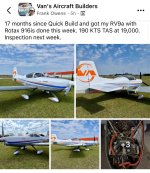
In case you missed this one on Facebook recently:
I like how the builder is claiming 190 knots TAS at 19,000 feet for their new bird, but then state they are waiting on airworthiness inspection. Which would indicate they haven't flown the aircraft yet.
 
It’s very encouraging to hear Lockwood and Van’s worked to increase the RV-9 VNE, but as a 9 owner myself, could you point to any published discussion of the increase from Van’s? I’ve found nothing actually coming from Van’s on a VNE increase. Thanks.
Van’s published an update to Section 15 a couple of years ago - available on their web site. That discusses this.
 
Here's the most recent published Section-15, Revision-9 regarding "VNE and Flutter" found on Van's Aircraft website. It indicates that "True and Indicated" VNE for the RV-9A is 210 MPH or 182 knots, where the other models show 230 MPH or 200 knots. I also find it interesting that they state "True and Indicated" VNE and don't appear to differentiate between the two.

Flutter testing of factory prototypes has resulted in establishing a true and indicated NEVER EXCEED SPEED (Vne) of 210 statute mph for the RV-3,4 and RV-6/6A, 230 statute mph for the RV-7/7A/8/8A. and 210 statute mph for the RV-9A. This speed was determined through flutter testing at a speed of 20 mph above Vne. (FAA certification criteria require flutter testing up to Vne plus 10% or about 20 mph) The flutter testing performed consisted of exciting the controls by sharply slapping the control stick at various speed increments up to this level. Under all conditions, the controls immediately returned to equilibrium with no indication of divergent oscillations indicative of flutter. This testing was performed on factory prototype aircraft, and the flutter free flight operation of subsequent amateur built RVs has substantiated published Vne.

The “slap-the-stick'' method of exciting the controls for flutter testing is potentially dangerous and requires a very skilled pilot trained to recognize the subtle control responses which indicate the onset of flutter. For this reason, it is suggested that amateur builders do not perform flutter testing of their RVs. Rather, the airplane should be constructed in strict conformity to the plans with particular attention paid to the control system--- trailing edge radii, skin stiffness, control linkage free-play, and static balance in particular. Maintaining conformity with the prototype (plans) will provide an adequate level of assurance against control surface flutter. Any design changes to the control surfaces, control system, or primary structure could invalidate the testing which has been done, and require that testing be re-accomplished.
 
Here's the most recent published Section-15, Revision-9 regarding "VNE and Flutter" found on Van's Aircraft website. It indicates that "True and Indicated" VNE for the RV-9A is 210 MPH or 182 knots, where the other models show 230 MPH or 200 knots. I also find it interesting that they state "True and Indicated" VNE and don't appear to differentiate between the two.

Flutter testing of factory prototypes has resulted in establishing a true and indicated NEVER EXCEED SPEED (Vne) of 210 statute mph for the RV-3,4 and RV-6/6A, 230 statute mph for the RV-7/7A/8/8A. and 210 statute mph for the RV-9A. This speed was determined through flutter testing at a speed of 20 mph above Vne. (FAA certification criteria require flutter testing up to Vne plus 10% or about 20 mph) The flutter testing performed consisted of exciting the controls by sharply slapping the control stick at various speed increments up to this level. Under all conditions, the controls immediately returned to equilibrium with no indication of divergent oscillations indicative of flutter. This testing was performed on factory prototype aircraft, and the flutter free flight operation of subsequent amateur built RVs has substantiated published Vne.

The “slap-the-stick'' method of exciting the controls for flutter testing is potentially dangerous and requires a very skilled pilot trained to recognize the subtle control responses which indicate the onset of flutter. For this reason, it is suggested that amateur builders do not perform flutter testing of their RVs. Rather, the airplane should be constructed in strict conformity to the plans with particular attention paid to the control system--- trailing edge radii, skin stiffness, control linkage free-play, and static balance in particular. Maintaining conformity with the prototype (plans) will provide an adequate level of assurance against control surface flutter. Any design changes to the control surfaces, control system, or primary structure could invalidate the testing which has been done, and require that testing be re-accomplished.
I read Section 15 too and didn’t see anything related to Lockwood supposedly increasing the 9A’s Vne with approval from Vans. I’m pretty sure the 210MPH Vne has been in place for years. Perhaps I’m missing something, but it would seem that the “Lockwood/Vans 9A Vne increase” is more urban myth than published fact (but I hope I’m wrong about this).🙂🙂
 
I read Section 15 too and didn’t see anything related to Lockwood supposedly increasing the 9A’s Vne with approval from Vans. I’m pretty sure the 210MPH Vne has been in place for years. Perhaps I’m missing something, but it would seem that the “Lockwood/Vans 9A Vne increase” is more urban myth than published fact (but I hope I’m wrong about this).🙂🙂
Mike - the revision to Section 15 referencing the combined IAS/TAS Vne came out in 2023 (about the timeframe of the Lockwood/Vans collaboration on this project) - “there was a memo about it….” 😉
 
I've always found this video on flutter testing by NASA in 1966 to be very interesting.

Be really careful with terminology.
Classic flutter is often divergent very quickly (less than a second) and results in the wings separating. It is usually unrecoverable.
Control surface flutter is an oscillation of a control surface that can be longer period (a small number of seconds), can be recognised and sometimes reduced/stopped. It may result in the loss of one or more control surfaces. Sometimes called control surface buzz.
Both are aeroelastic instabilities, both are scary, classic flutter is usually fatal.
Control surface balancing is important if planning to regularly fly close to the limits.
 
Be really careful with terminology.
Classic flutter is often divergent very quickly (less than a second) and results in the wings separating. It is usually unrecoverable.
Control surface flutter is an oscillation of a control surface that can be longer period (a small number of seconds), can be recognised and sometimes reduced/stopped. It may result in the loss of one or more control surfaces. Sometimes called control surface buzz.
Both are aeroelastic instabilities, both are scary, classic flutter is usually fatal.
Control surface balancing is important if planning to regularly fly close to the limits.
In this particular case, showing a twin Comanche Horizonal Stabilator entering a "Flutter" situation, I guess your argument and differentiation really needs to be directed to NASA since they were the organization who performed the test and made this video. Van's also describes their Flutter testing as recoverable but highly risky for builders to perform, and they recommend building according to plans and balancing all control services, which I certainly did myself and also checked after painting. (y):cool:(y)
 
Last edited:
Damnit. I'm going to end up having to find a way to justify this project...

I don't need 190 knots at FL190. But I really, really want it.
There are more options. At the price of that firewall forward one could buy a second airplane. A Lancair 360 can blow through 190 knots at about any altitude and can be bought for the price of that firewall forward.
 
I’ve posted this Flutter Primer on VAF before, but newer folks may find it educational:


Classical flutter involves the coupling or two or more aeroelastic vibration modes. Regarding control surface flutter, an example wrt to ‘rudder flutter’ - The flutter mode could consist of the rudder rotation mode coupling with the rudder torsion mode, thus involving only the rudder.

But often the flutter mode may be the rudder rotation mode or the rudder torsion mode coupling with the vertical tail bending mode or the vertical tail torsion mode. So both the rudder and vertical tail are participating in the flutter mode (and not just the rudder alone) and so the vertical tail fails along with the rudder.

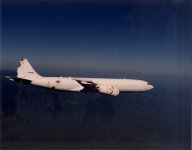
After this Boeing E-6 vertical tail/rudder/tab flutter event the airplane landed safely back at Boeing Field in Seattle. Luckily the E-6 had adequate inherent lateral-directional stability characteristics with the amount of vertical tail that remained.

E-6 Flutter Event Photo.jpg

Regarding TAS Vne’s: Some flutter modes have flutter speeds that follow a TAS line with increasing altitude. An example of these are the so-called "explosive" flutter modes, where there is a large decrease in aeroelastic damping for a small increase in airspeed. "Aeroelastic" damping is Structural Damping plus Aerodynamic Damping. Structural Damping is usually a constant, the value of which depends on the construction design and materials used in the structure. With this type of flutter mode, structural failure can occur in less than a second.

Other flutter modes follow the so-called "half and half" speed line with increasing altitude, roughly midway between EAS (CAS/IAS for us non-Mach challenged RV's) and TAS. An example of these would be the so-called "hump” or “low damped” flutter modes, where there is a small decrease in aeroelastic damping for a large increase in airspeed. It is called a "hump" mode because it looks like a hump when plotted on an Airspeed vs Damping plot. Depending on the characteristics, it is sometimes possible to slow down and back out of these type modes. The Comanche stabilator/tab flutter event in the video posted above fits in this category.

And some flutter modes follow more of an EAS line with increasing altitude.

Choosing a Vne in terms of straight TAS is the conservative call when the flutter characteristics are not well known or understood.
 
Last edited:
Choosing a Vne in terms of straight TAS is the conservative call when the flutter characteristics are not well known or understood.
I learned a lot from the primer in your post, but this was always my impression. Vans was never going to do extensive flutter testing in-house, and they may have legitimate concerns about variability in an amateur-built application, so they are inclined to choose the most conservative limitation and stop there. Whether their expressed limitation holds with more scrutiny is mostly a job for someone else. Lockwood may have been the someone else in this case, or they were willing to relax the limitation in light of the hours flown over a couple decades by RV-9s in the field.
 
Back
Top