Van's Air Force

The definitive Van's Aircraft support community! Buying, building or flying an RV? Join our exclusive family of mentors and enthusiasts!

RV7 Spar Bolt Orientation

mack55

Well Known Member
Patron
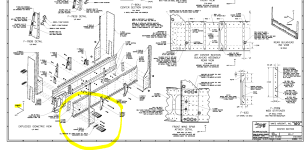
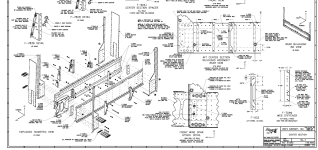
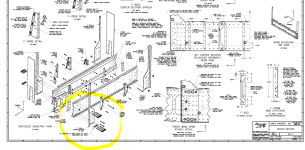
I am going to install the wing mate bolts after drilling the rear spar on my RV7. Drawing 11 shows the NAS close tolerance bolts going in from the back of the spar... I don't think this really matters since the bolts are in mostly shear but I would normally install a bolt like this from the front for additional safety of a nut breaking loose. Am I missing something. Any reason I can't go from the forward side. There is also a kick panel that would keep a bolt from working entirely out. I could see a rear install necessary on an A model as the gear weldments would make the lower holes impossible.

1729344198377.png
 

Attachments

  • 1729344160329.png
    1729344160329.png
    428.1 KB · Views: 24
  • 1729344180642.png
    1729344180642.png
    433.4 KB · Views: 24
I think you could have difficulties installing them from the front due to the taper of the fuselage.

If you have an RV-7, you might find this build log entry useful. The plans depiction of where the washers go on the taildragger model merits some skepticism, so you might want to ponder it before you drive the bolts in for good.
 
I am going to install the wing mate bolts after drilling the rear spar on my RV7. Drawing 11 shows the NAS close tolerance bolts going in from the back of the spar... I don't think this really matters since the bolts are in mostly shear but I would normally install a bolt like this from the front for additional safety of a nut breaking loose. Am I missing something. Any reason I can't go from the forward side. There is also a kick panel that would keep a bolt from working entirely out. I could see a rear install necessary on an A model as the gear weldments would make the lower holes impossible.

View attachment 72399
Having built an RV7 (tail dragger) - I would HIGHLY recommend insertion of the spar bolts as shown in Dwg 11 due to interference on forward side of spar due to bracket F-782D (Dwg 34) and assembled nuts shown on Dwg 34 4-D all interfere with insertion of most outer bolts from front. Another interference is the flange on F-7114. Also - See Dwg 11 10-C which shows fuselage sides getting narrower as you move forward - yet another strong hint of interference issues if attempting to insert from front. I have experience removing & replacing RV7 wings - This is a GREAT TIME to follow the factories drawings.
These are close tolerance bolts - you will need to grease them for insertion and likely end up using gentle persuasion along with dry-ice (chill bolts, insert very quickly) - these bolts are not likely to vibrate anywhere...
My experience you ask: an A&P/IA for decades, built several+ planes, FAA DER (retired decades ago), involved in flight-test & Ops & Configuration changes all my life.
Hope this helps.
 
I think you could have difficulties installing them from the front due to the taper of the fuselage.

If you have an RV-7, you might find this build log entry useful. The plans depiction of where the washers go on the taildragger model merits some skepticism, so you might want to ponder it before you drive the bolts in for good.
This is a general drawing for both A models and tail wheel configuration. You can’t rotate the nuts on the bottom bolts do to the landing gear weldments on the A’s. So the washers goes between the bolt head the wing spare carrie-throgh to prevent rotational maring.
 
Also, if you could conceivably install the bolts from the front, the nuts would be hidden by the seat pans. Installing from the back puts the nuts on the front, visible side. Maybe the ability to visually check them was a consideration as well?
 
  • Like
Reactions: Mel
This is a general drawing for both A models and tail wheel configuration. You can’t rotate the nuts on the bottom bolts do to the landing gear weldments on the A’s. So the washers goes between the bolt head the wing spare carrie-throgh to prevent rotational maring.
Yes, my point was that the drawing is probably tailored for the A model and doesn't work as well for the taildragger, so if you blindly follow the plans (as I did) you end up with a workable but less-than-pretty result.
 
Also, if you could conceivably install the bolts from the front, the nuts would be hidden by the seat pans. Installing from the back puts the nuts on the front, visible side. Maybe the ability to visually check them was a consideration as well?
7 is different from a 6.
On a 7 there is a cover that hides the bolts.

One thing no one has mentioned… if the bolts were installed from front to back (not sure it’s even possible for the outboard ones), it would make the bottom ones even harder to remove than they already are if done per the plans.
 
On the 7 I don't think you can physically install the lower bolts backward because even if the angle of the fuselage sidewall would allow it, the lip on the long edge of the F-7114 fuselage gusset (a part that doesn't exist for the 7A) is is sticking up and I don't think you could get the bolts slid home and get the heads past that lip.

Stick with the plans.
 
I had the same thought as you regarding the direction but after looking at it just followed the drawings. It works and really is a non issue.
 
I'm interested to hear how the install goes.
Frozen bolts or room temp?
What lubricant?
Difficulty from 0-nightmare?
Any special tools?
Brass hammer?
Rivet gun?
Etc?
 
I'm interested to hear how the install goes.
Frozen bolts or room temp?
What lubricant?
Difficulty from 0-nightmare?
Any special tools?
Brass hammer?
Rivet gun?
Etc?
Larry,
I just mounted my wings Friday. Bolts went in at ambient temperature. Applied very thin film of grease and used a hammer to persuade them into place.
If you haven't installed your wings yet, don't make the mistake I did on my first build. The bottom nuts are difficult to install. Don't run the bolt in all the way. Drive it so only 2 or 3 treads are showing then install the nut and tread it on by rotating the bolt from the aft-side, the grease helps with this. Also start with the outboard bolts, that gives you a clear view of bolt you're working on. Top bolts are a breeze.
 
I'm interested to hear how the install goes.
Frozen bolts or room temp?
What lubricant?
Difficulty from 0-nightmare?
Any special tools?
Brass hammer?
Rivet gun?
Etc?
Hey Larry-

I realize you weren't asking me, but here's how it went in my case;

-The bolts spent the previous night in my freezer and came from home in a cooler with ice packs, but I seriously doubt that it did more than just make me feel better.
-we put the wing on with a couple of rig pins and the holes lubed with LP2
-an inspection mirror and flashlight was handy to verify when they were close enough to start thinking about installing a rig pin.
-used a plastic dead blow hammer to encourage the rig pins in, and a wooded dowl rod to help drive them back out when it came time to put a bolt in that hole
-I started each bolt by tapping in with a plastic hammer enough to be sure they were actually going in and not hung up, then drove them the rest of the way with a rivet gun turned down to about 20 psi with a nylon tip set. A flush set against a wood block would work too.

It wasn't to bad. Took two of us about 3 hours to install both wings, My brother in law is an IA I'm an A&P, but my main qualification for this job was owning a plastic BFH.

I know you're building a tricycle gear and that the gear weldments make this a completely different kind of job, but it seem like the majority of that pain will come with getting the nuts torqued down. I can see how a couple of things a guy could do to make this harder than it needs to be would be to shove a rig pin into a hole thats difficult to access the fwd side when the time comes to drive them back out, or to not watch the washer stackup because some have washers under the bolt head rather than the nut.

 
I'm interested to hear how the install goes.
Frozen bolts or room temp?
What lubricant?
Difficulty from 0-nightmare?
Any special tools?
Brass hammer?
Rivet gun?
Etc?
Larry,

Followed the standard drawings and installed as most have mentioned from the rear. No dry ice for me. I used LPS2 on the bolts and a rivet gun with rag to keep from marring the bolt. With some patience the bolts went in. Like all things on this build the other side was done in half the time. I needed to use 2 washers on the top bolts. When I installed the bolts on the left side I put one washer under the bolt head and one under the nut. Worked out perfect. The bottoms only required a single washer.
 
I went through this on the initial fitting. Imo the single thing that will help you get the bolts in or out will be the assistance of another person lifting the end of the wing and getting weight off the bolts.
 
Back
Top