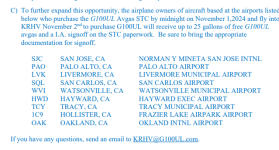
Just saw the news on AVWeb. This should stir the pot a little more on this battle.


Exciting times! Those of you based there will have to give some regular PIREPs.
 
I’d be curious to know what it is selling for. Foreflight shows $7.59 for UL94 so I’m sure G100UL is even more.
 
100LL 5.99 to 8.50 in the SLC area, excluding KSLC at $8.90. Currently $6.23 at my home S. Calif airport. Not just 'a California thing' from my experience in the west.
 
100LL 5.99 to 8.50 in the SLC area, excluding KSLC at $8.90. Currently $6.23 at my home S. Calif airport. Not just 'a California thing' from my experience in the west.
Yea, it's not really a California thing, California's a big place. O22 on Arnav is showing $4.99 for self serve, which is reasonably competitive with 100LL prices across the country.
 
As confirmed by GAMI, Experimentals do not require an STC to use the fuel, so unless you want to pay for the STC anyway, I’m guessing the free fuel offer wouldn’t apply to us.
I wonder if GAMI would give experimentals free 25 gallons to try? that would really spur sales?
 
I wonder if GAMI would give experimentals free 25 gallons to try? that would really spur sales?
As a very well connected person with the whole G100UL project, I can assure you GAMI will not be doing that. They do not produce or own the fuel. They own the patent on the technology/recipe and the manufacturer pays a tiny portion to them to make it. I know you meant it as "tongue in cheek" and it would be fun to see, but don't hold your breath.

The good news is our engines will run much cleaner and healthier on G100UL. I have seen first hand the results of tester the last 12 years and it is about time we all started using it. I can't wait down here :-)
 
Across the bay at KSQL I'm currently paying $6.35 for full-service 100LL (no self serve pump on the field). I'd count that in the range of "expensive, but it's the bay area so you have to pay for the line guy to live somewhere within commuting distance". We also have UL94 for $7.65, but I haven't felt like it would be worth the price difference to try it. At $6.99 I'd probably at least give G100UL a shot to see how the engine runs with it, but I'm probably not going to fly to KRHV to buy it regularly rather than paying less for LL at home. Certainly if a 100LL ban went into effect tomorrow but the other prices stayed the same, it's the option I would pick.

RHV is a good place for them to start this, though - there is a substantial push within the county government that runs the airport to get it shut down, over the usual concerns from property owners in areas that have been developed much past where they were when the airport was built. Leaded gas has come up a lot in those arguments, and so the previously mentioned $7.xx 94UL has been the *only* avgas available there for a while. G100UL coming in cheaper than 94UL and promising to be better for engines than 94UL and better for the environment than 100LL certainly seems like a win. The question, as mentioned, is whether that price is subsidized or if it can be competitive long-term.

 
Did anyone attend the kRHV G100UL rollout and can give a PIREP?

I did not. However, I have seen the county documents, and can share that the fuel is being sold at RHV for cost + taxes. There’s zero markup currently.
 
Across the bay at KSQL I'm currently paying $6.35 for full-service 100LL (no self serve pump on the field). I'd count that in the range of "expensive, but it's the bay area so you have to pay for the line guy to live somewhere within commuting distance". We also have UL94 for $7.65, but I haven't felt like it would be worth the price difference to try it. At $6.99 I'd probably at least give G100UL a shot to see how the engine runs with it, but I'm probably not going to fly to KRHV to buy it regularly rather than paying less for LL at home. Certainly if a 100LL ban went into effect tomorrow but the other prices stayed the same, it's the option I would pick.

RHV is a good place for them to start this, though - there is a substantial push within the county government that runs the airport to get it shut down, over the usual concerns from property owners in areas that have been developed much past where they were when the airport was built. Leaded gas has come up a lot in those arguments, and so the previously mentioned $7.xx 94UL has been the *only* avgas available there for a while. G100UL coming in cheaper than 94UL and promising to be better for engines than 94UL and better for the environment than 100LL certainly seems like a win. The question, as mentioned, is whether that price is subsidized or if it can be competitive long-term.
$7/gallon is not competitive long term but not in the way that you think lol the price needs to go way down.
 
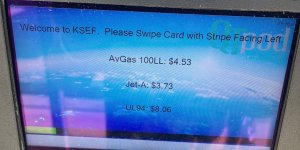
Local airport started selling UL94. I'd love to start using unleaded fuel and have my O2 sensors last more than a month but for an extra 3 dollars a gallon not going to happen.
 

Attachments

  • Screenshot 2024-11-09 173803.jpg
    Screenshot 2024-11-09 173803.jpg
    206.8 KB · Views: 66
GAMI mention in a Avweb post that there will soon be a second airport in Ca selling G100UL. Does anybody know which airport?
 
I'm based at KRHV and saw the G100UL launch. I was in the final stages of my CFI checkride prep so I decided to pass on G100UL on the launch date but plan to start using it. As others have mentioned, the $6.99 price is not bad considering that KSJC sells 100LL at > $11 per gallon. I suspect that I will still get cheaper 100LL when I do go to places like Tracy or Columbia where it is currently less than $5.25 per gallon but it's nice to not have to go somewhere to refuel (or at the end of a long trip).

G100UL is not yet available at the other Santa Clara County airport with the 100LL ban (E16) so perhaps that's the second airport? In related news, it looks like Swift now has an STC for their 100R fuel and has an arrangement for it to be used in some of the 172s at San Carlos Flight Center: https://www.avweb.com/aviation-news/california-flight-school-using-swift-100r-in-its-172s/

Vas
 
Some people will feel good paying this stratospheric high price. I don't.
That is about the price I've been paying for 100LL in northern CA/southern OR. I'd be delighted to pay that price.
GAMI mention in a Avweb post that there will soon be a second airport in Ca selling G100UL. Does anybody know which airport?
If I had to guess, I would say either PAO or E16.
 
Has anyone seen the G100UL detonation test report online?
It is part of the GAMI presentation they presented at Osh. There was a link in one of these vansairforce forum's post to it, to a youtube video of the presentation where he presented this data. also presented data on 94UL.
 
Cleaner and healthier except for the valves. The valves like the lead.
I have not seen any data that suggested this old wives tale is true. if you have data, I would love to see it. The lead is in suspension as part of a molecule. I don't see lead coating the valves or any other metal, so I cant see how it would affect anything.
 
It is part of the GAMI presentation they presented at Osh. There was a link in one of these vansairforce forum's post to it, to a youtube video of the presentation where he presented this data. also presented data on 94UL.
I was looking for a G100UL written report similar to the UL94 test report out the FAA tech center.
 
I have not seen any data that suggested this old wives tale is true. if you have data, I would love to see it. The lead is in suspension as part of a molecule. I don't see lead coating the valves or any other metal, so I cant see how it would affect anything.
This idea originates in old design engines from the pre-unleaded era. The valve seats in such engines required the lead to cushion the impact of the closing valve. That's why converting an old car to unleaded gas requires head work (for hardened valve seats). Modern aero engines have this metallurgy already in play, so there's no reason to expect valve problems. Time will tell.
 
This idea originates in old design engines from the pre-unleaded era. The valve seats in such engines required the lead to cushion the impact of the closing valve. That's why converting an old car to unleaded gas requires head work (for hardened valve seats). Modern aero engines have this metallurgy already in play, so there's no reason to expect valve problems. Time will tell.
I wonder if the valve recession issues on older engines without hardened valve seats were really a detonation issue? Maybe the switch from leaded fuel to unleaded fuel impacted these valves (pun intended) due to the subsequent reduction in octane, or anti-knock qualities of the fuel, and not the absence of lead. There seems to be insufficient data to separate out the possible causes.
 
I wonder if the valve recession issues on older engines without hardened valve seats were really a detonation issue? Maybe the switch from leaded fuel to unleaded fuel impacted these valves (pun intended) due to the subsequent reduction in octane, or anti-knock qualities of the fuel, and not the absence of lead. There seems to be insufficient data to separate out the possible causes.
In the automotive world, the causes and effects were clear. The modifications to go from leaded to unleaded fuel are limited to valve seats on most engines of the era. There was usually no requirement to reduce compression ratio, for example.
 
In the automotive world, the causes and effects were clear. The modifications to go from leaded to unleaded fuel are limited to valve seats on most engines of the era. There was usually no requirement to reduce compression ratio, for example.
but the question remains, if one reduced the compression ratio when switching to unleaded fuel, would it have cured the valve seat recession issue?
 
In this article Mike Busch talks about the causes of exhaust valve/seat recession. Note that Lycoming switched to hardened exhaust valve seats more than 30 years ago.

Yes, there are 100s, perhaps 1000s of Lycoming-powered aircraft around the world flying with mostly unleaded fuel without valve problems.
 
but the question remains, if one reduced the compression ratio when switching to unleaded fuel, would it have cured the valve seat recession issue?
I don't think it had anything to do with detonation. Liquid cooled engines can run way higher compression without detonation. I believe automotive compression ratios at that time were around 8 to 1. Now days 10 to 1 is common, still without detonation concerns.
 
This idea originates in old design engines from the pre-unleaded era. The valve seats in such engines required the lead to cushion the impact of the closing valve. That's why converting an old car to unleaded gas requires head work (for hardened valve seats). Modern aero engines have this metallurgy already in play, so there's no reason to expect valve problems. Time will tell.
Ya know, I ran 1960's vintage Volvo B-20 engines with 10:1 CR on both leaded and unleaded fuel for years and years. Those were cast-iron heads with the valve seats cut right into the iron. I noticed absolutely no difference in the valve seat area after 150,000 miles during tear-downs. In both cases, a very light touch-up of the seats was done just to refresh while I was in there. ( I did find that with 10.5:1 CR, the Mahle pistons would tend to break compression rings, so I backed off to 10:1. No trouble there.)
I had heads that had run for 500,000 miles. So, I really think the valve-seat issue was just a fear-mongering to try to delay introduction of unleaded auto fuels.
 
Ya know, I ran 1960's vintage Volvo B-20 engines with 10:1 CR on both leaded and unleaded fuel for years and years. Those were cast-iron heads with the valve seats cut right into the iron. I noticed absolutely no difference in the valve seat area after 150,000 miles during tear-downs. In both cases, a very light touch-up of the seats was done just to refresh while I was in there. ( I did find that with 10.5:1 CR, the Mahle pistons would tend to break compression rings, so I backed off to 10:1. No trouble there.)
I had heads that had run for 500,000 miles. So, I really think the valve-seat issue was just a fear-mongering to try to delay introduction of unleaded auto fuels.
Possible, but the British Roadster crew would disagree, at least in their cases. There's probably all possible variations from "no problem" to "no compression" in the wild.
 
I wonder if the valve recession issues on older engines without hardened valve seats were really a detonation issue? Maybe the switch from leaded fuel to unleaded fuel impacted these valves (pun intended) due to the subsequent reduction in octane, or anti-knock qualities of the fuel, and not the absence of lead. There seems to be insufficient data to separate out the possible causes.
I believe that's exactly what George Braly from GAMI was asserting (with data) in regards to the UL94 issues that UND experienced. He said it was caused by knock, which was an insufficient octane problem. G100UL does not have the same problem.
 
Although the different unleaded fuels have been “tested” to be ok to mix with 100LL, is anyone concerned with mixing different manufacturer’s unleaded, which I am sure has not been tested.
Here is a notice that AOPA put out to beware and not mix different unleaded fuels.

“Misfueling can lead to catastrophic engine failure, which is why clear communication between pilots and line service personnel is essential. Pilots should confirm the limitations of their STC for the engine and airframe. And, when placing full-service fuel orders, confirm every detail of the order—including type, grade, and volume—with line service personnel, or be aware of these factors when conducting self-service fueling. Aircraft must also have proper logbook documentation and placards that support conformance with the applicable STC and accurate fueling.
“It is important to note that while the new unleaded fuels are designed to mix with 100LL, it remains uncertain whether they can be safely mixed with each other. Until more information is available, unleaded fuels must not be combined. Again, each engine and/or aircraft may have specific limitations that aircraft owners need to be aware of when fueling their aircraft.
 
True, but 100LL doesn’t stain like the new G100UL reportedly does. Apparently the stains from G100UL are either very hard to remove or cannot be removed. Need more info on that aspect of the fuel.
The GAMi website has a whole page about this.
 
The GAMi website has a whole page about this.

True, but 100LL doesn’t stain like the new G100UL reportedly does. Apparently the stains from G100UL are either very hard to remove or cannot be removed. Need more info on that aspect of the fuel.
"Staining" is the sales-friendly term for the problem. If one studies the MSDS for G100UL, it is composed of up to 40% xylene. Xylene is used in paint strippers. No thanks.
 
Last edited: