Van's Air Force

The definitive Van's Aircraft support community! Buying, building or flying an RV? Join our exclusive family of mentors and enthusiasts!

High EGT Warning on G3X with EGT Temp approx. 1500F-1550F, Is This Normal?

jackking123

Well Known Member
Patron
Running about 5300-5350 RPM, got G3X EGT going RED, recall over 1530 or 1550F. It was on two cylinders.
How common is this. I reduced power. The RED warning went away and it was at or below 1500F.*
New to ROTAX, not having mixture. All you can do is power back, or is this normal.
It was hot 85F, high humidity at 1500' MSL, Est. density altitude 2500' to 3000'.

* Poor flight test pilot, did not take notes and using memory. Exact EGT Temps I don't recall.
 
You can also go forward on throttle and get it out of eco mode which will richen the mixture and cool EGT's. At least that's how I was taught.
God Bless, Mo POWER... When in doubt GAS IT... Ha ha. That makes a sense. The throttle is marked rich in the higher end. As long as you are below 5500 RPM that is the way to cool it, go into full rich range or reduce power. Thank you kindly. (y)
 
EGT failures?
Swop them around and see if the fault reoccurs.
I've had it on one cylinder.

John.
Yep thank you... but they are all fairly even, and two were peaking at same time. The engine just had a scan and all sensors were OK. I think it was just conditions, power setting. However it was not beyond limits. The G3X is trigging warning over 1500F. Normal is 1300-1500F. I recall it got to 1525F. Reducing power made it go lower. From what I can find 1616F is Max. Your comment is appreciated, keeping an eye on it.
 
Below are quotes from Mike Busch at https://www.savvyaviation.com/wp-co...,powerplant mechanic with inspection authori-
High EGTs do not represent a threat to cylinder longevity the way high CHTs do.
Therefore, limiting EGTs in an attempt to be “kind to the engine” is simply misguided.
. . .
Absolute values of EGT are simply not meaningful and are best ignored. There is no such thing
as a maximum EGT limit or redline, and trying to keep absolute EGTs below some
particular value—or even worse, leaning to a particular absolute EGT value—is simply
wrongheaded. Don’t do it. If you must fixate on those digital engine monitor readouts,
fixate on something important, like CHT
 
I suggest that the EGT alarm setpoint be be raised to 2000 degrees.
I am not disagreeing, and it confused me. However new to ROTAX I am not assuming it is like the Lyc or Continental air cooled engines Mike is referencing.

Below are quotes from Mike Busch at https://www.savvyaviation.com/wp-content/uploads/2023/12/EAA_2010-10_egt-myths-debunked.pdf#:~:text=Mike Busch, has been a,powerplant mechanic with inspection authori-
High EGTs do not represent a threat to cylinder longevity the way high CHTs do.
Therefore, limiting EGTs in an attempt to be “kind to the engine” is simply misguided.
. . .
Absolute values of EGT are simply not meaningful and are best ignored. There is no such thing
as a maximum EGT limit or redline, and trying to keep absolute EGTs below some
particular value—or even worse, leaning to a particular absolute EGT value—is simply
wrongheaded. Don’t do it. If you must fixate on those digital engine monitor readouts,
fixate on something important, like CHT

You are 1000% correct. However I am new to Rotax (2 years as a CFI and EAA Tech counselor) . High EGT is not key but CHT.
The ROTAX is water cooled and oil cooled. Even with EGT flashing red, water temp, oil temp and CHT were solidly in the cool end of green. Just being conservative.
 
Last edited:
I suggest that the EGT alarm setpoint be be raised to 2000 degrees.
I don't think so. I had a manifold pressure sensor that was faulty and reported a much lower MP, so my system interpreted that as the engine needed lower fuel flow when in fact needed a much higher fuel flow and went lean, very lean. Temps over 1500 F EGT need to be understood. Doubt this is normal. Please post if anyone has seen EGT's over 1,500 F, doubt there will be many.

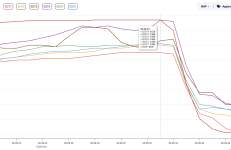
Screenshot 2026-05-28 222137.png
 
Below are quotes from Mike Busch at https://www.savvyaviation.com/wp-content/uploads/2023/12/EAA_2010-10_egt-myths-debunked.pdf#:~:text=Mike Busch, has been a,powerplant mechanic with inspection authori-
High EGTs do not represent a threat to cylinder longevity the way high CHTs do.
Therefore, limiting EGTs in an attempt to be “kind to the engine” is simply misguided.
. . .
Absolute values of EGT are simply not meaningful and are best ignored. There is no such thing
as a maximum EGT limit or redline, and trying to keep absolute EGTs below some
particular value—or even worse, leaning to a particular absolute EGT value—is simply
wrongheaded. Don’t do it. If you must fixate on those digital engine monitor readouts,
fixate on something important, like CHT
poor advice from mike. Watching egts is important. They shed light on what is happening in your combustion process. A great example is catching a failed ignition in one or all cylinders by observing high egts.

Know how your egts normally react to each unique combination of engine performance variables and you will be much better at catching issues when they arise. Combining with cht can help to identify partially clogged injectors.
 
Last edited:
I don't think so. I had a manifold pressure sensor that was faulty and reported a much lower MP, so my system interpreted that as the engine needed lower fuel flow when in fact needed a much higher fuel flow and went lean, very lean. Temps over 1500 F EGT need to be understood. Doubt this is normal. Please post if anyone has seen EGT's over 1,500 F, doubt there will be many.

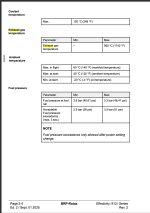
View attachment 118968
Yes, i have seen as high as 1600 (that was well lop) when one of my ignition systems failed. See post above. The gross timing retardation from running on one plug will raise egt 150-200 degrees.
 
Last edited:
The POH now states 1742F as the maximum.. which I think might be the sensors max. It seems as the sensors age, they start to read slightly more and more elevated temperatures.. until finally they fail. I've already had to replace 2 that failed (within a couple months of each other). I've found that EGT temps are really only good for diagnosing an immediate issue - such as a exhaust valve that isnt closing fully (allowing still-burning gases out) or a cylinder that isn't firing.
 
poor advice from mike.
Not true. His statement "High EGTs do not represent a threat to cylinder longevity the way high CHTs do" is absolutely correct. Raw EGT numbers mean nothing, it's when you see a change that the troubleshooting begins. That's why, if you check the TCDS for your engine you won't find an EGT limitation. I have never seen any service information (at least from Lycoming) that even hints at high EGT's (in and of themselves) are to be avoided. They mention operation at peak, lean or rich of peak EGT, but never give a number.
 
Not true. His statement "High EGTs do not represent a threat to cylinder longevity the way high CHTs do" is absolutely correct. Raw EGT numbers mean nothing, it's when you see a change that the troubleshooting begins. That's why, if you check the TCDS for your engine you won't find an EGT limitation. I have never seen any service information (at least from Lycoming) that even hints at high EGT's (in and of themselves) are to be avoided. They mention operation at peak, lean or rich of peak EGT, but never give a number.
So, you raised your EGT alarm setpoint to only give you a warning if 2,000 F is exceeded, maybe he meant centigrade? :unsure:

Screenshot 2026-05-30 121737.png
 
I suggested 2000 degrees F arbitrarily to eliminate nuisance alarms at 1500 degrees.
According to post 12 above, evidently Van's arbitrarily specified 1742F as the maximum.
Who knows why they picked such a precise number?
What happens if the EGT reaches 1743 F ? :)
I don't think any of the above posts say that high EGT temperatures are detrimental to engine health, only that EGT changes can indicate a problem.
At 40,000 feet, which is colder, -40C or -40F ?
 
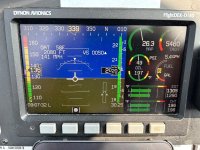
A point of reference on my RV-12 w/ 912ULS running near 5500 rpm..... EGT's each within a couple of degrees of 1300F. Pulling strong @ 141 TAS....
 

Attachments

  • 71A21174-F72C-45B6-89FC-82854B60260D_1_105_c.jpeg
    71A21174-F72C-45B6-89FC-82854B60260D_1_105_c.jpeg
    360.3 KB · Views: 17
Not true. His statement "High EGTs do not represent a threat to cylinder longevity the way high CHTs do" is absolutely correct. Raw EGT numbers mean nothing, it's when you see a change that the troubleshooting begins. That's why, if you check the TCDS for your engine you won't find an EGT limitation. I have never seen any service information (at least from Lycoming) that even hints at high EGT's (in and of themselves) are to be avoided. They mention operation at peak, lean or rich of peak EGT, but never give a number.
Mike said, from your quote:

Absolute values of EGT are simply not meaningful and are best ignored…
My post was targeted at this statement and remain convinced it is bad advice. Raw egt values are absolutely meaningful in Identifying issues with your engine. I never said you should compare your egt values to another person’s, nor did i say that high egts are detrimental to engine health. Its ok if you don’t feel the same about the subject. We just have different opinions.
 
Last edited:
I am not disagreeing, and it confused me. However new to ROTAX I am not assuming it is like the Lyc or Continental air cooled engines Mike is referencing.


You are 1000% correct. However I am new to Rotax (2 years as a CFI and EAA Tech counselor) . High EGT is not key but CHT.
The ROTAX is water cooled and oil cooled. Even with EGT flashing red, water temp, oil temp and CHT were solidly in the cool end of green. Just being conservative.
So what does your Rotax manual say?
 
So what does your Rotax manual say?
You can look it up on line and down load all the manuals. There is the Rotax Owners dot com website as well. What is absolute limit? No one seems to agree and I could not find a limit in the manual. If you like please look it up. If you can find it let all of us know.

Measuring EGT varies with EGT Probe location and type. Rotax does not make the exhaust pipes or know or care where every LSA manufacture places the EGT probe in the exhaust pipe. Exhaust pipes are appliances to the engine and the airframe manufacture makes them. I am sure engineering from Rotax and the LSA airframe maker communicate.

My question I had is why was it going RED at 15xxF on this G3X in a normal cruise condition. The short answer is because the G3X was set to go off then. Who set that limit? This is a simple dumb question I had. Not that complicated. That is it, respect limits. However....

To GO into the WEEDS. PLEASE DO NOT READ - IF THIS INFO IS REMEDIAL OR HAS WAY TOO MUCH DETAIL (SORRY):


G3X Base Configuration:
Van provides a file to sets the RV-12iS fundamental airframe parameters, engine gauge band ranges (tailored for either Rotax 912ULS or 912iS engines), and reference speeds (such as maneuvering speed Va). Did Van set this EGT limit or did the owner change it?

"Van’s Aircraft's configuration files for the Garmin G3X system (like the .gca base configurations) do not list a specific maximum EGT limit. Instead, the factory preset leaves it "unlimited". Rotax outlines the maximum allowable EGT 880C or 1616F" (another search with Rotax 912IS specifically in a RV-12iS states 950C / 1742F EGT max. NO References given to either number I found. Does not mean it is not out there. If you find reference to these numbers, for the 912iS, post that link.)​
Note: Rotax 912 iS Series is designed to operate leaner, with the highest maximum limit of 1742F or 950C (again no reference found). This might be absolute right at exhaust port. 1616F at a EGT probe down stream (guessing 4 inches let's say) may equate to 1742F at exhaust port. May be 15XX F is a conservative number with buffer? ALSO we have to be careful not to get the UL and iS mixed up, as well as 912, 915 or 916.)​

More Reader Warnings - If you really know all about EGT in aircraft engines do not read. If curious I'll give my dissertation.

EGT is typically NOT a HARD LIMIT, it used was used to measure a PEAK or difference between cylinders. This is for manual leaning, 1st peak or in the case of multi EGT's difference between cylinders may help indicate issues. Note MULTI channel EGT/CHT's was not always a thing. Most planes had NO EGT/CHT. If they did they had ONE, either EGT or CHT, rarely both. Now we have graphical "ENGINE MONITORS" in LSA's. Go fly a Piper Cub. It does OK without a G3X. Ha ha. (Note: Cars don't use EGT or CHT typically. They use KNOCK sensors, lean to detonation than increase mixture richness to stop knocking. Along with ambient air temp, air flow volume, throttle position, RPM, engine load, O2 sensor the ECU adjusts mixture.)

The Rotax 912iS of course has EFI and mixture is 100% controlled by an ECU engine "mapping" (mixture). Move throttle to high power over-rides and goes to RICH mode. It is a basic EFI system, not sophisticated, I believe a look up table based on RPM, MAP, AMBIENT AIR TEMP and throttle position. It does not have an O2 sensor like a car. One reason 100LL aviation fuel has a lot of lead. Lead kills O2 sensors. Even 100LL with Decalin RunUp and Alcor TCP might let some LEAD molecules get by. O2 sensor life with lead fuel, even a little can be measured in dozens of hours, not years.

Engines like Lycoming and Continental do NOT have EGT limits unless they have Turbine Inlet Temperature (TIT) limits on Turbocharged versions. You have EGT limits going into the turbocharger, thus INTERCOOLERS. Jet or Turbofan engines also have hard EGT limits, to prevent metals, turbine blades, case, combustion chamber from damaged. Thus on turbocharged engines, cars or airplanes intercoolers are used. My TDI (Turbo Direct Injection) Diesel VW, has a massive intercooler. Intercoolers are good.

EGT probes can be placed near the exhaust port or further down stream. Closer it reads higher, reacts faster, but it also burns EGT probe out faster. Further down the opposite. However since the Van's RV-12iS is a fixed configuration, and the pipes are NOT ROTAX, the Van's part numbers sold by Van's. A Rotax 912iS in a different LSA with different exhaust pipe, EGT probe location, brands of EGT probes will read different.

EGT is relative. Make sense? You would expect or hope the way Van set up the Rotax 912iS in the RV-12iS they mapped all this out. For NOW I am respecting the limit as it is set in the G3X now... which I think is conservative, gives a buffer. Of course you will not see CHT, Water or OIL temp spike. However those poor exhaust valves are see a LOT OF HEAT. So to contradict my self, there are EGT limits.

With air cooled engines CHT gives you the WARNING that you are running too lean.


In a plane with a RED KNOB you can make the mixture richer and lower the EGT, as well as. RV-12iS you have two choices to lower EGT (regardless of limit set in your Dynon or G3X). You can reduce power or you can increase power, where it goes into the full rich mode.

Right now I am satisfied to respect the G3X and acknowledge the current EGT limit warning as it is set. Not my plane, only giving it a good inspection. It has been suggested

Mich48041 stated above to set EGT limit to 2000F. (Request for reference ignored, I will be accused of not taking good advice now.)

dmattmul replied to Mich48041 and stated 1500F is nominal or normal typical. (Thank you dmattmul)​


For now I am leaving it alone. I have a better understanding or Rotax 912iS EGT limits (be they arbitrary or based on some hard engineering). Thanks to some great replies. I'm good and don't want to make people mad, or get into "primer wars". (PS my primer is the best, ha ha.)

Hope that is clear as mud. Respect and understand limits, and do not exceed them.
 
Last edited:
You can look it up on line and down load all the manuals. There is the Rotax Owners dot com website as well. What is absolute limit? No one seems to agree and I could not find a limit in the manual. If you like please look it up if you can find it. Measuring EGT varies with EGT Probe location and type. Rotax does not make the exhaust pipes or know or care where every LSA manufacture places the EGT probe.

My question I had is why was it going RED on this G3X so early in a normal cruise condition. The short answer is because the G3X was set to go off then. Who set that limit? This is a simple dumb question I had. Not that complicated.

To GO into the WEEDS. PLEASE DO NOT READ - IF THIS INFO IS REMEDIAL FOR YOU WITH WAY TOO MUCH DETAIL.


G3X Base Configuration:
Van provides a file to sets the RV-12iS fundamental airframe parameters, engine gauge band ranges (tailored for either Rotax 912ULS or 912iS engines), and reference speeds (such as maneuvering speed Va). Did Van set this EGT limit or did the owner change it?

"Van’s Aircraft's configuration files for the Garmin G3X system (like the .gca base configurations) do not list a specific maximum EGT limit. Instead, the factory preset leaves it "unlimited". Rotax outlines the maximum allowable EGT 880C or 1616F" (another search with Rotax 912IS specifically in a RV-12iS states 950C / 1742F EGT max.)​
Note: Could not find these numbers in Rotax MM or Op manual. Rotax 912 iS Series is designed to operate leaner, with the highest maximum limit of 1742F or 950C. This might be absolute right at exhaust port. 1616F at a EGT probe down stream (guessing 4 inches let's say) may equate to 1742F. May be 1550F is a conservative number with buffer? ALSO we have to be careful not to get UL and iS mixed up, as well as 912, 915 or 916.)​

More Reader Warnings - If you really know all about EGT in aircraft engines do not read. If curious I'll give my dissertation.

EGT is typically NOT a HARD LIMIT, it used as to measure a PEAK or difference between cylinders. This is for manual leaning, 1st peak or in the case of multi EGT's difference between cylinders may help indicate issues. Note MULTI channel EGT/CHT's was not always a thing. Most planes had NO EGT/CHT. If they did they had ONE, either EGT or CHT, rarely both. Now we have graphical "ENGINE MONITORS" in LSA's. Go fly a Piper Cub. It does OK without a G3X. Ha ha.

The Rotax 912iS of course has EFI and mixture is 100% controlled by an ECU engine "mapping" (mixture). Move throttle to high power over rides and goes to RICH mode. It is a basic EFI system, not sophisticated, I believe a look up table based on RPM, MAP, AMBIENT AIR TEMP and throttle position (and may be other parameters). It does not have an O2 sensor like a car. One reason 100LL aviation fuel has a lot of lead. That kills O2 sensors. Even 100LL with Decalin RunUp and Alcor TCP might let some LEAD molecules get by. O2 sensor life with lead fuel, even a little can be measured in dozens of hours, not years.

Engines like Lycoming and Continental do NOT have EGT limits unless they have Turbine Inlet Temperature (TIT) limits on Turbocharged versions. You have EGT limits going into the turbocharger, thus INTERCOOLERS. Jet or Turbofan engines also have hard EGT limits, to prevent metals, turbine blades, case, combustion chamber from damaged. Thus on turbocharged engines, cars or airplanes intercoolers are used. My TDI (Turbo Direct Injection) Diesel VW, has a massive intercooler. Intercoolers are good.

EGT probes can be placed near the exhaust port or further down stream. Closer it reads higher, reacts faster, but it also burns EGT probe out faster. Further down the opposite. However since the Van's RV-12iS is a fixed configuration, and the pipes are NOT ROTAX, the Van's part numbers sold by Van's. A Rotax 912iS in a different LSA with different exhaust pipe, EGT probe location, brands of EGT probes will read different.

EGT is relative. Make sense? You would expect or hope the way Van set up the Rotax 912iS in the RV-12iS they mapped all this out. For NOW I am respecting the limit as it is set in the G3X now... which I think is conservative, gives a buffer. Of course you will not see CHT, Water or OIL temp spike. However those poor exhaust valves are see a LOT OF HEAT. So to contradict my self there are EGT limits.

In a plane with a RED KNOB you can make the mixture richer and lower the EGT. RV-12iS you have two choices to lower EGT (regardless of limit set in your Dynon or G3X). You can reduce power or you can increase power, where it goes into the full rich mode.

Right now I am satisfied to respect the G3X and acknowledge the current EGT limit warning as it is set. Not my plane, only giving it a good inspection. It has been suggested

[B]Mich48041[/B] stated above to set EGT limit to 2000F. (my comment is thanks no thanks. Request for reference ignored. I will be accused of not taking good advice now.)

dmattmul replied to Mich48041 and stated 1500F is nominal or normal typical. (Thank you dmattmul)​


For now I am leaving it alone. I have a better understanding or Rotax 912iS EGT limits (be they arbitrary or based on some hard engineering). Thanks to some great replies. I'm good and don't want to make people mad, or get into "primer wars". (PS my primer is the best, ha ha.)

Hope that is clear as mud. Respect understand and limits and do not exceed them.

Your response is painful to read. I don't understand such lack of clarity.
 
I told you NOT TO READ IT or get your feelings hurt... Follow instructions Sir. :ROFLMAO: :ROFLMAO: :ROFLMAO: :ROFLMAO:
PS thank you for reading. I hope you learned something.
Hang in there. You'll figure it out. There are many published upper limits but typically one would NOT set their red alarm at this level. For Lycoming CHT limit is 500 F, I would not set my red alarm and close to this temperature. Why, because I know it's not normal. Pull your SD card and review previous flight data to set up yellow and red alarms that would indicate an abnormal condition. You don't want alarms going off all the time as you will start to ignore them and that could lead to a real problem.

Good luck !
 
Back
Top