

Van's Air Force
You are using an out of date browser. It may not display this or other websites correctly.
You should upgrade or use an alternative browser.
You should upgrade or use an alternative browser.
Footwell and Baggage Carpet Mats
- Thread starter jerry98b
- Start date


Buy commercial grade carpet with either wool or nylon as the face fiber. It should have a "class 1" fire rating. You'll need to do your own research on underlayment, but I'd stay away from anything with PVC or other material that smokes when it burns.I'm thinking about making my own carpet mats for the footwell and baggage area. Wanting to maybe put a little backing for cushion and sound absorption. Any recommendations on what and where I can get safe to use carpet and backing?
Carpet is bad enough, but adding rubber or other components to the bottom is just a source for creating smoke in a fire situation.I'm thinking about making my own carpet mats for the footwell and baggage area. Wanting to maybe put a little backing for cushion and sound absorption. Any recommendations on what and where I can get safe to use carpet and backing?

andoman
Well Known Member
I used a light weight boat carpet that met some nominal fire resistance standard. I glued it to the floor and to each removable panel with 3M contact cement. Once covered, I used a soldering iron to melt the screw holes in panels.
I opted for no additional sound proofing material as I felt the carpet would be enough of an improvement. I wanted to keep things as light as possible.
I opted for no additional sound proofing material as I felt the carpet would be enough of an improvement. I wanted to keep things as light as possible.

I haven’t done this myself yet, but have researched it before. My plan is to use the above mentioned “commercial grade” nylon carpet, with foam backing for the forward floor to fill in between the floor ribs.
Aircraft Spruce sells a foam sound deadening material that I think would work well: Aircraft Spruce Soundproofing Foam
Aircraft Spruce sells a foam sound deadening material that I think would work well: Aircraft Spruce Soundproofing Foam
There is nothing special or meaningfully different between airline carpet and commercial carpet with a Class 1 fire rating. It will all burn under the right conditions.Interior materials used on bizjets and airliners (carpet, leather) must meet FAA fire requirements. Look for someone who refurbishes these aircraft and ask for scraps.
There is a popular bulider DAR, his wife did some videos and talked sourcing. I bought some and used it. A machine that handles edge binding needs consideration. No padding, why the weight?
The precut product installed seemed cushier or softer and seem well worth the money given the time savings.
The precut product installed seemed cushier or softer and seem well worth the money given the time savings.

While carpet looks and feels nice, my opinion goes against it for a couple reasons. To me, the RV is never going to be a "quiet" aircraft, and headset choice is best option for minimizing noise. Having worked most of my life maintaining aircraft, big jets and G/A, carpet is a nasty nuisance and causes moisture, dirt and tape/glue position holding issues. I prefer a more utilitarian approach with a non-skid ,stick on material like skateboards use and wing walks use. I used it in my RV-4, and it is easy to clean, non-trapping way to protect the floor and adds almost zero weight. Also, nothing to pull up or remove during maintenance open up of panels and floors. Under the rudder pedals, I have thin .016" SS sheet stock, bonded to 1/8" red silicone matting so my shoes slide and there is some heat protection. I usually load soft bags in the baggage area, and see no need for carpet there. Just my 2 cents.
Attachments
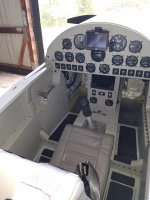
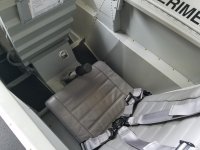
After doing my first inspection I appreciate this so much more. I worry about rudder cable interference and left most of the vertical pieces off. I’ll consider the wing walk stuff next inspection.While carpet looks and feels nice, my opinion goes against it for a couple reasons. To me, the RV is never going to be a "quiet" aircraft, and headset choice is best option for minimizing noise. Having worked most of my life maintaining aircraft, big jets and G/A, carpet is a nasty nuisance and causes moisture, dirt and tape/glue position holding issues. I prefer a more utilitarian approach with a non-skid ,stick on material like skateboards use and wing walks use. I used it in my RV-4, and it is easy to clean, non-trapping way to protect the floor and adds almost zero weight. Also, nothing to pull up or remove during maintenance open up of panels and floors. Under the rudder pedals, I have thin .016" SS sheet stock, bonded to 1/8" red silicone matting so my shoes slide and there is some heat protection. I usually load soft bags in the baggage area, and see no need for carpet there. Just my 2 cents.
Most carpet burn tests require the carpet to be laying on a flat surface. What will self-extinguish in a flat (e.g. flooring) application may burn in a vertical orientation, like if you install it on a wall. Installing carpet on walls was a thing once upon a time. Whether that was really kool or an awful trend is a matter of opinion, but from a safety standpoint it was a mistake...After doing my first inspection I appreciate this so much more. I worry about rudder cable interference and left most of the vertical pieces off. I’ll consider the wing walk stuff next inspection.

I scoured VAF for any quantitative evidence that interior “sound proofing” made a significant difference. Nobody offered meaningful.The consensus was most of the sound energy was coming through the canopy, firewall and floor by the exhaust. I insulated the engine side of the firewall with Danh heavy ablative insulation. 102 dB before and after.
This is yet another anecdote, but there is one other RV-6 on my home field that I’ve flown as comparison to mine. My RV has virtually no interior, no insulation or sound deadening. It would be sickeningly loud without a headset and is borderline unbearable without a good ANR headset. The other RV on the field has A LOT of interior insulation and sound deadening. It is quieter inside than any other single engine piston I’ve flown. The only GA planes I’ve flown in that were comparable are light twins. It also weighs 100 pounds more than mine (partly due to being an IO-360 and CS vs. my O-320 and FP, but that only accounts for maybe 50lbs of the difference).I scoured VAF for any quantitative evidence that interior “sound proofing” made a significant difference. Nobody offered meaningful.The consensus was most of the sound energy was coming through the canopy, firewall and floor by the exhaust. I insulated the engine side of the firewall with Danh heavy ablative insulation. 102 dB before and after.
