

Van's Air Force

The definitive Van's Aircraft support community! Buying, building or flying an RV? Join our exclusive family of mentors and enthusiasts!

Engine Mount Crack...

Piper J3

Well Known Member
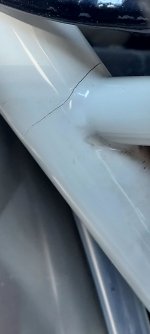
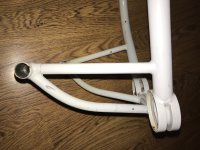
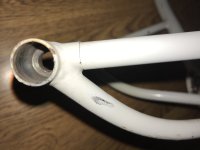
My friend is doing Annual Condition Inspection on his Legacy RV-12 and found a large crack in rear circular tube of the engine mount. Crack is on right hand side just above where the lower engine support arm is welded to the rear ring. Airplane is five-years-old and 500TT… operated gently off of hard pavement. Photo attached…


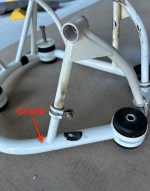
Some background…. The engine mount on my RV-12 cracked at 630TT. My crack was in the lower engine support arm on the left side. My airplane is an early SN and has first iteration of the engine mount design which does not include gusset plates at the engine case mounting holes. Photo attached…. I know of only one other RV-12 that had a cracked engine mount like this latest crack on the rear circular ring… and I believe int the exact same spot.


The purpose of this thread is to inform the RV-12 fraternity and to ask if anyone else has experienced a cracked engine mount…
 

Attachments

  • IMG_0020.jpeg
    IMG_0020.jpeg
    2.4 MB · Views: 562
  • IMG_0019.jpeg
    IMG_0019.jpeg
    1.8 MB · Views: 557
  • Resized_20240525_133417.jpeg
    Resized_20240525_133417.jpeg
    167.7 KB · Views: 548
That might be repairable by a good welder familiar with thin wall tubing; the original powder coating needs to be removed, and the mount checked for any other cracking. Make sure the weld gets inspected after the welder finishes and before powder coating to finish the repair. Hop that helps get the plane flying again.
 
Piper J3,
The photos, 2 are the left side yours and one of the right side crack, correct? Do you have a wider shot of the right side one to help guide my inspection? I will probably use a bore cam from the bottom rather than remove the cowl to check. I do regular checks since your crack but re-checking can’t hurt.
 
I am not seeing a Service Bulletin (yet) for the WD-1220 Engine Mount that is the subject of this thread.

However, there is an SB-00023, Nov 20, 2020 for the Engine Mount Standoff WD-1221.
 
I am not seeing a Service Bulletin (yet) for the WD-1220 Engine Mount that is the subject of this thread.

However, there is an SB-00023, Nov 20, 2020 for the Engine Mount Standoff WD-1221.
Yes, that is the one.
 
The misalignment in the tube that is broken clear through shows the part was fabricated with residual stress. You could re-align and weld it, but it will crack again and likely sooner. If you have a good fab shop nearby (think industrial equipment not Joe's trailer hitch), They could weld it with proper procedures. Then do a post weld heat treat to remove all of the stress (what should have been done in the first place).
 
Update….

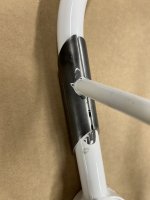
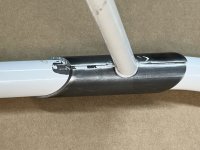
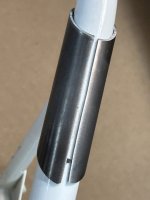
Engine mount has been removed from airframe and cracked tube will be repaired by TIG welding an over-sleeve per instructions detailed in Aircraft Circular 43.13 Acceptable Methods, Techniques, and Practices – Aircraft Inspection and Repair.

The rear ring tube on the Rotax mount is 0.875 OD x 0.065 wall thickness. The crack is located in a section of the ring where the tubing is straight and not curved, so an over-sleeve can easily be fitted. The over-sleeve tube will be 1.000 OD x 0.065 4130 Chromoly and will match diameters very closely. Dimensions for over-sleeve length are dictated by tubing diameter. The over-sleeve tube will be split lengthwise and have ends cut at 30-degree angle to reduce stress concentration.

TIG welding will be accomplished by pre-heating the weld zone and using ER80S-D2 filler rod. Finished weld will be wrapped in mineral wool to allow slow cooling.

The cracked tube in my engine mount was repaired using the above method and now has 300 hours post-repair.

I’ll provide photos of the repair when completed…
 
Update….

Engine mount has been removed from airframe and cracked tube will be repaired by TIG welding an over-sleeve per instructions detailed in Aircraft Circular 43.13 Acceptable Methods, Techniques, and Practices – Aircraft Inspection and Repair.

The rear ring tube on the Rotax mount is 0.875 OD x 0.065 wall thickness. The crack is located in a section of the ring where the tubing is straight and not curved, so an over-sleeve can easily be fitted. The over-sleeve tube will be 1.000 OD x 0.065 4130 Chromoly and will match diameters very closely. Dimensions for over-sleeve length are dictated by tubing diameter. The over-sleeve tube will be split lengthwise and have ends cut at 30-degree angle to reduce stress concentration.

TIG welding will be accomplished by pre-heating the weld zone and using ER80S-D2 filler rod. Finished weld will be wrapped in mineral wool to allow slow cooling.

The cracked tube in my engine mount was repaired using the above method and now has 300 hours post-repair.

I’ll provide photos of the repair when completed…
Short of a full PWHT that's the way to do it. Chromoly likes to induce stress when welded. Do what you can to minimize it and you'll be good. Side note .065 sounds thin, but 8000hp top fuel dragster chassis' are built with .049 wall tube.
 
Update….

Engine mount has been removed from airframe and cracked tube will be repaired by TIG welding an over-sleeve per instructions detailed in Aircraft Circular 43.13 Acceptable Methods, Techniques, and Practices – Aircraft Inspection and Repair.

The rear ring tube on the Rotax mount is 0.875 OD x 0.065 wall thickness. The crack is located in a section of the ring where the tubing is straight and not curved, so an over-sleeve can easily be fitted. The over-sleeve tube will be 1.000 OD x 0.065 4130 Chromoly and will match diameters very closely. Dimensions for over-sleeve length are dictated by tubing diameter. The over-sleeve tube will be split lengthwise and have ends cut at 30-degree angle to reduce stress concentration.

TIG welding will be accomplished by pre-heating the weld zone and using ER80S-D2 filler rod. Finished weld will be wrapped in mineral wool to allow slow cooling.

The cracked tube in my engine mount was repaired using the above method and now has 300 hours post-repair.

I’ll provide photos of the repair when completed…
Can you post a wider shot of where this crack is located so we can check our mounts?
 
Arrow shows where rear tube is cracked. Crack is almost entire circumference of tube. Small hole was drilled to ascertain wall thickness of tubing = 0.065"
 

Attachments

  • Screenshot 2024-05-30 at 7.07.54 PM.png
    Screenshot 2024-05-30 at 7.07.54 PM.png
    2.1 MB · Views: 274
Update…. My friend ended up buying a new engine mount from Van’s to the tune of nearly $2K when shipping was factored in. Airplane was out of commision for almost a month. I’m now getting around to repairing the cracked mount for which I started this thread. I fitted a 1.000 OD x 0.065 4130 Chromoly over-sleeve and its ready for welding...
 

Attachments

  • IMG_9457.jpeg
    IMG_9457.jpeg
    1.5 MB · Views: 158
  • IMG_9458.jpeg
    IMG_9458.jpeg
    1 MB · Views: 162
  • IMG_9460.jpeg
    IMG_9460.jpeg
    850.1 KB · Views: 154
Of the four RV-12s based at our airport, three have developed cracks that were found within the past month or so. All three planes have over 1,000 hours on them.

Mine is cracked on the right side of the mount ring, almost exactly where the one in @Piper J3 's photo was. We don't have any cracks in the smaller diameter tubing. You can bet I'll be taking a much closer look at those when we pull the mount for repair. Another one has a similar crack on the left side, and the third I don't recall exactly - right side, but may have been lower.

I'm bummed that these cracks are forming. I'm happy that the first one of our three "victims" told the rest of us at our recent EAA chapter meeting. We're doing the condition inspection and I had just inspected the mount and didn't see the crack. It was hidden under a wrap of self fusing silicone tape used to protect the mount tube from a wire tie used to secure an engine heater power cable. You can bet it will go back together with a different solution for that, though an Adel clamp would have hidden it just as effectively.
 
I wonder if there is any common exterior cause of these cracks. Maybe the frequency of dynamic prop balancing, frequency of carb balancing, extended low RPM, condition of landing strips, motor mount rubber condition, and probably a few others that might contribute to the cracking. I check mine every time the cowl is open, so far so good, just passed 1700 hrs.
 
My friend is doing Annual Condition Inspection on his Legacy RV-12 and found a large crack in rear circular tube of the engine mount. Crack is on right hand side just above where the lower engine support arm is welded to the rear ring. Airplane is five-years-old and 500TT… operated gently off of hard pavement. Photo attached…


Some background…. The engine mount on my RV-12 cracked at 630TT. My crack was in the lower engine support arm on the left side. My airplane is an early SN and has first iteration of the engine mount design which does not include gusset plates at the engine case mounting holes. Photo attached…. I know of only one other RV-12 that had a cracked engine mount like this latest crack on the rear circular ring… and I believe int the exact same spot.


The purpose of this thread is to inform the RV-12 fraternity and to ask if anyone else has experienced a cracked engine mount…
Yes, we had a crack this year discovered in our April annual. Replaced the mount that bolts to the firewall.
 
Yes, we had a crack this year discovered in our April annual. Replaced the mount that bolts to the firewall.
Is this the separate rear standoff that bolts to top of engine mount? Can you show photo of crack?

SB-00023 WD-1221 Engine Mount Standoff inspection/replacement
 
I wonder if there is any common exterior cause of these cracks. Maybe the frequency of dynamic prop balancing, frequency of carb balancing, extended low RPM, condition of landing strips, motor mount rubber condition, and probably a few others that might contribute to the cracking. I check mine every time the cowl is open, so far so good, just passed 1700 hrs.
I think engine mount should have been designed / made with heavier wall tubing....
It's a function of the metallurgy not design or thickness. Chromoly warps significantly when welded. So when you clamp 2 ends down and weld them a stress is built in from the tubes not being able to move. In addition chromoly gets brittle in the HAZ (heat affected zone) around the weld. So without addressing the stress it's just a matter of time and it will crack.

The chosen welding process can help. Old time oxy/ acetylene you heat up several inches away from the joint, make the weld, then keep heat on it to slow the cooling rate. this isn't precise but is usually successful at removing the stress and embrittlement. MIG is a bad idea if your not going to stress relieve. TIG has a very small HAZ so most of the time you can get away with not stress relieving after the weld. But cracking is still relatively common (in the automotive racing world). I suspect these mounts are TIG welded but I've seen video of a popular airframe manufacturer using MIG (not sure how they're getting away with that).

The right thing for VANS to do would be stress relieving after its welded up. Basically put it in an oven, bring it up to a prescribed temp for a prescribed time, and cool it down slowly. I'm not sure why they don't as it's not that expensive if done in batches. If I was repairing my own mount I would take it to a fab shop and have this done. Well worth the few hundred dollars they'd charge.
 
It's a function of the metallurgy not design or thickness. Chromoly warps significantly when welded. So when you clamp 2 ends down and weld them a stress is built in from the tubes not being able to move. In addition chromoly gets brittle in the HAZ (heat affected zone) around the weld. So without addressing the stress it's just a matter of time and it will crack.

The chosen welding process can help. Old time oxy/ acetylene you heat up several inches away from the joint, make the weld, then keep heat on it to slow the cooling rate. this isn't precise but is usually successful at removing the stress and embrittlement. MIG is a bad idea if your not going to stress relieve. TIG has a very small HAZ so most of the time you can get away with not stress relieving after the weld. But cracking is still relatively common (in the automotive racing world). I suspect these mounts are TIG welded but I've seen video of a popular airframe manufacturer using MIG (not sure how they're getting away with that).

The right thing for VANS to do would be stress relieving after its welded up. Basically put it in an oven, bring it up to a prescribed temp for a prescribed time, and cool it down slowly. I'm not sure why they don't as it's not that expensive if done in batches. If I was repairing my own mount I would take it to a fab shop and have this done. Well worth the few hundred dollars they'd charge.
Thanks for this explanation about welding conditions as I am an amateur welder. I’ve done some simple art projects for my wife but if I need serious welding I take it to a professional.
 
Thanks for this explanation about welding conditions as I am an amateur welder. I’ve done some simple art projects for my wife but if I need serious welding I take it to a professional.
Keep at it, it's just metal. if you don't like your first weld grind it out and do it again. (y):)
 
It's a function of the metallurgy not design or thickness. Chromoly warps significantly when welded. So when you clamp 2 ends down and weld them a stress is built in from the tubes not being able to move. In addition chromoly gets brittle in the HAZ (heat affected zone) around the weld. So without addressing the stress it's just a matter of time and it will crack.

The chosen welding process can help. Old time oxy/ acetylene you heat up several inches away from the joint, make the weld, then keep heat on it to slow the cooling rate. this isn't precise but is usually successful at removing the stress and embrittlement. MIG is a bad idea if your not going to stress relieve. TIG has a very small HAZ so most of the time you can get away with not stress relieving after the weld. But cracking is still relatively common (in the automotive racing world). I suspect these mounts are TIG welded but I've seen video of a popular airframe manufacturer using MIG (not sure how they're getting away with that).

The right thing for VANS to do would be stress relieving after its welded up. Basically put it in an oven, bring it up to a prescribed temp for a prescribed time, and cool it down slowly. I'm not sure why they don't as it's not that expensive if done in batches. If I was repairing my own mount I would take it to a fab shop and have this done. Well worth the few hundred dollars they'd charge.
Great explanation, based on that they will ALL will break eventually. My question was what factors are causing some to break at a few hundred hours and others to go past 1700? Maybe new / different vendors so different techniques? OR are there differences in the operation and maintenance that helps longevity?
 
Van's issued SB-00023 WD-1221 Engine Mount Standoff inspection/replacement. Seems like something ought to be said about the engine mount itself... I know of at least six mounts that cracked, including mine and a friend.
 
Being an LSA, I guess RV-12 materials were made lighter, including critical components like the engine mount. In saying that--I remember when Richard Van Grunsven himself, at the Arlington Washington fly-in, announced that his RV models (before the RV-12) had never experienced any engine mount cracks. In saying this, I have never found any cracks in my RV-9A engine mount after 1800-hours and 21-years. I wonder if the engine isolators in the RV-12 are of sufficient size.:rolleyes:
 
Great explanation, based on that they will ALL will break eventually. My question was what factors are causing some to break at a few hundred hours and others to go past 1700? Maybe new / different vendors so different techniques? OR are there differences in the operation and maintenance that helps longevity?
That's getting outside my wheelhouse. I suspect since they're hand made/ welded there are variances from the hands doing it. Welders skilled in gluing together alloys beyond basic carbon steel are hard to find and very expensive. I don't know anything about Vans or their supplier, but typically shops like that don't pay enough to keep top welders. Typically shops are where a guy learns so he can go make the big money on the road. (This theory is supported by the price mentioned above. I know plenty of guys who could build that mount. But I don't know if they'd do it for $2k.
Being an LSA, I guess RV-12 materials were made lighter, including critical components like the engine mount. In saying that--I remember when Richard Van Grunsven himself, at the Arlington Washington fly-in, announced that his RV models (before the RV-12) had never experienced any engine mount cracks. In saying this, I have never found any cracks in my RV-9A engine mount after 1800-hours and 21-years. I wonder if the engine isolators in the RV-12 are of sufficient size.:rolleyes:
Again a bit outside my knowledge base. I'd bet your engine mount uses the same .065 wall tube. That's pretty stout for chromoly. As I mentioned previously 8,000hp Top fuel dragsters use .049 in their chassis. Could be the mounting differences. Or maybe the Rotax rpm just means a shorter fatigue life?
 
Again a bit outside my knowledge base. I'd bet your engine mount uses the same .065 wall tube. That's pretty stout for chromoly. As I mentioned previously 8,000hp Top fuel dragsters use .049 in their chassis. Could be the mounting differences. Or maybe the Rotax rpm just means a shorter fatigue life?
In looking at other Rotax equipped aircraft forums, especially with the Rotax 912 series engine, they also tend to experience harmonic vibrations that can lead to fatigue and cracking in the engine mount--so, not just the RV-12. That's also why metal props need to be analyzed and matched to a specific engine type, or they can produce harmonic vibrations, which can fatigue the prop to failure in a relatively short amount of time. Some certified aircraft have RPM range restrictions for that very reason.

The RV-12 engine mount is very different in design to your typical RV Lycoming dynafocal engine mount. By definition, dynafocal engine mounts greatly dampen engine vibration based upon their self-canceling "focal" to center of mass geometry.
 
Last edited:
Update…. My friend ended up buying a new engine mount from Van’s to the tune of nearly $2K when shipping was factored in. Airplane was out of commision for almost a month. I’m now getting around to repairing the cracked mount for which I started this thread. I fitted a 1.000 OD x 0.065 4130 Chromoly over-sleeve and its ready for welding...
I would love to see any final photos, pre-painting of possible for future reference.
 
Of the three that have cracked in our little group...

#1 - RV-12iS, student built club plane with 2000+ hours, flown by 10 people. I heard they're putting 500 hours per year on it.
#2 - Extremely well built RV-12 with a 912ULS. Pilot is a "repeat offender" RV-6, RV-12, KR-1 and something else. 50+ years flying, EAA tech counselor, knows what he's doing. It's always been a very smooth ride.
#3 - Ours. Three out of 4 owners currently flying; 1021 hours TT. We had a fair bit of vibration prior to a carb rebuild and dynamic balance a few years back; it's smooth now.

Working with the owner of #2, we're going to get our mounts fixed locally. Van's doesn't have them in stock, and they can't tell us when they will have them again (not to mention we already know they'll eventually crack). We'll have the mounts soda blasted to remove the powder coating and check for any more cracks. The cracks will be welded and smoothed, then we'll sleeve both sides with some 1" OD tubing with the ends cut at 30 degrees per AC43.13. Welding will be TIG done by a qualified welder at an aircraft engine repair shop. One of my partners is set up for powder coating to finish them up. Mine is old enough that it doesn't have the gussets that the newer mounts do, so we'll have those added while they're in the welding shop.
 
Last edited:
WD-01221-1 Engine mount is showing backordered from Van’s.

Does anyone have recent experience with what “backordered” usually means with Van’s parts? Are we talking days, weeks, or no way to know until they call back?

This is for the RV-12 / RV-12iS engine mount standoff SB-00023. The existing WD-1221 standoff is cracked, so the plane is grounded until the replacement part shows up.

Calling Van’s Monday, but I’m trying to get an idea of what to expect or whether anyone has had luck getting a safety/SB-related part expedited.

Also, if anyone happens to have a WD-01221-1 they would sell, or knows of one sitting in a kit, please message me.
 
Show a photo of crack.... it might be possible to weld a split section of 4140 tubing over the crack like myself and others have done for various sections of the main engine mount.
 
Back
Top