Van's Air Force

The definitive Van's Aircraft support community! Buying, building or flying an RV? Join our exclusive family of mentors and enthusiasts!

Alternator field wire separate from alt output?

WingnutWick

Well Known Member
Installing a new B&C alternator and the instructions say “Take care to route the (alt output) wire separately from the field connector assembly”. Is this read as don’t run the two wires together or just clear from the connector assembly that plugs into the alternator? The previous setup had the two wires running together and I’m wondering if this was wrong?

Thanks all!
 
With an external regulator (which the B&C has), there is a theoretical risk of an uncontrolled overvoltage if the field wire and the output wire chafe against one another and wear through the insulation. If this happened, the field would see full output volts, and drive the alternator to the max, irrespective of what the regulator is trying to do. Switching the alternator off or pulling the field breaker has no effect.

I don't think they worried so much about this in the past but aircraft with all electronic instruments are much more common than they used to be.
 
Field wire

I ran mine outside of the starter cable firesleeve and in it's own insulation. No way to touch the alternator "B" circuit.
B&C alternator and regulator
 
a little drift but.... i think this is the way in theory an overvoltage starts from a short within the alternator. that is what ovm's are for i guess.
 
Not a EE

So, opening the Bus-Field Supply via the alternator switch would have no effect if the field wire on the alternator came in contact with the battery lead?

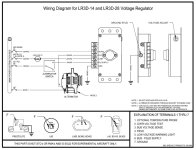
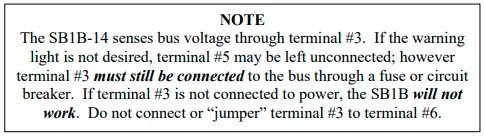
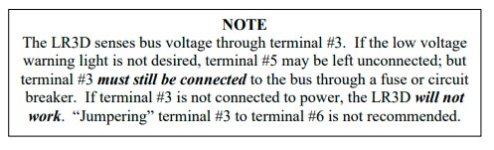
Also, I THOUGHT I remembered B&C stating it was OK to jumper 3 (Since) & 6 (bus field supply) and now they say either don't do this or not recommended?
 

Attachments

  • Screenshot 2023-07-15 184315.jpg
    Screenshot 2023-07-15 184315.jpg
    110.2 KB · Views: 77
  • Screenshot 2023-07-15 182809.jpg
    Screenshot 2023-07-15 182809.jpg
    34.1 KB · Views: 46
  • Screenshot 2023-07-15 182440.jpg
    Screenshot 2023-07-15 182440.jpg
    33.8 KB · Views: 43
a little drift but.... i think this is the way in theory an overvoltage starts from a short within the alternator. that is what ovm's are for i guess.

The OVM works by opening the breaker to the the FLD source. Any short that applies power to the FLD wire downstream of the breaker, including inside the ALT, will cause a runaway IF that source can provide enough current to do so (Alt output is regulated by current on the
fld input)
 
Practical likelihood?

Does anyone know how likely it is that this will occur in practice, i.e. alt output becomes connected to fld wire because both wires' insulation failed?
If this occurred then presumably the only thing that the pilot can do is turn off the master to protect the avionics from the OV condition.
 
Last edited:
Good Practice

In my short time in this sport, I have seen some pretty horrendous wiring firewall forward.
I think if good practices are used, and there are no chafing points of contact, this failure mode’s probability is down there with ignition switch failure. (Pun intended)
 
It is extremely unlikely that two parallel insulated wires would short together.
But if they did, shutting off the master switch would not do any good.
The electrical system is powered by the alternator, not the battery. So
disconnecting the battery will have no effect. And neither will opening the
alternator field switch because it is bypassed by the shorted wires.
 
my ovm disconnects the alternator b lead to the bus. an ovm wired to the field wire is not a surestop protection. i don't know if any of this is ever likely to happen but a ''hot'' field wire circuit would not prevent my ovm from working.
 
My Field wire is run separately from the B lead - however, at the alternator the two wires crossed each other right before the F went into the connector. The F was unsupported where they crossed and was touching the B. One day, I was inspecting wiring, separated the 2 wires with my finger. They were chafing against each other and about 1/2 the insulation was gone! Fixed and added support so they could not rub against each other. Lesson learned.
 
My Field wire is run separately from the B lead - however, at the alternator the two wires crossed each other right before the F went into the connector. The F was unsupported where they crossed and was touching the B. One day, I was inspecting wiring, separated the 2 wires with my finger. They were chafing against each other and about 1/2 the insulation was gone! Fixed and added support so they could not rub against each other. Lesson learned.

I would be interested to know what the root cause of this chafing (...and by inference, movement) was. Can you share pictures before/after?
 
Hello Brian - I’m not sure if I took a before/after pic, but will look after OSH (plan to arrive Friday, before show starts). If not, I’ll take a pic next time the cowl is off. The plane had over 1,000 Hobbs on it when I noticed the chafing. I’m assuming (hate using that word), it was caused by vibration over many hours and the F slowly “sawed” into the larger B wire. Wire is aviation Tefzel. The wires crossed at an approx. 90 degree angle, and it was a few inches from the F connector/plug in the back of the alternator. Both alternator and remote regulator are B&C, have worked flawlessly for me and have 1488 Hobbs on them. I have a heavy industry, electrical background and have seen many “bad things “ happen over the years - so I am always looking for an issue when I have an area opened up.
 
...I have a heavy industry, electrical background and have seen many “bad things “ happen over the years - so I am always looking for an issue when I have an area opened up.

Roger that!

I was curious, because I ran the field wire adjacent to the B lead, all the way up to the alternator, and only have about 1.5" or so of separation at the end where they diverge and go to their respective terminations on the alternator.

The entire length of the bundle is hung on adele clamps and two points along the sump/case halves above the intake runners, and the bundle is zip tied every 3 inches.

Aside from the difference in mass of the B lead and the field wire at the ends, I don't see an opportunity for resonance or movement....

Cheers!

B
 
don't turn off the master contactor

Does anyone know how likely it is that this will occur in practice, i.e. alt output becomes connected to fld wire because both wires' insulation failed?
If this occurred then presumably the only thing that the pilot can do is turn off the master to protect the avionics from the OV condition.

My thoughts:

Yes the likelihood of the field wire shorting to the B lead is very low with proper installation and periodic inspection but turning off the master would remove the battery which is the only thing holding the voltage down.​
The B lead is connected to the main bus. An AGM battery will hold the voltage down for some time but a battery with a battery manager will disconnect itself fairly quickly. With the battery disconnected the voltage will rise into the hundreds and all electronics will be destroyed. The only thing you can do to shut down the alternator is stop it from spinning, turn off the engine and pitch up to stop the prop.​
Let's say you're in cruise and notice an OV event, you have an externally regulated alternator with a crowbar, the field CB has not popped, turning off the alternator field does not fix the problem. If you turn on everything you have in order to reduce current going to the battery, reduce engine RPM hopefully to idle, look for a place to land ASAP, and have an AGM battery, it could work, you could throttle up if you're short on your emergency straight in approach. But that's a lot to think about and if you have a battery with a battery manager and dual electronic ignition that would be destroyed by a battery disconnect it's more of a concern.​
If the field wire shorting to the B lead was a likely enough scenario one would develop an aircraft specific emergency plan to recognize and deal with it in flight but thankfully with proper installation and periodic inspection I'm willing to assume it will not happen.​

P.S.

A similar scenario can happen with an automotive internally regulated alternator that has no OV protection and an enable wire folks mistake for a field power wire. Start the engine, enable the alternator, then the only way to turn it off is to stop it from spinning. An OV event happens, crew turns off what they think is the field and the alternator keeps running. Or they turn off the master contactor also and the voltage goes into the hundreds. Ref an RV Allan Nimmo purchased: https://vansairforce.net/community/showpost.php?p=1415585&postcount=9
In this case the alternator would not restart with the enable switch turned off so Alan was able to restart the engine without restarting the smoke. He had magnetos so no EI to destroy.​
.
 
Last edited:
Electrically dependent engine

For those of us with a EDE obviously this could be a very bad situation. Since I run 2 alternators 2 batteries seems I have 2 issues to address. If the pad mounted alternator shorts field to B lead it can't use any of the excess amperage generated to feed the main bus so it seems the voltage will keep climbing until the engine is shut down. (Pad mount alternator generates ~ 20 amps @ 2,200 RPM and I only need 12 to run the engine bus) My 2 buses are separated and with diodes only can feed primary to pad mount bus and not visa versa. If the main alternator would short, I could disconnect the pad mount and shed amps through that bus and turn on pitot heat and seat heaters to take some of the load. Seems I need to ensure the pad mount field never gets in contact with the B lead. I've set my alternator shunt alarms to 20 amps for the pad mount and 50 amps for the main bus to let me know ASAP I could have an over-voltage condition. Obviously have also set the voltages to give me an early warning.

Thanks, and appreciate the heads up,
 
Last edited:
i think it is strange all the talk about the 2 alt leads touching and making elect. contact. anywhere this happens it is bad. fuel pumps, ignition, navigation instruments.
the real issue about run away voltage is that it is caused by an internal short in tha alt. or a failure in the regulator. those 2 wires builders are talking about keeping so far apart get real close together in the alt.
it is my impression that a crowbar or some ovm is to protect from these internal failures. external wires are supposed to take care of themselves by good building practices.
 
don't turn off the master contactor


My thoughts:

Yes the likelihood of the field wire shorting to the B lead is very low with proper installation and periodic inspection but turning off the master would remove the battery which is the only thing holding the voltage down.

The B lead is connected to the main bus. An AGM battery will hold the voltage down for some time but a battery with a battery manager will disconnect itself fairly quickly. With the battery disconnected the voltage will rise into the hundreds and all electronics will be destroyed. The only thing you can do to shut down the alternator is stop it from spinning, turn off the engine and pitch up to stop the prop.

Let's say you're in cruise and notice an OV event, you have an externally regulated alternator with a crowbar, the field CB has not popped, turning off the alternator field does not fix the problem. If you turn on everything you have in order to reduce current going to the battery, reduce engine RPM hopefully to idle, look for a place to land ASAP, and have an AGM battery, it could work, you could throttle up if you're short on your emergency straight in approach. But that's a lot to think about and if you have a battery with a battery manager and dual electronic ignition that would be destroyed by a battery disconnect it's more of a concern.

If the field wire shorting to the B lead was a likely enough scenario one would develop an aircraft specific emergency plan to recognize and deal with it in flight but thankfully with proper installation and periodic inspection I'm willing to assume it will not happen.​

P.S.

A similar scenario can happen with an automotive internally regulated alternator that has no OV protection and an enable wire folks mistake for a field power wire. Start the engine, enable the alternator, then the only way to turn it off is to stop it from spinning. An OV event happens, crew turns off what they think is the field and the alternator keeps running. Or they turn off the master contactor also and the voltage goes into the hundreds. Ref an RV Allan Nimmo purchased: https://vansairforce.net/community/showpost.php?p=1415585&postcount=9

In this case the alternator would not restart with the enable switch turned off so Alan was able to restart the engine without restarting the smoke. And he had magnetos so no EI to destroy.​
.

I have an internal regulated Denso on my plane it's been in it since 2015 still working fine and when I turn that switch off that you're saying is not the field it definitely turns the alternator off, you turn the switch off that controls that 12v to the little wire coming out of the back and that alternator shuts down. How do you have it wired so that it doesn't turn the alternator off mine is Wired from power directly from the battery bus and I turn that switch off and the alternator shuts down.

I've read that post that you linked to and that makes no sense to me shuts the master off and the voltage goes to 119 volts that's nuts, something's wrong he didn't have something wired right or had some other malfunction that sounds like full Fielding somehow the only only way to go that high voltage

When I get back home I'll fly it take a video of it shutting the switch off in flight and show you the voltage going back to battery voltage. Here's a link to my alternator it's a very simple 40 amp internally regulated Denso https://www.ase-supply.com/product_p/nd-021080-0760.htm

Ok reread your post, and see you said disconnecting the battery from the B lead is what caused the 119 volts... still sounds strange

Edit one more time thinking about my system again that double pole double throw toggle when I take it from the alternator throw it goes to off and that disconnects the battery from the system, and then I can throw it the other way to battery only, so I've already disconnected the battery and goes right back to 12 volts whatever the battery is at. My B lead is wired directly to the back of the ammeter from there it's wired to that toggle switch the double pole double throw toggle switch that's where I break the connection to the battery I never got no increase of 120 volts whatever that guy did he had something funky going on.

When I turn that DPDT master switch on, one pole connects the battery to the ammeter and bus and the ALT charging wire because its connected to the ammeter. The other pole has a jumper wire from the battery pole providing the 12v power to turn the Alt, throw left alt is on, throw right battery only. When I turn that toggle off at the exact same moment the field depowers the alternator the other pole takes the battery off the b-lead. works perfect
 

Attachments

  • Screenshot_20230215-085158_Opera.jpg
    Screenshot_20230215-085158_Opera.jpg
    177.7 KB · Views: 15
Last edited:
I have an internal regulated Denso on my plane it's been in it since 2015 still working fine and when I turn that switch off that you're saying is not the field it definitely turns the alternator off . This is the one that I have and you turn the switch off that controls that little wire coming out of the back and that alternator shuts down. How do you have it wired so that it doesn't turn the alternator off mine is Wired from power directly from the battery bus and I turn that switch off and the alternator shuts down.

I've read that post that you linked to and that makes no sense to me shuts the master off and the voltage goes to 119 volts that's nuts, something's wrong he didn't have something wired right or had some other malfunction that sounds like full Fielding somehow the only only way to go that high voltage

When I get back home I'll fly it take a video of it shutting the switch off in flight and show you the voltage going back to battery voltage. Here's a link to my alternator it's a very simple 40 amp internally regulated Denso https://www.ase-supply.com/product_p/nd-021080-0760.htm

Ok reread your post, and see you said disconnecting the battery from the B lead is what caused the 119 volts... still sounds strange . The way mine is wired up is through a double pole double throw toggle I can throw one way and it just disconnects that field wire or the wire you're saying it's not the field wire the 12 volt starting power for the alternator and if I throw the toggle the other way it takes the battery out of the system I'll try it both ways and see what happens I know I've shut the field wire off and that just takes the alternator out of the system and leaves everything else powered up by the battery


Edit one more time thinking about my system again that double pole double throw toggle when I take it from the alternator throw it goes to off and that disconnects the battery from the system, and then I can throw it the other way to battery only, so I've already disconnected the battery and goes right back to 12 volts whatever the battery is at. My B lead is wired directly to the back of the ammeter from there it's wired to that toggle switch the double pole double throw toggle switch that's where I break the connection to the battery I never got no increase of 120 volts whatever that guy did he had something funky going on

It seems some internally regulated automotive alternators have a field wire.

And some internally regulated automotive alternators have an enable wire that many mistake for a field wire. Once enabled the only way to turn off the alternator is to stop it's shaft from spinning.

I‘m sure this is not the whole story on every automotive alternator ever... but the point is one should determine whether their alternator can be turned off with the same instrument panel switch used to turn it on, in case of an OV event.

Good thing your particular automotive alternator has a field wire.
 
Last edited:
Sounds more like the guy in that link you posted that got 119 volts was using a one wire alternator and they don't have field switches
The Alan Nimmo incident mentioned at the bottom of Post #16 is consistent with an internally regulated one wire automotive alternator that has gone OV.

It is also consistent with an internally regulated automotive alternator with an enable wire versus a field wire when said alternator goes OV.

It behooves everyone with an internally regulated automotive alternator to determine whether they can turn the alternator off with the same instrument panel switch they use to turn it on.

If it’s an internally regulated aircraft alternator from a reputable supplier it will have a field wire and OV protection with the field wire powered through a 5A breaker that will open in an OV event. It’s a breaker versus a fuse so that it can be reset, SOP is to reset it once in case it’s a nuisance trip, if it trips again it’s a real OV event.
 
Last edited:
That is how I wired mine up 11 years ago a 5 amp fuse in line between the alternator and field toggle, but now you have me curious about the b lead voltage at my bus when I turn my DPDT master switch off, got thinking about my volts gauge and I wired it directly to the hot battery always on with its own toggle to turn on even with battery OFF, so when I said I turned that switch off the voltage I was measuring was on the battery and it wasn't connected to the bus.. I broke the connection when turning the battery off. so I need to put a volt meter on that ammeter where the B lead is wired in so I can actually tell what the alternator is doing after I turn that switch off.. maybe youre right.. been awhile since I messed around with it. I am pretty sure I went Alt to OFF and than Bat only and that tied the battery and volt gauge back to the bus, and it was still showing bat voltage nothing out of normal.. but cant remember for sure maybe I just went alt to off than back to alt and that is an inconclusive check with my volts gauge isolated from the bus LOL
 
Last edited:
That is how I wired mine up 11 years ago a 5 amp fuse in line between the alternator and field toggle, but now you have me curious about the b lead voltage at my bus when I turn my DPDT master switch off, got thinking about my volts gauge and I wired it directly to the hot battery always on with its own toggle to turn on even with battery OFF, so when I said I turned that switch off the voltage I was measuring was on the battery and it wasn't connected to the bus.. I broke the connection when turning the battery off. so I need to put a volt meter on that ammeter where the B lead is wired in so I can actually tell what the alternator is doing after I turn that switch off.. maybe youre right.. been awhile since I messed around with it. I am pretty sure I went Alt to OFF and than Bat only and that tied the battery and volt gauge back to the bus, and it was still showing bat voltage nothing out of normal.. but cant remember for sure maybe I just went alt to off than back to alt and that is an inconclusive check with my volts gauge isolated from the bus LOL
I’d have to see a schematic to reliably understand how your master and alternator are wired.

I use a progressive off / battery / battery + alternator “2-10” switch as per most Bob Nuckolls Z templates. Some confuse a “2-10” switch with a simple DPDT switch.

However, bottom line is, if the engine is running and one kills the master switch, the main bus will remain powered if the alternator did not turn off. The alternator will not regulate bus voltage as well without the battery present but it’s not a problem unless the alternator’s internal regulator has gone OV as was evidently the Allan Nimmo case.

I don’t know but Allan’s case is consistent with:
  • A marginally bad B lead crimp in the cockpit that was adequate in normal ops but smoked when the alternator went OV and the battery drew more current than the marginally bad crimp had ever seen.
  • When he killed the master the battery was disconnected so it wasn’t there to hold the voltage down. Kudos to Allan for the presence of mind to pitch up to stop the prop then pitch down to windmill restart the engine on the magnetos.
    • If the aircraft had had EI the ignition would have been destroyed. Nothing wrong with EI or EFI+I but one needs design their electrical power system carefully.
    • An AGM battery will hold the voltage down for a significant amount of time if it remains connected in an OV event. It’s still an emergency get on the ground ASAP battery’s gonna smoke at some point in time event though if the alternator cannot be turned off. If the alternator can be turned off it becomes a battery capacity remaining event.
    • An LiFePO4 battery with a BMS will disconnect to protect itself and the voltage will go to 100+ in an OV event, hence the EarthX admonition to incorporate reliable OV protection.
  • Without a schematic of Allan’s system and / or the opportunity to inspect the aircraft I am reduced to conjecture.
  • If one follows Bob Nuckolls Z templates there would be no B lead crimp in the cockpit. That moves the smoking crimp from the cockpit to firewall forward but the marginally bad crimp and the OV event and not being able to turn the alternator off remain. Or maybe Alan’s battery was aft of the firewall, more conjecture.
  • Bad crimps are avoidable and all too common in feeders big and small in EAB. In an inflight emergency one will wish they had invested in the knowledge and money required to make good crimps.
 
Last edited:
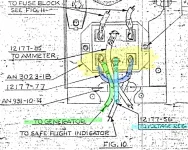
Mine is not a simple DPDT it's a heavy duty master switch but it works like a double pole double throw it's just a heavy duty double pole double throw put it that way, its what Piper used in the late 40s and 50s as the battery master its an AN3023-1B, disregard the notes for gen, the top is wired to the battery via two 30 amp fuses, redundancy
 

Attachments

  • 20201202_124416.webp
    20201202_124416.webp
    173.5 KB · Views: 19
Back
Top