Post #3, but here's a bit more detail.
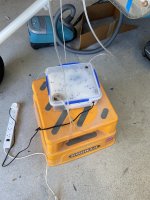
-Simple clear gallon plastic container. Local Jimmy John's gave me a couple.
-
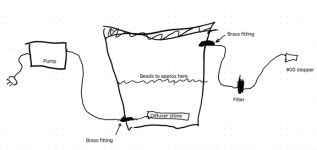
Amazon aquarium air pump. Big one. Moves a lot of air.
-
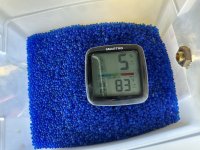
Amazon hygrometer installed in the lid
-
Amazon food strainer. Give the other two to wifey.
-
Amazon dessicant beads. Two each gallon size to allow for exchange.
-AN833-4D 90 degree bulkhead
-AN818-4D Nut (2)
-AN819-4D Sleeve (2)
-AN832-4D Union
-AN924-4D Nut (2),
-1/4" soft aluminum tube.
-Rubber plug for oil filler. A friend printed an oil filler with NPT threads for another aluminum tube fitting.
-1/4" ID Tygon clear tubing
-Universal metal fuel filter (1/4" barb) to catch any airborne silica
-24 hr timer.
-Block of 2X6 to support the container so the fitting would clear. Drill or cut a notch for the fitting on the bottom of the container.
-Home Depot Homer bucket.
Drill a hole in the bottom of the container for the AN833 and install it. Flare a section of tubing and make a 90 degree bend clear of the container. Drill a big hole for the hygrometer in the lid and a smaller hole for the AN832. Install both. Flare another piece of tubing and install. Cut a section of Tygon to connect the output of the pump to the bottom fitting on the dryer. Cut another short piece to connect from the dryer top fitting to the filter. Drill the plug for a piece of tubing and insert it. Use the rest of the Tygon to connect from the filter to the rubber plug. Cut rhe handle off the 4" strainer and place it on the bottom of the dryer over the fitting. The strainer sits on the bottom and keeps beads from blocking the line. Fill the dryer with beads and close the lid. Set the timer to the desired run time. Turn the timer till it starts. Air flows in the bottom and out the top. When the meter goes above 10%, I change the beads and take the others home to dry. Since it's open loop, there's no smell drying and Sweetie doesn't mind me using the oven. 250 for 3 hours.
The whole rig is on a rolling tool cart along with the heater/fan, charger, sump heat power and dryer. Four circuits controlled by a Switcheon. The heater has a fan mode for post flight.
After a flight, I connect and rotate the timer till bit comes on then leave it. It will run 30 min at some point every day. The time isn't important.