Van's Air Force

The definitive Van's Aircraft support community! Buying, building or flying an RV? Join our exclusive family of mentors and enthusiasts!

Another pmag question

I wish it was that easy with the 6cyl engines. I’d rather pickup on the case than the crank….
I chose not to go that route on the 540. My research indicated that there is lots of vibration back there and it causes more issues for the mags than that seen on the 4 cyl variants. Didn't want to take the risk. I believe flywheel pickup (VR or hall effect) is the way to go. Almost all upside and MUCH easier than building a mag hole pickup device.

I don't think it is any harder to build one of the for the 6 cyl engines. The shaft is different, but not really any harder to make.
 
I chose not to go that route on the 540. My research indicated that there is lots of vibration back there and it causes more issues for the mags than that seen on the 4 cyl variants. Didn't want to take the risk. I believe flywheel pickup (VR or hall effect) is the way to go. Almost all upside and MUCH easier than building a mag hole pickup device.

I don't think it is any harder to build one of the for the 6 cyl engines. The shaft is different, but not really any harder to make.
It’s my understanding that the gearing isn’t 1:1 which is why the 6 cylinder pmag has a gear train in it. Gears + harmonics = very hard to make reliable.
 
It’s my understanding that the gearing isn’t 1:1 which is why the 6 cylinder pmag has a gear train in it. Gears + harmonics = very hard to make reliable.
Yes, 540 is 1.5:1 or 1:1.5 (forget at the moment), not 1:1. That can be covered in the megasquirt software (custom trigger wheel), but it is quite uncommon and doubt it is in the megajolt code.

Magnets in the flywheel are 1:1 and easy to deal with and take all the gearing and vibration issues out of the equation.

Pmag apparently chose to use gears to get it back to 1:1, so they could reuse their 4 cyl software. Lazy and poor engineering IMO; Should have modified the code to support the 1.5 speed and avoid another point of mech failure.
 
Last edited:
How state of the art is a new YIO-390? Why can’t an engine manufacturer create a reliable means of cam / crank position sensing?
Lightspeed
Electroair
Surefly
Pmag

All have to mechanically interface with the accessory case gears. So the market is trying to retrofit new tech on engines that don’t appear to have changed since the 70s…. A tougher environment to operate in

The Lightspeed have (for some time now +23 years) a sensor board that mounts to the front of the case which detects crank position via magnets that are pressed directly into the flywheel at predetermined positions (TDC and +37/42, etc). This was updated to a smaller pickup (sensor) also mounted to the front of the case, and a carrier ring for the magnets that's screwed into the flywheel.

Lightspeed also has the accy case mounted position sensor. (ed. Not recommended for all the reasons and demonstrated failure modes and general poor reliability)
 
The Lightspeed have (for some time now +23 years) a sensor board that mounts to the front of the case which detects crank position via magnets that are pressed directly into the flywheel at predetermined positions (TDC and +37/42, etc). This was updated to a smaller pickup (sensor) also mounted to the front of the case, and a carrier ring for the magnets that's screwed into the flywheel.

Lightspeed also has the accy case mounted position sensor. (ed. Not recommended for all the reasons and demonstrated failure modes and general poor reliability)
sorry, forgot to mention LS.
 
Yes, 540 is 1.5:1 or 1:1.5 (forget at the moment), not 1:1. That can be covered in the megasquirt software (custom trigger wheel), but it is quite uncommon and doubt it is in the megajolt code.

Magnets in the flywheel are 1:1 and easy to deal with and take all the gearing and vibration issues out of the equation.

Pmag apparently chose to use gears to get it back to 1:1, so they could reuse their 4 cyl software. Lazy and poor engineering IMO; Should have modified the code to support the 1.5 speed and avoid another point of mech failure.

Is that true? Most systems have a sync trigger to tell it when the crank rolls over but on a 1.5:1 system how would you know without gearing back to 1:1? If you don’t know when the crank turned over how would you know which plugs to fire?

The mag works because it never loses sync with the crank even when off, so it doesn’t need to know absolute position.

In an effort to relate this back to pmag discussion:

The pmag 6 cyl setup has additional mechanical complexity, which is in part why it was delayed so long. I have no idea if it’s more or less reliable, I just know that it has more moving pieces.
 
Is that true? Most systems have a sync trigger to tell it when the crank rolls over but on a 1.5:1 system how would you know without gearing back to 1:1? If you don’t know when the crank turned over how would you know which plugs to fire?

The mag works because it never loses sync with the crank even when off, so it doesn’t need to know absolute position.

In an effort to relate this back to pmag discussion:

The pmag 6 cyl setup has additional mechanical complexity, which is in part why it was delayed so long. I have no idea if it’s more or less reliable, I just know that it has more moving pieces.


You are correct. I didn’t think it through. Must have done that exercise years ago and forgot. The 1.5:1 ratio wouldn’t work as you never know if you are in the first or second phase of drive rotation when you first saw the missing tooth or sync trigger. You can calculate speed, but need an external sync of some sort to know which phase your in. 1.5:1 is the same as 3:2, but must know which phase to know tdc and therefore crank angle.
 
Well, gee, I did replace a set of bearings after 500, maybe 600 hours. No reason, but yeah, I was in there because the seal was leaking. Had a scratch on the shaft. Not that it mattered, because $27 magnetic pickups don't care if they are oily.

Anyway, bearings and a seal totaled about $30.

Maybe I'll crank fire the next one. The other $300 worth of components don't care where I get the trigger signal.

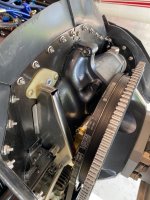
View attachment 122018

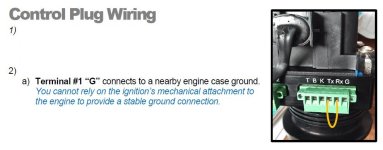
View attachment 122019


No, it's not, but it's a great sales feature. Fear of loss, a powerful motivator.

Seriously, show us your data. How may pilots have ever lost all ship's electrical power and flown home on their self powered p-mag?

I'd bet a whole lot more have failed the internal generator and flown home on ships power.

Dan we always get into arguments about nothing. However I disagree. Nuff said. I have no idea what those gold things are and don't want to know. :ROFLMAO: What ever they are, Apples and Cumquats no comparison to a P-Mag. Dan electrical failures do happen Brother, have occurred, will occur again with electronic ignition.
VariEz crash due to EI.

Ross who makes the SDS EI, has a Subaru powered RV-6... yep, he had a forced landing due to ignition issue years ago (he learned important lesson). As I mention many Diamond DA42 and DA62 loss of power due to loss of electrical system (not one but many mostly due to silly pilot tricks). You can say it's not important. To each his own. Raw mechanical reliability, Carburetors, Mechanical FI and Magnetos (that are self powered) like an old farm tractor has it's charms, utility and a reliability advantage to bring home the bacon.

You say the bearing is fine and the pmag is a great product . So, why did they suggest you inspect it every 100 hours? And why do sp many people here report having to send there units in due to the bearing failing that inspection.

Clearly you are happy and that is great. But that is not data either.

Why? an abundance of caution. It is AIRCRAFT and reliability and safety is important. To work well the tolerances have to be very tight. Why not check it. It was a new experimental ignition and Brad wanted to make sure it was perfect.

So many things you check during condition yearly, year after year, inspect and go YEP still good. The first production E-Mag/P-Mag was 2006, 20 years ago. There were some changes early on. They new they had some life limit, made no secret about it. The GEN II larger bearings was an improvement but still not immortal. The original bearings were still fine and did not need to be upgraded, unless they for replacement, they you upgrade. It was all quite transparent. There are no secrets.

The inspection with cowl already off already for condition inspection is an hour each, pull the plug leads, pull the clamp, slide it out, 30 seconds check for play, yep good, than put it back in. Timing? Even a caveman can do it. It is a no brainer.

The bearings DO wear be it 500 or +1000 hr or more. That is a lot of flying. The repair is simple. Why 500 hours inspections now? MORE SERVICE HISTORY? Apparently "Mo-Betta" Hartzell bearing? I am out of the loop. I don't know. I have vintage P-Mags. Yeah Verily, behold the longer inspection interval!

A lot of P-Mag owners NEVER check the shaft play. It is NOT mandatory. It is what it is. Take it or leave it. Some people just don't like them with no experience. Do as you like. Some claim some issues so they sold them, so they say. User error?

BTW Everything on the back of that accessory case in the history of aviation: vacuum pumps, magnetos, hydraulic pumps, propeller governor, starter, generator, all wear out at some point. Not sure why all the anxiety. Brad knew this was a demanding area with vibrations, power pulses and heat. It was designed to handle this.

Other EI's you drill and glue magnets in the ring gear/pulley, set the gap. Should work with wires running all over to the EI box, unless the alternator belt breaks (and they do) and takes out both your EI pickups. :oops: I think the smart move is one OLD fashion Mag and one EI. Many folks do this. Most of the gain of an EI is with the ONE... The second one is an incremental increase in efficiency.

Periodic P-Mag maintenance and bearing replacement is worth it to me. They work great, simple to install, and are self powered. :) :love:
P-Mag has proven to by very reliable. The bearing is not subject to catastrophic failure (unless you grossly neglect it. I recommend you say clear of the P-Mag if this is a big dot deal to you. I get it if you don't like it. The other EI's are fine, but you MUST have extra battery or alternator. Do as you like.

I have an extra battery for my Glass Cockpit. One P-Mag can take power off that "emergency bus", if it needed it, but does not. That P-mag is isolated from the electrical grid.
 
Last edited:
Ross who makes the SDS EI, has a Subaru powered RV-6... yep, he had a forced landing due to ignition issue. As I mention many Diamond DA42 and DA62 loss of power due to loss of electrical system (not one but many). You can say it's not important. To each his own. Raw mechanical reliability, Carburetors, Mechanical FI and Magnetos (that are self powered) like an old farm tractor has its charms, utility and a reliability advantage to bring home the bacon.

This is at best false attribution fallacy and at worst an outright lie (the only difference is motive). Read about the forced landing here: http://sdsefi.com/rv12.htm

It was not an ignition issue, it was a a failed alternator that went unnoticed for 10-15 minutes combined with the assumption that there was enough battery to power the airplane for extended periods.

This doesn’t apply to the SDS CPI2 product because it maintains a dedicated battery, not one shared with the rest of the airplane, and because that battery only runs the fairly low powered ignition and not high current fuel pumps and avionics, it has enough power to fly the airplane for hours depending on size. Not only that but the head until will immediately show the alternator fault with a bright LED and audio warning if you wire it into the intercom.

You also point out the belt failing, but eveybody armors those wires and I’m unaware of a single forced landing due to that mode of failure. Besides, this is another fallacy, you can’t argue that checking mag shaft play is trivial and also people will forget to inspect the alternator belt.

You raise a reasonable point that electric ignition won’t survive poor install, but neither will anything else. You need to torque your nuts and use lock washers every bit as much as you need to use quality crimp tools and connectors, except that quality wiring with proper supports and connections almost never wears out.

When I first started building I told some old timers I was going to use a glass panel. They stared in amazement and asked how I could dare trust electrons, I stared back and asked how they can trust vacuum pumps.

Anyway, the fact of the matter is that electronic ignition isn’t more complex than a mag, it’s just different complex. You are trading electronics for harmonics and wires for metallurgy. I’m good with that trade, modern electronics are very reliable. I’m not good with the pmag because you aren’t trading mechanical complexity for electrical complexity, rather you are adding the electrical complexity to the mechanical complexity and worse, that electrical complexity gets to live in an environment that is constantly trying to kill it.
 
On our RV-7A - 5 pMag issues in a little over 500 hours, including one engine rough running occurrence. Turned out to be bearing wear on one pMag and phase failure on the other - both at 70 hours. Have had failed "range check" two flights after pMag inspection at E-MAG Air. They couldn't find anything wrong (probably because they don't heat up the pMag when inspecting it). Latest was a true failure at 300 feet on takeoff resulting in very rough running of the engine. Thanks to the EI Commander, my son knew which pMag had gone haywire and turned it off. Haven't sent it back for inspection due to current pricing structure for overhaul at Hartzell. SDS CPI-2 being installed soon.

SDS EM-6 on our RV-10 has been flawless.

Belt protection for hall sensor is not that difficult.
 

Attachments

  • SDS Hall Sensor protection.jpeg
    SDS Hall Sensor protection.jpeg
    1.7 MB · Views: 73
On our RV-7A - 5 pMag issues in a little over 500 hours, including one engine rough running occurrence.
So, to everyone that keeps telling me the pmags are great and have no issues and there is no data saying otherwise, here is one. Maybe you can start tallying these, so you have some data. I see them here all the time. Yes, I fully understand that there are FAR more pmags that give great long term service without these problems, but clearly the design has flaws and not everyone enjoys that experience. How many people come here and say they sent the traditional mag in for service 5 times in 500 hours; never seen that posted here.

Its great that so many people love their pmag and have no issues, but folks here should be able to understand the potential risks before jumping in. Especially with the new pricing. That would have been $4800 in pmag service for the above poster under the new program.
 
I have no idea what those gold things are and don't want to know.

The pickup is a magnet and a coil of wire, both on a steel strip. The rotor is a 36 tooth steel gear with one tooth removed. No hot electronics.

What ever they are, Apples and Cumquats no comparison to a P-Mag.

That's for sure. I went back and looked. The bearings were $3.92 each. The seal was $5.80. The total for seal replacement with new bearings was $13.64.

Periodic P-Mag maintenance and bearing replacement is worth it to me. They work great, simple to install, and are self powered. :) :love:

As noted, self-powered is a great sales feature.
 
My mags have 200 hours since the 500 inspection was completed, and I need new harnesses so I was thinking about maybe swapping one out to a P-mag. After reading the many threads on here, The advantage(s) all of this tech offers are:

The ability to use auto plugs
The ability to run more advance at lower MP which is more efficient when running LOP
Easier starting (this is a "maybe")
Experimenting because Experimenting is fun.

My mission is 1 hour acro and formation flights, with an occasional 1-1.5 hour cross country flight thrown in. I have a Catto 3 blade (FP) IO360 so I generally run ROP- I bought an RV so I could GET THERE not goof around with mixtures and lose 5 knots. Although I understand the advantages and maybe with some experimenting I will try running LOP one of these days.

Even the Kitplanes article with all of the ignition advance experiments showed that when running ROP the optimal timing is (drum roll) 25 degrees! Same as the old tractor mags!

I may be missing something but I'm sticking with the mags.

I also see that the P-mag price doesn't include the new harnesses so there goes that justification (although I could still tell the wife that if necessary).
 
My mags have 200 hours since the 500 inspection was completed, and I need new harnesses so I was thinking about maybe swapping one out to a P-mag. After reading the many threads on here, The advantage(s) all of this tech offers are:

The ability to use auto plugs
The ability to run more advance at lower MP which is more efficient when running LOP
Easier starting (this is a "maybe")
Experimenting because Experimenting is fun.

My mission is 1 hour acro and formation flights, with an occasional 1-1.5 hour cross country flight thrown in. I have a Catto 3 blade (FP) IO360 so I generally run ROP- I bought an RV so I could GET THERE not goof around with mixtures and lose 5 knots. Although I understand the advantages and maybe with some experimenting I will try running LOP one of these days.

Even the Kitplanes article with all of the ignition advance experiments showed that when running ROP the optimal timing is (drum roll) 25 degrees! Same as the old tractor mags!

I may be missing something but I'm sticking with the mags.

I also see that the P-mag price doesn't include the new harnesses so there goes that justification (although I could still tell the wife that if necessary).

This is a great point. If I wanted simple I would have installed mags.

My reasons for EI is:

Hotter spark can ignite richer and leaner mixtures that a mag might struggle with. Might make it possible to run leaner LOP as well as help with hot restarts.

I want to inspect wires and be done. I don’t want to time mags every annual.

I like NGK plugs and MSD wires.

Little bit more speed when LOP due to the ability to add advance.

Smoother idle due to way less timing at idle.

Reduced timing at high manifold pressures and/or low altitude to keep things a little more cool.
 
My mags have 200 hours since the 500 inspection was completed, and I need new harnesses so I was thinking about maybe swapping one out to a P-mag. After reading the many threads on here, The advantage(s) all of this tech offers are:

The ability to use auto plugs
The ability to run more advance at lower MP which is more efficient when running LOP
Easier starting (this is a "maybe")
Experimenting because Experimenting is fun.

My mission is 1 hour acro and formation flights, with an occasional 1-1.5 hour cross country flight thrown in. I have a Catto 3 blade (FP) IO360 so I generally run ROP- I bought an RV so I could GET THERE not goof around with mixtures and lose 5 knots. Although I understand the advantages and maybe with some experimenting I will try running LOP one of these days.

Even the Kitplanes article with all of the ignition advance experiments showed that when running ROP the optimal timing is (drum roll) 25 degrees! Same as the old tractor mags!

I may be missing something but I'm sticking with the mags.

I also see that the P-mag price doesn't include the new harnesses so there goes that justification (although I could still tell the wife that if necessary).
Yep - it is all about meeting mission requirements. But yes, starts are done in a blade or two. Hot starts are a rotation or two as I’m slow pushing the mixture knob in.

For short and local flights like you list the ROI is not as great. For me the reduced fuel burn on my typical 4 hour Cross Country legs makes a huge difference - as in I can still go fast but many times I can skip an added fuel stop.

Attached is a screen shoot from a typical cross country Ignore the 0.4gph indication. It just means I went directly to the desired LOP fuel flow and did not go slow enough to get an accurate indication. My measured GAMI spread is 0.0–0.1gph. RV-8, IO-360-M1B, dual pMags and Hartzell two blade BA prop.

Carl
 

Attachments

  • screenshot-N8PH-SN12727-16.7.0.11423-20250607-185302-154-en_US.png
    screenshot-N8PH-SN12727-16.7.0.11423-20250607-185302-154-en_US.png
    978.4 KB · Views: 33
This is a great point. If I wanted simple I would have installed mags.

My reasons for EI is:

Hotter spark can ignite richer and leaner mixtures that a mag might struggle with. Might make it possible to run leaner LOP as well as help with hot restarts.

I want to inspect wires and be done. I don’t want to time mags every annual.

I like NGK plugs and MSD wires.

Little bit more speed when LOP due to the ability to add advance.

Smoother idle due to way less timing at idle.

Reduced timing at high manifold pressures and/or low altitude to keep things a little more cool.
Yes I did forget the study showed a few knots faster running LOP at higher altitudes with lots of advance. Seems to do this consistently and safely you'd want really good engine instrumentation. I have the EI 4 probe EGT/ CHT which requires me to view each cylinder individually. Serves to keep me entertained on my 1 hour flights.

Timing the mags with the buzz box takes very little time- I think the "hotter spark" issue is kind of moot, but the easier starting seems quite real because the P-mag puts out more juice at lower rpm? Either way, easier hot starts would be nice.

Yep - it is all about meeting mission requirements. But yes, starts are done in a blade or two. Hot starts are a rotation or two as I’m slow pushing the mixture knob in.

For short and local flights like you list the ROI is not as great. For me the reduced fuel burn on my typical 4 hour Cross Country legs makes a huge difference - as in I can still go fast but many times I can skip an added fuel stop.

Attached is a screen shoot from a typical cross country Ignore the 0.4gph indication. It just means I went directly to the desired LOP fuel flow and did not go slow enough to get an accurate indication. My measured GAMI spread is 0.0–0.1gph. RV-8, IO-360-M1B, dual pMags and Hartzell two blade BA prop.

Carl
Carl, I think you are saying you have a FP prop- to achieve LOP do you lean down to the target RPM? My hottest EGT peaks around peak RPM. So to achieve LOP, I would need to start out at a higher RPM and lean down to it as RPM reduces immediately after peak EGT.

I use the iPhone app for power settings, I have a MP gauge, so it becomes a dance of reducing 1/2", waiting for the RPM to stabilize, checking the app to see what my power setting is at, etc. And trying to fly perfectly level without autopilot to keep my RPM stable. Again, a great way to stay entertained during XC flights. By the time I get the power perfectly set at 75% it's time to start descending.

Edit, I did notice that the auto plug harnesses are cheaper, as are the plugs, so there's that advantage.
 
Smoother idle due to way less timing at idle.
while maybe counter-intuitive, more advance can be good for a smoother idle. My 6 struggled with rough idle due to hot fuel (using outside injector ports, as have no top ports - 1/8 SS lines get hotter out there). I ultimately settled on 35* of advance at idle and it helped a lot. Advance ramps back down at 1000 rpm and then ramps as normal.
 
Incorrect, the SDS CPI2 is also self powered. It uses a dedicated battery that it maintains that powers the unit if you have electrical problems. The only difference is that one system stores energy and the other generates it, ether way neither system depends on external power in an emergency.

You could argue that the pmags are easier to install, and you’d be absolutely right, they don’t take up panel space either.

On the flip side, the CPI2 doesn’t have electronics bolted to the engine, doesn’t have bearings to fail, doesn’t have a min rpm, allows you to set whatever timing you want, and isn’t known to need overhaul.

No it is a BATTERY a second battery that has finite energy. The PMAG has no battery, it has a dynamo, a generator. DIFFERENT. I am not incorrect. :) The SDS is electrically defendant. To compensate a second battery is ALWAYS added (or additional generator).

As far as "you could argue"... I am done arguing. I said what I said... Enjoy your SDS it is a fine unit... but is not failure proof, nor is any man made machine.
 
while maybe counter-intuitive, more advance can be good for a smoother idle. My 6 struggled with rough idle due to hot fuel (using outside injector ports, as have no top ports - 1/8 SS lines get hotter out there). I ultimately settled on 35* of advance at idle and it helped a lot. Advance ramps back down at 1000 rpm and then ramps as normal.
This is my experience as well. It throw a bunch of advance at idle, and then ramp it down to a significant retard (compared to data plate values) as the power comes up on TO roll.
 
I don’t think you can. You sure couldn’t do this back when I was flying Pmags.
It was really a rhetorical question. You can't really adjust the slope of the advance curve either, which is problematic. The EI Commander did allow some adjustments on the fly, but it's been discontinued. 6 cylinder pMags are a completely different animal and I don't think you can do any external controlling of them, short of DIP switch changes and a flight deck fixed or variable timing switch.
 
…To compensate a second battery is ALWAYS added (or additional generator).
This statement is incorrect. A second battery/generator might be added in certain mission profiles to satisfy the comfort level of the operator, but the fact remains that the SDS ignition pulls less than one amp at max RPM, so the existing ships battery will power the ignition far, far longer than any fuel supply.

The “self powered” feature of the PMag is a nice sales pitch, but is hardly a compelling distinction when you consider the overall reliability of the aircraft as a system.
 
My mags have 200 hours since the 500 inspection was completed, and I need new harnesses so I was thinking about maybe swapping one out to a P-mag. After reading the many threads on here, The advantage(s) all of this tech offers are:

The ability to use auto plugs
The ability to run more advance at lower MP which is more efficient when running LOP
Easier starting (this is a "maybe")
Experimenting because Experimenting is fun.

My mission is 1 hour acro and formation flights, with an occasional 1-1.5 hour cross country flight thrown in. I have a Catto 3 blade (FP) IO360 so I generally run ROP- I bought an RV so I could GET THERE not goof around with mixtures and lose 5 knots. Although I understand the advantages and maybe with some experimenting I will try running LOP one of these days.

Even the Kitplanes article with all of the ignition advance experiments showed that when running ROP the optimal timing is (drum roll) 25 degrees! Same as the old tractor mags!

I may be missing something but I'm sticking with the mags.

I also see that the P-mag price doesn't include the new harnesses so there goes that justification (although I could still tell the wife that if necessary).
Vans sells the pmag with the harness included.
 
No it is a BATTERY a second battery that has finite energy. The PMAG has no battery, it has a dynamo, a generator. DIFFERENT. I am not incorrect. :) The SDS is electrically defendant. To compensate a second battery is ALWAYS added (or additional generator).

I just spent the morning riding an e-bike in the Italian Alps. I’m super thankful that it was “self powered” or I’d be dead
 
This statement is incorrect. A second battery/generator might be added in certain mission profiles to satisfy the comfort level of the operator, but the fact remains that the SDS ignition pulls less than one amp at max RPM, so the existing ships battery will power the ignition far, far longer than any fuel supply.

The “self powered” feature of the PMag is a nice sales pitch, but is hardly a compelling distinction when you consider the overall reliability of the aircraft as a system.

This is true and how I implemented, but I do think that the dedicated battery that is maintained by the CPI2 is a useful feature and qualifies it for “self powered”.

The reason is because the ignition will continue to work even if the main bus is shorted to ground, or the installation is poor. As long as the dedicated battery is installed per the manual, everything else electrical can quit and the ignition continues to run.
 
This is true and how I implemented, but I do think that the dedicated battery that is maintained by the CPI2 is a useful feature and qualifies it for “self powered”.

The reason is because the ignition will continue to work even if the main bus is shorted to ground, or the installation is poor. As long as the dedicated battery is installed per the manual, everything else electrical can quit and the ignition continues to run.
I feel the same and believe this is just as effective as the pmags built in generator. Fully isolated, redundant power source with the added benefit of not turning off the the ignition if you drop below 800 rpm.
 
This is true and how I implemented, but I do think that the dedicated battery that is maintained by the CPI2 is a useful feature and qualifies it for “self powered”.
I agree. Ross developed the auto switching, charging and fault detection so the customer didn’t have to figure that out on their own. It’s a plug and play solution and effectively makes the ignition self sufficient. In context, it does not matter that the juice comes from an on board generator, a battery, Mr. Fusion, or powdered unicorn horns - as long as the sparks last longer than the fuel supply, that meets the requirements.
 
I agree. Ross developed the auto switching, charging and fault detection so the customer didn’t have to figure that out on their own. It’s a plug and play solution and effectively makes the ignition self sufficient. In context, it does not matter that the juice comes from an on board generator, a battery, Mr. Fusion, or powdered unicorn horns - as long as the sparks last longer than the fuel supply, that meets the requirements.

I think Ross and SDS are great, but it does matter. Did you read your own words? "developed auto switching...fault detection." That is a lot of compactions and reliance on more circuit boards, semi conductors. I know he tested it, and I'm sure it is great but not perfect. Nothing is. It is NOT like a The P-MAG (electronic ignition), which utilizes a permanent magnet alternator (PMA), a specialized alternator that is powering the ignition at all times above 800-900 RPM. The P-Mags are powered all the time 100% independent of the aircraft electrical system. Again self powered, independent of the aircraft electrical system or a back up battery.

BTW if you have a problem with 800 RPM's as min RPM for the P-MAG, that is a non issue.

Personally I did not want to drill pulley to bond in magnets. I did not want to mount pickups inside the pulley off of brackets and run wires to another box, somewhere behind the firewall. I did not want to add another batter. With P-Mag, take the Bendix or Slick out, put in P-Mag in. As I said before the best solution may be KEEP one Bendix/Slick magneto as backup to a single EI, for great reliability and true electrical independence. Magnetos have a great record of reliability if maintained (with some notable excepts like the two mag one drive ill-conceived design).

I just spent the morning riding an e-bike in the Italian Alps. I’m super thankful that it was “self powered” or I’d be dead
Great humble brag, but your point? You say batteries store energy. I made a note of that. Thanks. 👍How far did you push that heavy e-bike to get back after the batteries die? Ha ha. I did not ride my bike today, but spent the morning doing loops and rolls in my RV-7 with my hot girlfriend, who bought me lunch after, no batteries involved. :)
 
Last edited:
Jack, how often do you check your P-mag alternators for operation?

I try to do it every flight, especially 1st Flight, but on subsequent flights I typically skip self power ignition check.
Abbreviated ignition check, turn LEFT Off/On, than RIGHT Off/On.
I might abbreviate if I am in a flight of aircraft, cleared for take off.

Keep in mind P-mag works fine even if self-power fails, connected to aircraft bus for power. One of my p-mags is connected to the E-bus which is isolated by DC-DC charger, and yes I have a 2nd battery, for the glass panel. Belt and suspenders baby. Also if I ever switch to another brand of EI I have isolated backup DC power.

I have gated Mil Spec toggle switch: Off, On and Test.​
ON (middle) gated can not go up or down without pulling switch out.​
OFF (down) pull out on switch and select down, it laches in off.​
TEST (up) pull out and hold up; it's mechanically spring loaded to go back to ON (middle) when released.​

Takes about 8 seconds, not rushing, to do ignition check during runup, throwing switches: off/test/on/off/test/on. This confirms each P-Mag is SELF power.
I also get my switch throwing jollies. :) 👍

It is recommended to occasionally, confirm the MIN RPM the ignition will stilll power the engine. You can feel it getting rough. Some report 700-850 RPM engine is the MIN. I do not do this often. I stop at 900 RPM. If still smooth running, that is good enough.
 
Last edited:
….Personally I did not want to drill pulley to bond in magnets. I did not want to mount pickups inside the pulley off of brackets and run wires to another box, somewhere behind the firewall. I did not want to add another batter.
That’s your right and you clearly have bought into the marketing that it’s easier to install. It is. But that convenience comes at a cost. And that cost is system reliability. You are trading an easy to install but mechanically complex unitized ignition product vs a harder to install, but more reliable distributed product. You made your choice. Live with it. But don’t dig up imaginary failure modes to justify your choice.
 
I try to do it every flight, especially 1st Flight, but on subsequent flights I typically skip self power ignition check.
Abbreviated ignition check, turn LEFT Off/On, than RIGHT Off/On.

Seems like a quality self-power check would require (for example) grounding #1's p-lead so the engine is running on #2 alone, then using #2's test switch to disconnect its ship's power. If the engine remains running, #2 alternator is good. It's how I check them when I do a pre-buy.

Your OFF/ON/TEST switching requires moving one switch to OFF, then the other switch to TEST.

Merely cycling ship's power Left Off/On, then Right Off/On requires detecting a failed alternator by noting a rather small RPM drop and perhaps some EGT shift. Yet a small RPM drop is what pilots have been taught to expect as normal.
 
Last edited:
I think Ross and SDS are great, but it does matter. Did you read your own words? "developed auto switching...fault detection." That is a lot of compactions and reliance on more circuit boards, semi conductors. I know he tested it, and I'm sure it is great but not perfect. Nothing is. It is NOT like a The P-MAG (electronic ignition), which utilizes a permanent magnet alternator (PMA), a specialized alternator that is powering the ignition at all times above 800-900 RPM. The P-Mags are powered all the time 100% independent of the aircraft electrical system. Again self powered, independent of the aircraft electrical system or a back up battery.

BTW if you have a problem with 800 RPM's as min RPM for the P-MAG, that is a non issue.

Personally I did not want to drill pulley to bond in magnets. I did not want to mount pickups inside the pulley off of brackets and run wires to another box, somewhere behind the firewall. I did not want to add another batter. With P-Mag, take the Bendix or Slick out, put in P-Mag in. As I said before the best solution may be KEEP one Bendix/Slick magneto as backup to a single EI, for great reliability and true electrical independence. Magnetos have a great record of reliability if maintained (with some notable excepts like the two mag one drive ill-conceived design).


Great humble brag, but your point? You say batteries store energy. I made a note of that. Thanks. 👍How far did you push that heavy e-bike to get back after the batteries die? Ha ha. I did not ride my bike today, but spent the morning doing loops and rolls in my RV-7 with my hot girlfriend, who bought me lunch after, no batteries involved. :)

I don’t think you understand the electronics in these boxes.

The pmag has an alternator, a voltage regulator, an absolute position hall effect sensor, a coil, a microcontroller, and it diode ors (or uses a power management IC and a MOSFET) to pick ships power or regulated alternator power.

The SDS uses a power IC and microcontroller to switch based on voltage, perhaps another IC as a charge controller, then uses an external trigger hall effect sensor as a crank pickup, an external coil, and an external battery.

Arguing that the generator and voltage regulator is less complex than a battery and charge controller is odd. The regulator in the pmag would require much more capacitance and semi conductors, and the auto switching is more or less the same, you are just switching from ship power to voltage regulated generator in one case and battery in the other.

What’s my point? It’s pretty simple, batteries are a legitimate mode of self powered, just like an electric car, your phone, or the e-bike I rode this morning, and many times batteries are simpler. Batteries don’t need regulation or over voltage protection, never create electrical noise, and aren’t subject to harmonics, bearings, etc.

BTW, I rode 22 miles and came back with 50%, it’s not that hard to size a battery, especially if there is only a single load and its current draw is completely known.
 
That’s your right and you clearly have bought into the marketing that it’s easier to install. It is. But that convenience comes at a cost. And that cost is system reliability. You are trading an easy to install but mechanically complex unitized ignition product vs a harder to install, but more reliable distributed product. You made your choice. Live with it. But don’t dig up imaginary failure modes to justify your choice.
"Bought Into the marketing." - That is patronizing. Yes I bought two P-mags. Very happy. Not ignorant, naive or inexperienced. I did my research. Light Speed, ElectroAIr, SDS and P-Mag. I waited over 10 yrs before I even would consider buying the P-Mag. P-Mag is #1 selling experimental electronic ignition on the market 20 years says something. I waited for SDS II to see what was up before buying the P-Mag/ I was impressed. I even inquired about ordering but Ross was busy and never got back. He had a backlog. I thought about Canada, getting parts. P-MAG? USA, service exceptional. (I believe Hartzell is still keeping manufacturing in USA). I also did not want all the extra wires, control display unit. If I was racing and wanted to endlessly play with the MAP (RPM/Manifold Pressure/Advance Curve) I would go SDS. I just wants something that works hands off.

"Easier to install" - Yes it is a fact. Facts are stubborn. Again wires running over your engine with pickups inside the pulley that have to be aligned, gapped that could if something fouls the spinner, ring gear could wipe out sensors. I did have a alternator belt fail on a Piper Twin... The generator seized and belt smoked and came off with force. If EI sensors were there they would likely be damaged, gone. I don't need cockpit displays on on the fly adjustment. I just want an ignition out of sight out of mind.

"Cost is system reliability." That is a strawman. What reliability issue with P-Mag? They are very reliable. This red herring distracts from the self power and ease of installation. I wrote a book on bearing wear above, please read it. That is a maintenance item I grant you. This is a known wear item and addressed with maintenance. Yes it is more than hall effect sensors off the pulley. Got it. Noted. Than you follow up with self power and ease of installation is not important? Your opinion. I find it very important.

Your argument and others is Self Power and Ease of installation are NOT important so the P-Mag has no advantages? That is Illogical. Yes there are other solutions, but the P-Mag is the only one that does what it does and does it well. If it was easy everyone would do it. It was not easy.

The value and advantage of P-Mags is prima facie, self evident. Again #1 selling experimental electronic ignition on the market 20 years. There is NO MARKETING, just good product, great customer service and word of mouth. They spent ZERO on marketing. Do you see Ads all over magazines and internet? No, not at least in the pre Hartzell years.

Light Speed with CDI (Capacitive Discharge Ignition) and manual timing adjustment in flight, great especially for racing, turbo engines (but could blow your engine if not careful with user timing advance). LS has clear advantages. It is not certified and you need a back up battery. It has been around one of the longest and has had some board failures. That is why we have TWO ignitions. (Almost all other EI's use good old , fashion, Inductive Discharge Ignition (IDI), invented by Charles F. Kettering in 1910 and first used by DELCO on 1912 Cadillac. P-Mag, SDS, Electroair, Surefly, Light Speed (lower priced model) all use IDI... like your car. As far as CDI that is best for high RPM applications, due to recovery time. Since our engines are slow turning IDI is good.

SDS with all kinds of cockpit displays and controls, auto backup power, very cool. That is a lot of wires, too much info and controls, overkill for me. Don't get me wrong I like overkill but ignition out of sight out of mind, just work please. I just want the engine to go SUCK, SQUEEZE BANG BLOW... especially the BANG. I don't want to think about my ignition or see it. Just turn it on and it works. Done.

Electro-Air has marketing they have the hottest of the hottest sparks ever. Well that may or may not be true but there is only so much energy you can use. More spark energy is wasted at some point, and it just draws more electrical power from plane. It is certified and you need a back up battery. Otherwise I think it is a fine ignition, but there have been issues in the field but believe they are rare.

Sure Fly - certified unit that uses aircraft spark plugs (or you can convert to NGK if experimental but that is a customer modification I believe). You need a back up battery.

I WANT A MAGNETO. ON>RUN OFF> That is it. I want it to run with the master and E-bus switches OFF.
I don't want to see ala carte wires and sensors in the engine bay. I don't want Inst Panel display, or endless user adjusts flight or ground.
I just want it to work and give me ALL the Advantages of EI:


Easier Start​
Smoother Idle​
Hotter Spark (this is where the marketing fibs come in by other brands)*
Lower fuel Burn, better fuel economy at high altitude lower power, due to timing advance.​

The P-Mag and frankly ALL the EI's do the same dang thing, just in different packages. Ease of installation, less wires, and self power rocks, P-Mags "marketing" advantage. I don't want to mess with settings, other than time it (LED light Caveman can do it) and fly it. Yes there are A B jumpers, even I can figure it out. It is VERY advanced and has features that are hidden. With small effort you can access it through a DATA port for engine data, diagnostics and even modification, with a utility program Brad has sent people. I have a copy. P-Mag has robust fault detection and fault LED, that has coded blinks to tell you what is going on.

* "P-Mag does not have a hot spark" - I heard that years ago, so I investigated. I know the coil pack used on P-Mag. I read the hype by an un-named experimental EI company, I even called and talked to them. Talked to another EI companies and P-Mag. My conclusion, irrelevant marketing. The P-Mag spark energy is more powerful than needed, enough to give a big fat spark across +0.035 gap at full power with margins X10. It's a pointless complaint. If someone's coil (transformer) claim is they have bigger step up? OK. What you going to do with it? Use more ships electrical power? Yes and it's wasted.

EI is not Rocket Surgery or Brain engineering (see what I did there). 😊 P-Mag uses clever design choices, conservative with safety in mind, and is a high quality product. But it is a challenge to be in a hot and vibrating environment. That is NOT to say others are not high quality or have Pros and Cons. So there you go. May be you bought into the marketing and the propaganda? I waited to decade on EI. I looked seriously at every brand out there. The winner? What ever you decide. Even the Standard Magneto has a lot of merit for local flying, especially if you never fly at high altitude, long distance at 55% to 60% power. The EI can not be beat in this lower power regime. So if you have two good Magnetos, stick with them. They work.
 
Last edited:
Seems like a quality self-power check would require (for example) grounding #1's p-lead so the engine is running on #2 alone, then using #2's test switch to disconnect its ship's power. If the engine remains running, #2 alternator is good.

Your OFF/ON/TEST switching requires moving one switch to OFF, then the other switch to TEST.

Merely cycling ship's power Left Off/On, then Right Off/On requires detecting a failed alternator by noting a rather small RPM drop and perhaps some EGT shift. Yet a small RPM drop is what pilots have been taught to expect as normal.

This raises a good point about EI. They do not work like mags and you must understand the differences to test them.

In the case of a pmag, it sounds like the p-lead just cuts the coil to make sure the other coil/plugs/wires work, but it doesn’t test the generator.

Having one switch in test and the other off isn’t intuitive, but without that I don’t see how you can test the generator.

I have a similar problem, I have ign1 off/on, ign2 off/on, then (on)-off-(on) for the p-lead test. There are a couple of ways to test, what makes sense to you?

1. IGN 1/2 on, start, test both sides, then ign1/2 off, note the panel show fault and light up the on battery indication, ign1/2 on.

2. IGN1/2 on, start, ign1/2 off, test both sides on battery while showing fault, then IGN1/2 on?

3. Something else?

The issue is that the CPI2 won’t power down when on battery unless engine rpm is zero, so turning it off just cuts to backup. That said I do get an indication on the panel so perhaps it doesn’t matter if I never have the ignition cut during my preflight tests….

Thoughts?
 
Seems like a quality self-power check would require (for example) grounding #1's p-lead so the engine is running on #2 alone, then using #2's test switch to disconnect its ship's power. If the engine remains running, #2 alternator is good. It's how I check them when I do a pre-buy.

I do my run-ups with bus power turned off. Internal generators on both p-mags get tested before every flight. Bus power comes back on before I retard the throttle for the idle check.

Every p-mag installation I've seen has toggle switches for bus power and a preflight test procedure based on the p-mag manual.

- mark
 
That makes sense. Does it wear out the breakers to cycle them every flight?
Klixon:
5,000 cycles: 30 VDC resistive
10,000 cycles: Mechanical, no load

So if you tested them every day, 5000 cycles equals 13 years.
Pmags are close to no load so probably closer to 20 years +.
 
Last edited:
This is at best false attribution fallacy and at worst an outright lie (the only difference is motive). Read about the forced landing here: http://sdsefi.com/rv12.htm

It was not an ignition issue, it was a a failed alternator that went unnoticed for 10-15 minutes combined with the assumption that there was enough battery to power the airplane for extended periods.

This doesn’t apply to the SDS CPI2 product because it maintains a dedicated battery, not one shared with the rest of the airplane, and because that battery only runs the fairly low powered ignition and not high current fuel pumps and avionics, it has enough power to fly the airplane for hours depending on size. Not only that but the head until will immediately show the alternator fault with a bright LED and audio warning if you wire it into the intercom.

You also point out the belt failing, but eveybody armors those wires and I’m unaware of a single forced landing due to that mode of failure. Besides, this is another fallacy, you can’t argue that checking mag shaft play is trivial and also people will forget to inspect the alternator belt.

You raise a reasonable point that electric ignition won’t survive poor install, but neither will anything else. You need to torque your nuts and use lock washers every bit as much as you need to use quality crimp tools and connectors, except that quality wiring with proper supports and connections almost never wears out.

When I first started building I told some old timers I was going to use a glass panel. They stared in amazement and asked how I could dare trust electrons, I stared back and asked how they can trust vacuum pumps.

Anyway, the fact of the matter is that electronic ignition isn’t more complex than a mag, it’s just different complex. You are trading electronics for harmonics and wires for metallurgy. I’m good with that trade, modern electronics are very reliable. I’m not good with the pmag because you aren’t trading mechanical complexity for electrical complexity, rather you are adding the electrical complexity to the mechanical complexity and worse, that electrical complexity gets to live in an environment that is constantly trying to kill it.

I stopped reading. "This is at best false attribution fallacy and at worst an outright lie (the only difference is motive)" Calling me a liar, go away. Booo.

What the P-Mag does not have are sensors, wires, boxes shot gunned all over plane. Not there is anything wrong with wires, sensors, boxes, connectors shot gunned all over the hot vibrating engine compartment? :rolleyes: What could go wrong with wires and connectors running all over and hot vibrating engine, in engine bay with other things to chaff against and going through bulkheads? (Vibration, chaffing, wear, bad connection). Don't hate the messengers. I RECOMMEND you inspect your wires well just like P-Mag operators have to check their bearings.

You are being pedantic and petulant. Your remedial explanation of how things work was making what point? I understand the risk and design trade offs as I spent a career designing and certifying aircraft and aircraft systems, and then flying them. I have been honest, factual, correcting misunderstanding of the P-Mag. This has upset people who were secure in how much better their choice was. Do as you like is what I have said. I have said ALL EI's have Pros and Cons. When I point out Con's of other EI's it is total cognitive dissonance. WHAT? :oops: Your EI can fail in many ways extra battery or not. Sorry. I have flown some aircraft with the most redundant systems in aviation. In GA aviation. SEL we have one engine. We have no redundancy of thrust. I digress.

You misunderstood what I said about Magnetos. It went over your head. I am NOT saying Magnetos are better than EI. What I am saying, magnetos are not the weak sauce people falsely think or are unreliable. They have a hot spark at high RPM. They also have fixed 25 BTDC timing (typically) which is a great compromise for full power, OK for 75%. EI is better, stronger spark across the full RPM range, timing advance at lower power. EI is "simple" in the aspects of no moving parts. So they should be more reliable. You seem to think I am saying Magnetos are better? No but spending $5000 to get an EI when you have two good Mags might not be the value added preposition you think.

On the other hand a 500 hr Bendix inspection replacing cam breaker points, capacitor, oil seal, slinger, and all felt washers/strips. It is about $500 with labor. The parts are about $100-$120, DYI is peanuts. If other items need replacement, impulse couple, cost go up. Overhaul of Mag is with engine overhaul (1500-2000hrs) and cost $1000-$1500 (again full overhaul exchange $2000). Not really horrible, so EI is not a MUST have for many. You can do a lot of 500 hr inspections at $100 in parts, verses a $5000 EI. For me I am 100% for EI because I was starting from scratch and got a good deal. I have less than $2500 into my two P-Mags (bought two 2nd hand, sent to Brad and company, inspected and upgraded, bought new harness and plugs at nominal charge). Was very happy with the service. Fingers crossed Hartzell will continue? The one story I heard was promising. Turn around time a little longer, cost a little higher but not unreasonable.

Empirically from my experience and experience of others with P-Mag over a decade, pretty solid. Perfect no, neither is your EI brand. Sorry :censored: Since most EI's are in experimental aircraft, service difficulty data is incomplete. The bearing wear check of P-Mag is a nothing-burger, and did I say, I love ❤️ the EASE OF INSTALATION, TIMING AND SELF POWERED. So there. 😁🤣🥹

Base Leg Aviation with their new IO-540 6 Cyl, RV-10, one electronic ignition a SureFly which is an accessory case driven EI like the P-Mag, one standard magneto. The SureFly of course requires backup battery. I don't want to get into all the 6-Cyl comments, but it just sounds like irrational fear. Again don't care, do what you all like. Not bashing your choices.

"eveybody armors those wires" and "I’m unaware of a single forced landing due to that mode of failure." These are two "fallacies". You say EVERYONE? OK sure brother. Not true everyone, I can assure you, I'm an EAA Tech Counselor. A belt could move the sensor gap or just rip wires off. I say COULD so don't get mad. Sorry. Plus all the wires and connectors on a hot vibrating engine.... Than you say you are UNAWARE? That is a fallacy or a lie? :unsure: Ha ha. Come on man. I am "not aware", is not a winning argument or proof. I have examples of DA62 $1.5M diesel twin (electrically dependent engines) forced landing due to electrical issues. It could happen. That is all I am saying. All EI have failure modes. P-Mag has a lot of Pros, one being indpendant of the ships electrical power.

If your dual EI uses the same set up, sensors are near each other, same power source, common control box circuit boards, well not as independent as you think. That is another case for keeping ONE MECHANICAL MAG. I know the EI makers try to make dual EI systems independent and redundant. But are they really? Of the sensors are close to each other not so much. They all share ships power or back up battery power. Magnetos and P-Mag are independent of electrical system.

But from a reliability standpoint MECHANICAL systems, Mechanical pumps, mechanical FI or Carbs, Magnetos (ono most of the GA fleet (for last 90 yrs) have worked and been very reliable, brute force, not subject the planes electrical system working. I agree electrical systems can be made very redundant, but looking at Bob Knuckles dual battery dual alternator and a Sea of switches. I have to laugh. Too complicated. You need a type rating. All this to assure electrical power for your EI? Glass? Yep that is the reality I suppose, but I want to simplify, not make it more complex, costly and heavy.

I admit the 5 switch throws to test the P-MAG on run up is a lot I guess, BUT, regular Mag has 6 clicks of ignition switch to check L&R Mags, 2 clicks off, 2 clicks back on, 1 click off, 1 click back on.

The RV-12iS as most know has EFI and EI. No mixture control. Lane A Off, On, Land B Off, On, Left fuel pump Off, On, Right fuel pump Off, On, that is 8 throws of switches in a LSA? HA HA. Good grief. Today in the RV-12iS, Lane (A) fault light came on during the flight today with another student (I think connection needs cleaning). No big deal. However two ECU's, EFI and EI, Gen A, Gen B, all the complications, wires, connections, ECU's, to be unburdened by the mixture control? OK. It is more efficient than the 912UL.

Another student, this one a primary student, in a C-152 currently, run-up, Mag check and carb heat, load meter/low volt idiot light off, done. No EFIS button pushing to get to fuel or electrical pages.

P-Mag is like the standard Magneto in this respect, independent from electrical system. THAT IS A BIG DEAL.

Good look in your flying pursuits.

 
Last edited:
If correcting your false statement about the SDS forced landing, or pointing out that the SDS is likely less electrically complex because it doesn’t have a voltage regulator and both switch loads, or pointing out that batteries are a legitimate self powered option when there are battery powered cars and aircraft makes me pedantic and petulant then so be it.

You have your opinions and that fine, I’m not really talking to you anyway, I’m more trying to help the community by pointing out that there is another option that isn’t subject to bearings/heat/vibration that is able to continue flight even if the main bus shorts to ground. With the added benefit of programming straight timing if you want or even reduced timing at very high power settings.

I think it’s very important for builders to have an in depth understanding of the risk profiles that come with decision making, especially decision making that affects the fan up front.

My advice to those people is simple: know the risk. Mags are simple, and can fail, but usually last 500 hours. Pmags are much more complex because they have many of the mechanical aspects but also the added electrical complexities. They have had a lot of revisions, and many have had issues with bearings or lost timing. SDS CPI2 is a purely electrical solution and the electronics aren’t subject to heat and vibration. There is a backup battery, but it only needs 1amp to run the airplane for an hour, and it’s dedicated without any switches or other passives to fail. The biggest risk is poor install or not protecting the crank trigger and having a belt fail.
 
Last edited:
If correcting your false statement about the SDS forced landing, or pointing out that the SDS is likely less electrically complex because it doesn’t have a voltage regulator and both switch loads, or pointing out that batteries are a legitimate self powered option when there are battery powered cars and aircraft makes me pedantic and petulant then so be it.

I’m not a post modernist, I’m an engineer. Truth has meaning.
Lots of engineers here… none of you seem to agree. I’m not an engineer, I know exactly who I am. I’m just a dude, playing a dude, disguised as another dude!!
 
Wiring eh?

Bearings get a lot of discussion, but best I can tell loss of connection at the green clamp connector is the common failure. Adding pins can help, but it's a crutch. No auto manufacturer anywhere would accept this sort of ignition connector, and a P-Mag has two of them.

Ground.jpg

I'm flying a system which has no firewall-forward 12V power, ground, tachometer, p-lead wiring, electronics, or blast tubes. The triggers are not near the fearsome alternator belt...and the inline connectors are Amphenol AT.
 
Last edited:
Wiring eh?

Bearings get a lot of discussion, but best I can tell loss of connection at the green clamp connector is the common failure. Adding pins can help, but it's a crutch. No auto manufacturer anywhere would accept this sort of ignition connector, and a P-Mag has two of them.

I'm flying a system which has no firewall-forward 12V power, ground, tachometer, p-lead wiring, electronics, or blast tubes. The triggers are not near the fearsome alternator belt...and the inline connectors are Amphenol AT.

Never a fan of the terminal strip but they work. Do YOU really think your many connections via Crimp on Spades, Crimp Ring Terminal, Molex or D-Sub connectors are superior? OK. Terminal blocks work well especially if you use wire ferrules (not needed but made me happy).

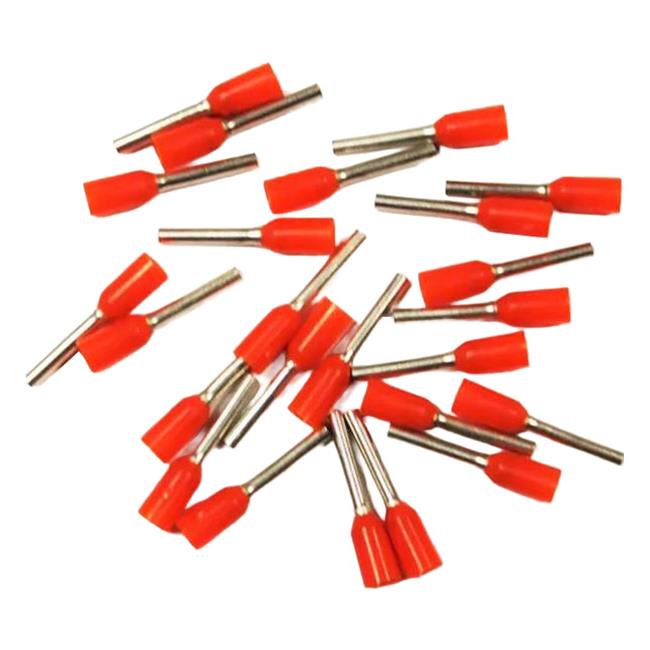
DX Engineering Insulated Wire Ferrules P-Mag electronic ignition terminal strip, the maximum wire gauge is typically 20 to 22 AWG. The terminal blocks only accept pins, stripped wires, or wire ferrules with an outside pin diameter of roughly 1.5 mm to 1.7 mm (0.055-0.065). Next size down is 1.2 - 1.4mm might be better.

dxe-iwf-20-25pk_fh_xl.jpg


See Videos below:

P-Mag has three wires and it does not need any of them! :unsure:😊. The 3 wires, P-Lead (switch to ground to disable), Power (for start only). and short ground jumper. There is an optional tach signal. The optional jumper for A/B timing curve is a short jumper, not a 4 foot wire running from the propeller through the baffling and firewall. PMAG will continue to RUN if your wires fall off. IT STILL RUNS LIKE A MAGNETO!!!! THIS IS WHY IT HAS AN ADVANTAGE... Good old reliable farm tractor technology. Wiring is less important to the P-Mag, as it is self contained and self powered.

BTW Pin 2 and 3 for the A/B timing curve jumper is also RS-232 port as some may not know. If you want to track your timing advance and other factors... in flight you can. EI Commander is a stand alone panel mount monitor for the P-Mag.


Again "other" EI shot gun control boxe(s), separate coil(s), sensor(s), and all the wires and many connectors to wrangle them together electrically, ALL over the engine bay on a shaking, very hot vibrating engine in a crowded (chaffing, fretting, rubbings wires), not to mention the "exploding" alternator belt. Ha ha. More connections, more wires exposed sensors, more chance for failure. Now I am being hyperbolic slightly but making a point.

EI's that have components spread out all over, careful installation of the wiring and connections is a must, and inspection every condition inspection (or better every oil change) of all the wires and connections for airworthiness is a most. Inspection of wires and connections about an hour I guess? P-Mag also needs continued inspections also like ALL EI's, every annual take a look at the bearing, takes an hour of so. Bearing works well and last a long time (not forever). No big deal to me. I like having ALL the components in one place, no drilling of pulley and brackets hanging off engine holding sensor, inside the pulley a hair away (0.06-0.10) away from spinning magnets, no more no less.

Again flying an RV-12iS yesterday throwing FAULT light on LANE A. Why? Some spurious voltage no doubt due to resistance in the 100 connections, i.e., nuisance. This is a "factory" harness with fancy connectors. Rotax service bulletin has changed the coil harness, and coils from 2 to 3 wires, because... coils over heated and two wire connector is problematic. The ECU will throw faults for everything. To comply is $$$$$. P-Mag is all in one, very few wires and connections. RELIABILITY = Less wires and less connections for better reliability.

To say P-Mags are unreliable is just hearsay, rumor, innuendo. You don't get to be in business 20 yrs and garner a very good reputation and be best selling. It is so good Hartzell bought the business. This self powering is not something easily done. 20 yrs, considered easily the best selling EI for experimental aircraft. P-Mags fly more hours fleet wide and well proven. Bearing wear is not a flaw or defect, only normal wear. Case closed. 😊


How Ferrules work
 
Last edited:
Do YOU really think your many connections via Crimp on Spades, Crimp Ring Terminal, Molex or D-Sub connectors are superior?

Yes, and again, Amphenol AT connectors, specifically engineered for engine compartments.

OK. Terminal blocks work well especially if you use wire ferrules (not needed but made me happy).

Crimped terminals are unsatisfactory, but you recommend crimped ferrules? You say they're not needed, but offer a video demonstrating why they are?

friday140708.jpg

Again "other" EI shot gun control boxe(s), separate coil(s), sensor(s), and all the wires and many connectors to wrangle them together electrically, ALL over the engine bay on a shaking, very hot vibrating engine in a crowded (chaffing, fretting, rubbings wires), not to mention the "exploding" alternator belt.

No straw left in that straw man. Again, there is no firewall-forward 12V power, ground, tachometer, p-lead wiring, electronics, or blast tubes here. The triggers are not near the fearsome alternator belt. There are only two wires attached to anything with shake. Plus, I remind you overhauling a trigger assembly costs less than $15.

"Separate coils" is amusing. You do realize the P-Mag uses a coil from a Ford Ranger, simply parked on top of the unit? In the OEM application, it has a three wire pigtail and a plug for the three coil pins. The pins are tiny. EMagair elected to skip the plug and stabilize the three wires with a sealant, making it their own special part. Dig out the sealant and tell us if they crimped a connector to the pins, or just soldered the wires to them. While you're there be sure to add the ferrules to the three external wires

The coil is less than $30 from multiple sources. Should be interesting to see what they charge for the special airplane version.
 
Wiring eh?

Bearings get a lot of discussion, but best I can tell loss of connection at the green clamp connector is the common failure. Adding pins can help, but it's a crutch. No auto manufacturer anywhere would accept this sort of ignition connector, and a P-Mag has two of them.

View attachment 122647

I'm flying a system which has no firewall-forward 12V power, ground, tachometer, p-lead wiring, electronics, or blast tubes. The triggers are not near the fearsome alternator belt...and the inline connectors are Amphenol AT.

I used a Pmag on one side based on anecdotal evidence that it would start better and Lycoming sold them that way.
I don’t have enough experience to say if it does but starts well. Most of what I know about airplanes is what I read on VAF. Anecdotally I see just as many or more issues with the other electronic ignitions.

If I did it again I probably would have copied you.

What is your recommendation for a first time builder?
 
Back
Top