Nashpdman

Well Known Member
Friend
What's the process for priming and painting over alodine? Specifically, alodine that is outside of the chemical bonding window. In other words, alodined parts that have been sitting on the shelf of months. Scuff, wipe with acetone, type primer, etc?

Thanks!
Mike
 
What's the process for priming and painting over alodine? Specifically, alodine that is outside of the chemical bonding window. In other words, alodined parts that have been sitting on the shelf of months. Scuff, wipe with acetone, type primer, etc?

Thanks!
Mike
Degrease and shoot. Do not scuff.
 
I am just about to start dimpling on rudder parts for my RV-10. Soon I'll alodine all parts. Does alodining present any problems for priming and painting? Is there any specific prime that have to be applied before final paint? Thanks,
 
I am just about to start dimpling on rudder parts for my RV-10. Soon I'll alodine all parts. Does alodining present any problems for priming and painting? Is there any specific prime that have to be applied before final paint? Thanks,
Alodine is an organic conversion coating that helps paint adhere to aluminum. most any primer will work to some degree, but epoxy primers will offer great protection over a long period.


Steve
 
I am just about to start dimpling on rudder parts for my RV-10. Soon I'll alodine all parts. Does alodining present any problems for priming and painting? Is there any specific prime that have to be applied before final paint? Thanks,
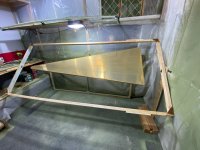
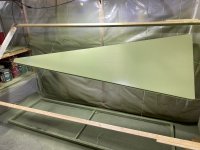
Here is the 2-part epoxy primer I've been using as recommended by the SW technical rep.
The other primers I had in stock cannot be used after a part is alodined due to adhesion issues.

Sherwin-Williams
MIL-PRF-23377K,
Type 1 Class C2
2.8 VOC Chromated Epoxy
Polyamide Primer
CM0724933
3:1 ratio with CM0110933 reducer.
18- sec #2 Zahn cup "Thin to win"

It is green in color


IMG_1090.jpeg


IMG_1094.jpeg
 
Last edited:
Here is the 2-part epoxy primer I've been using as recommended by the SW technical rep.
The other primers I had in stock cannot be used after a part is alodined due to adhesion issues.

Sherwin-Williams
MIL-PRF-23377K,
Type 1 Class C2
2.8 VOC Chromated Epoxy
Polyamide Primer
CM0724933
3:1 ratio with CM0110933 reducer.
18- sec #2 Zahn cup "Thin to win"

It is green in color


View attachment 71170


View attachment 71171
Did anyone tell you why you cannot use any other product??

I'm very curious.


Thanks,


Steve.
 
Here is the 2-part epoxy primer I've been using.

Sherwin-Williams
MIL-PRF-23377K,
Type 1 Class C2
2.8 VOC Chromated Epoxy
Polyamide Primer
CM0724933
3:1 ratio with CM0110933 reducer.
18- sec #2 Zahn cup "Thin to win"

Did anyone tell you why you cannot use any other product??

I'm very curious.


Thanks,


Steve.
Steve:

I reached out to the SW Aerospace Division (back in the early 2020's) in regards "The other primers I had in stock ...." including SW P60G2 CC-A2 Industrial Wash Primer of which I had been using on internal skins. The response was in regards coating an aluminum passivation (chromate conversion) surface after "their" acid etch primer had been utilized.

"Dave,

The Industrial Wash Primer is recommended over bare, untreated metal, not pretreated metal. The concern is going to be the consistency of adhesion.
So we would not recommend over Alodine 1200S. Hope this helps.

(Tech name deleted) - SW OEMFINISHES"


I will leave it to an individual builder to determine if their desired coating material(s) are comparable after a chromate coating has been applied.
One other note, the SW P60G2 acid etch primer does NOT provide enough corrosion protection and was another reason I shelved its usage.

"P60G2 is not intended for use over adequate chemical treatments on steel, galvanized steel, or aluminum. Using P60G2 over these chemical treatments may result in loss of adhesion .....Does not provide significant corrosion protection."

Folks wanting my reference material can PM me for additional data.
I like 2-part epoxy primers as it's finish is harder than chinese arithmetic.

drdave


I think it's pretty safe to say that EVERY major paint manufacturer is going to tell you to only use a specific primer.
I've used lots of different primers over the years and Mil-prf-23377 primers definitely offer good adhesion. I've used lots of Boeing BMS-10-11 with very good results and it is water based catalyzed epoxy primer and I have never had adhesion issues.

Some of this is what you can get your hands on in your part of the world. . Just be sure that whatever you choose to use, you run some test panels....and test it. Tape Adhesion test is easy...wiat for it to cure for 3 or 4 days, put down a 6 inch strip of good solid masking tape or I use nylon strapping tap...rub it on...and RIP it off....see how good your adhesion really is.

I think surface prep is very important. technique can also be important and temperature and humidity very much so...

Hope that's helpful,


Steve.

 
I think it's pretty safe to say that EVERY major paint manufacturer is going to tell you to only use a specific primer.
I've used lots of different primers over the years and Mil-prf-23377 primers definitely offer good adhesion. I've used lots of Boeing BMS-10-11 with very good results and it is water based catalyzed epoxy primer and I have never had adhesion issues.

Some of this is what you can get your hands on in your part of the world. . Just be sure that whatever you choose to use, you run some test panels....and test it. Tape Adhesion test is easy...wiat for it to cure for 3 or 4 days, put down a 6 inch strip of good solid masking tape or I use nylon strapping tap...rub it on...and RIP it off....see how good your adhesion really is.

I think surface prep is very important. technique can also be important and temperature and humidity very much so...

Hope that's helpful,


Steve.
I've never know of that simple, yet very effective Tape Adhesion test!

Thanks,
 
By the way, when people say "degrease", is that just wash it with the dishwasher soap and water, and rinse it well with water?
 
By the way, when people say "degrease", is that just wash it with the dishwasher soap and water, and rinse it well with water?
NO. That's a good step 1
Step 2 would be to throughly wipe down the whole part with Acetone and a clean rag or industrial paper towel.
(Lacquer thinner and MEK leave residues. Acetone is the right prep...)

Then stick the part in a plastic garbage bag and tape it shut, till you're ready to Etch and Alodine. White cotton gloves, actually keep the oils and acids from your fingers from getting on the surface and is a pretty solid idea.

Not operating room sterile...but...pretty dang clean is a good goal.

Steve
 
Last edited:
NO. That's a good step 1
Step 2 would be to throughly wipe down the whole part with Acetone and a clean rag or industrial paper towel.
(Lacquer thinner and MEK leave residues. Acetone is the right prep...)

Then stick the part in a plastic garbage bag and tape it shut, till you're ready to Etch and Aldine. White cotton gloves, actually keep the oils and acids from your fingers from getting on the surface and is a pretty solid idea.

Not operating room sterile...but...pretty dang clean is a good goal.

Steve
Wow! Thanks. This is why I choose Van's kit, there is always someone to help us newcomers! Thanks once again.
 
Wow! Thanks. This is why I choose Van's kit, there is always someone to help us newcomers! Thanks once again.
And by "clean rag", we mean something that has absolutely never seen fabric softener (silicone). Best to stick with paper towels.
 
By the way, when people say "degrease", is that just wash it with the dishwasher soap and water, and rinse it well with water?
Dove Detergent works wonderful (we used it in the past on birds covered in icky-pic) some use Simple Green. I clean the alcoa red ink off with acetone, I find it better than MEK for that. But. these are my techniques, what do I know.....
 
Dove Detergent works wonderful (we used it in the past on birds covered in icky-pic) some use Simple Green. I clean the alcoa red ink off with acetone, I find it better than MEK for that. But. these are my techniques, what do I know.....
To Dave's point:

Dawn, simple green...Zep degreaser...and many more do a good job initially...I prefer following up with Acetone, because I keep my Alumaprep and re-use it for several batches of parts.

The less you contaminate the Alumaprep, the more parts you can continue to use it for. I have a plastic vat that I keep mine in, covered, same with my Alodine.

The quicker you contaminate those baths...the quicker you replace them and it's not like they're cheap these days.

The point is, it doesn't really matter the specific choice of soap, degrease agent etc...whatever works well for you, is fine. Clean em....don't touch em, then alumaprep (Etch) then rinse, then Alodine, then rinse, then prime.

as clean as you can.


S.
 
De grease your parts and re apply the alodine when you're ready to paint them. It's a common process at the big manufacturers when the parts are not painted within the specified time limits.

When you want to use a primer on top of the alodine make sure it's compatible with alodine treated surfaces.